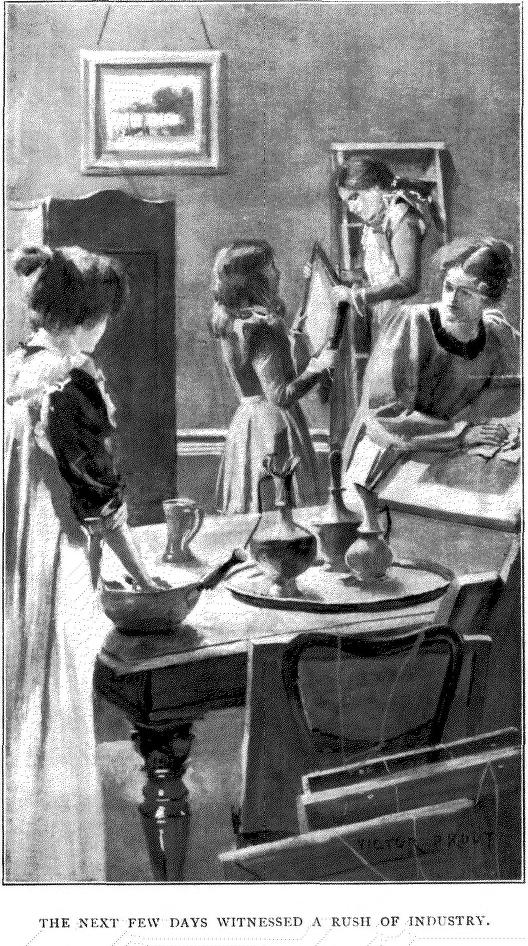
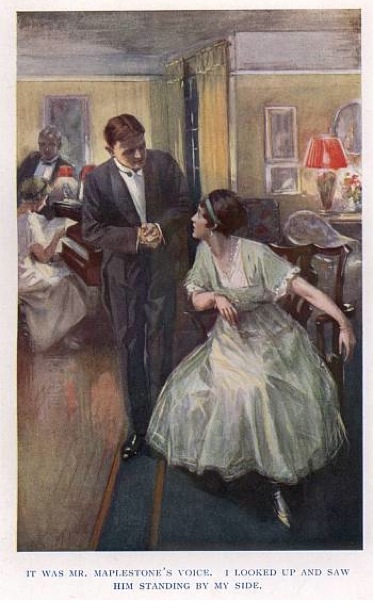
Susan Rowley Richmond Lee, Aka Curtis Yorke

Pam’s Pictorama Post: Today is a book day here at Pictorama. You all know that periodically I share something I have dived into, usually a late 19th or early 20th century author. (Other examples include my passion for series books found in posts here and here – or my recent passion for the author Rosa Mulholland, and the first post about her can be found here.) By coincidence this year on my birthday I picked up a book, which like last year’s Rosa Mulholland find, has sparked reading a series of books by the author. While Mulholland is an Irish writer who is sort of all about being Irish, Susan Rowley Richmond Lee (quite a name!) is a Scottish writer who penned under the, blissfully simple, name of Curtis Yorke. Really, these are the only similarities between the two writers. I guess I should give a bit of spoiler alert on plots – really just for the third book. These books don’t have a lot of plot surprises however; it’s mostly about how you get there.

Her available autobiography is very thin. She was born in Scotland in 1854 (d. 1930) and educated in Glasgow. She married a mining engineer, John Wilson Richmond Lee, and they moved to Kensington. She published her first book in 1886, That Little Girl, and went on to write 50 books. That brief bio is all we appear to know about her and as noted and also differing from Mulholland her Scottish nationality is not a dominant feature of her writing. You could easily just assume she is British.

Birthday purchase from The Strand which kicked off the reading bonanza.

I have read three of her books, starting with The Wild Ruthvens which I purchased at The Strand bookstore on my birthday as mentioned. Her books all seem to weigh in at about 350 pages. The Wild Ruthvens is what was called a juvenile and today I guess would be a young adult novel. It is the story of a family of essentially very unruly kids (naughty to the point of being unlikeable at times) who are minus parents and raised by an elderly aunt with the occasionally intervention of a somewhat younger uncle and his periodic attempts to tame them. A cousin who was crippled in a riding accident is thrown into the mix and is one of the forces that slowly changes the family dynamic. Published in 1899 (from the Gift Book Series for Boys and Girls) by L.C. Page and Company, my entry into her work 13 years in clearly shows she knows what she is doing when writing a book. The plot of this, and her other books I have read thus far, is not especially complicated and in particular she does not really compete with Rosa Mulholland in this way. However, it is easy to see why she was popular and The Wild Ruthvens appears to be one of her most popular books, hence its availability in the Rare Book Room at The Strand.
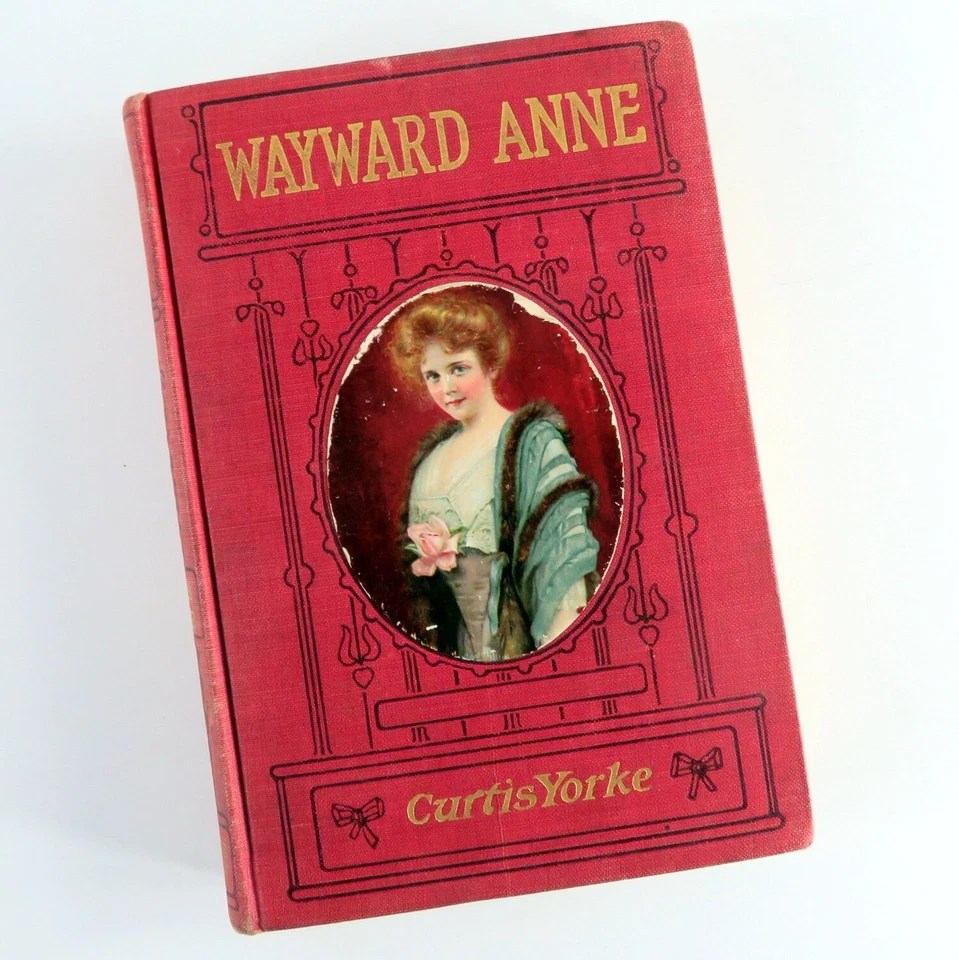
At $75 before shipping and with a broken spine, this seems a bit dear.

Physical copies of her books are not widely available (some are for sale with bizarrely huge prices for a completely unknown author – a waterlogged copy of one is up for $350 on eBay), however I have found a cache of them scanned for free reading via Google Play Books and I have read two more that way and have a third underway. A warning that at times the scanning is messy and amateurish (I am loathe to complain as otherwise these books wouldn’t exist) but in the end all the pages do appear to be there so just push forward. Goodreads appears to have no reviews or ratings of any of her books yet (although I did come across a request from someone to add a book) and of course I mean to change that. Even the Wikipedia listing for her books is only partial (select) if we know she published 50.
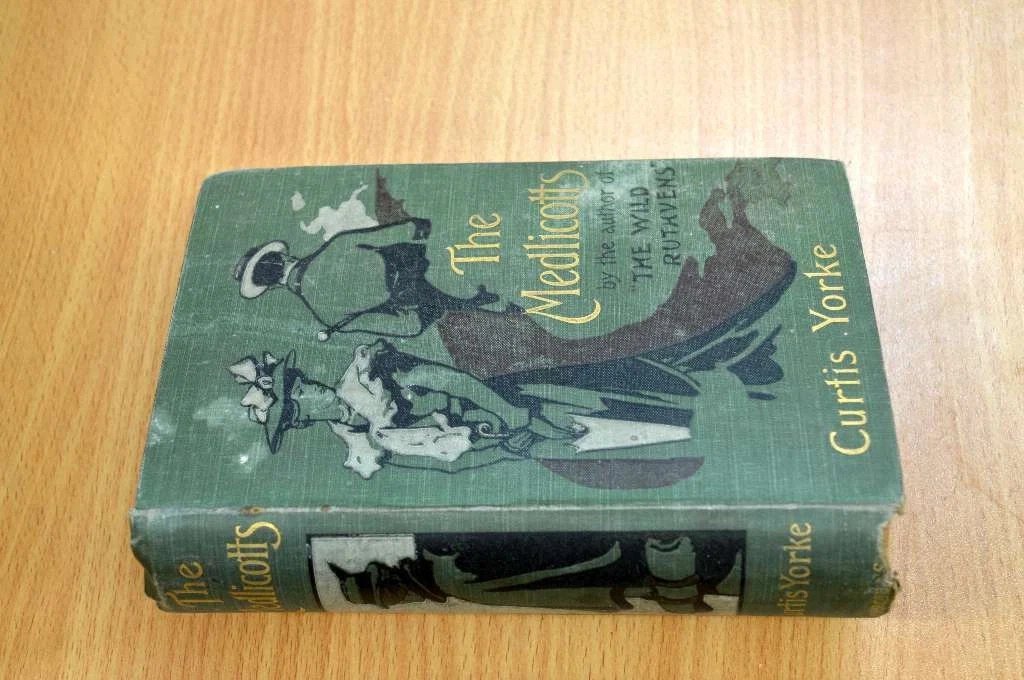
A copy for a good price on eBay. As mentioned, I read it for free on Google Books.

With each book I have read I like her more and that may have something to do with the fact that, by coincidence, each has taken me further in her career. My second read was The Medlicotts: An Uneventful Family Chronicle (1895) published by Jarrold & Sons. It would appear that this might be her second most available book. A somewhat typical tale of a young woman who goes into service as a governess. While this family isn’t missing parents, their role is thoroughly superseded by the grandmother who is the heart of the house and a wonderfully defined character. One of the children is a little girl nicknamed Batty which seems like an unfortunate nickname – she is an aspiring writer and I note this to come back to it in a minute.

Third and most recent read is The World and Delia, 1907. Now first and foremost a warning, a reprint of this book is for sale on Amazon (I read a free copy on Google Books) however their description of the plot is entirely wrong. Maybe AI wrote it? I have no idea. It isn’t that I wouldn’t like to read the one the described there but it isn’t this book. The plot of this one is actually a bit interesting however. A young woman has been raised by maiden aunts and is entirely unworldly, somehow she is introduced to a widowed man and her isolation and sadness at not being a part of the world so captures him that he asks her to marry him within days of meeting her. He lives in a fairly rural area (so she actually goes from living in London but totally isolated to this town where she gets to engage out in the world more) and by plot planning coincidence her only acquaintance her own age she has ends up marrying and moving into an estate nearby.

The story is of how she and her husband grow to love each other in a one step forward, two steps back sort of fashion. As above, the odd thing is a character named Batty who is a middle-aged housekeeper! It is such a distinctive nickname – did she mean for us to know it is the young girl as above in The Medlicotts? No indication is ultimately given – just an insider notation within her universe, I guess. It did leave me wondering how the young girl above could have evolved into this character but not sure if there is ever going to be an explanation. Meanwhile, warnings on this one include a not very contemporary analysis of modern (new) women and a smidge of unexpected racism.

There you have it for now. I have two more downloaded and ready to go so we will see where it takes me – clearly still much to mine in the vein of early women authors of Great Britain.
Reading: de Horne Vaizey Cont.

Pam’s Pictorama Post: I continue to work my way through the available books by Mrs. George (nee Jessie Mansergh) de Horne Vaizey, as chronicled in early parts here and here. I have had a tough time reading with a consistent timeline so I have hopped a bit through her ten year, prolific career and have been spending a lot of time around 1908 and 1909 recently, with a few jumps to near the end of her life in 1917.

There is not a lot of deep biographical information readily available and I sketched out most of it in my second post about her. She had a good for nothing drug addicted husband who had the good grace to die and she starts publishing shortly after. What I didn’t know until recently was that her young daughter, Gwenyth, took one of her stories from a drawer and sent it to a magazine contest without telling her mother. Jessie won and the prize was a cruise where she met George de Horne Vaizey and they marry and meanwhile her career was launched.

From A Houseful of Girls, 1902.

So the question of what was really lighting a fire under her about writing is an open one – she must have enjoyed it, but was it a financial need? I always thought she wrote for a longer time before remarrying and needed to support her family. Nonetheless, write she does with tremendous output. Wikipedia counts 31 books in the span of her brief career (another site says 33) and I think we have to assume there were magazine stories published as well. (There appears to be a collection of them published either right before or after her death.)

Her books are not especially brief. I would say they average around 300 pages. Reading them electronically it is a bit hard to tell. Sometimes two or even three were published in a given year.

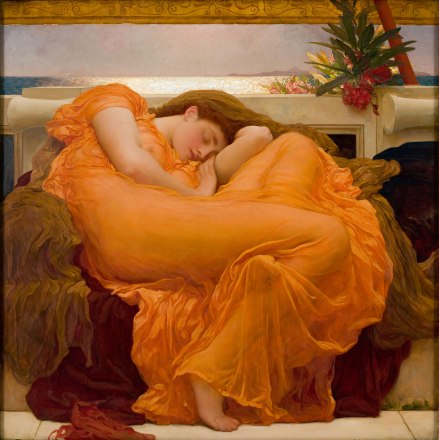
I have been thinking about her heroines as I read and as they grow in interest with her increased skill as a writer. They stop being simply likable (beautiful and loveable – gray eyes, long lashes) fairly early on and start to become more complicated. In Flaming June (note that the painting above is of the same name and was well known at the time – was she making reference to it? Frederic Leighton, 1895 – I say yes!) she has an American main character with a Western accent which, while effective, gets a bit tedious to read after awhile. (She also had a character with a lisp in one volume that started to drive me nuts. It seems to be a fashion for writers of the time to show all the accents they could write with.)

Also from A House Full of Girls.

However, over time her women grow into complex characters who are sometimes more interesting than likeable. For example, the woman in Flaming June is hot tempered and extremely independent. Much of the plot, and what happens to her both good and bad, centers on this quality as well as her stubbornness. It makes the story tick and, without being a spoiler I will say, gives it a somewhat quixotic ending.

In addition to greater character development her plots become more interesting and she leaves off the basic sort of worn tropes about school days and money acquired, lost and acquired again which were the bread and butter of her early writing and certainly for women authors of the day. A young woman of middling income decides to take a basement flat in the city and dress as a much older woman so that she will be free to help people in a way that an attractive young woman could not. (The eponymous volume is The Lady of the Basement Flat, 1917.) The story is worked however so that she also has a life at a country house where she is herself – of course the two weave together at some point. However, what a concept!

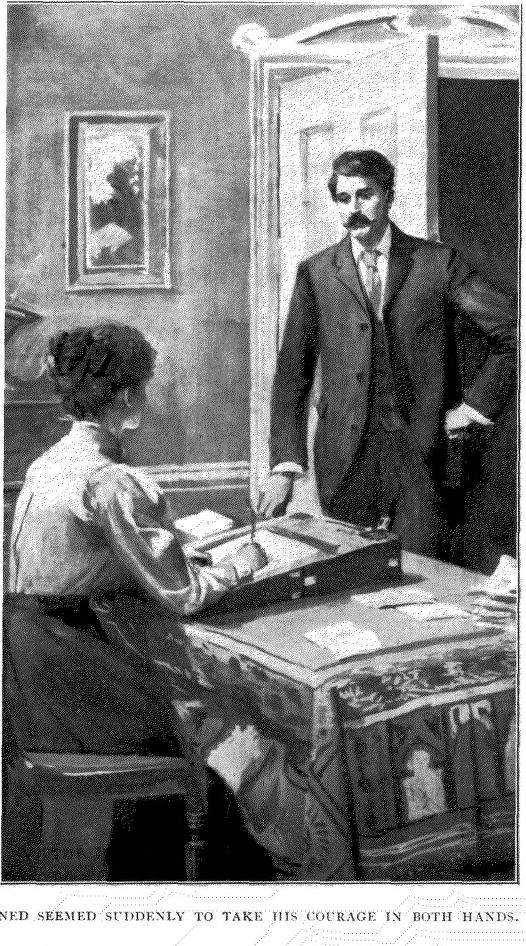
From Etheldreda the Ready, which I am currently reading, 1910. Definitely not one of her more likeable heroines! Etheldreda is utterly self-oriented and conceited, thus far anyway!

In What a Man Wills she takes a sort of well trod narrative path with a wealthy, ill, elderly man who invites four nieces and nephews for a long visit to decide who will be his heir. While, again without being a spoiler, I would say she doesn’t manage an entirely new take on it, she does well with expanding it and again, not afraid to make one of her main characters flawed.

Her women, even her heroines, can fall victim to vanity and greed, if not quite all the way to ambition. (She does poke fun at women authors occasionally with a sort of self-deprecation.) They are often a bit forward for the time and space they live in – especially those who reside in or come to find themselves in small rural towns. Financial ruin comes to people and families on a routine basis, but with a sort of detail that makes you think that for those who lived on investment income they way many people did at the time, that this was a very real event.

Her characters opine on the limited options for women – that they are not trained for anything to prepare them for life or possible ways to make a living. Therefore their fortunes hang largely on their ability to marry well – or remain dependent on a male relative or someone else to settle money on them. In the end this depends on how attractive they are and can make themselves and some of the more forward characters have a real struggle with this very real problem.

From The Lady of the Basement Flat – sadly I don’t have one of her dress as the elderly version of herself!

Frankly, the male characters tend to be a bit more one dimensional; she came from a large family and almost all of her characters do. Therefore, there are always a few brothers for color and plot development and of course there are suitors, and although we are privy to fewer of their thoughts and motivations, they are generally not fleshed out like the women are having they were often an end goal which offered security and a home in addition to whatever romantic interest was brought to the table.

The closest we come to the male prospective in the somewhat brilliant novel, An Unknown Lover. This is a complicated plot and while there is a woman at the center of it, we do get into the heads of both her epistolatory lover and brother and their motivations which help drive this story. Thus far I would say this is her best, published in ’13 so she is flexing her muscles, but not yet at the end of her life.

From Daugther of a Genius, 1903. A ner’do well father dies leaving his children to rely on their wits and creativity to make their way.

So my interest in women authors at the turn of the last century continues unabated. Watching them chafe at the conventions that defined their lives and dictated how they could live – sometimes these very conventions sentencing them to penury without a way to survive. It has been interesting to place her historically before some of my other beloved authors such as the adult novels of Frances Hodgson Burnett and Edna Ferber (a few of those posts are here and here, but there are others!) but interesting to add her to the timeline. Also, the play between the British authors and the American is interesting as women in the United States seem to have been freer to pursue a living more broadly than their British counterparts earlier on – and the conventions of our society a smidge less confining.

As stated in my earlier posts, Jessie de Horne Vaizey spends the last years of her life bedridden and dies in 1917. I learned recently however that it was first typhoid, then eventually arthritis which confined her to bed and she died unexpectedly during an operation for an appendicitis – so what made her an invalid is not what killed her. She does some of her characters painful rheumatic complaints, usually elderly men, but clearly she knew what she wrote of – and as someone who suffers from it myself, I can only imagine the kind of pain she must have had without the meds of today to help alleviate them. There are also many plot instances of long recoveries from illness, not unlike her typhoid I assume. She was my age when she died, but she made the most of her almost two decades as an author.