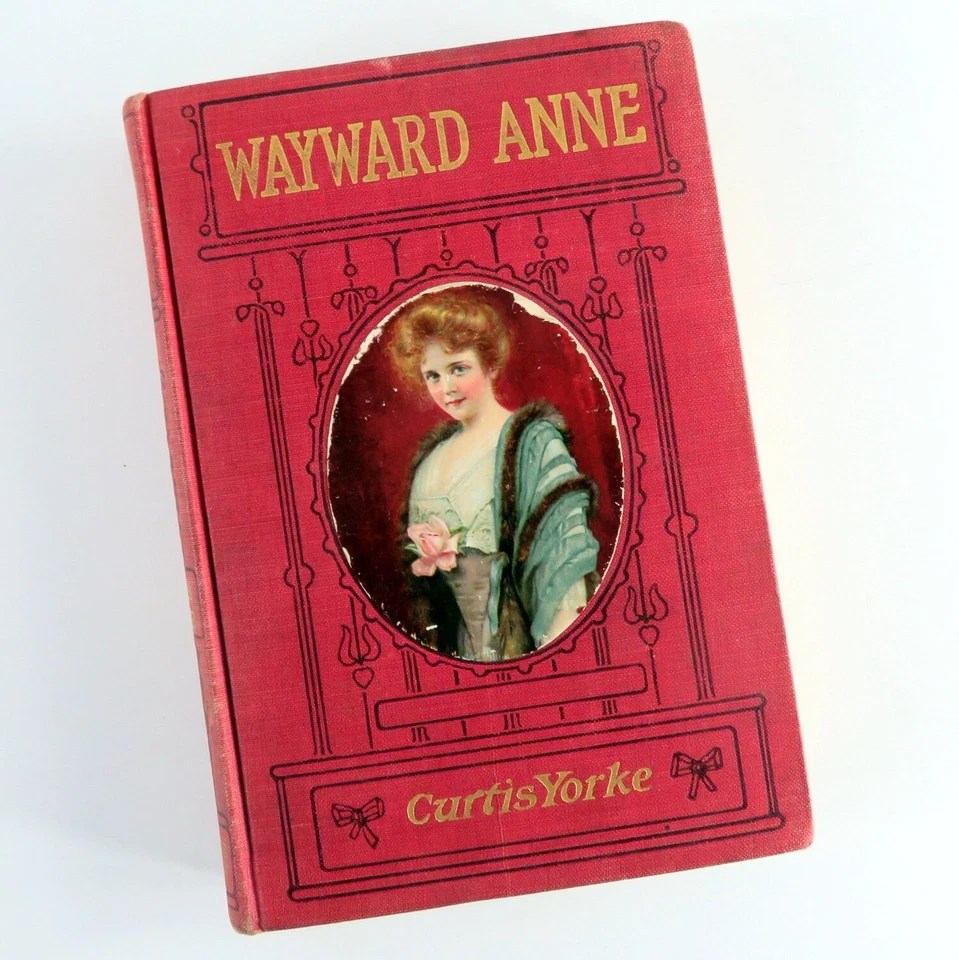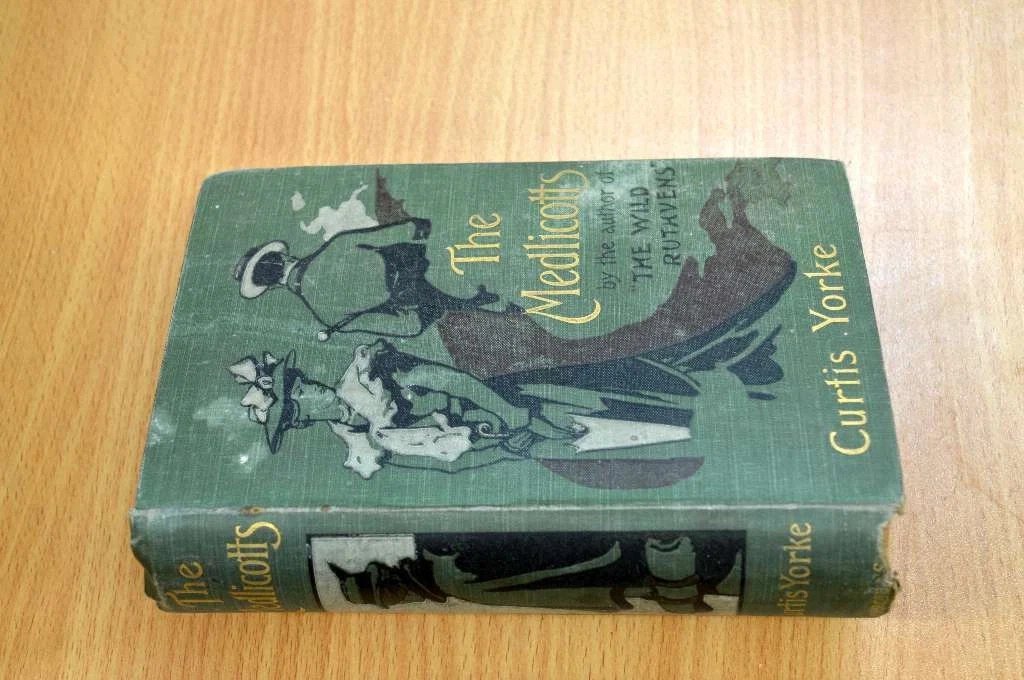
Pam’s Pictorama Post: It is another book day here at Pictorama. I have continued to digest Curtis Yorke novels at a rapid pace, even as I figure out how much I like her and where I think she fits in my pantheon of women writers of the late 19th and early 20th century.
Back in March I posted my first salvo having read a clutch of her books, mostly in the sort of juvenile, young adult genre. (You can read that post here.) Curtis Yorke is of course her nom de plum and her aka is Susan Rowley Richmond Lee – a whole lot of name by any standard. Fair warning that toward the end of this post I write a lot of detail about plots and if you have wandered over from Goodreads, fair warning that there are many spoilers down there!
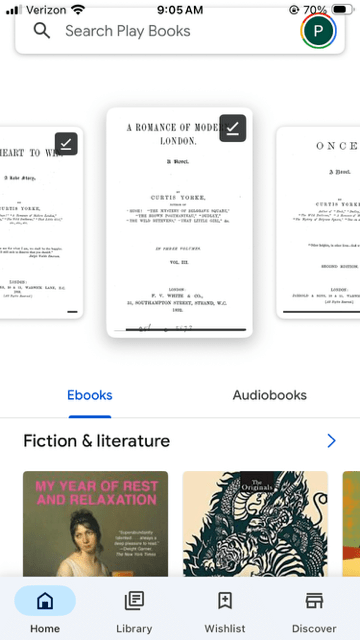
I will say upfront that one thing I was wrong about was the availability of her physical books. They are available to some extent even in this country, unlike my beloved Rosa Mulholland whose physical books are largely sold only in the UK and cost a small fortune to ship across the ocean these days. However, perhaps more importantly, they are surprisingly available online for free via Google Play Books. It is this deep vein I have been mining and thus have read a lot of the more adult novels recently. An alert to future readers however, these books were put online by copying the actual pages from books and therefore the print (on my phone for example) is quite small and I have had to read them all on my iPad. (Although you can make the page bigger you have to do it for each page which is annoying – there is no function to just increase the size overall.)
By way of reminder, we have virtually no autobiography on her except that she was born in 1854 in Scotland and died in 1930. She was educated in Glasgow, married and lived in Kensington and published some fifty books. I can only imagine that she was quite popular in her day and would think at some point her identity was known, the prejudice against women writers waning by the 1920’s, and that someone must have written a magazine article or two about her. If true that work remains to be done.
However, I do feel compelled to say that in some ways she compares unfavorably for example Rosa Mulholland who is a contemporary and sort of an Irish kissing cousin to her Scottish roots. While RM wears her Irish identity on her sleeve, Yorke never refers in particular to Scotland and much of her work takes place in London or the surrounding areas. I say she compares unfavorably because Rosa Mulholland avidly conceived and concocted her intricate plots, executing them and sewing up her many planted points as she went on over hundreds of pages. (Some of my posts and odes to Rosa Mulholland can be found here and here.) I would have to say she is also a lesser light and even a harder comparison to make to someone like Frances Hodgeson Burnett and her adult novels. (Happy hours spent reading those which I was recently reminded of – some posts can be read here and here just for starters.)
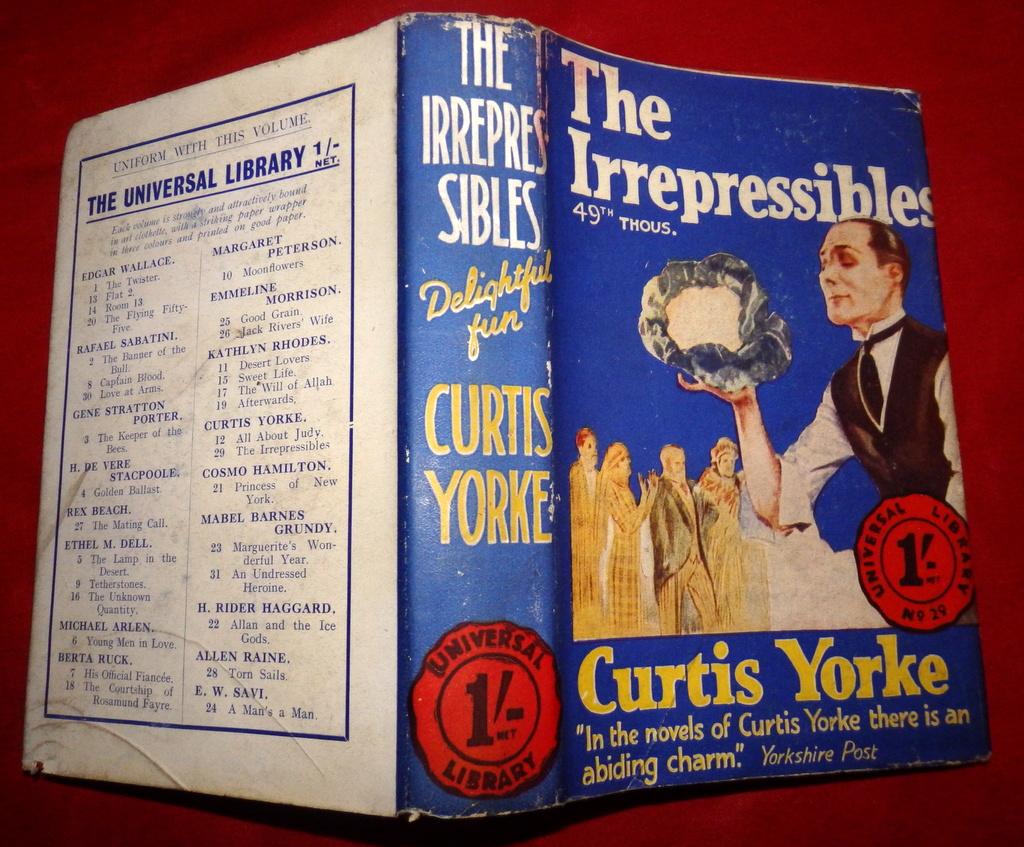
I feel though that Yorke may have been the sort of writer who, with perhaps a broad over-arching outline, just sat down each day and wrote with the narrative going wherever it did. (Kim says this is how Dickens wrote as well, some do I guess.) Fortunes found and lost and found again – romances found and torn asunder. I assume these were probably originally published in pieces although the chapters don’t necessarily fall into the sort of cliff hangers that come of that.
In one of her longer single volume novels Once! (published 1892) she has at the heart of the story (major spoiler here, just a warning here again) an overarching moral message about the male protagonist who has made a bad marriage with a women who (in addition to being a lousy mother), becomes drug addicted; is in love with another man and has, it turns out, only married him for his money – which of course in the way of things he will lose before regaining at the end. Meanwhile, he has taken in his young cousin who has lost her father and has no income. The cousin has a crush on him but when, over time he falls in love with her, she is nothing short of horrified – even once the wife is out of the picture and he reveals it to her. While I think we can all agree none of this is exactly model behavior, Yorke really crushes him for this. (And of course none of that is about being cousins – it is acknowledged that this is done all the time – although it might have been the issue for you or I.) It was a rare time when I just felt somehow out of sync with the sort of accepted behavior of the period. It lacked nuance for me somehow.
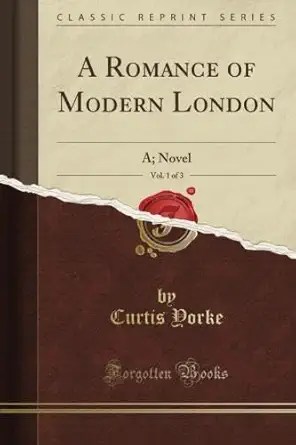
More recently I finished a three-volume opus titled, A Romance of Modern London. (Also published 1892 or perhaps volume one was?) These books chase through a myriad of now you see it, now you don’t wealth and general fortune for the characters. It starts very compellingly with two orphaned children, a boy and a girl, who through starvation, illness and somewhat extraordinary misfortune somehow manage to stay together after the death of their mother – father was long gone. She is then snatched up by some long lost grandparents (ah! they weren’t really brother and sister) who have fallen into a fortune but are by all accounts a bit, shall we say, rough and ready. The boy continues to suffer terrible poverty and adversity until he finds fame and fortune as an author – just as the grandparents lose their money.
Strangely in this case the boy and the girl (now grown and in love with each other but not suspecting that their newfound affection is returned) rarely actually lose touch with each other – he marries her good friend (makes her miserable as he doesn’t love her) while men keep asking her to marry them and she will not, even if it means she is cast out on the street as of course an underlying theme is always the dependance of women on men to house and support them – be they fathers or husbands. You are mostly out of luck if you don’t have one of those. I liked this book but some of the tributaries seemed a bit arbitrary, especially toward the end. On a final note about the end – weirdly, although happily married at the end and in the final pages she introduces their sadness that they have not had a child of their own. Was she thinking of a volume four that was never written?
Finally in His Heart to Win (I love that title – so fitting to the time and type of story! 1894) we have a pretty delightful story of a man who marries a young, sheltered girl, raised by her aunts, because he feels sorry for her. They are frank with each other in that it is sort of a marriage of convenience (he is older, widowed, has children) although Molly falls in love with him rather quickly, although keeps this to herself – as does he when he (albeit more slowly) falls in love with her – as if actually loving each other was somehow breaking their bargain. They chase around this – fortunes lost and found too I believe – until ultimately they figure that thing out and live happily thereafter.
I do wish I knew more about the reception for her writing and the life of the author in general. However, as above it remains utterly undocumented as far as I can tell, or at least via a surface sort of research online. For now I am working my way through the wealth of novels (and some short stories) available online before I start scooping up the physical books. For those of you who are following this, there is likely more to come here on Pictorama.