Pam’s Pictorama Post: Apologies in advance for anyone who was peevish that yesterday was a book-ish post as I am going to wrap up (at least for now) my thoughts on Mrs. George de Horne Vaizey today as she continues to be my reading material of choice. (Yesterday’s post is here.)
I will confess I went for a long fallow period of not reading much and just one off books here and there when I was. Kim powers through all sorts of long and short term reading projects, both for his own edification and for things related to work, so I am jealous when I am without one too. However, I am there with the best when I find a rabbit hole to go down and therefore here we are today.
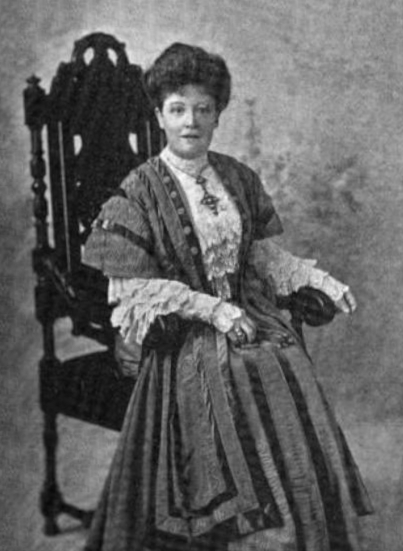
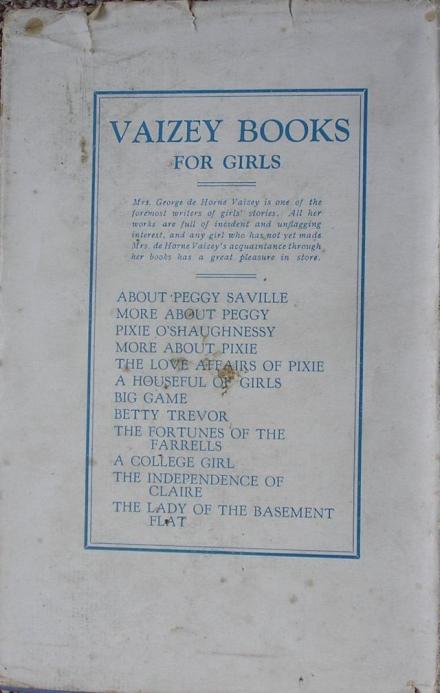
Mrs. G de HV as I like to call her, is fading from consciousness and seems to have barely been rescued for the digital age. If we are to look at the remaining availability of her published volumes, we have to assume that the Pixie books I wrote about yesterday were among her most popular, with a few other titles that seem to stand out. She wrote upwards of 32 books (I say upwards because Wikipedia does not always have every book published by an author although they do a good job of it) and clearly there were short stories. There is a collection of them mentioned as published in 1918. The list of her publications runs from 1897 to 1918, ending with that collection of stories. However, if I really want to read the widest swath of her work I will need to dig some. I would say about half is available online or for sale as antique volumes or occasional reprint.
Born Jessie Bell in 1857 as one in a melee of seven children (four brothers, two sisters) she was the daughter of a Scottish insurance broker. Her place of birth was Liverpool. She first married Henry Mansergh, a cotton broker, and published her first volumes under the name Jessie Mansergh. They had a daughter, Gwyneth Alice, in 1886. Mansergh was an addict which seems to have contributed to his early death. Reading between the lines so to speak, one wonders what part her early writing played in supporting them.
While I was certain that hers was a pen name of a type that was often adopted at the time, I learned that no, her second husband was indeed George de Horne Vaizey. She meets him while on a cruise which was a prize awarded for one of her short stories. They marry in ’98 and have a son, also named George, who goes on to be a writer. Sadly her own life ends as an invalid, confined to bed for many years. She dies in 1917 at about age 60 (her precise date of birth unknown) and therefore the final volume is posthumous.
Jessie uses her own life as whole cloth for her fiction. Large dynamic families, addiction, illness abound in her pages. Therefore, I have to assume that her evolving views on marriage and the relationships between men and women was also explored on her pages. If you’ve followed my previous musings on women writings of the early 20th century, you know that I found that even the juveniles such as The Radio Girls and Automobile Girls were gently ever pushing the line forward for what was permissible and acceptable for young women. (Some posts on those books here and here.)
Interesting to find Mrs. G de HV who is a bit earlier still than those authors and for me a logical forerunner of some. The line for women, the options they had in society for supporting themselves, is still more nascent although shifting all the time. An ongoing theme she explores is the unmarried middle class woman and her lack of options. I’ve already encountered several books where due to various circumstances the heroine is in some way prohibited or unable to marry and is faced with the issue of how to live their lives, preferably not just dependent on family. She seems to walk a narrow line – clearly a woman married to a man of means is the safest port in the storm.
She also confronts the daily reality of marriage – the idea that you are joining up with a mate who you will continue to make conversation with daily for decades. (I have often said that knowing that I would never be bored talking to Kim helped ensure a good union for us!) The sheer difficulty and exhaustion of running a house and caring for a family.
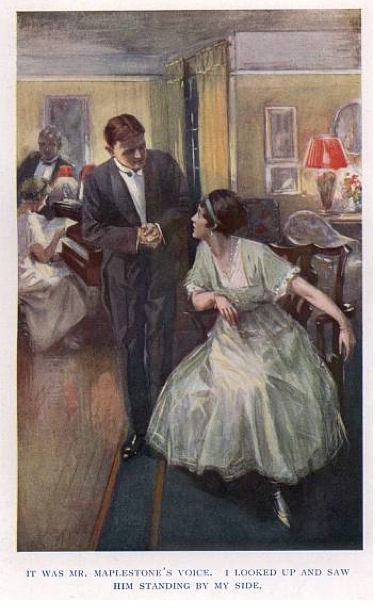
I am going to skip forward to An Unknown Lover, a novel published in 1913. (Some spoiler alerts ahead for those who care.) The author sets herself some unusual tasks. We have a heroine, Katrine, in her late twenties who has spent most of the last decade caring for her older brother who was widowed shortly after marrying. There are rarely effective parents in her books – adult children have either lost them or they are on the sidelines for some reason. I can’t even remember why they weren’t present to stop this hot mess of a situation – dead and forgotten in this case.
Anyway, both characters are beginning to chafe at the situation. The heroine opines on having all the responsibilities of housekeeping without the partnership of a true mate. She is also painfully aware that she is dependent on her brother for her keep, which comes to a hard point when he decides to remarry. She has no marketable skills and living in a small hamlet no prospects of marriage which is more or less what she is trained for. As a literary challenge, our author has placed an epistolary relationship through part of the book, which moves the storyline along. At first it seemed a bit awkward, but it grew on me. Despite some flaws and maybe questionable decisions, it is to date my favorite of her novels.
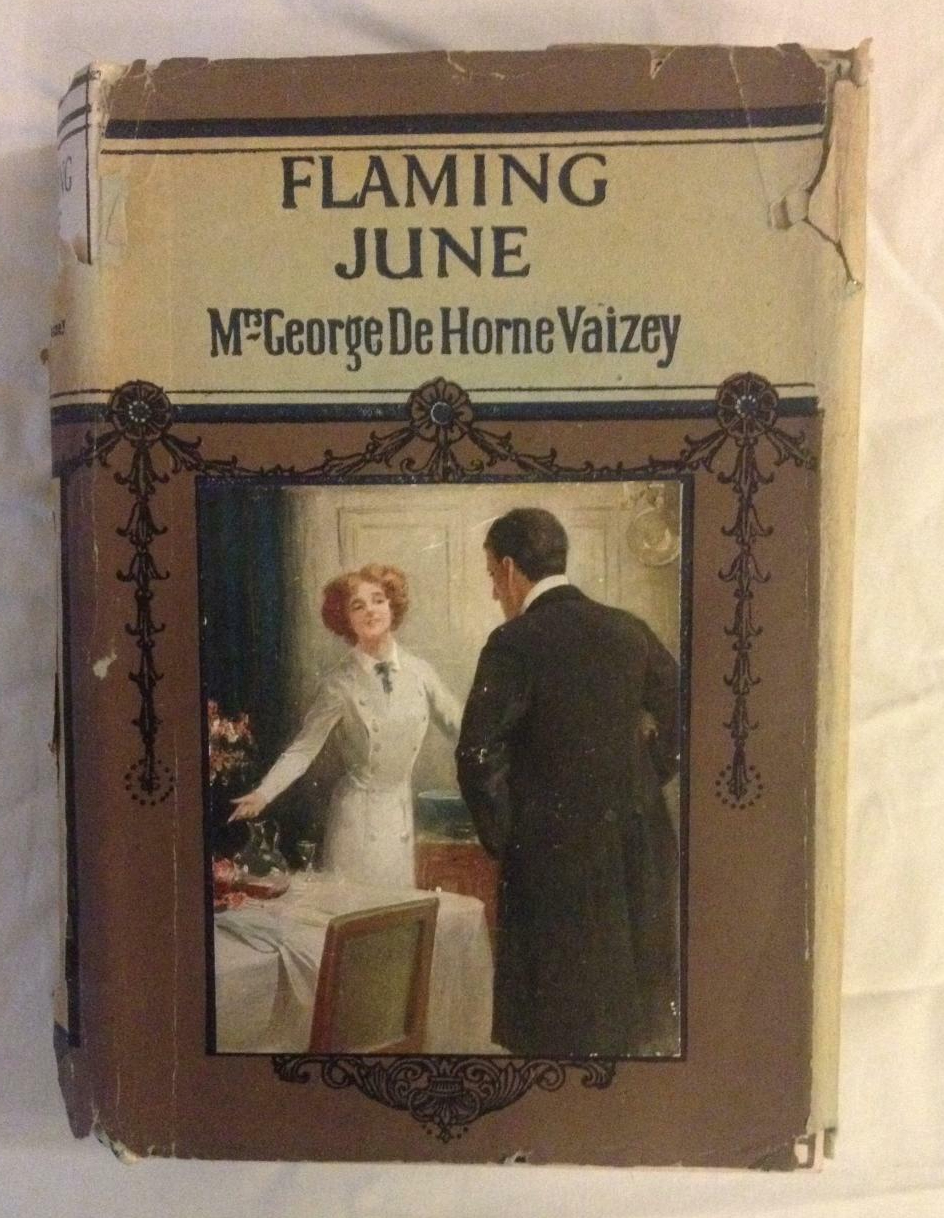
De Horne Vaizey has beloved tropes – I’ve noted before a preponderance of gray eyed heroines, some have golden eyes as an alternative. An odd one seems to be a fondness for shipwrecks – I believe I may be up to three in her oeuvre to date. An interesting tidbit, while researching this post I came across the following in an Internet Archive version of An Unknown Lover which actually photographs the pages of a hard copy of the novel and included this forward below:
AUTHOR’S NOTE
Lest I should be credited with making literary material out of a disaster still painfully fresh in the minds of readers on both sides of the Atlantic, I should like to record the following rather striking coincidence.
On the fourteenth of April last, I was engaged in writing the description of the collision at sea in which the heroine of the present book plays a part; and after some deliberation as to the most forceful word to employ, wrote the sentence which originally ran as follows: —
”Mercifully it is not one person in many thousands who is called upon to endure so titanic an experience. …”
A few hours later my husband returned home and told me of the news which had that day thrilled the world — the foundering of the steamship Titanic on her maiden voyage.
Many weeks passed by before I could bring myself to continue the narrative.
Hampstead.
Jessie de Horne Vaizey.
Somehow she pulls out two parallel love stories and details the personal growth of Katrine as she makes some rather bold leaps forward to attain a measure of happiness and independence, gently breaking with at least some of society’s conventions.
Sadly Jessie de Horn Vaizey doesn’t live quite long enough to see the shift which occurs even in the early 20’s for women. At six or so volumes I have barely scratched the surface and if it is interesting enough I promise more to come.
 Pam's Pictorama