Pam’s Pictorama Post: I haven’t posted a book review in a very long time and I am not entirely sure I have ever written one for a contemporary volume (Kim Deitch books notwithstanding of course), let alone a non-fictions one. (My reading and therefore posting runs heavily to very early 20th century fiction, largely by women. For a few examples you can look here and here.)
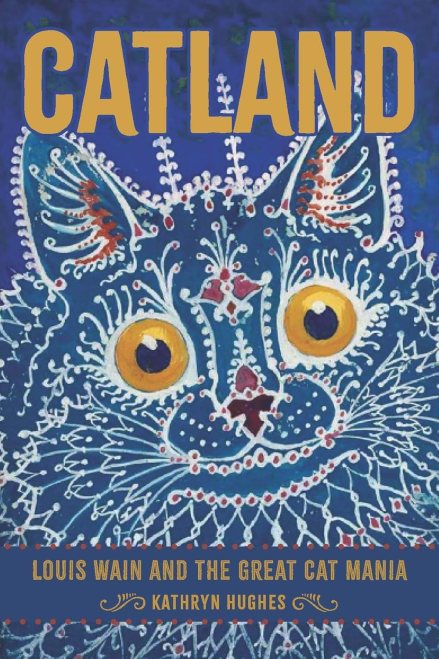
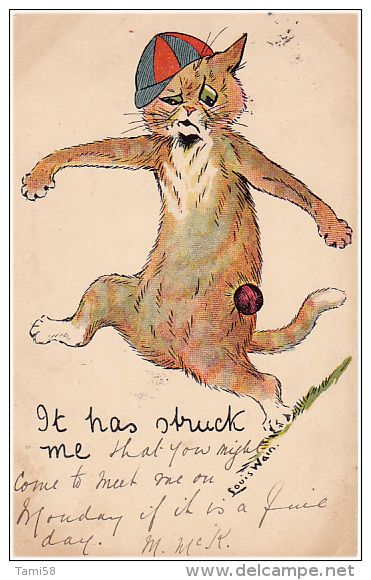
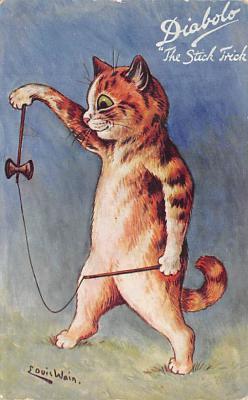
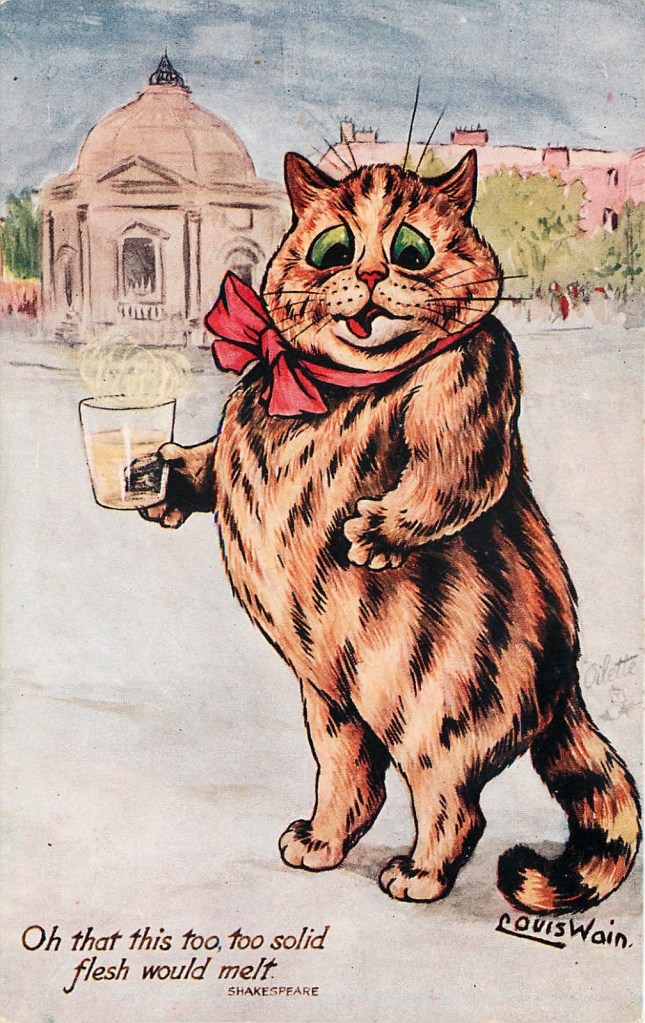
However, it seems quite logical that I would break that ground today with this recently published book as it combines Louis Wain (of whom I have posted often – try here and here for items from my collection) and the Victorian cat craze which helped launch the cat as house pet relationship as we know it today. Catland Louis Wain and the Great Cat Mania by Kathryn Hughes is more or less hot off the presses. Hughes has worked the Victorian history side of the street before and draws heavily on her accumulated knowledge for this sizeable volume.
Hughes uses Wain’s biography as a rough parallel to the rise of cat breeding and ownership – perhaps a fair measure as one could say that Wain’s art, intertwined with the newly found fondness for felines, helped drive the mania but was also driven by it. She loads it up with an equal amount of stories and tidbits from broader Victorian life, but centered mostly on a newly formed cat craze as it were.
While Hughes does take the opportunity to set both Wain’s autobio and previous chroniclers straight on some points, his biographical bits are interspersed throughout by chapters devoted to other aspects of cat related Victorian life. (Somehow I had missed the fact that Wain had a cleft palate which was largely hidden by facial hair as an adult and I had no knowledge of the family history designing and making liturgical fabrics – the latter being of much interest when you consider his sense of pattern and design.) Evidently Wain gilded the facts of his life liberally (lied) during his lifetime making some of it up out of whole cloth more or less.
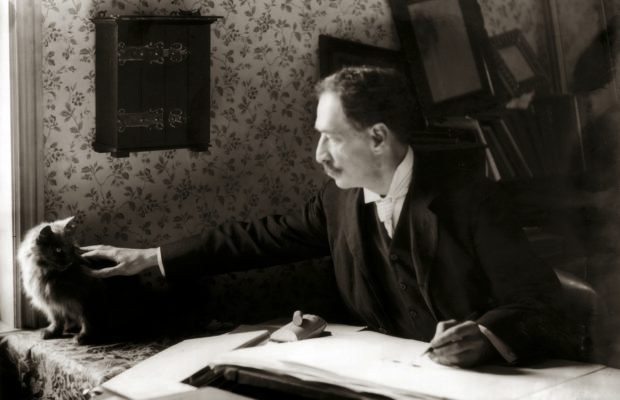
Hughes’s Wain is a socially awkward fellow, albeit it with flashes of attempted showmanship, who was most comfortable wandering off into his own world, In his public persona he judged (the newly created) cat shows, gave demonstrations of two fisted simultaneous cat drawing, and wrote some vaguely (and then increasingly) unhinged editorial pieces for the papers of the time. On the other side of the coin, he and his family declared bankruptcy more than once; he had a tendency to wander off for periods of time, and of course eventually he sadly drifts (almost retreats) into his decorative cat laden world of insanity.
Much the same could be said about Victorian England and its relationship to felines. First, it is clear that there was a pretty hard line between the nascent “purebred” (often pampered) pets of the day, and the run of the mill kitty of the street. The practice of bringing a street kitten or cat into your home was not the norm and, aside from those which were kept for work such as mousing, those cats were at best left to languish in the streets.

Some of the Victorian practices concerning cats are not for the weak of cat-loving heart to read so fair warning here. There were descriptions and stories I glossed over at best and I suggest same for Pictorama readers. A chapter on Victorian taxidermy (including a woman with a literal cat hat and cat tail cape – Eeeck!) isn’t even the worst of it as the period does seem to have a glib cruelty to it. However, not all the cat tales are bad ones and there were numerous fun bits and pieces that I’ve been reporting to Kim in bed for weeks now.
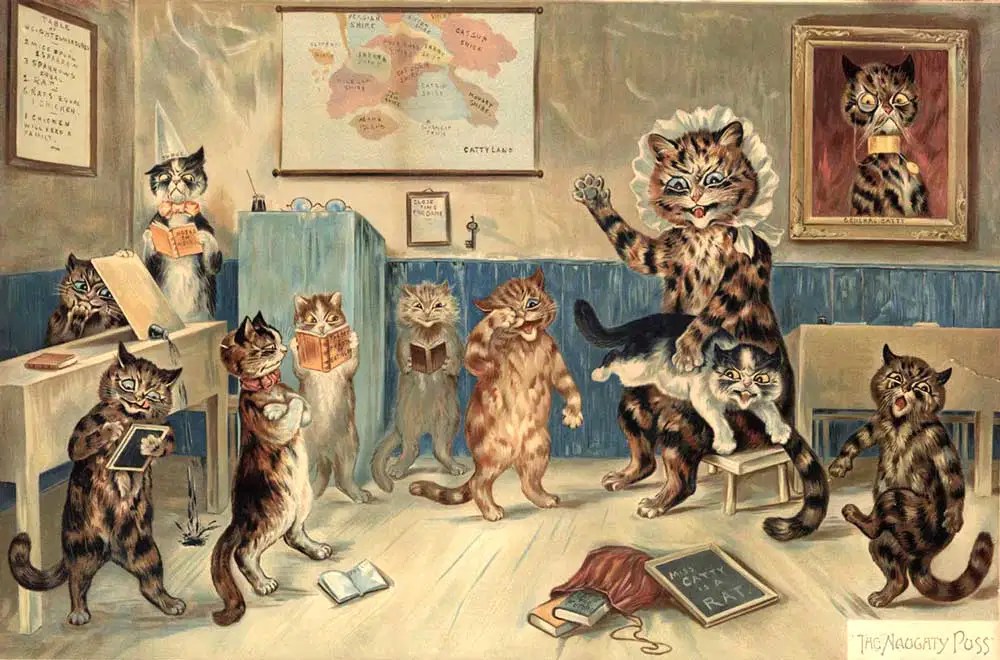
The book is gloriously well illustrated including, but happily not limited to a color section. Wain’s work lends itself even to black and white reproduction and Hughes uses it to good effect in support of her points as well as being fun to look at.
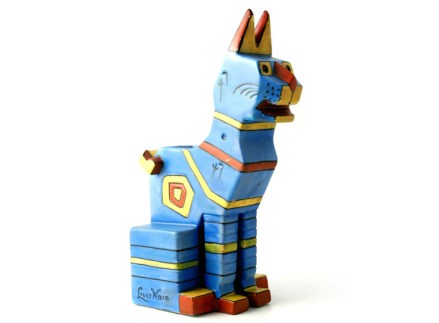
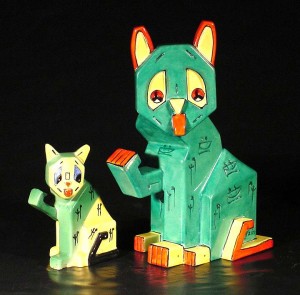
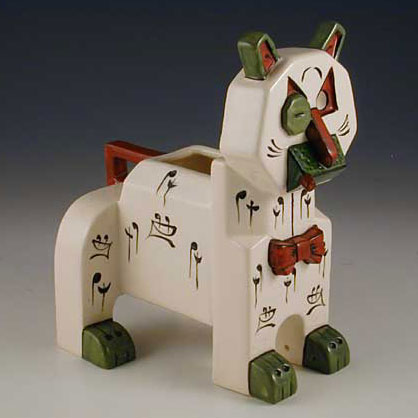
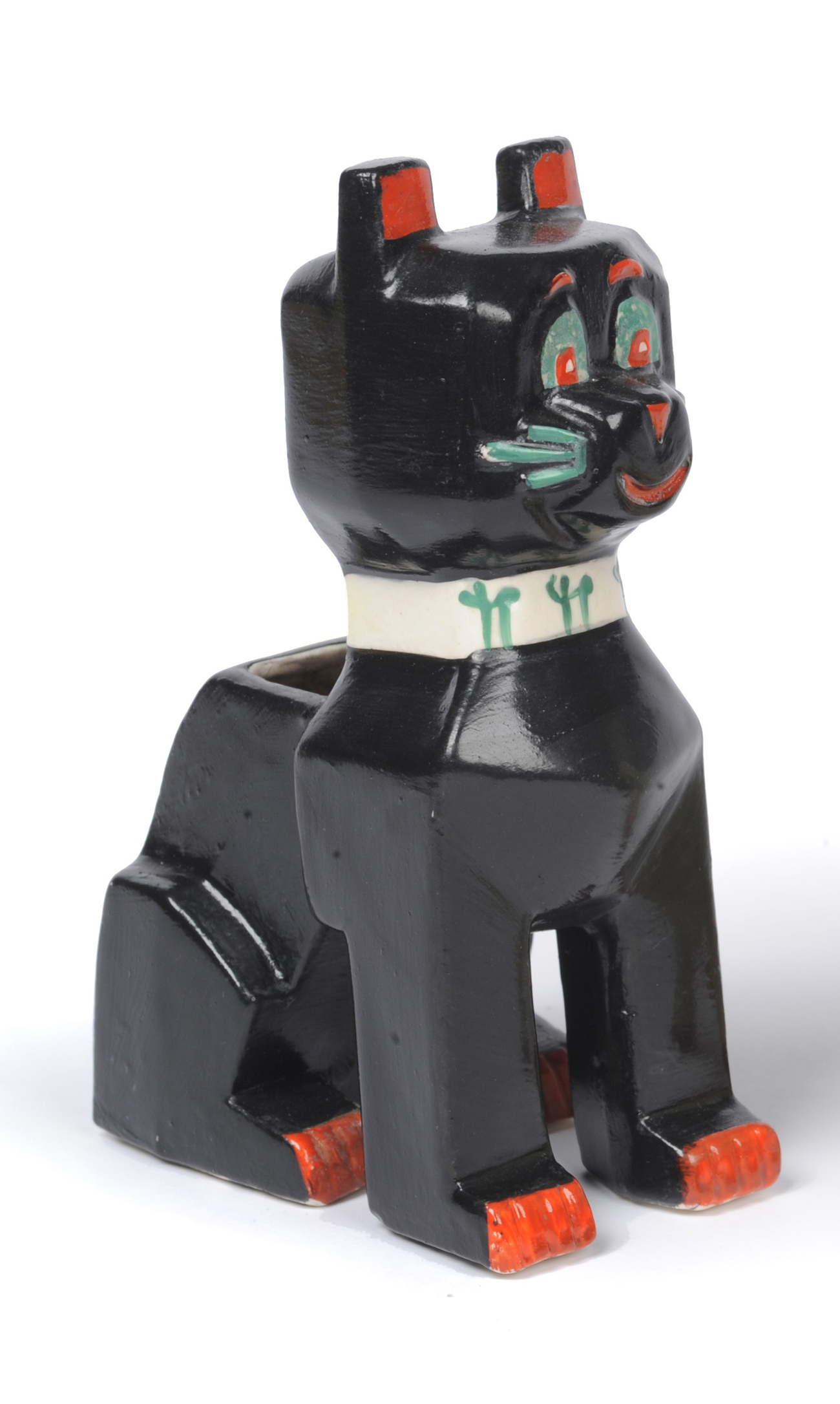
My favorite chapter in the book was on the Wain futuristic ceramics which I have always had an interest in and it answered at least some of my questions about these. A somewhat luxe line of teapots and the like in true Futurist forms, Wain had the bad luck of launching his line in June of ’14, just as war was overtaking Europe and Great Britain. Not the best time for offbeat ceramic cat-ware.
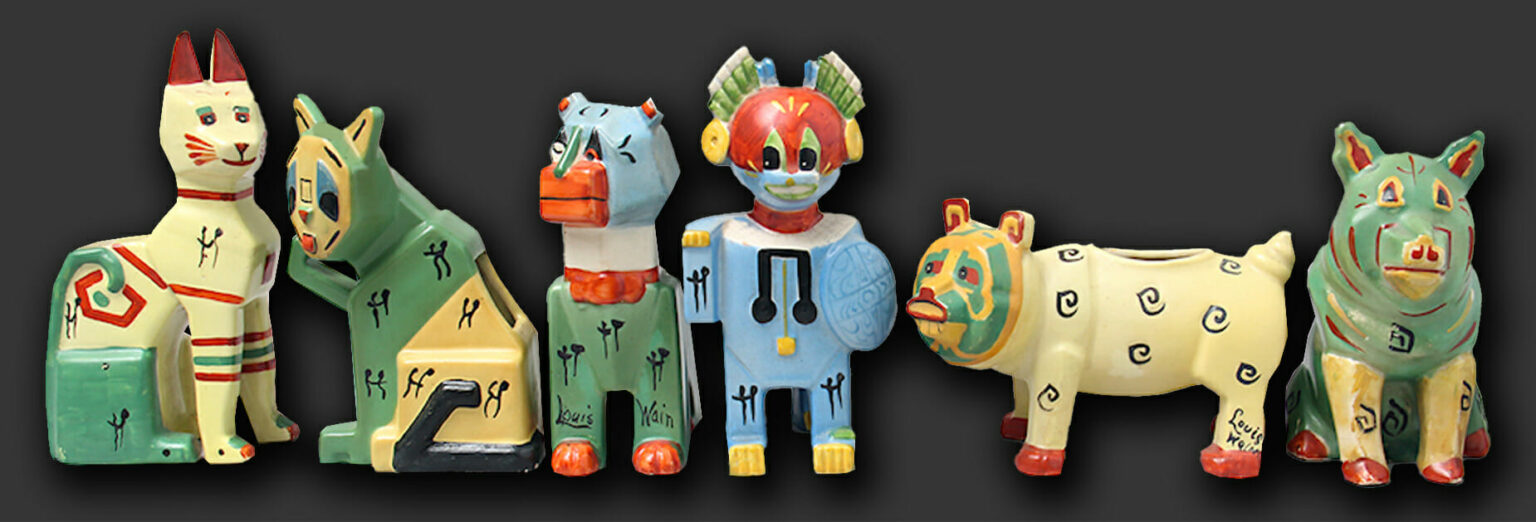
Produced by a company called Max Emanuel there were 19 patented designs in the first batch with names as diverse as The Mascot Cat and Road Hog Cat. The choice of colors where the larger designs were produced was referred to by a critic as an angry cake decorator on acid. Evidently there was even at inception a riot of designs, colors and finishes for the items, manufactured at two different plants which would make positive identification hard even then and almost impossible now that forgeries have flowed into the market. Still, I would snatch one up if I could and liked it and remain unconcerned about proof of origin.
The most disappointing chapter was on Wain and Felix! Other than the story of Sylvia Pankhurst’s Felix factory on the East End of London being told (Pictorama readers may remember that from a very popular early post that can be found here), Hughes does a rough retelling of a the plot of a silent cartoon that is easily viewed on Youtube. I’m mystified by why she included Felix if she was so disinterested.
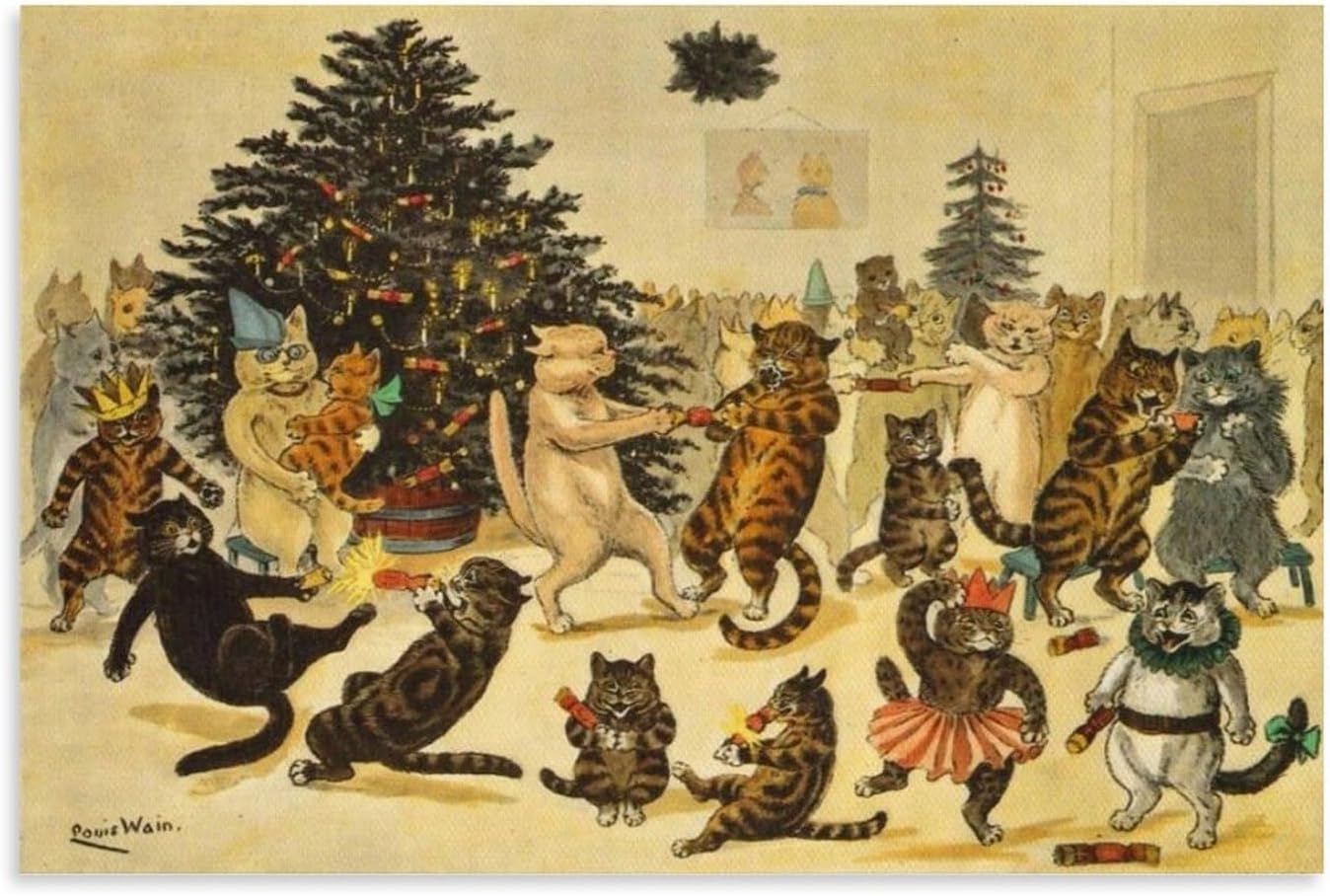
Wain and his sisters eventually leave London to reside in a suburban seaside town near Margate (one of his boosters in the magazine world was an early investor and set them up there), and this holiday retreat lifestyle inspires some of Wain’s most entertaining cards and images – cats golfing, boating and swimming as well as sly social commentary found even in Catland.
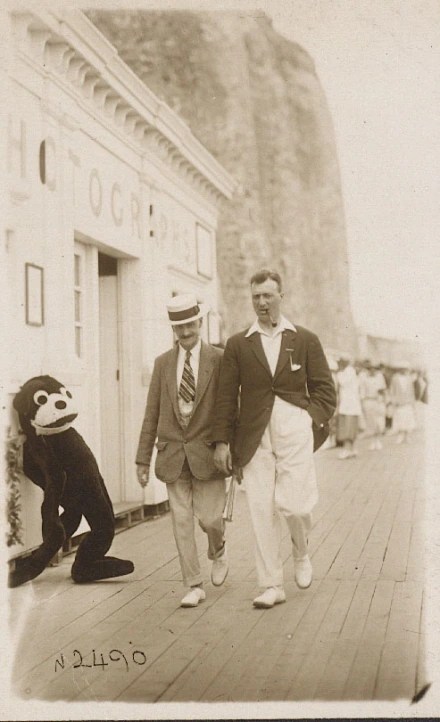
Meanwhile, of course I have wonderful day dreams about Louis actually wandering over to the Felix photographers in Margate where so many of my Felix photos were made and having a postcard made with an arm tossed around the shoulders of a tall stuffed Felix – this is now united with my day dream of finding one of the giant Felix dolls from those establishments.
Furthermore, as it happens eventually TS Eliot was also nursing a nervous breakdown in the neighborhood – in a town just on the other side of Margate. It is irresistible to imagine that they met at that time, perhaps had a coffee and were strolling the boardwalk together. And perhaps they wandered in and had a picture postcard snapped for posterity – to show up in my collection one day.
 Pam's Pictorama