Rosa Mulholland Part Two: Searching for the Sweet Spot

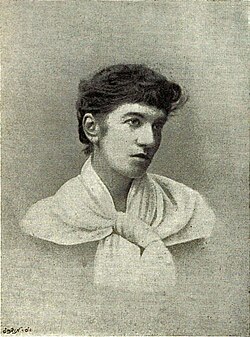
Pam’s Pictorama Post: Several weeks ago I embarked on reading a new late 19th-early 20th century author, Rosa Mulholland, and wrote a post about her that can be read here. I’ve subsequently read several more books and thought I would update you a bit on my findings. (Recovering from mouth surgeries has given me much reading time – in addition to these books I polished off at least as many contemporary novels!)

For those just tuning in, Mulholland (who also wrote under the name Gilbert) was a prolific Irish writer of the late 19th to early 20th century. Many of these volumes, virtually all illustrated fairly profusely, are beautiful old editions which is what attracted me when I bought the first volume.

I have read several more since I last reported and found one I cannot seem to get into, but more about that in a bit. Terry, Or, She Ought to Have Been a Boy, was one of the few books I was able to find and read online. It was published in 1902 and is a novella that seems to have been a sort of chapter book for older children, or one that could be read to them.

I didn’t love it – for me it felt like it never quite got all the way off the ground. It is about a very obstreperous and wildly undisciplined little girl and her brother who tags along with her exploits. Said children are left with an infirm grandmother who leaves their care largely to a housekeeper. A lot of chaos ensues. Terry is a Rosa Mulholland-type character as a child who we never get to follow into adulthood.
Not my copy as I read it online. Pretty though!

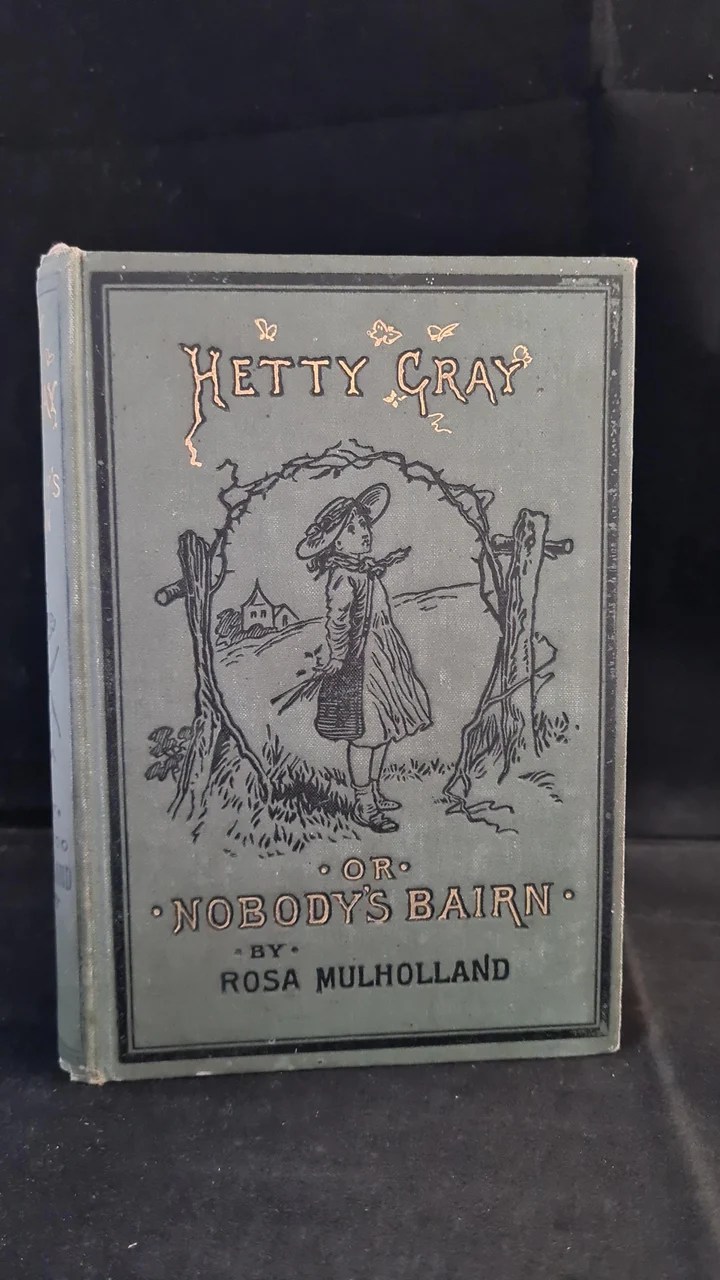
Hettie Gray: Or Nobody’s Bairn (1883) is short novel, also available online and I gather there is a reprint that is widely available. This is a more interesting story where Hettie is a foundling (of high birth of course) who literally washes up ashore and is taken in by a poor village couple. As a small child (with a bit of a wild streak) she is found one day by a wealthy woman who literally scoops her up and takes her off. She spoils her terribly and makes her into a bit of a wretch and then the wealthy woman promptly dies leaving Hettie largely friendless. We watch her original good nature re-emerge under adversity.

Mulholland has a few ongoing fascinations she returns to again and again in her writing – one is strong willed women and the difficulties they have fitting into the narrow society of the time (they are generally somewhat tamed but that will also pays off in other ways), and another is class structure. These two things play together as evidently to be poor and strong willed is seen as one thing but to be rich and strong willed another.
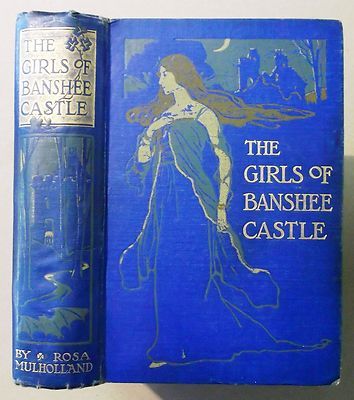
I don’t own this one yet, but there seems to be a fair amount of noise about it so am looking for it (1895).

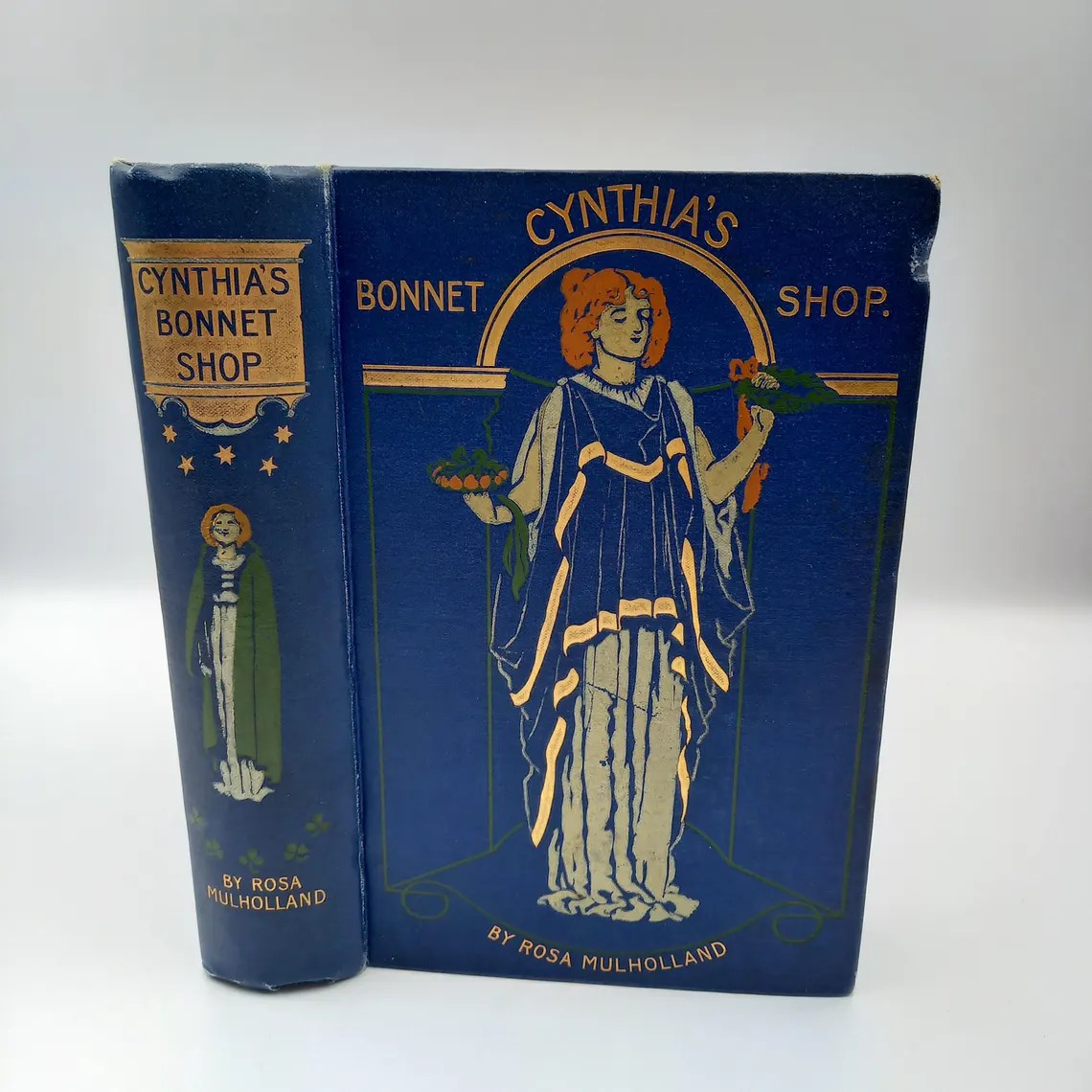
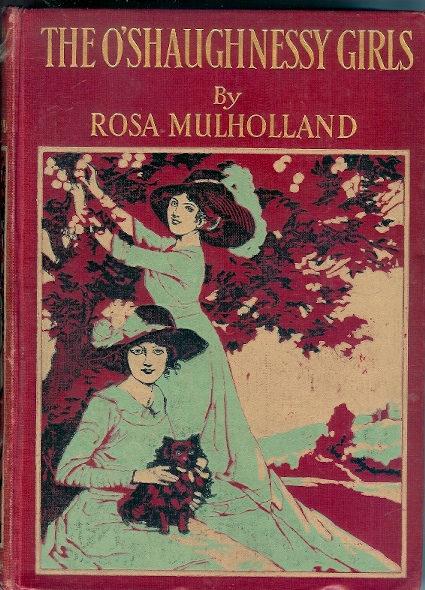
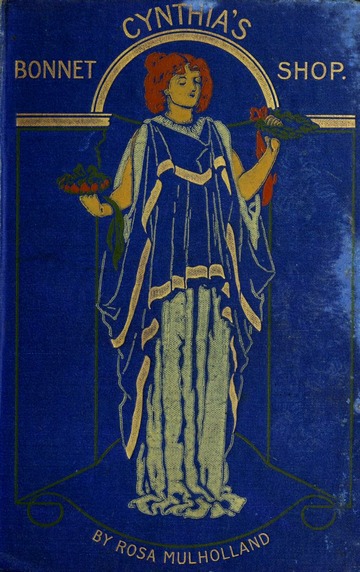
The best of this lot was Cynthia’s Bonnet Shop (1900) and it is for me Mulland at her best. (I did purchase one of the first editions as shown here, but had to settle for one that is quite tatty in order ot make it more affordable!)

Although some of the usual tropes are present, Cynthia is part of a fatherless but otherwise large and intact family which is a nice switch. There is the requisite wealthy (but unpleasant and selfish) relative who inadvertently sets Cynthia on the path to establishing her own bonnet shop. There is a mysterious benefactor. Her London shop becomes wildly popular. Romances for the sisters ensue but skew some with a patent Mulholland, I love him but I think he loves you not me so I’ll step aside, bit of plot. It is a pleasantly long read and the characterization of the two older sisters is great and good fun.

Mulholland notably also has a thing for astronomy. This is the second book (My Sister Maisie being the other) that has a story line about a woman who aspires to being an astronomer. I have to imagine that it either was a personal interest of hers or she was close to a woman who was or wanted to be one. That is another quality of these novels – the women are striving for something but consistently fall short of achieving in the man’s world. I assume this was a factor of the time and place. Mulholland is several decades earlier than let’s say Francis Hodgson Burnett (I wrote about her adult fiction which I enjoyed immensely in a post here). Europe was behind the US in progress for women and I would guess Ireland a bit further behind still. People looking at Suffragettes more than a bit askance as they emerge there.
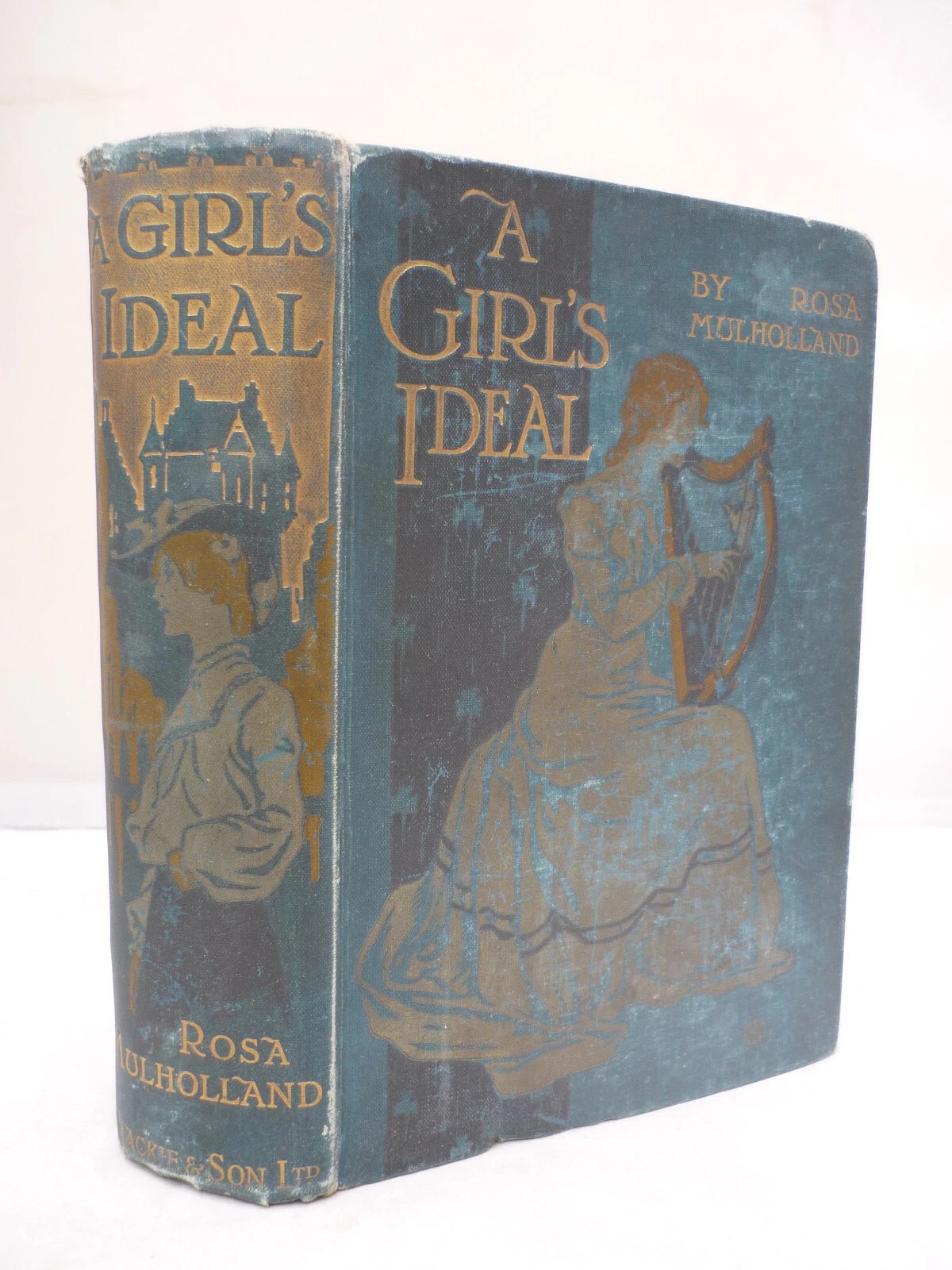
Another I don’t have but am interested in (1905).

The final book for today, Marcella Grace, An Irish Novel (1886), is a plot that is devoted entirely to class distinction and the inflammatory politics of Ireland at the time. As someone without a lot of background in the political history of Ireland I am not equipped to comment on the position she takes. It is clear that she is leaving some room for a dissenting view (some sympathy for the downtrodden who took the paths of taking up arms) although for all of that they are the evil forces who drive this particular plot forward. This does make for a different book and I appreciate that as she could start to feel a bit repetitive. However, while I enjoyed it I cannot say it was an absolute favorite.

There is one on my bedside pile that I have been unable to penetrate, Father Tim (1910). Unsurprisingly it is about a priest in Ireland. I’m not saying I won’t end up reading it but I have not yet been able to really engage with it. Perhaps the fact that it seems to be written from a man’s point of view isn’t working for me. If I manage to read it I will report.
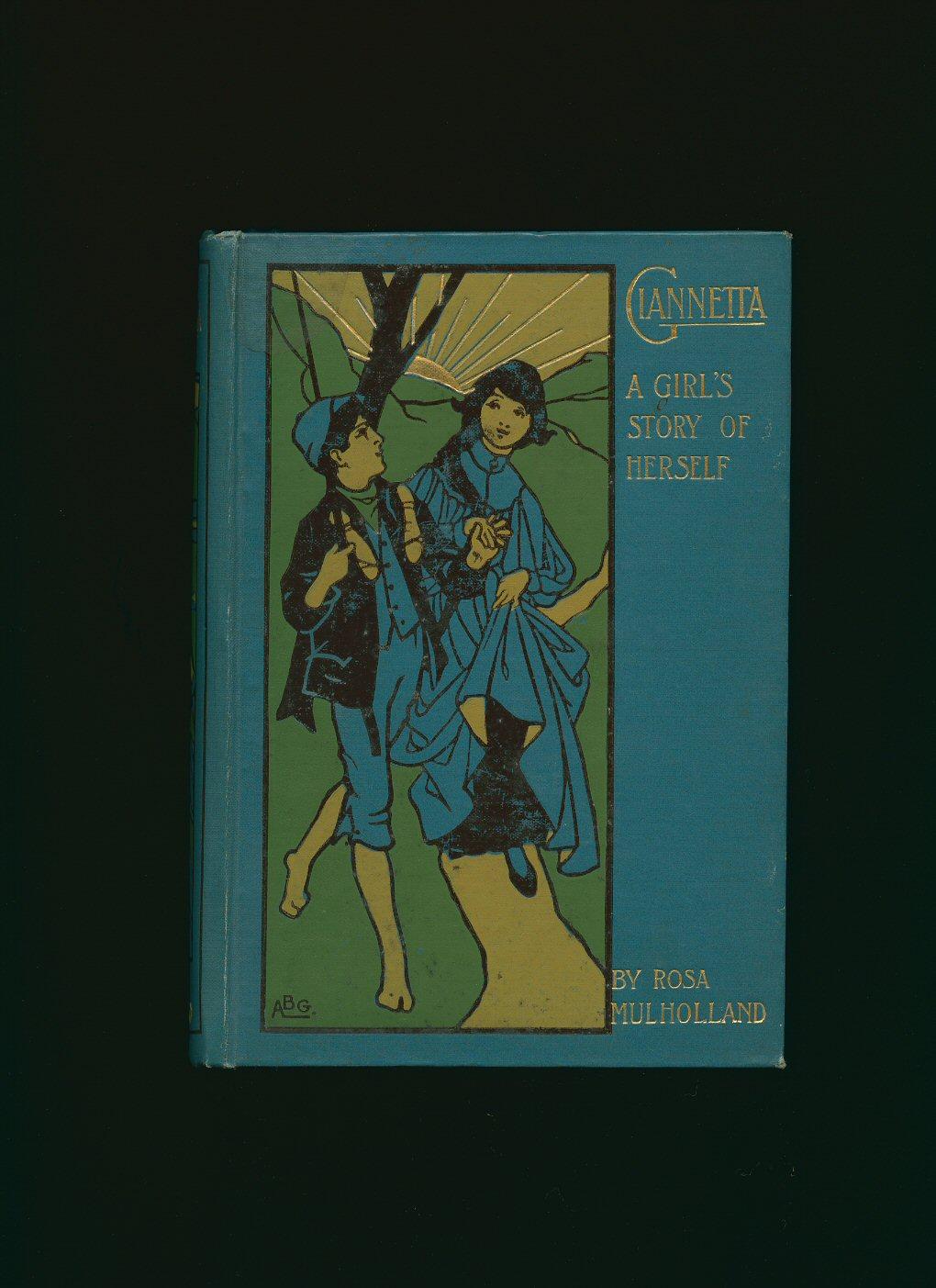
Another one I am hankering for, 1889,

I’m not sure looking this over that I have precisely found the sweet spot in her writing. I want to say that 1900 seems to be a high water mark, but Terry, Or, She Ought to Have Been a Boy is shortly into the 20th century and was less promising. (I think I have to be careful to avoid these books meant for children – not true of all authors but for me it may be for her.)

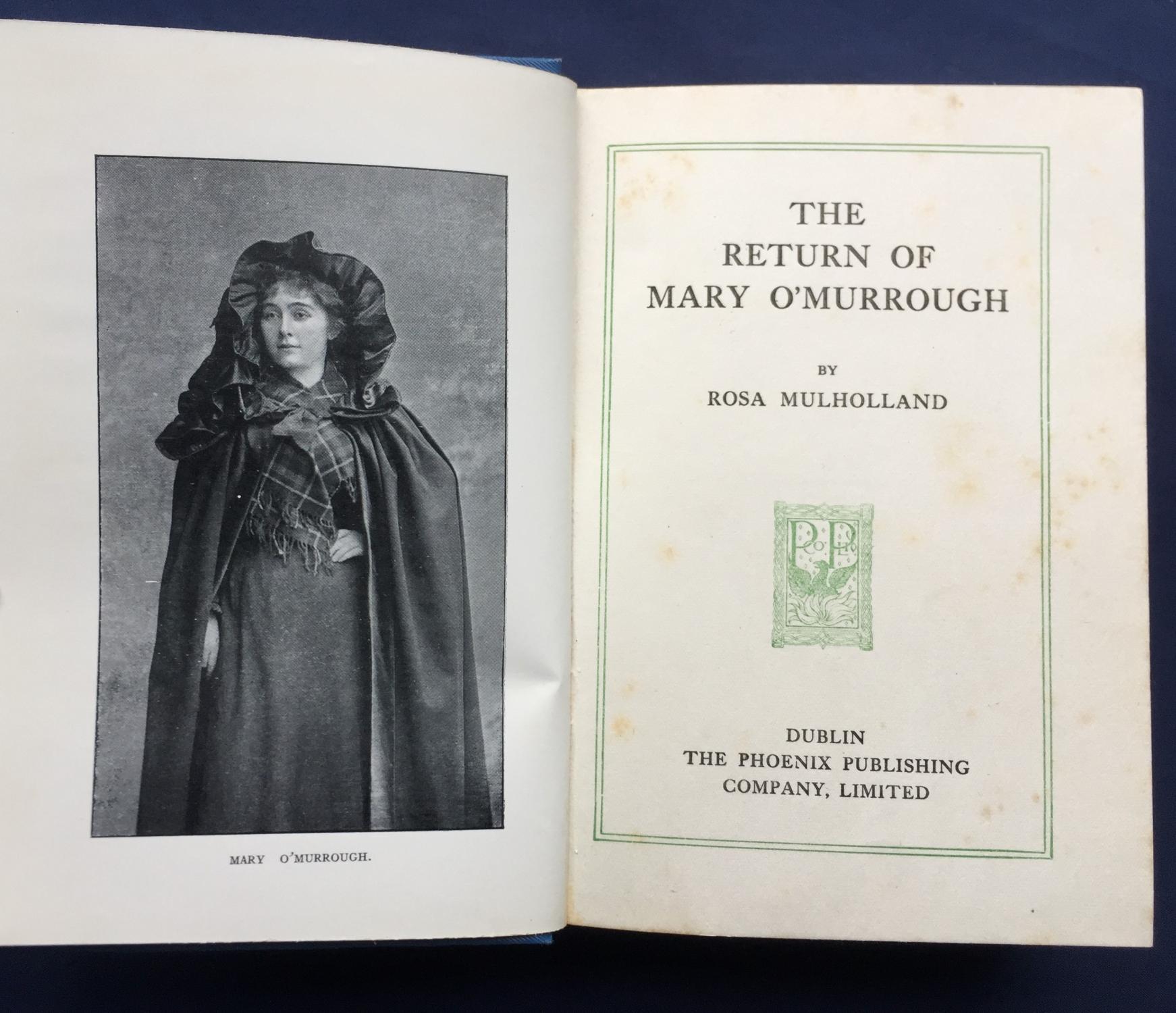
I have one more hardcover book in the house to read, Narcissa’s Ring, 1916. I have been acquiring them as they become available. They are more widely available in Britain but the postage to ship a book is so outrageous it puts most of them out of reach. Given what I wrote about in the earlier post and this one, a true sweet spot has not yet emerged.
Rosa Mulholland: Part One

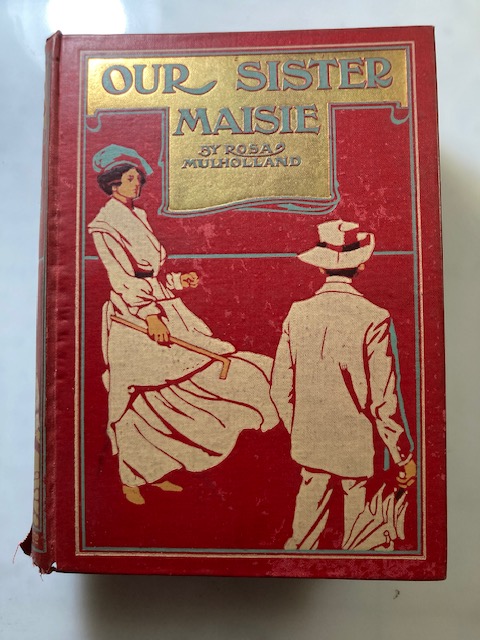
Pam’s Pictorama Post: If yesterday was devoted to a bit of what we’ve been watching here at Deitch Studio, today I will spend some time on what I have been reading. You may remember that as part of a much belated birthday celebration spent wandering around downtown with Kim, I purchased a rather beautifully bound volume by Rosa Mulholland with the intention of reading it. That volume, Our Sister Maisie, turned out to be an interesting sort of a point in her career to stumble onto and, written when she was 66 years old, it seems to have been one of her most popular books.

Volume I purchased as a belated birthday gift to myself in March at The Strand.

Her biography is interesting when considering her stories which deal a lot with the position of women in terms of money and livelihood at the time which she documents and considers. The daughter of a prominent doctor she came from a fairly well to do Irish family in Dublin. Other she first dabbled in painting (I have seen no evidence of it) she turned her hand to writing early and began trying to get published in her teens, including a novel at 15. One of the most interesting pieces of the tale is that early publication of her work caught the eye of an elderly Charles Dickens who not only encourage her but published her in one of his magazines and in a compilation with one of his own stories.

He bet on a good horse. She was very prolific with a list of upward of forty publications, mostly novels, to her credit. She wrote under at least three names I can find, Rosa Mulholland, Rosa Gilbert and very early on, Ruth Murray and seem to have published until a few years before her death and there was a healthy reprinting of her work which continues into the 1940’s. Gilbert is her married name – she married at the age of 50 to a well-known historian, Sir Thomas Gilbert, 12 years her senior. By marriage she therefore became Lady Gilbert.

If any of her writing was used for films I cannot find any evidence of it. I want to say that her books while very popular in Ireland and Great Britain they appear to have been less known here in the US. Really though the only evidence I have of that is that used contemporary copies of her books are mostly available in Britain.

Much like some of the other women authors I have written about previously (for starters, the adult novels of Francis Hodgson Burnett which can be found here, one about Mrs. George de Horne Vaizey here and an earlier one on Edna Ferber here) she is writing about the changing values and culture evolving around women’s emerging role in the late 19th and into the 20th century. Of the above mentioned authors, Francis Hodgson Burnett writes a bit about the other side of the Atlantic and especially the influence of the more forward Americans who visit there – generally very wealthy ones at that. Mrs. George de Horne Vaizey also writes about Britain but is poised a bit later.

A pretty if damaged volume for sale. I am waiting for a less expensive but equally beautiful volume.

Mulholland therefore is a bit unique in her entirely Irish perspective and generally a bit earlier than the women above. She recognizes that there is a problem where women’s only option for survival is the money their family could supply in the form of a life-long bit of capital to earn and be spent down and the marriage they make. Therefore nascent attempts to work among them are plot points – smart and ambitious women (much like herself we have to assume) are trying to break the mold either because they have been left with no money or are a simmering genius whose talent must find an outlet.

For all of that and knowing of her own life she can be a bit hard on these women – perhaps as society at the time was and it was the feeling of the day. I have read three of her books to date and in Our Sister Maisie there is a younger sister who yearns to be an architect – much like the young Mulholland she even has some of her designs used when she is teenager. Against all odds she makes it to architecture school and, although it is a bit unclear, drops out just before completion to marry her wealthy and wonderful heart’s desire.

I don’t have this one yet either but great title and nice opening page.

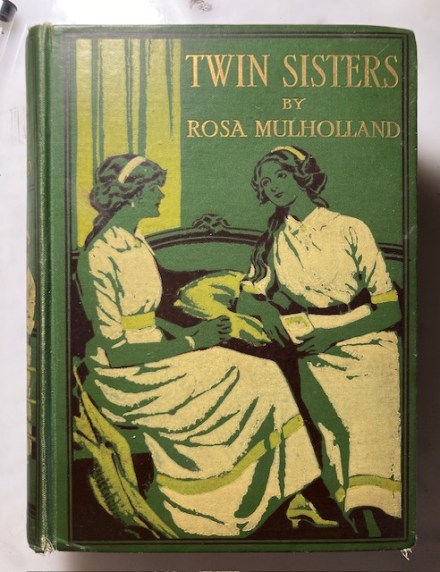
In a later volume, Twin Sisters, An Irish Tale published in 1913 she has a female character who, in charge of her late husband’s estate (it is thought of as her managing it for her son – as if she wasn’t also living off it in the meanwhile) invests aggressively in the stock market and makes but ultimately loses much of the fortune. She is criticized as having had no business trying to do the work of a man. But women like her are frequently left to their own devices and the heroine of the story arrives, along with her twin sister, in Britain from Spain as the wards of a family friend they never met. Penniless, the woman charitably agrees to help launch them into society and make agreeable marriages for them. Our girl Pipa isn’t having it though and takes work in an apple orchard in the country instead. Although she is roundly criticized for this, she is our heroine so needless to say she does the right thing – but of course she will end up with her best mate as well.

I’m also holding out for this illustrated version of this volume.

Mulholland’s books are a bit harder to track down than what I have enjoyed in recent years where there has been aplenty available online and in inexpensive used volumes. Rosa Muholland’s books tend to be beautifully bound, illustrated, volumes that are being sold at a premium because of that and despite the fact that there is not much demand to read them. Why more are not available electronically I cannot quite figure out. Perhaps she is just a bit early for for most people – or if the basis of those collections is based on American libraries and universities she may just not be in the right purview.

Clearly it would be a pity not to read this one in a beautiful illustrated volume like this one as well! Not in my collection – yet!

All this to say that while between the acquisition of physical volumes of her books, I grabbed one of her earlier works online and that was interesting and The Late Miss Hollingford was the story of hers, serialized in a magazine, that caught Dickens’s eye. Her descriptive powers were in greater force in her early writing, although her descriptions of the Irish country and seaside are also wonderful in Our Sister Maisie. The descriptions of the farm this young woman goes to live on are just cozy and great. (Yes, another orphaned girl-woman sent off to live with folks she hardly knows – this time her parents, who she barely knew, died of a fever in India leaving her a sufficient income although in reverse this time she is sent to live with people who don’t have money. The father was the perpetrator of a pyramid scheme and those seemed to be rampant at this time – I know the from the de Vaizey books among others!)

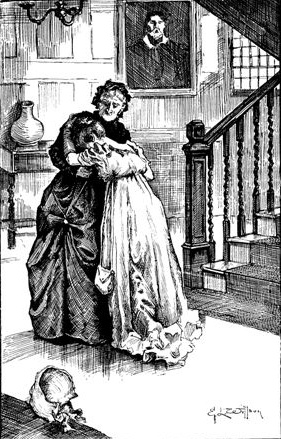
Illustration from the Late Miss Hollingford which I read electronically but with illustrations via Project Gutenberg.

I suspect there will be more to come on Ms. Mulholland and her writing as I am wading into the depths. I also suspect that Abe Books and others can expect to be seeing a whole lot of my pocket change in the near future. Stay tuned.

Belated Birthday Fare

Pam’s Pictorama Post: As those in the New York area know, it was a freakishly warm day here yesterday, topping out around 80 degrees. As a result the denizens of this metropolis poured onto the streets in wrinkled summer garb (or simply lack thereof) all white bellied and sleepy like a city of Rip Van Winkles. Kim and I entered the fray and spent the day hunting small Pam pleasures as is our program for my birthday.

A February birthday girl, this year I was bedeviled first by Kim’s Covid, followed by my own – and then a distressing string of funerals and memorials, plus one wedding! The MoCA comics festival thrown in too. All this to say, yesterday was our first day in a long time when we were left to our own devices.

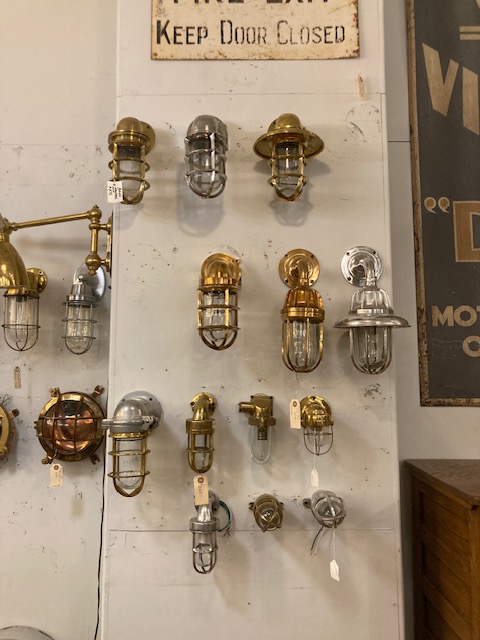
Old Good Things is chock-a-block full of antique fixtures and a lot of brass. My dad was a utter sucker for brass fixtures and I can only imagine he would have come home with one of these. My father’s daughter, I too was tempted…

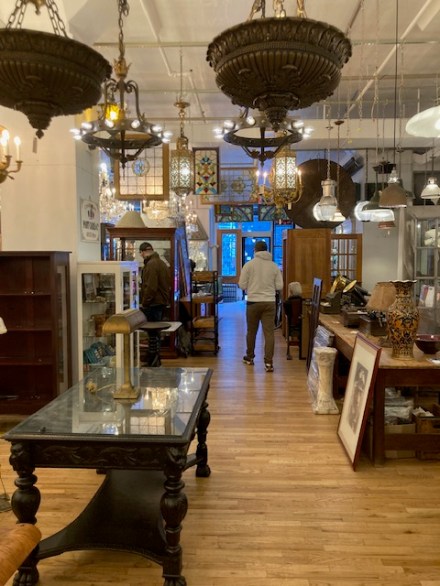
I started our itinerary with a stop at an antique and architectural salvage store, way over on the westside of midtown called Old Good Things which I have been curious about. (Their website can be found here.) I follow these folks on Instagram and while what they offer is generally just too large for my living situation but I have always wanted to visit the store. I do fantasize about replacing bathroom fixtures, maybe a fireplace mantel in NJ and light fixtures as well, and it sends me musing. There is much wonderful furniture, with an emphasis on wooden cabinets of drawers which is one of my own forms of kryptonite, hard to resist. Still, these are very large pieces for the most part and I live in small spaces.

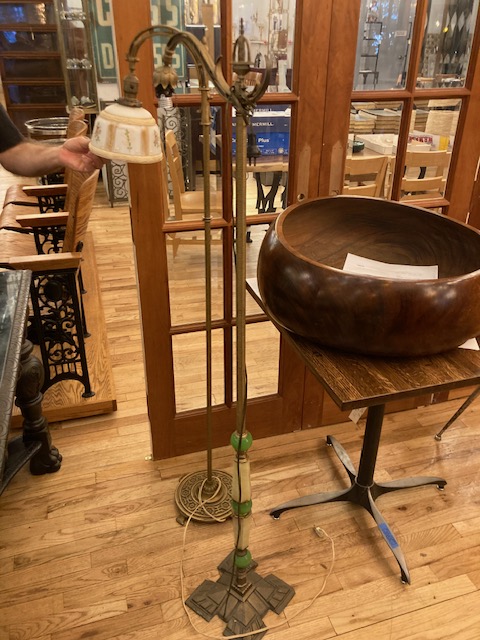
Two intriguing standing lamps that had just come into stock. They are being rewired so I have a minute to think about investing in them.

Notably there were a few rather comfy and wonderful leather arm chairs but all I could see were happy cat claws so I moved along. These two standing lamps which just came into stock and had yet to be rewired were of interest – we could use a standing lamp here in the New York apartment and the weird sort of jadeite on one interests me. They were pricey but I will consider them. A good standing lamp is hard to find.

Then we headed downtown for what I considered the main event – the Metropolitan Postcard Club show and sale. I have not been to one since before Covid when they used to take place on 57th Street at a rundown Howard Johnson’s hotel near 8th Avenue. It was then a much larger affair, easily 3-4 times the size of the group yesterday. However, this just meant I burrowed a bit deeper and a very patient Kim joined me in sorting through boxes of cat postcards, with a few of New Jersey thrown in for good luck.

It was held at a pleasant, small and essentially non-descript church in the West Village called the Church of the Village. About a dozen dealers had a large circle of tables and it was quiet enough that you could sit and patiently go through the labeled boxes. I flashed a picture of yesterday’s Felix card on a few dealers to see if they had ever had any go through their hands. One looked quite stunned and said no, the other gave me a knowing look and said he might have one at home. I gave him my card.

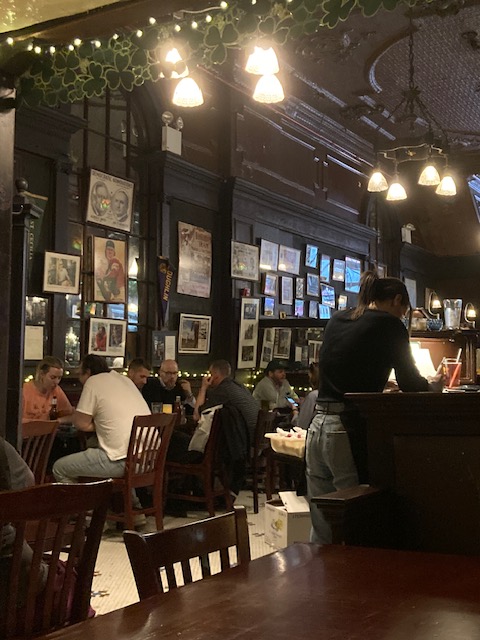
I left the show lighter in dollars but happily heavy in cards and I will commence a liberal dissemination of them here in the coming weeks. It was well passed lunchtime and our tummies called so we wandered over to the Old Town Bar on 18th Street. I had a craving for an old establishment and this fit the bill perfectly. We’d eaten upstairs not that long ago but for lunch were seated at a table in the back.

My view of the main room at lunch yesterday. I would like to be there when it is quiet enough to go around the room and read what is on all the walls.

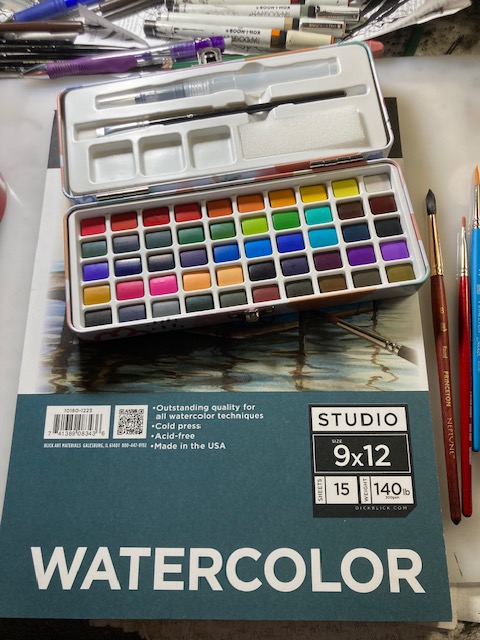
After lunch we made a quick trip to Blick so I could buy some watercolor brushes and paper. My friend Eileen (@EileenTravell) gave me a very lovely birthday gift of a nifty watercolor set for my birthday and I hope to commence playing with them soon.

Thank you again Eileen! I hope to make some use of these.

The next real stop of the day was The Strand bookstore. Our original thought was that we would just pop in to look in used fiction. (Kim looking for Dumas and I for someone named Carol Brink. We just saw a somewhat obscure Barbara Stanwyck 1953 film based on a Brink novel called Stopever. The films was renamed All I Desire, and directed by Douglas Sirk. It is masterful film making and visually stunning, like many of his films although this one in black and white and not the signature saturated color. A good TCM write up of the film, with spoilers, can be found here.) We came up empty handed on both scores but decided to head up to the Rare Book Room.

We’ll see if this acquisition is more than good looking on the outside.

Kim and I more or less nibble at the edges of the Rare Book Room. We aren’t interested in the signed first editions, but instead make our way to a few bookcases of more or less random old books. I have scored several items at this venue, including some that lead me further down the path of interesting authors or series. Despite the name, some of these volumes are very affordable.

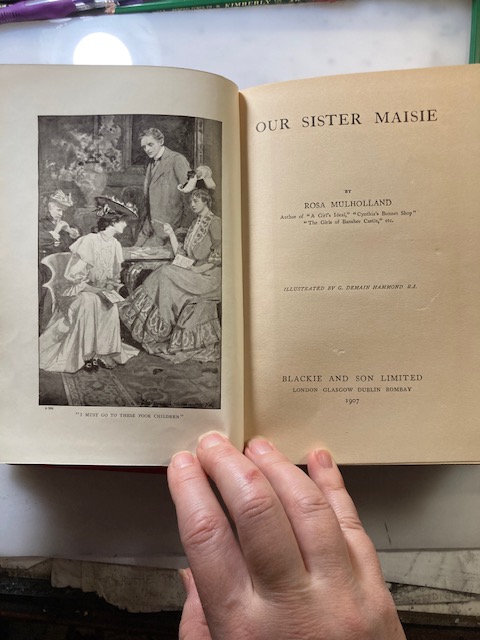
Very competent illustrations by someone named G. Demain Hammond R.I.

However, I did pay up a bit for the book I bought yesterday. Shown here, it is a very pretty looking, illustrated volume which helps its cause. It actually may not need any help. I looked up the author, Rosa Mulholland, and she appears to be quite interesting. She was an Irish writer, very prolific and also wrote under the name of Rosa Gilbert, her married name – aka Lady Gilbert. Rosa appears to have worked the side of the street of fiction I like so maybe more about her to come over time as well.

A frequent stop either to or from The Strand.

We wrapped up with a quick look in Alabaster Bookshop around the corner from The Strand. Still checking for Dumas and coming up empty handed. I like Alabaster although they focus more on recent books and art volumes and I feel like I haven’t bought anything there in a while. I always check their kids and juvenile books, but it is a somewhat diminished section. I always remember that had a charmingly grumpy calico cat I saw grow from kittenhood on there. Her ghost still wafts through and I miss her.

That was it, a wrap on another birthday, perhaps all the better for the wait this year.