How Kim Makes Comics: a Pictorama Perspective

Pam’s Pictorama Post: The cats are lined up and bent over sheets of Bristol Board, brushes clasped in paws, working hard with tiny pots of ink at the ready. They produce their sheets in an anthropomorphic ballet as they pass them in an assembly line, one to another. Kim keeps a weather eye on their progress while creating the art they are inking. While I, on the other hand, dance through the room in my vintage custom cat decorated dress, bringing treats and encouragement – while also the voice of reason and sometimes critique. Waldo lurks in the corners or out the window, wrecking occasional havoc. That is how folks might imagine life here at Deitch Studio.

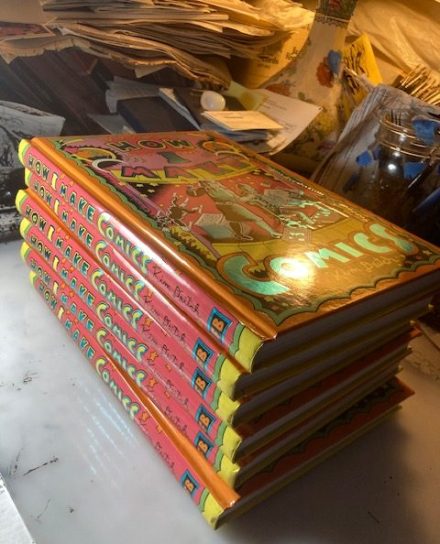
The reality is slightly different and Kim actually gives you a pretty fair sense of it in his latest book, How I Make Comics. (It is available now. You can snatch yours up here and here online or run to your local comic bookstore and demand a copy.) Our tiny one room apartment is depicted there, although much like when they advertised apartments for sale, it somehow looks slightly bigger and some of the piles exist but I am grateful it looks a bit neater. Cookie and Blackie wander through, but he has spared you my long chatty conversations with them.
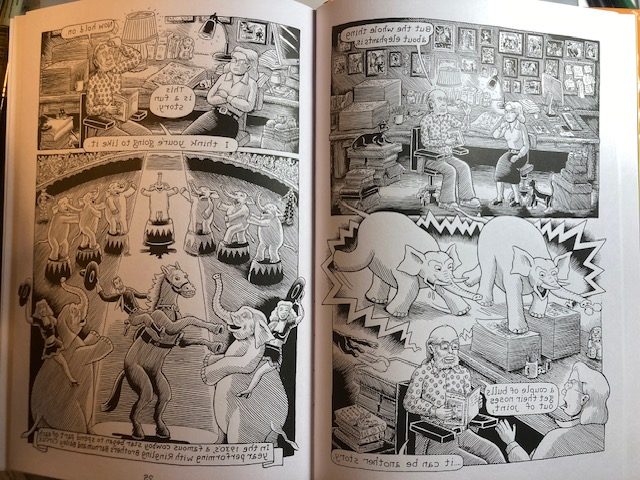
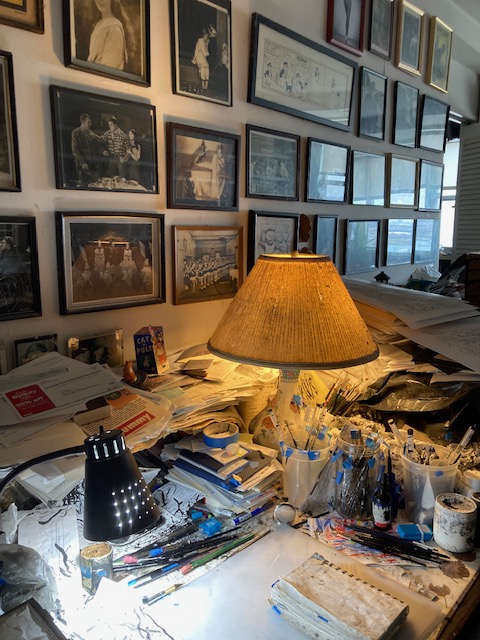
Kim’s workspace drawn in How I Make Comics.
…And a recent picture taken for an interview.

Yes! Today is the day for my spousal and admittedly very biased review of Kim’s new book, How I Make Comics. For anyone who missed my earlier also biased wifely review of Kim’s Reincarnation Stories back in 2019, it can be read here. (And a new edition of Reincarnation Stories in trade soft cover can be found for sale here or here.)

What Kim has captured, to my thrill and delight, at the core of this book – is the unending conversation which is the background of our lives, much of which is devoted to developing storylines. Sometimes these are just little spurts of story. Kim will tell me something and I’ll say, Ha, there’s a story there! and he might spin it out a bit or I will read a wild snippet from the morning New York Times aloud and wind us both up. Some stick, most don’t. (As noted in the book, those that qualify earn a place on a bit of paper on his desk under the plexiglass he draws on.) I am the only one on social media and share the occasional choice tidbit – a cat that brings a stone to a fish store daily in exchange for a treat or the like.
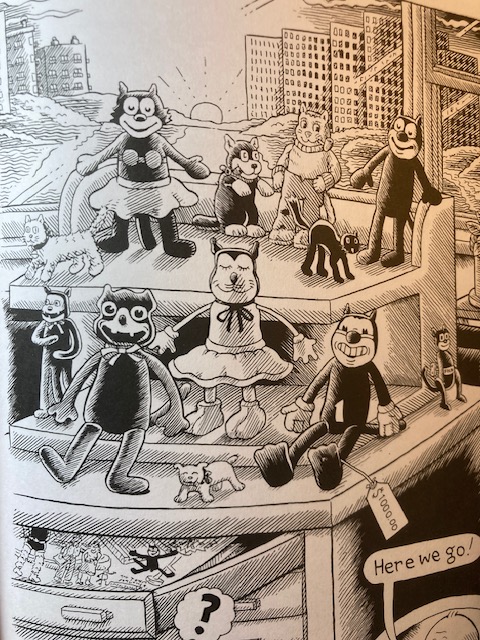
I love it when Kim creates new toys amongst my real ones. Detail from page 33 of How I Make Comics.

Meanwhile, for those of you who like to see the Pam Butler character you will not be cheated. I sit here with my coffee, in my pajamas (Pictorama folks know I wrote about my favorite pair of pj’s in elephant toile here a few years ago) at my laptop, often on a weekend morning, while Kim sits next to me (really next to me, I squeeze past him each morning – while inking no less, talk about ballet) to get more coffee. He’s working and there is a stream of consciousness discussion between us. His desk complete with photos over his workspace is lovingly depicted in several pages – recognize any of those from prior Pictorama posts?

I’m not saying that it is only in the morning that we chat extensively, but it is the most time we have together during the week when we aren’t eating dinner and exhaustedly watching our current passion on television. (While old films continue to play a major role in our watching, we have recently worked our way through a Japanese serial, Jin, from 2011, followed by the Canadian series, Anne With an E, ’17 and now just catching up with Breaking Bad, ’08. As you can see we missed the early to mid-20 teens in television and are making up for it now.) Depicted in the book is our Covid/post Covid configuration of the apartment and much of How I Make Comics has at least its genesis in those years. (There is one sole visual reference to mask wearing on pages 66 and 67 – a true passage of that story.)

It is funny for me (and somewhat enlightening) to see the comic book version of myself with my words coming out of her mouth. My role as critic and top rejector of not-quite-up-to-snuff stories is played out in this book. Pam Butler sounds a bit hard at times, although frankly I recognize precisely what she says as my very own words or ones much like them so no argument. On the other hand, how could I reject a story about a 40-year-old cat in Harlem? Although I guess I don’t really and Kim plays it out for us, telling in true rollicking Deitch style.
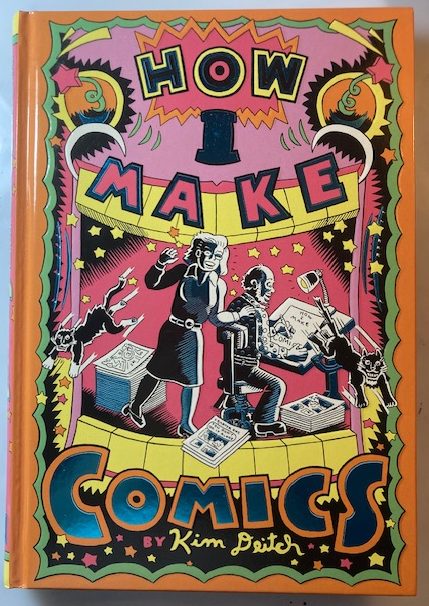
To step back and have a real fan girl moment, it is a just thrill to have this book in my hands. We both love its shiny, metallic cover which portrays us in a sort of grinning, gaping cartoon grin, cats flying off, Kim working hard at his table with me over this shoulder. Pages are piling up around him – that’s real too.

Last night Kim had a signing at Desert Island in Brooklyn and Gabe Fowler had thoughtfully stocked many of Kim’s earlier books and others were brought in by people for signing. It was a glorious bunch of Deitch to sort through – Beyond the Pale (my own square one first Deitch book purchase about a year before meeting him); Smilin’ Ed; even The Amazing, Enlightening and Absolutely True Adventures of Katherine Whaley (arguably Kim’s favorite book of his); even Hollywoodland, and the equally allusive Shadowland, which might be the best size and printing ever of one of Kim’s books and sold out so quickly that they are hard to find. Having said that the work is well represented in this new volume with the space needed to investigate the tiny details in the images. It was a mini-career retrospective which I pawed through with delight while he was signing.

Fantagraphics has thoughtfully brought out a great trade paper edition of Reincarnation Stories at the same time and I admit with both on the table I felt like a mom who can’t decide between her children who are both beloved. In many ways though, How I Make Comics is a logical heir to Reincarnation Stories and even has a reincarnation tale told within. I really like the physical design of the trade paper volume. Seems to me it will be a pleasure to read that way.
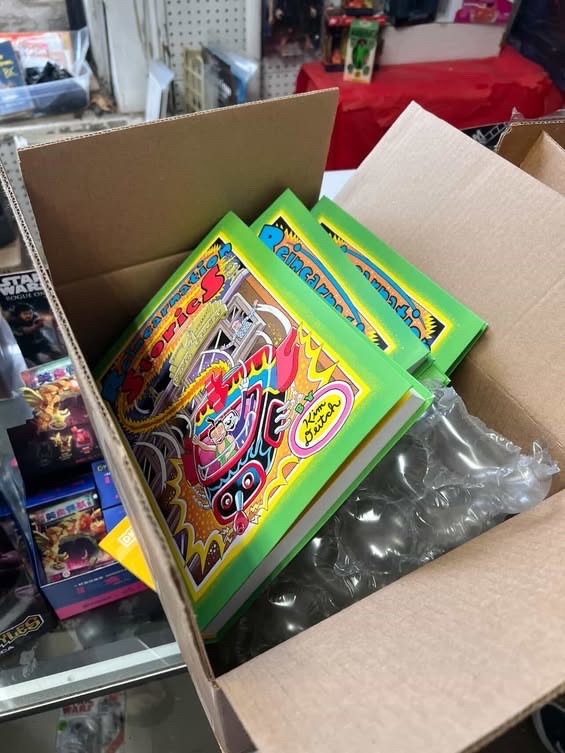
Copies of the new softcover edition of Reincarnation stories showed up here the other day too!

It is a special thrill for me to see one of my actual storylines developed in How I Make Comics, Rat-Haven. It has been given a liberal Deitchien touch, but the original bones for it were, as depicted, from me – a story that popped into my head full-blown one morning on the way to work. Meanwhile of course there are liberal amounts of performing elephants, romance, retribution, cat people and other Kim Deitch essentials teeming throughout this book. A pro tip: look at the front and especially end papers carefully and you will get a bit of a story postscript.
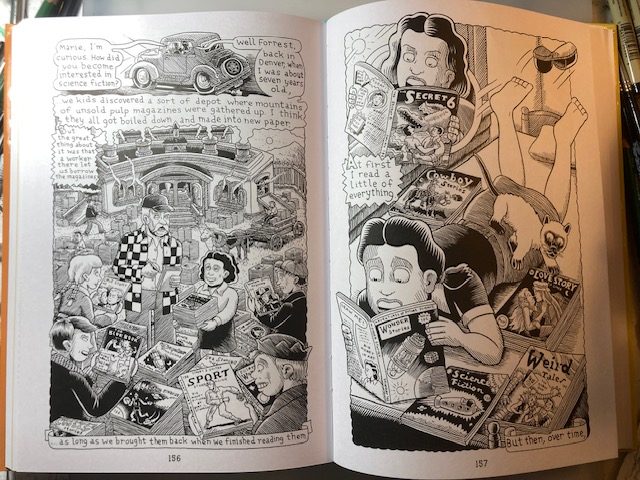
A young Marie Deitch reveling in science fiction magazines.

Lastly, I am compelled to share that my favorite story in this book is, The Two Maries. There are stories of his that I have gently rooted for Kim to tell over time, and this is one of them which I am so glad to see executed. To me it is the perfect blend of things (real and might have been) and the visuals of Kim’s mom, Marie, and her science fiction reading addiction is one of the highlights of this volume. It kicks off the sort of appendix section at the back of the book – these appendixes are sort of like the kitchen at the party where everyone turns out to be hanging out – savoring some of the best bits for last.

So that readers is my heavily biased review of Kim’s new book. A prouder wife does not exist than Mrs. Pictorama Deitch today! I say, enjoy!
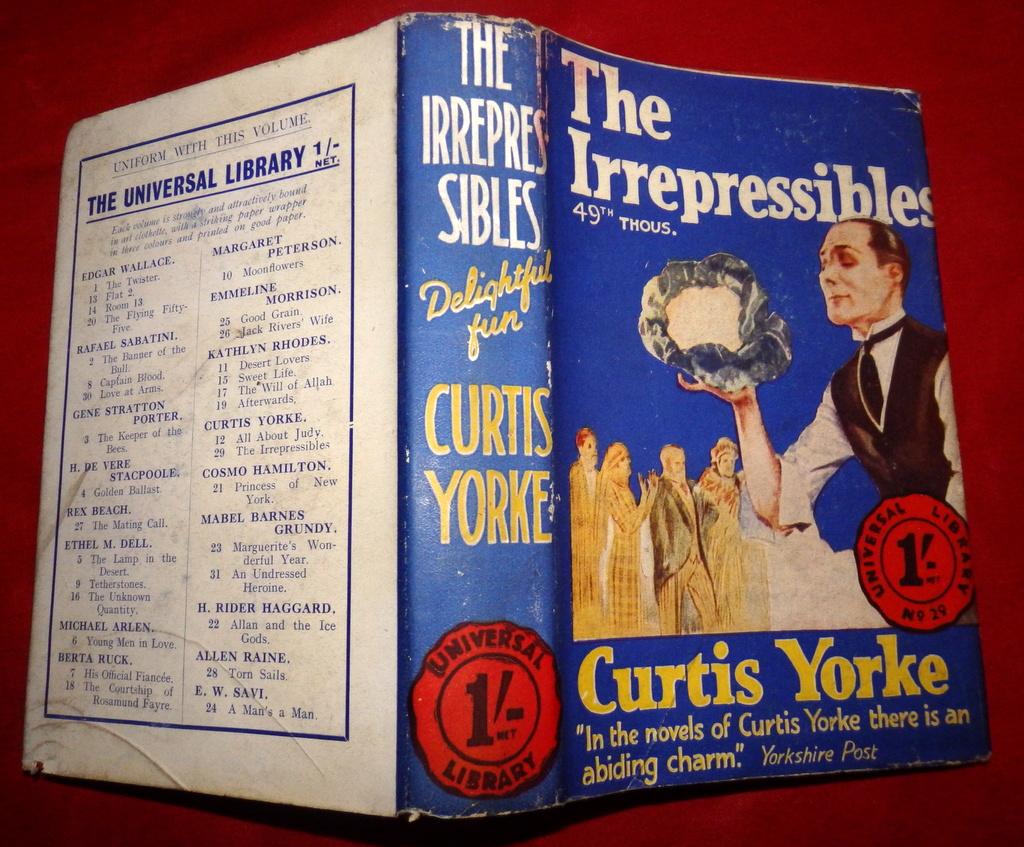
More Curtis Yorke

Pam’s Pictorama Post: It is another book day here at Pictorama. I have continued to digest Curtis Yorke novels at a rapid pace, even as I figure out how much I like her and where I think she fits in my pantheon of women writers of the late 19th and early 20th century.

Back in March I posted my first salvo having read a clutch of her books, mostly in the sort of juvenile, young adult genre. (You can read that post here.) Curtis Yorke is of course her nom de plum and her aka is Susan Rowley Richmond Lee – a whole lot of name by any standard. Fair warning that toward the end of this post I write a lot of detail about plots and if you have wandered over from Goodreads, fair warning that there are many spoilers down there!

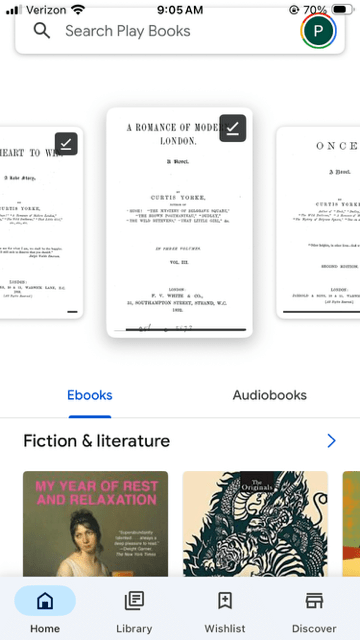
I will say upfront that one thing I was wrong about was the availability of her physical books. They are available to some extent even in this country, unlike my beloved Rosa Mulholland whose physical books are largely sold only in the UK and cost a small fortune to ship across the ocean these days. However, perhaps more importantly, they are surprisingly available online for free via Google Play Books. It is this deep vein I have been mining and thus have read a lot of the more adult novels recently. An alert to future readers however, these books were put online by copying the actual pages from books and therefore the print (on my phone for example) is quite small and I have had to read them all on my iPad. (Although you can make the page bigger you have to do it for each page which is annoying – there is no function to just increase the size overall.)

By way of reminder, we have virtually no autobiography on her except that she was born in 1854 in Scotland and died in 1930. She was educated in Glasgow, married and lived in Kensington and published some fifty books. I can only imagine that she was quite popular in her day and would think at some point her identity was known, the prejudice against women writers waning by the 1920’s, and that someone must have written a magazine article or two about her. If true that work remains to be done.

However, I do feel compelled to say that in some ways she compares unfavorably for example Rosa Mulholland who is a contemporary and sort of an Irish kissing cousin to her Scottish roots. While RM wears her Irish identity on her sleeve, Yorke never refers in particular to Scotland and much of her work takes place in London or the surrounding areas. I say she compares unfavorably because Rosa Mulholland avidly conceived and concocted her intricate plots, executing them and sewing up her many planted points as she went on over hundreds of pages. (Some of my posts and odes to Rosa Mulholland can be found here and here.) I would have to say she is also a lesser light and even a harder comparison to make to someone like Frances Hodgeson Burnett and her adult novels. (Happy hours spent reading those which I was recently reminded of – some posts can be read here and here just for starters.)

Saw this late one available online. Might need to grab it up!

I feel though that Yorke may have been the sort of writer who, with perhaps a broad over-arching outline, just sat down each day and wrote with the narrative going wherever it did. (Kim says this is how Dickens wrote as well, some do I guess.) Fortunes found and lost and found again – romances found and torn asunder. I assume these were probably originally published in pieces although the chapters don’t necessarily fall into the sort of cliff hangers that come of that.

In one of her longer single volume novels Once! (published 1892) she has at the heart of the story (major spoiler here, just a warning here again) an overarching moral message about the male protagonist who has made a bad marriage with a women who (in addition to being a lousy mother), becomes drug addicted; is in love with another man and has, it turns out, only married him for his money – which of course in the way of things he will lose before regaining at the end. Meanwhile, he has taken in his young cousin who has lost her father and has no income. The cousin has a crush on him but when, over time he falls in love with her, she is nothing short of horrified – even once the wife is out of the picture and he reveals it to her. While I think we can all agree none of this is exactly model behavior, Yorke really crushes him for this. (And of course none of that is about being cousins – it is acknowledged that this is done all the time – although it might have been the issue for you or I.) It was a rare time when I just felt somehow out of sync with the sort of accepted behavior of the period. It lacked nuance for me somehow.

Many of these are published and available as reprints although as stated, there is a wealth of them available for free online.

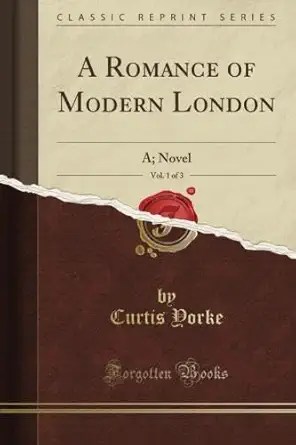
More recently I finished a three-volume opus titled, A Romance of Modern London. (Also published 1892 or perhaps volume one was?) These books chase through a myriad of now you see it, now you don’t wealth and general fortune for the characters. It starts very compellingly with two orphaned children, a boy and a girl, who through starvation, illness and somewhat extraordinary misfortune somehow manage to stay together after the death of their mother – father was long gone. She is then snatched up by some long lost grandparents (ah! they weren’t really brother and sister) who have fallen into a fortune but are by all accounts a bit, shall we say, rough and ready. The boy continues to suffer terrible poverty and adversity until he finds fame and fortune as an author – just as the grandparents lose their money.

Strangely in this case the boy and the girl (now grown and in love with each other but not suspecting that their newfound affection is returned) rarely actually lose touch with each other – he marries her good friend (makes her miserable as he doesn’t love her) while men keep asking her to marry them and she will not, even if it means she is cast out on the street as of course an underlying theme is always the dependance of women on men to house and support them – be they fathers or husbands. You are mostly out of luck if you don’t have one of those. I liked this book but some of the tributaries seemed a bit arbitrary, especially toward the end. On a final note about the end – weirdly, although happily married at the end and in the final pages she introduces their sadness that they have not had a child of their own. Was she thinking of a volume four that was never written?

Finally in His Heart to Win (I love that title – so fitting to the time and type of story! 1894) we have a pretty delightful story of a man who marries a young, sheltered girl, raised by her aunts, because he feels sorry for her. They are frank with each other in that it is sort of a marriage of convenience (he is older, widowed, has children) although Molly falls in love with him rather quickly, although keeps this to herself – as does he when he (albeit more slowly) falls in love with her – as if actually loving each other was somehow breaking their bargain. They chase around this – fortunes lost and found too I believe – until ultimately they figure that thing out and live happily thereafter.

I do wish I knew more about the reception for her writing and the life of the author in general. However, as above it remains utterly undocumented as far as I can tell, or at least via a surface sort of research online. For now I am working my way through the wealth of novels (and some short stories) available online before I start scooping up the physical books. For those of you who are following this, there is likely more to come here on Pictorama.

More Autumn in New York: Catching Up

Pam’s Pictorama Post: Yesterday I devoted my post to writing about work and specifically about the dog event fiesta that September has become. My job, which is on a fiscal year ending on December 31 (I do not recommend this), will increase in volume, stress and energy required, continuously increasing through our gala in early December and on through the last week of the calendar year until I fall over on New Year’s Day. However, returning from our summer weeks in New Jersey is more than adjusting to increasing work, it is the adjustment back into our lives here at the official location of Deitch Studio – a physically much smaller epicenter of our operation.

Cookie and Blackie are generally very relieved that we have once again returned them to their private abode here. While there is novelty with the twice yearly trips to the shore house, their discovery that other cats exist in the universe aside from them (not a welcome thought), they prefer the one room here where they rule unimpeded.

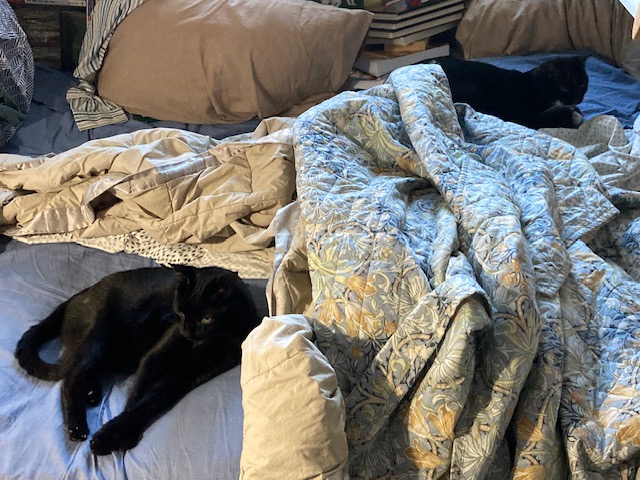
Blackie and Cookie in an uneasy bed truce yesterday.

For those readers who remember that Blackie was limping before we left (resulting in an emergency trip to work on Saturday) his limp has improved but not gone away. The trickiest jumps are a bit beyond him (the pedestal sink in the bathroom to his chagrin – he needs us to lift him in for a drink), but his jumping gradually improved in New Jersey. He and Cookie are 14 this year and perhaps this is a bit of age showing. If he didn’t hate the vet so I would take him to my friends in rehab and let them have a look or perhaps do some acupuncture on it.

Meanwhile, when we return they spend the first weeks hating each other like they never saw the other before. Blackie wasn’t allowing Cookie on the bed which annoyed her but she was so happy to return to her perch on the top of the couch by the windows she ignored it until it blew over in the last day or so.

I probably bought it because it is pretty but looking forward to reading it soon too.

Books! Despite leaving a pile in New Jersey, many seem to have found their way back here too. As much as I have embraced reading electronically where I can (all new novels and what I can find on my list for 19th and early 20th century writers) I must say somehow a stack of books has built up next to the bed. They are mostly one off old novels and volumes of short stories from the 1910’s. If I find any new leads into interesting writers I will let you know. The most recent Rosa Mulholland book acquisitions reside there, while several earlier volumes remained in New Jersey. (Earlier posts on her novels can be found here, here and here.)

I am enjoying a book of short stories, Nancy’s Country Christmas, 1904, by someone named Eleanor Holt which I purchased on one of our trips to the Antiques Annex. Unfortunately this volume seems to be her only published effort aside from a magazine serialization or two and the internet has yielded little. I would read more of her if there was more to read.

Very few of the books I buy still have their covers!

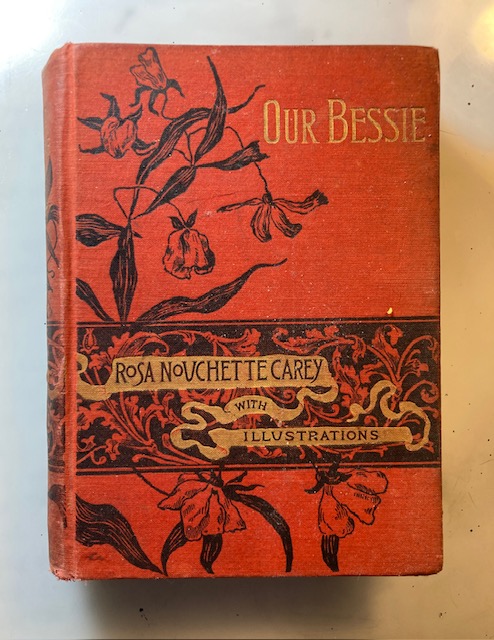
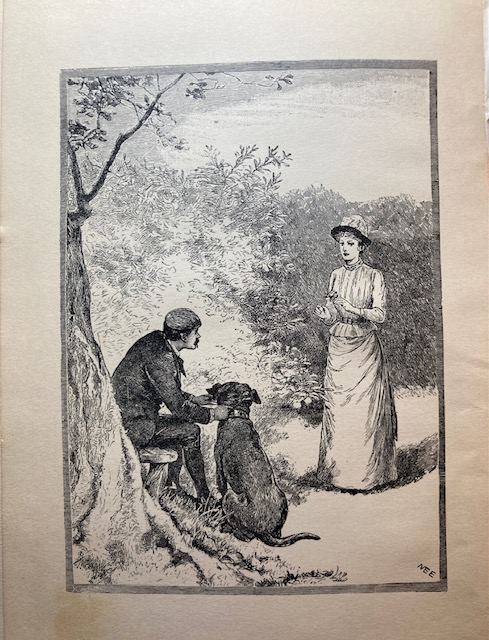
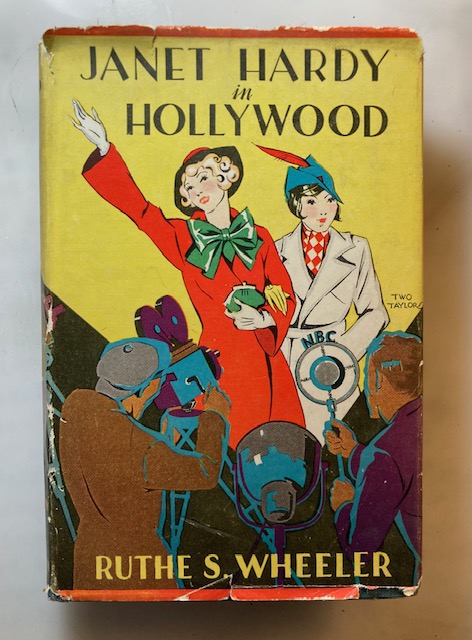
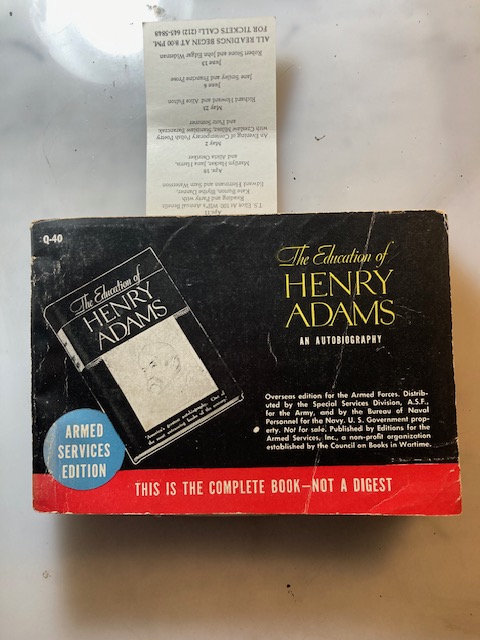
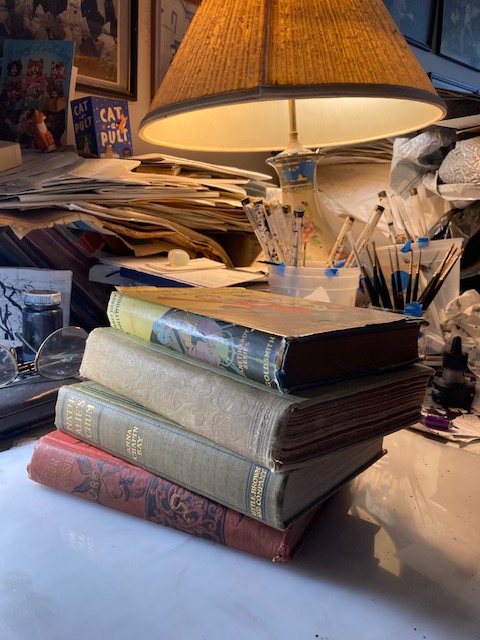
In the pile are: Natalie’s Chum by Anna Chapin Ray, 1905; Our Bessie by Rosa Nouchette Cary (nicely illustrated) with no publication date but a note on the flyleaf of 1896; and a later addition of Janet Hardy in Hollywood by Ruth Wheeler, a series book from 1935. To his credit I think Kim is reading his way through things largely purchased and left to pick back up in New York. His nose has been buried in The Education of Henry Adams for a while now since we got back – in an interesting horizontal paperback form designed to distribute to GI’s. He read reprints of the Superman saga during some of his vacation in New Jersey but luckily for our limited space, was able to leave them at the house there.

Kim’s reading.

I am a rather voracious reader when I get going and I have read a number of contemporary novels recently as well. I generally review them very briefly on Goodreads if you ever wonder what I am reading when I get into the 21st century. I am partial to books about time travel and for example highly recommend The Ministry of Time (here) and, slightly different, The Life Impossible (and here). I am a fast reader and the books pile up so I am glad they are largely electronic. Some are so splendid though I do miss having physical copies. I also miss the ability to hand my copy of an excellent book over to a friend.

Stack of books among those next to the bed right now.

Aside from digesting stuff and somehow sorting it into the apartment, there is so much to do as there is for all of us in this back-to-school time of year. I am struggling through the last of the paperwork for my mother’s estate (having saved the worst for last I am afraid; the transfer of retirement accounts is ferocious), the apartment here needs attention (plumber anyone? I can’t seem to get a call back and our toilet needs to be replaced), and soon the weather will inform me it is time to turn the closets over and a long delayed need to weed through them. I have made two fall clothing purchases and both are brown which is different for me – we’ll see how that works out. I will say we have very limited closet space and it is that moment when summer and fall clothes are cheek to jowl. My list for what needs doing is long!

Adjusting to our somewhat miniscule kitchen and away from my garden means a different kind of cooking – more just assembling than cooking really. It took a week or two but I seem to have reacquired the skill set. Kim and I have remembered the sort of dance required for both of us to be in there – let alone when the cats want to be with us! However, soup time is upon us and I am mentally gearing up to schedule in my weekly soup making. (Recipes for soups can be found in prior posts here and here.)

THE PORDENONE SILENT FILM FESTIVAL 2025 – 44TH EDITION: SPECIAL EVENTS AND RETROSPECTIVES

The super charged energy of fall will help – street festivals, dates to see friends, new exhibitions. Even for us early film fans there are options – a favorite, the Perdenone Silent Film Festival, is the first week in October and broadcast online with a subscription. (Information about the festival can be found here.) Next weekend I travel back to New Jersey for some appointments there. Mum season will have begun (I like a good couple of mums on the front steps – can’t compete with Park Avenue shown above though) and I will start to turn my thoughts to getting the garden ready for winter and the eventual holiday season there.

This ended up being longer than planned so thank you if you stayed with me to the end! Also a shout out to all of you as Pictorama crossed the 500 member line last week. Thank you!

Narcissa’s Ring: More Mulholland

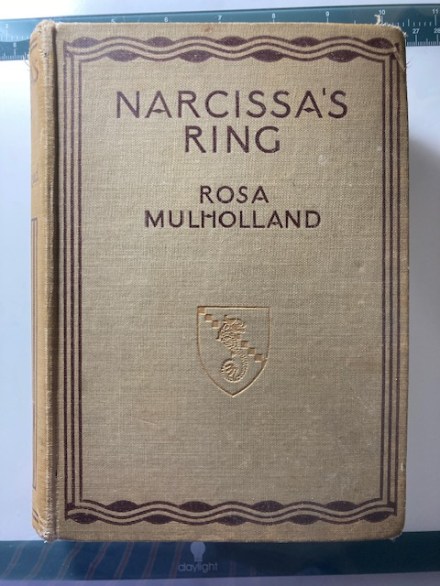
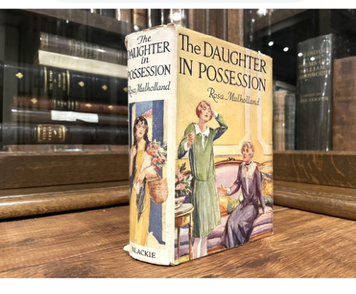
Pam’s Pictorama Post: I did not plan to post about Rosa Mulholland so soon on the heels of my most recent post (found here if you missed it just last week and the first one about her books here), where I zipped through a number of her works, mostly early, that I had read. However, Narcissa’s Ring, was a recent acquisition and a later work which kind of knocked me off my chair. As it happens, I was also lucky to find an internet site with a number of her books – including The Daughter in Possession: The Story of a Great Temptation. Both of these interesting works were published originally in 1915 and’16 respectively and they are worth note and comment while they remain fresh in my mind.

Before I get to them, a heads up about where I found The Daughter in Possession which I had not even seen copies or mention of for sale or otherwise. A site I have used occasionally in the past called Internet Archive (find it here) turns out to have a number of these hard to find volumes available for reading online. The did not come up in a general search for her books initially and it wasn’t until I thought to look there that I found them. This is very good news!

The somewhat bad news is that it is not the easiest site to read a long book on – I have had trouble saving them to my “account” although perhaps it is just most easily done on a computer rather than a phone or iPad. I am still working that out. Actual volumes are scanned for every page which is a charming way to read them – inscriptions and all in some cases. It also means if the volume was illustrated (which these virtually all were) you get those too. I am thrilled to be able to offer a place where some of these are available online, not to mention for free.

As far as I can tell, the Internet Archive exists out of California and I have not attempted to tap it for the many, many other categories it lists (everything from television shows to Russian literature). Of course I am curious about film and assume that, like the books, the films archived there may not show up in more general internet searches although may for specific books. I will need to send them a contribution as they have done great work in making some really obscure volumes available.

I had not in fact had I heard of Narcissa’s Ring either until I stumbled across a copy on eBay for sale here in the US. (I search for new ones online on a regular basis and eBay seems to pop for one periodically. The shipping from the UK where many of these reside makes the cost untenable.) It is the real find. In 1916 Mulholland was 71 years old and from reading this she may have in a sense been at the height of her prowess as a writer. While the style remains the same and some of her favorite tropes (romance, class divisions, astronomy) remain intact she goes for a full on sort of mystery in this now favorite novel.

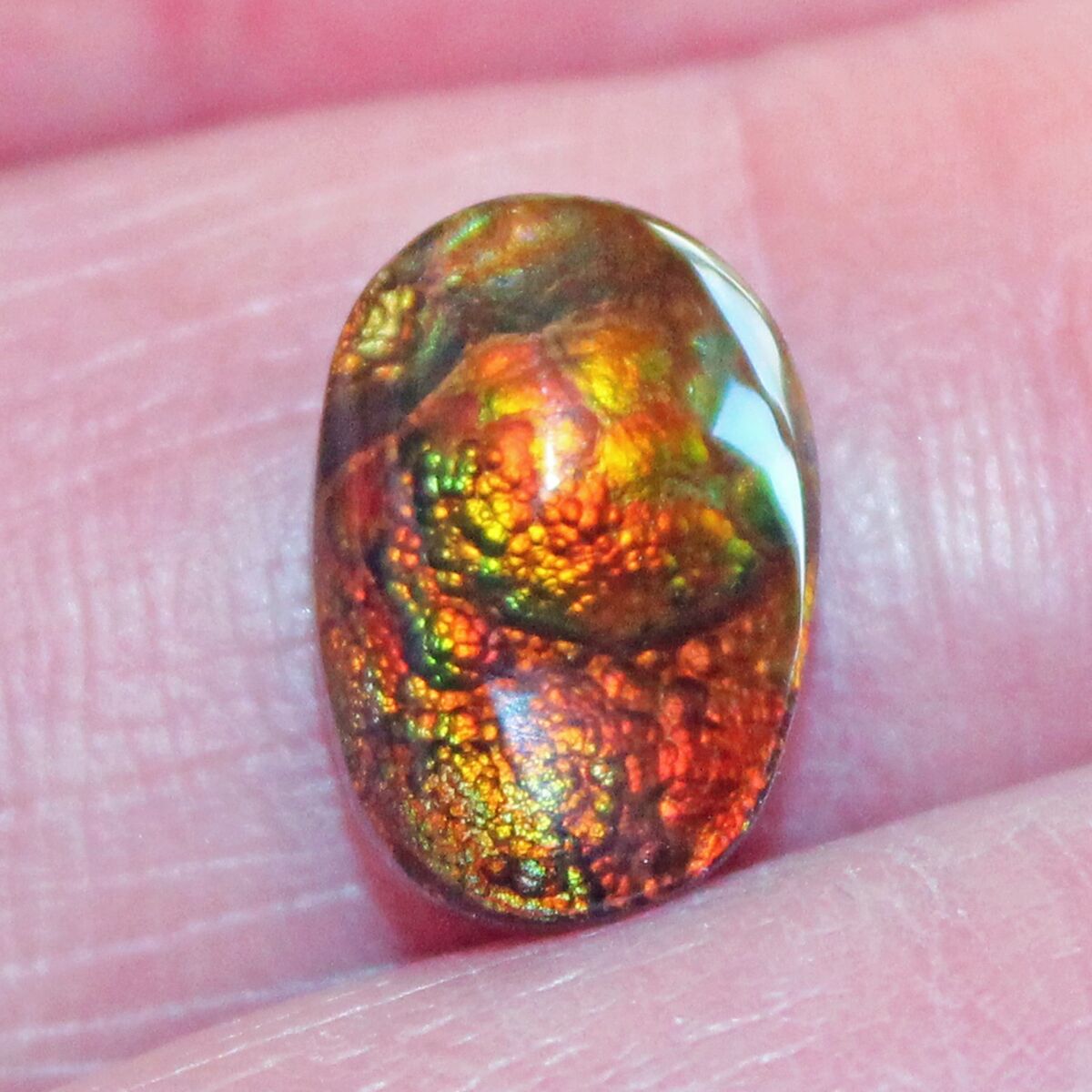
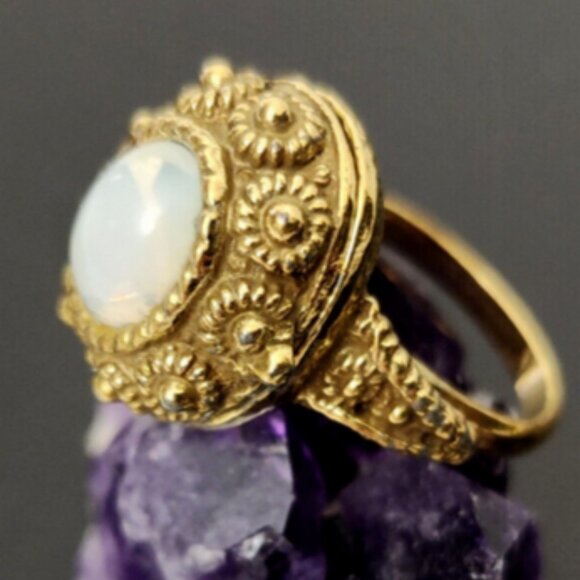
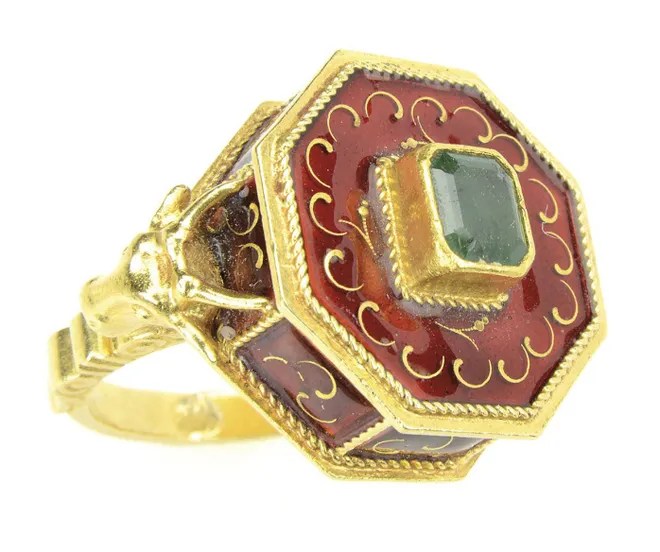
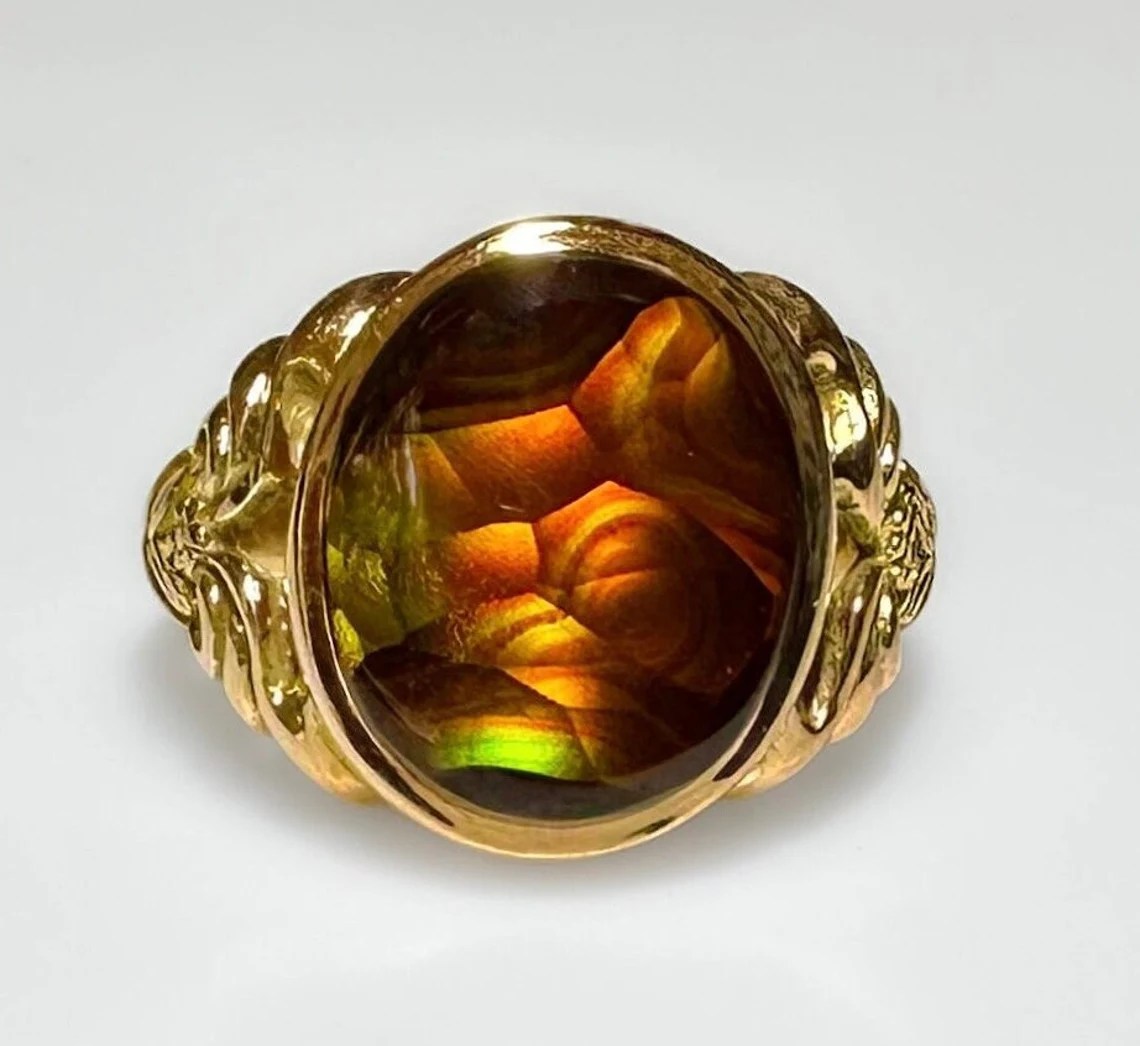
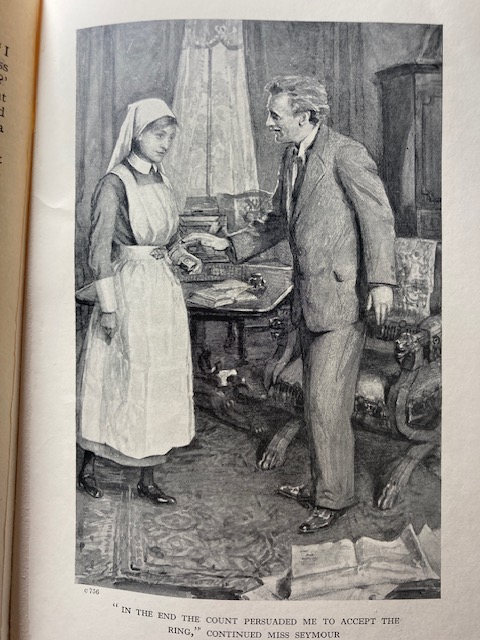
As the story opens we find a young Russian teen with a penchant for chemistry in London, before long he is shifted to her favored locale of Ireland, but not for long as he is chasing clues to rescue his father from a life sentence for murder in Moscow. The search leads him to a certain perfume found in an antique ring – the sort which might have also stored poison but instead house a bit of sponge or other substance scent would be added to and worn. The scent in the ring never dissipates. It has a cabochon of glowing red stone on it – one that takes on an almost supernatural glow in certain lights. (Two stones to engage your imagination above.)

Mulholland leads us on a most wonderful chase through Britain, a sojourn in Egypt and ultimately the Moscow of the day. Because Mulholland is writing about these places as they are being experienced at the dawn of the 20th century there is a more than usual time capsule quality to her record of what these places were like at the time – not so much with her usual eye to recording what she knows may soon drift away in her native Ireland, but with more of a sense of the here and now in these places.

This slightly cheesy version kept coming up in my searches. The stone is really beyond the beyond!

I wouldn’t dream of spoiling the intricate plot but am here to say that it is a corker and I would have to put it at the top of my list of her books!

It also left me wandering the internet looking at these rings – presumably there was one in particular which must have inspired her. The concept goes way back to the Middle Ages and all sorts of examples still abound. As for glowing fire stones there are many – from fire opals exotic agates.

Immediately on the heels of Narcissa’s Ring I was able to hop back a year for The Daughter in Possession: The Story of a Great Temptation. (It’s a bit of a title, right?) This is an interesting lead into Narcissa’s Ring if you are considering her oeuvre as a whole because there is a developing sense of mystery and plot in this novel which is a prelude to the other.

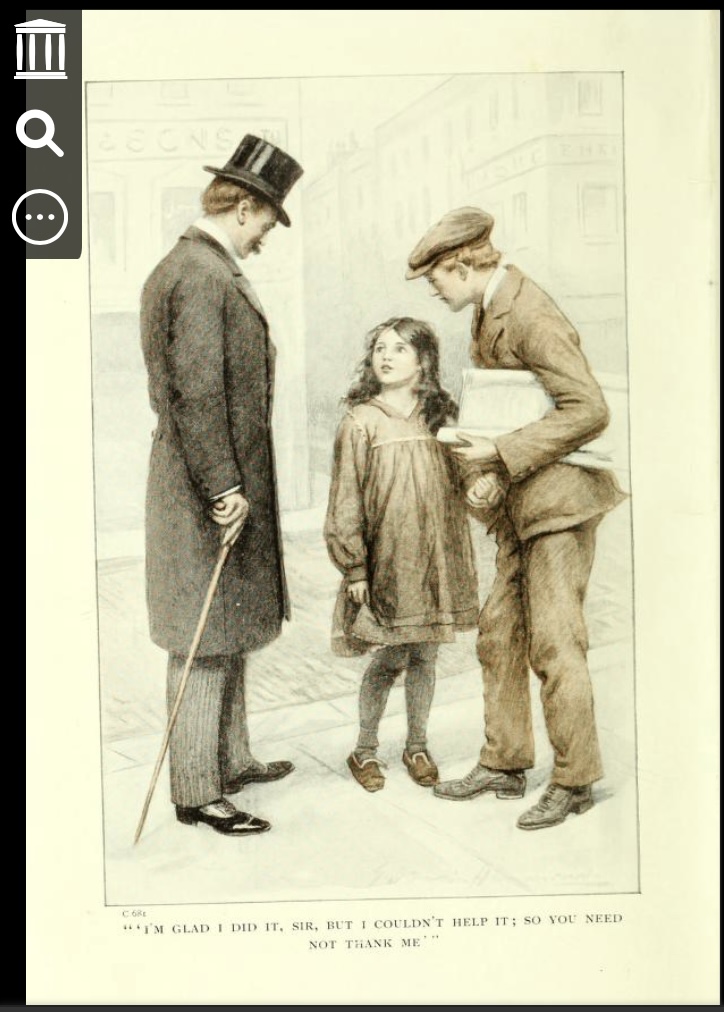
Illustration from the online version of The Daughter in Possession.

The Daughter starts off with a favorite baby rescued after shipwreck set up (see Marcella Grace for another example) but turns into a multi-faceted plot following several lives as they set off together in one place and diverge wildly before all coming back. Like Narcissa’s Ring, locations in Ireland are briefly paid tribute to but the majority of the book takes place in London and then Europe, largely France which is a bit of a surprise. (There is an interlude in Toledo and sometimes I feel like we are treated to a travel log of her globetrotting.)

Illustration from Narcissa’s Ring.

We have a narrator for part of the story who is a bit unreliable, and we don’t quite know how the ending will or won’t surprise us. Like Narcissa’s Ring the trip is definitely worth the journey here. I would not rate it quite as highly but must say that she was going full throttle with her writing powers at the end of her life and seems to have only continued to improve.

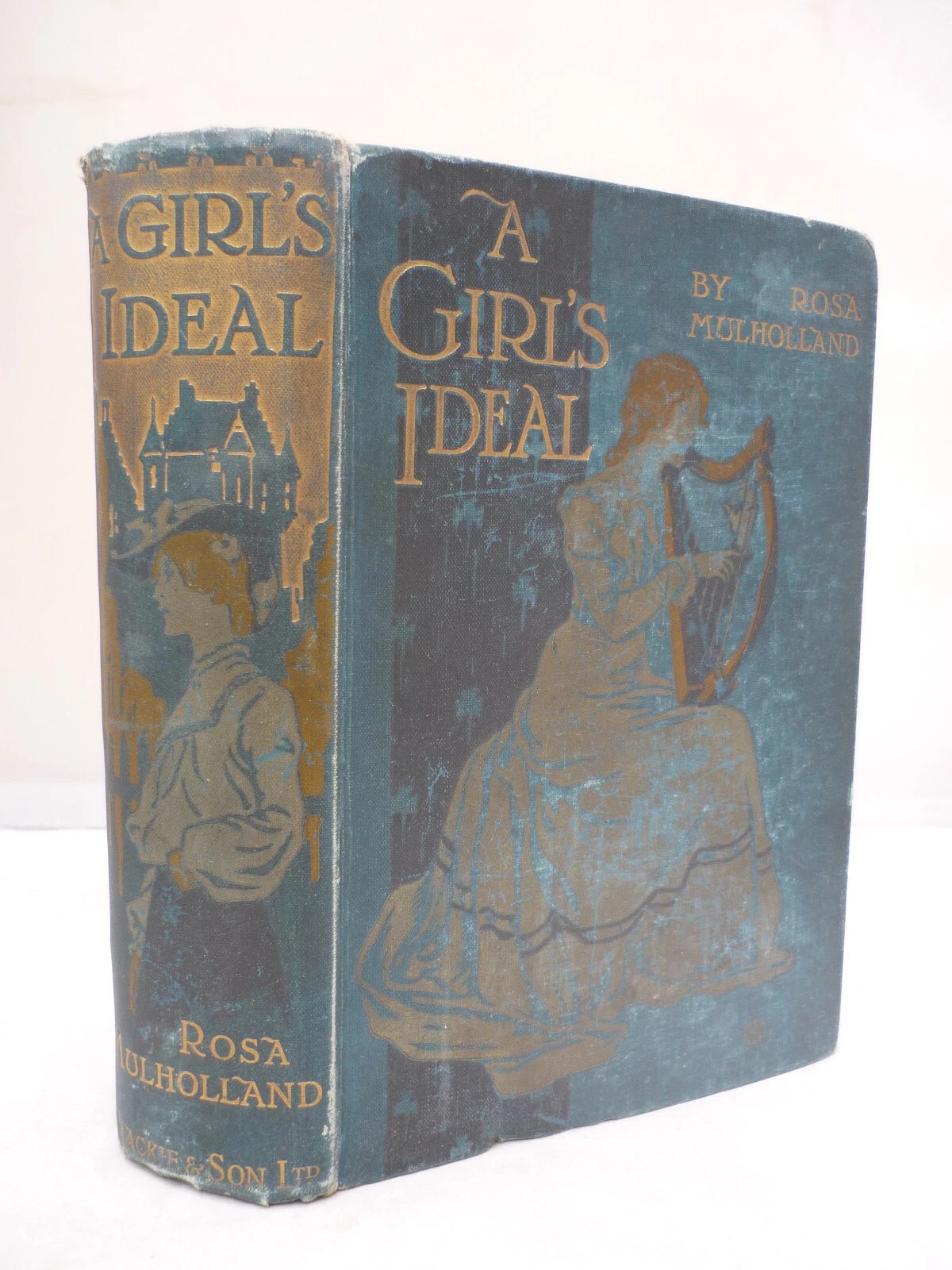
The next one slated for reading, A Girl’s Ideal (1905), appears to start in the United States but will likely shift to Ireland shortly. (It is also available via the Internet Archive.) It is not clear to me that she ever made it to this country and her nascent description is a bit barren. This one is a you inherit a large fortune if you agree to marry this fellow you don’t yet know story!

Rosa Mulholland Part Two: Searching for the Sweet Spot

Pam’s Pictorama Post: Several weeks ago I embarked on reading a new late 19th-early 20th century author, Rosa Mulholland, and wrote a post about her that can be read here. I’ve subsequently read several more books and thought I would update you a bit on my findings. (Recovering from mouth surgeries has given me much reading time – in addition to these books I polished off at least as many contemporary novels!)

For those just tuning in, Mulholland (who also wrote under the name Gilbert) was a prolific Irish writer of the late 19th to early 20th century. Many of these volumes, virtually all illustrated fairly profusely, are beautiful old editions which is what attracted me when I bought the first volume.

I have read several more since I last reported and found one I cannot seem to get into, but more about that in a bit. Terry, Or, She Ought to Have Been a Boy, was one of the few books I was able to find and read online. It was published in 1902 and is a novella that seems to have been a sort of chapter book for older children, or one that could be read to them.

I didn’t love it – for me it felt like it never quite got all the way off the ground. It is about a very obstreperous and wildly undisciplined little girl and her brother who tags along with her exploits. Said children are left with an infirm grandmother who leaves their care largely to a housekeeper. A lot of chaos ensues. Terry is a Rosa Mulholland-type character as a child who we never get to follow into adulthood.

Not my copy as I read it online. Pretty though!

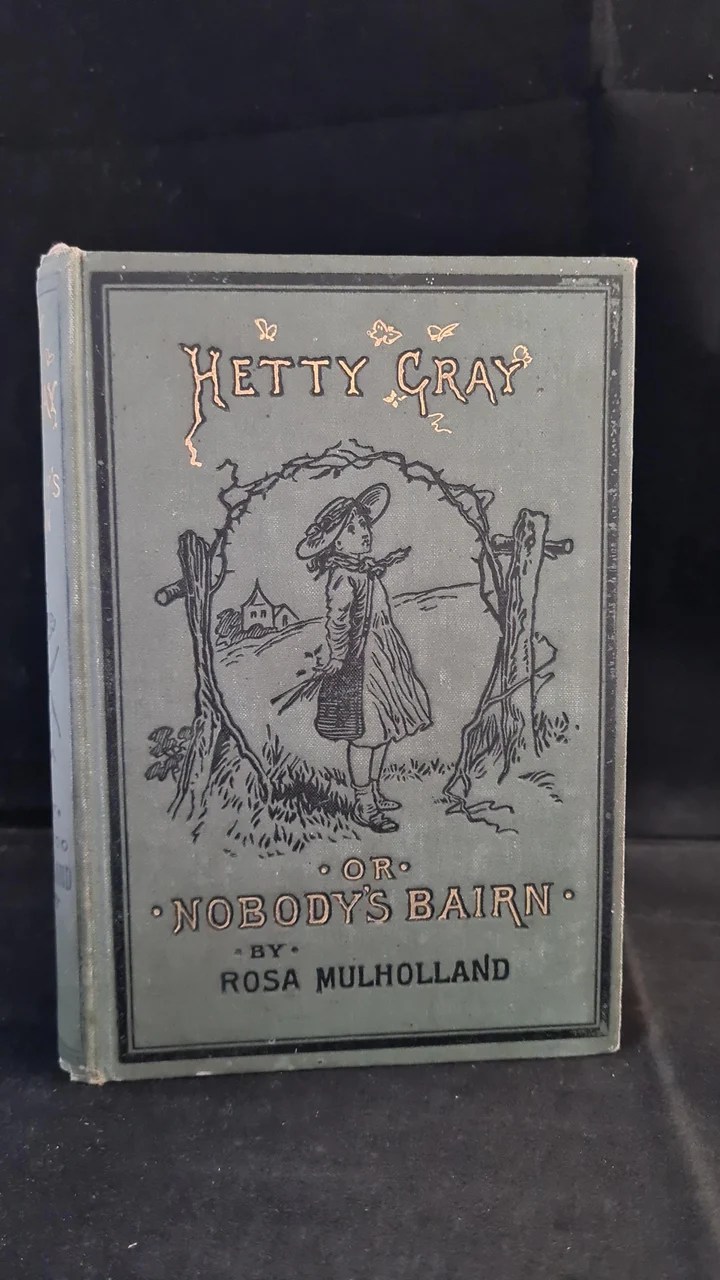
Hettie Gray: Or Nobody’s Bairn (1883) is short novel, also available online and I gather there is a reprint that is widely available. This is a more interesting story where Hettie is a foundling (of high birth of course) who literally washes up ashore and is taken in by a poor village couple. As a small child (with a bit of a wild streak) she is found one day by a wealthy woman who literally scoops her up and takes her off. She spoils her terribly and makes her into a bit of a wretch and then the wealthy woman promptly dies leaving Hettie largely friendless. We watch her original good nature re-emerge under adversity.

Mulholland has a few ongoing fascinations she returns to again and again in her writing – one is strong willed women and the difficulties they have fitting into the narrow society of the time (they are generally somewhat tamed but that will also pays off in other ways), and another is class structure. These two things play together as evidently to be poor and strong willed is seen as one thing but to be rich and strong willed another.

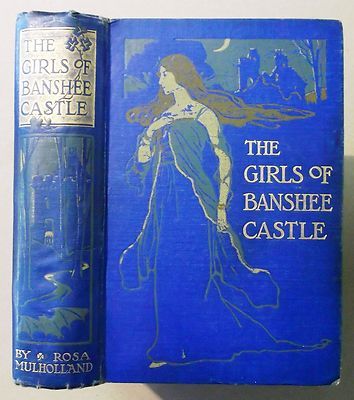
I don’t own this one yet, but there seems to be a fair amount of noise about it so am looking for it (1895).

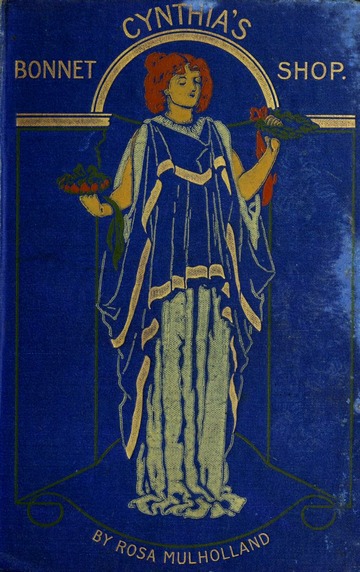
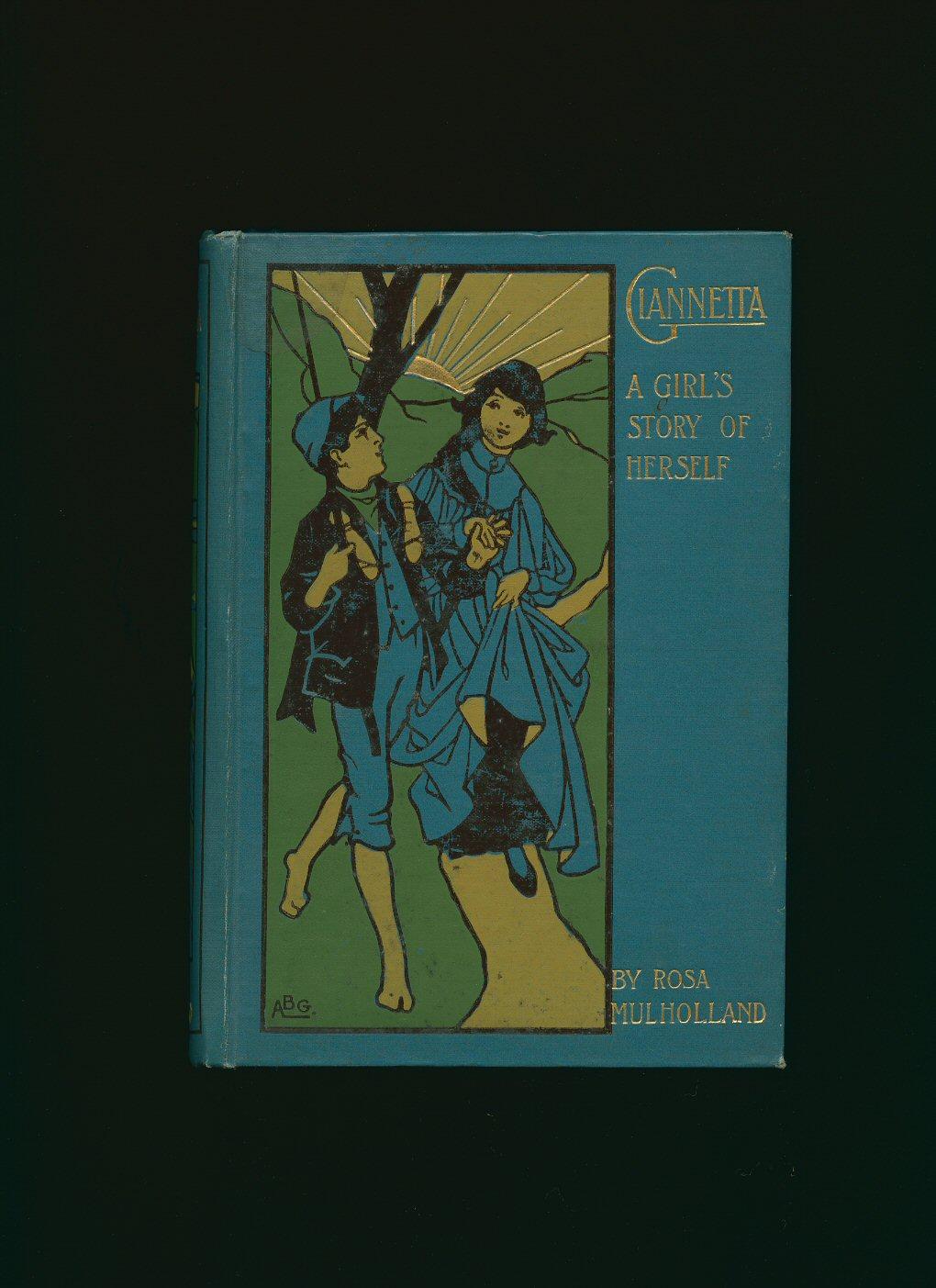
The best of this lot was Cynthia’s Bonnet Shop (1900) and it is for me Mulland at her best. (I did purchase one of the first editions as shown here, but had to settle for one that is quite tatty in order ot make it more affordable!)

Although some of the usual tropes are present, Cynthia is part of a fatherless but otherwise large and intact family which is a nice switch. There is the requisite wealthy (but unpleasant and selfish) relative who inadvertently sets Cynthia on the path to establishing her own bonnet shop. There is a mysterious benefactor. Her London shop becomes wildly popular. Romances for the sisters ensue but skew some with a patent Mulholland, I love him but I think he loves you not me so I’ll step aside, bit of plot. It is a pleasantly long read and the characterization of the two older sisters is great and good fun.

Mulholland notably also has a thing for astronomy. This is the second book (My Sister Maisie being the other) that has a story line about a woman who aspires to being an astronomer. I have to imagine that it either was a personal interest of hers or she was close to a woman who was or wanted to be one. That is another quality of these novels – the women are striving for something but consistently fall short of achieving in the man’s world. I assume this was a factor of the time and place. Mulholland is several decades earlier than let’s say Francis Hodgson Burnett (I wrote about her adult fiction which I enjoyed immensely in a post here). Europe was behind the US in progress for women and I would guess Ireland a bit further behind still. People looking at Suffragettes more than a bit askance as they emerge there.

Another I don’t have but am interested in (1905).

The final book for today, Marcella Grace, An Irish Novel (1886), is a plot that is devoted entirely to class distinction and the inflammatory politics of Ireland at the time. As someone without a lot of background in the political history of Ireland I am not equipped to comment on the position she takes. It is clear that she is leaving some room for a dissenting view (some sympathy for the downtrodden who took the paths of taking up arms) although for all of that they are the evil forces who drive this particular plot forward. This does make for a different book and I appreciate that as she could start to feel a bit repetitive. However, while I enjoyed it I cannot say it was an absolute favorite.

There is one on my bedside pile that I have been unable to penetrate, Father Tim (1910). Unsurprisingly it is about a priest in Ireland. I’m not saying I won’t end up reading it but I have not yet been able to really engage with it. Perhaps the fact that it seems to be written from a man’s point of view isn’t working for me. If I manage to read it I will report.

Another one I am hankering for, 1889,

I’m not sure looking this over that I have precisely found the sweet spot in her writing. I want to say that 1900 seems to be a high water mark, but Terry, Or, She Ought to Have Been a Boy is shortly into the 20th century and was less promising. (I think I have to be careful to avoid these books meant for children – not true of all authors but for me it may be for her.)

I have one more hardcover book in the house to read, Narcissa’s Ring, 1916. I have been acquiring them as they become available. They are more widely available in Britain but the postage to ship a book is so outrageous it puts most of them out of reach. Given what I wrote about in the earlier post and this one, a true sweet spot has not yet emerged.

Tulip Time: Part Two

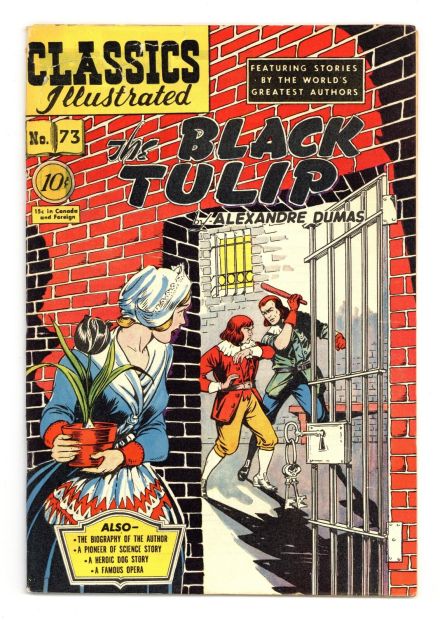
Pam’s Pictorama Post: I continue my second part, tulip treatise today with an odd alignment that came out of tulip talk recently here at Deitch Studio. As occasionally occurs here over leisurely morning work, reading and discussion sessions, Kim and I meandered through both my tulip triumphs in New Jersey and his interest in this book and comic as outlined below and these posts were born. Welcome to The Black Tulip and part two of the Pictorama post.

****

I commence with a full admission that before I met Kim Classics Illustrated comics were at best known to me in a theoretical way – a sort of punchline to a joke about not having read a school book assignment – as in clearly they read the comic book version. I confess I have never actually read one to date.

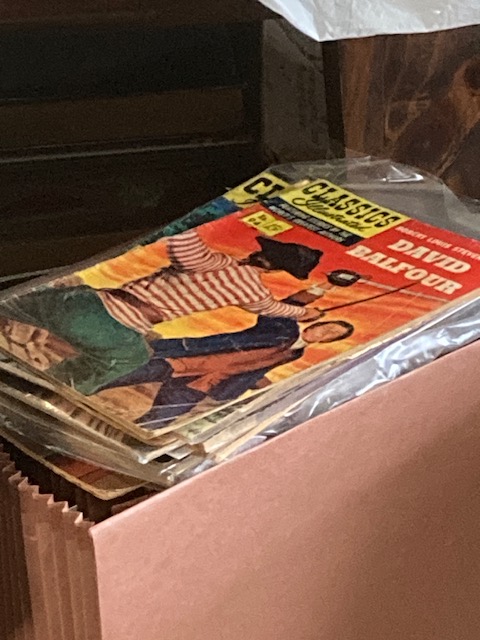
A pile of the comics within eyeshot, next to Kim’s desk, while I write this morning.

A number of years back Kim discovered a guy on 86th Street who was selling them. Not every day of the week, but most weekend days and maybe a few others piles of them on a table with their bright yellow logos being hawked. Over time they began their siren song and Kim was lured into slowly acquiring both those remembered from his youth and then ones he had missed along the way. Slowly his collection grew if haphazardly. I can’t remember now if the fellow gave up before Covid or it was the pandemic that did his periodic business in. And it wasn’t a constant flow, but an occasional addition would be made via eBay. Although he might give a quick look when I was with him it was generally a mission he completed on his own – an excuse for a walk on a nice day and presumably some comics chat.

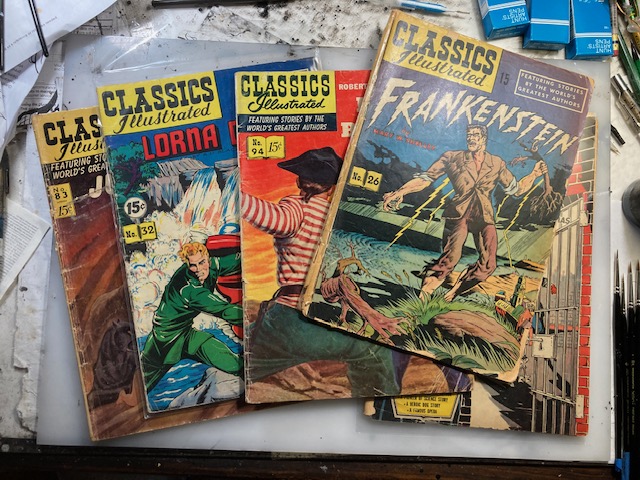
A better look at that pile. This is just the tip of the iceberg of Kim’s collection.

Kim, a voracious reader and particularly of classic literature, seems like an unlikely candidate however most recently he uses these as sort of massive supplemental illustrations to something he is reading. (The man is devoted to illustrated fiction in all its guises.) A large trade paperback on the history of Classics Illustrated found its way into the house recently and, although he is a committed Dumas fan, his purchase of The Black Tulip I believe was a result of his reading of that. The novel is on its way so he has not commenced reading it yet.

Classics Illustrated (which has lodged in my brain as Classic Comics) had a 30 year run, from 1941-1971, launching with The Three Musketeers. With printing and reprinting and the collecting of them, it can be a deep and largely affordable vein of comics collecting. If Kim were writing this there would be color and lore I cannot provide – thoughtful observations about the various artists who illustrated them, some who were wrapping up a career during the heyday of comics.

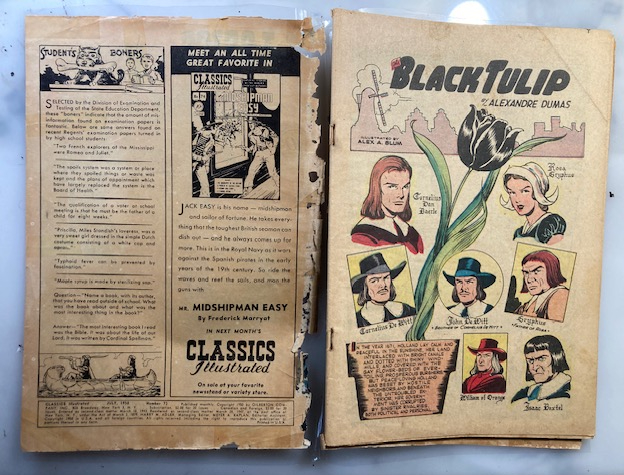
The opening pages of our rather tatty copy.

The Black Tulip (based as noted on the novel by Alexandre Dumas) was illustrated by Alex A. Blum (1889-1969) and I would say his illustrations are definitely part of the appeal of the comic. The story takes place during the tulip craze in the Netherlands of the 1600’s after the introduction of the plant from the near east in the preceding century. As you probably know, tulips were wildly sought after and the bulbs traded like gold or cocoa on a world exchange. Fortunes were made and lost in tulips and even poor and middle class families might stake their fortunes on the waxing and waning of them.

Queen of the Night variety of tulip – appears to be pretty much as close as we come to black.

The plot of the novel is the race to develop a truly black tulip and the nefarious individuals who would do anything to capture a $100k guilder prize for the development of it. (For the record, a true black tulip does not exist even today and a very dark purple one called black is as close as one comes.) Since Kim is planning to read the original novel as well so I will have to ask him if they explain why black seemed so desirable – I prefer red and orange among others myself. (It should be noted that blue does not exist either – only a sort of lavender to blue.)

The jolly cover caught my imagination and a stroll through the comic is not disappointing. For the record, there is a column in the front cover called Student Boners which claims to be funny mistakes made on regional state exams – along the lines of Name two explorers of the Mississippi – answer: Romeo and Juliet. There is a bio of Dumas and encouragement to read the full novel at the back. Throughout there seems to be a layer of an in the service of sort of self-conscious educational mission.

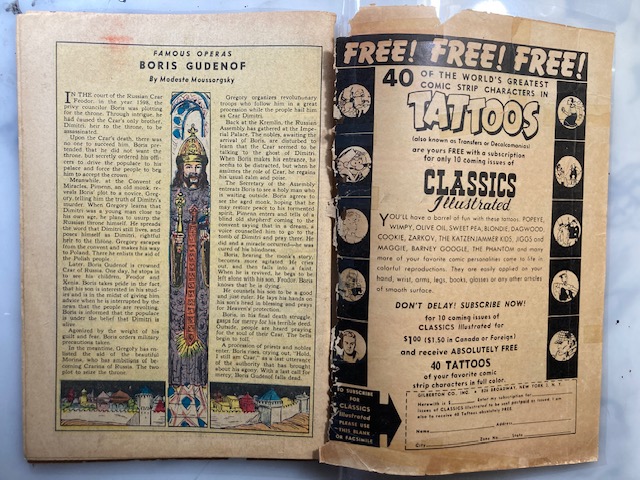
The back of the book – free comics tattoos with your purchase of 10 issues.

Along those lines also included at the back is a plot summary of the opera Boris Gudenof (what did kids make of that?); a bio of Alfred Nobel (Inventor of Dynamite!); and an unrelated short story about a dog. Kim informs me that the books had to be weighted with a certain amount of text in order to get a book rate for mailing. (This is part of the eventual undoing of the company as they ultimately lost this status.) There is an emphasis on the great literature these are based on (There have been no greater story-tellers than these immortal authors) and on reading in general.

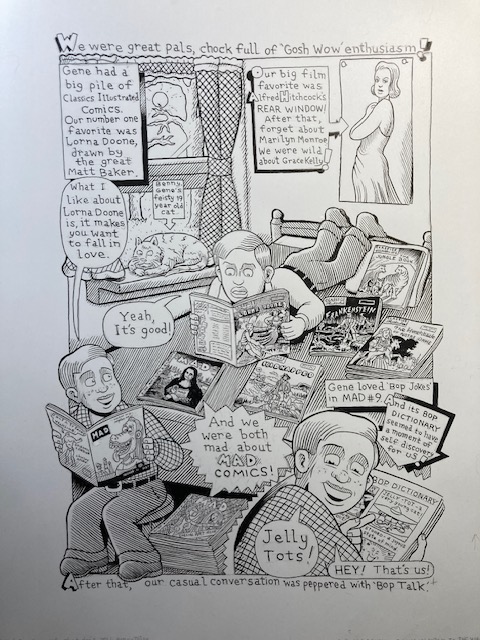
A page from a story to be published next year called Apocalypso.

As I alluded to above, these comics were a fixture of Kim’s childhood and a recently completed page from an upcoming story for his next book shows a young Kim and a friend in a room littered with them. (We had some discussion over which covers would be featured.) As for me, well my generation had Cliff Notes (which also took a final bite out of these comics) instead. I never read them, but I am sure they were far less romantic and potentially interesting as Classics Illustrated and in addition I doubt that anyone collects them today.