Pixie and Mrs. George de Horne Vaizey: Part One

Pam’s Pictorama Post: It has been a very long time indeed since I have posted about a writer or books I have been reading. That is in part because the last year did not lend itself to reading. Helping during my
mother’s last illness and the months that followed, ultimately leading to my changing jobs at the end of the year, certainly there were books, but reading was sporadic. Love or hate my book posts, books are back and today kicks off an interest in Mrs. de Horne Vaizey, nee Jessie Bell, later Mrs. Henry Mansergh and finally Mrs. de Horne Vaizey.

Pictorama readers of long-standing know that in recent years (especially during the at home pandemic years) I chased down the writings of numerous authors including all the Judy Bolton mysteries (a post about those can be found here) and strolled through the collected works of several women who were writing short stories and novels that depicted the emerging woman in the US and Britain at the dawn of the 20th century.

These included the adult novels of Frances Hodgson Burnett (in several parts, but it all starts here),
the (glorious) short stories and novels of Edna Ferber (here) and the various series books including the Red Cross Girls, Ruth Fielding books and the many volumes of my beloved Campfire Girls. (Starting here, here and here if you are game.)

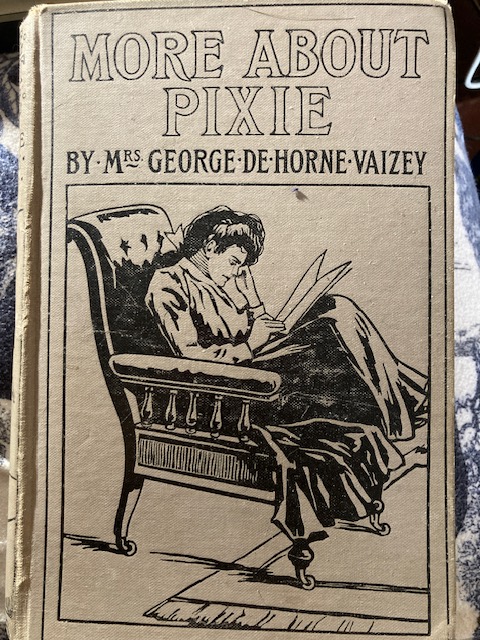
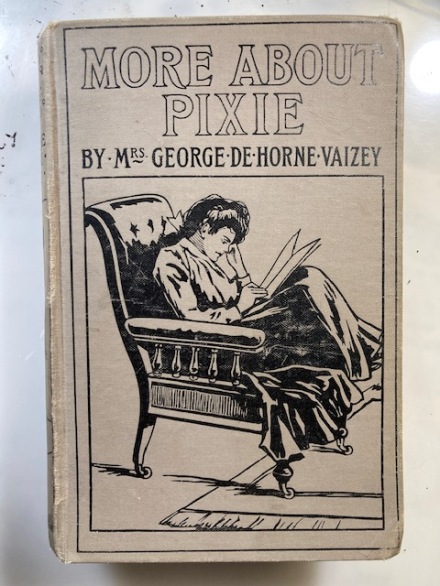
You might remember that my birthday this year turned into a day of poking around bookstores downtown, including The Strand’s re-opened rare book room. I picked up a copy of More About Pixie, the second volume in a three novel series by Mrs. George de Horne Vaizey (Mrs. GdeHV for my purposes going forward)

I was able to find the first volume of the books about Pixie online, Pixie O’Shaughnessy, with relative ease on my old friend Project Gutenberg. (All three volumes mentioned here are available on this free online resource as well as some others, although beyond these books only about half of her publications seem to be readily available. Many volumes of her work are also available at the Internet Archive.) I have largely been able to download illustrated versions of the books which I urge you to try to do as some of the illustrations are very good. (Oddly I can’t seem to open and share them here and show what I was able to find otherwise. I will add that the blog site isn’t actually allowing me to add images today so I apologize for the largely un-illustrated post!)

This first volume is a wonderful depiction of life in Ireland in the waning days of the 19th century. Written in 1902 it is a bit earlier than the copious volumes of my earlier reading I mention above. The impoverished, motherless (a recent loss) family resides in a dilapidated castle which becomes a sort of
character in the book, as does the backdrop of the small Irish town they reside in.

Pixie is a young child still at the start of this book – she is not a physically attractive youngster (this is an oddly defining characteristic that stays with her; her looks do not improve with age), however she has such an outspoken and winning personality that she always everyone’s favorite. To make up for her physical limitations as a beauty, she has two lavishly beautiful sisters (Mrs. GdeHV is a little obsessed with her heroines having gray eyes, they all do), Bridgie and Esmerelda, and attractive brothers in the bargain.
The funds are scraped together to send Pixie off to a private school in London and her adventures there make up the second half or so of the volume. (Esmerelda is hot tempered and so extravagantly stunning that she is somewhat done away with at the close of volume one.)

Written a year later, volume two, the one I picked up at The Strand More About Pixie, takes an interesting turn. It is in fact not so much more about Pixie, as the story is actually told by a young woman neighbor, a
recovering invalid, who lives on the street in London where the family decamps to at the start of this volume. Her encounters with the O’Shaughnessy family include Pixie, but in reality it focuses more on her friendship with one of the older sisters, Bridgie, who plays mother to the clan. Pixie does reassert
herself in the latter part of this volume, but it is Bridgie and the neighbor girl, Sylvia, and their friendship that is at the heart of the book.

Much of the book concerns the slow recovery of Sylvia (an illness which is given no name but has even affected her bones as they gravely consider needing to amputate her foot) who is another motherless child (life of mother’s was evidently cheap), living with an aunt while her father is away in India. (Mrs.
GdeHV likes to send men to India and bring them back after many years. To date I have barely been in India with her books, but wouldn’t be surprised if we end up there one of these days.)

It isn’t until 1914 that the final volume of the three is published, The Love Affairs of Pixie. Our prolific author has penned at least 17 volumes between these so it is a more mature writer who writes this novel. It interests me that she decided to turn her hand back to a now fully adult Pixie who returns as the heroine and focus of this story. Much of this story brings Pixie and the reader back to Esmerelda and Ireland, although the Ireland of this book is less lovingly described. Pixie remains unattractive on the face of things and in fact the book opens with her own discovery of this and is a theme throughout, but the pluckiness and good heartedness of Pixie has her as a sought after mate who (spoiler alert) finds her mate at the close of this volume.

Mrs. GdeHV clearly liked to assign herself challenges to keep things interesting. These are not formulaic series books (not that there’s anything wrong with those!), but instead you can see her making choices and setting up approaches to keep things different and interesting. I’ll cover more of her biography tomorrow, a sort of sad tale despite being a very prolific writer. She must have been popular in her time, but sadly volumes appear to be hard to find and I know she wrote short stories but none of those have turned up yet. However, I have only just begun my research so undoubtedly more to come.
 

Rolling Along

Pam’s Pictorama Toy Post: Today may mark the end of the birthday post fiesta – I have dinner with my friend Eileen Monday night and that technically marks the ends the annual month of shared birthday festivities with my Aquarian brethren. There was a time when there were several other members of the fold, but sadly folks have moved or are gone now so the February birthday dinners are less numerous. (Incidentally, for anyone just in this post for the toy, skip down to the bottom! Books and birthday at the top.)

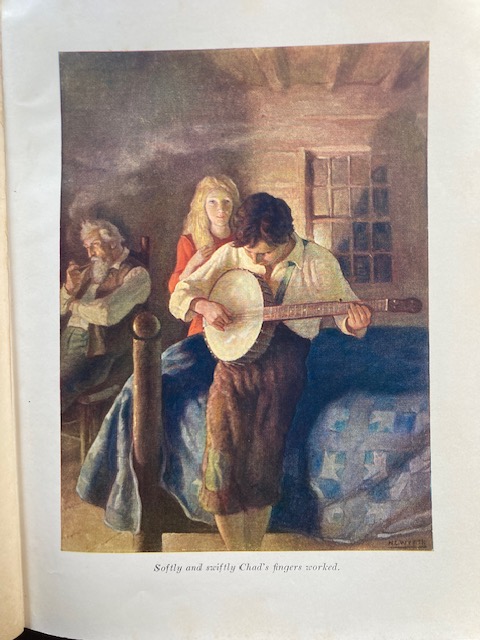
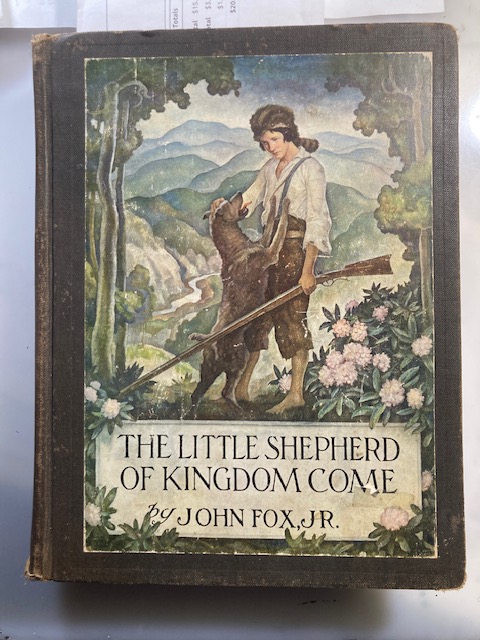
In addition to the February birthdays, there’s always a nice day spent with Kim roaming somewhere in the city. This year we ended up spending most of the day book shopping. We made a quick visit to Alabaster Books (on the ever mysterious 4th Avenue which exists as a stretch of street in that part of town around 13th Street) where we were intrigued, but the prices on the early juveniles volumes that appealed were too high for our blood, although I admit titles stayed with us and Kim later found another copy of The Little Shepherd of Kingdom Come by John Fox, Jr. illustrated by N.C. Wyeth, shown below.

Discovered at Alabaster Books in the East Village,but purchased elsewhere.

I have only had a backseat to Kim’s subsequent reading of it which seemed to veer from thinking it was amazing to a distinct sense of it falling off a bit. I will mention that he was particularly impressed with the illustration below and the song (Sourwood Mountain which can be heard on Youtube here) that it illustrates.

One of the N.C. Wyeth illustrations in the above volume. Link to the song being played above.

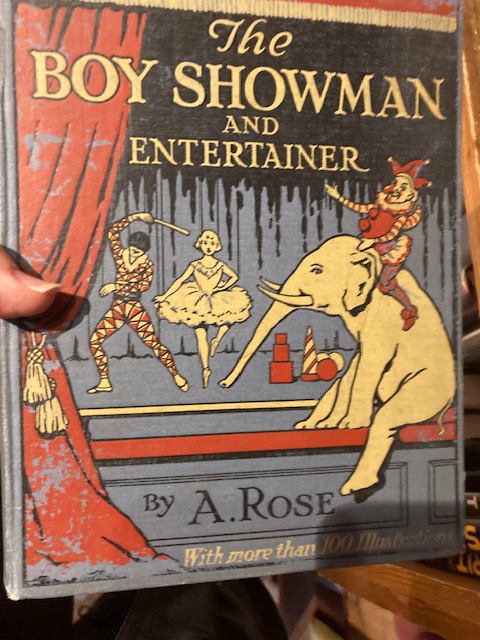
I, on the other hand, was tempted by The Boy Showman and Entertainer which essentially gives instruction on how to put on a show. These instructions were meant for someone much more handy than me (think of a kid who eventually grows up to work for NASA), but fascinate me nonetheless. I have another book of this type, How to Put on a Circus which I am very fond of and have written about here. Maybe I will go back for it.

Another almost purchase. Maybe eventually.

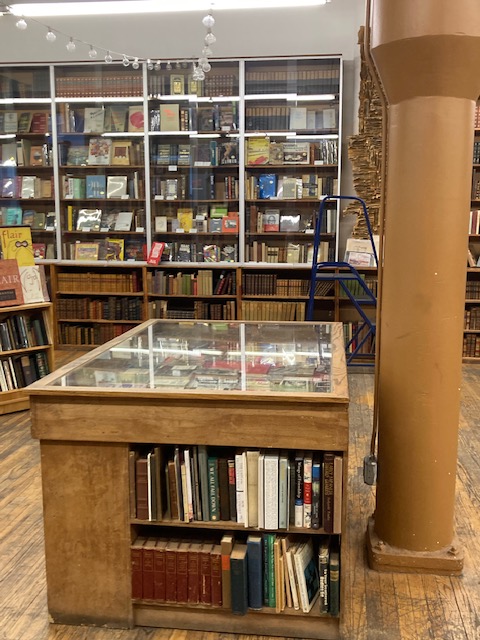
Sad that we did not feel inclined and able to support this bookstore on this particular day (they used to have the very most charming calico cat I liked to visit) we moved around the corner to The Strand. Much to our surprise and delight The Strand has re-opened their Rare Book Room upstairs. We scored a few interesting ratty volumes on the first floor before making our way up.

The Rare Book Room – welcome back old friend!

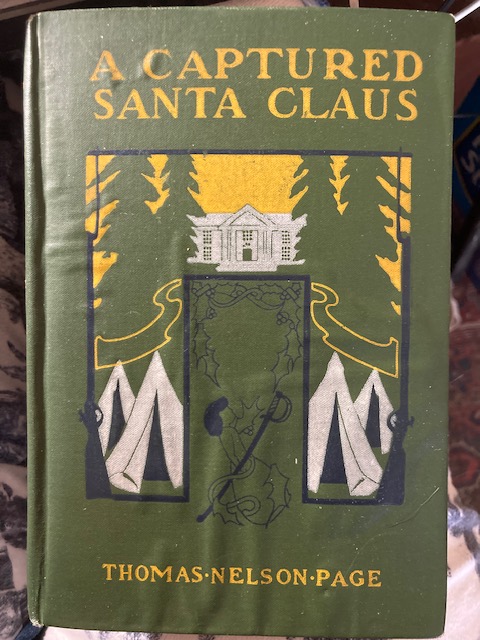
However among the purchases on the first floor was this interesting illustrated volume, A Captured Santa Claus which is a children’s chapter book, evidently about the Civil War. It is by Thomas Nelson Page and illustrated by someone named W. L. Jacobs. Perhaps more to come when I read this volume.

Purchsed downstairs at The Strand, merely old but not rare?

We were pleased to find some additional volumes in the old but not quite rarified enough to be truly rare. My significant purchase was the second volume in a series of three about Pixie O’Shaughnessy by Mrs. George de Horne Vaizey, aka More About Pixie. I was able to download volume one, simply Pixie O’Shaughnessy, and read it first. (Project Gutenberg and an illustrated version can be found here.) As Pictorama readers may know, I have a real soft spot for a certain kind of early 20th Century series book and this fits the bill gloriously. I think I owe Pixie and Mrs. de Horne Vaizey their own future post, but it all started here.

I’m already into this volume and I am a fan.

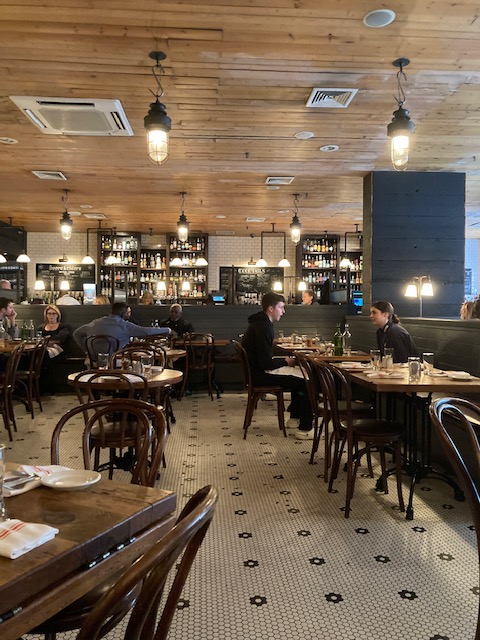
After a trip to the art supply store where Kim bought a new light board – a festive purchase; Kim loves this piece of equipment in his arsenal. Kim and I wandered over to The Smith where Kim treated me to a lovely lunch. I discovered a photobooth in the basement and we took the pics below – first photo strip in a long time.

The Smith in the East Village – a nice lunch and photobooth in the basement!

Meanwhile, I have buried the lead and toy folks are wondering when the heck I was going to get to this wonderful cat toy! I have lusted ongoing over toys on wheels and someday I will have (at least one) wonderful wheeled toy large enough for a small child to ride. There are wonderful elephant ones and many bears. We shall see about that!

Commemorative photostrip pics.

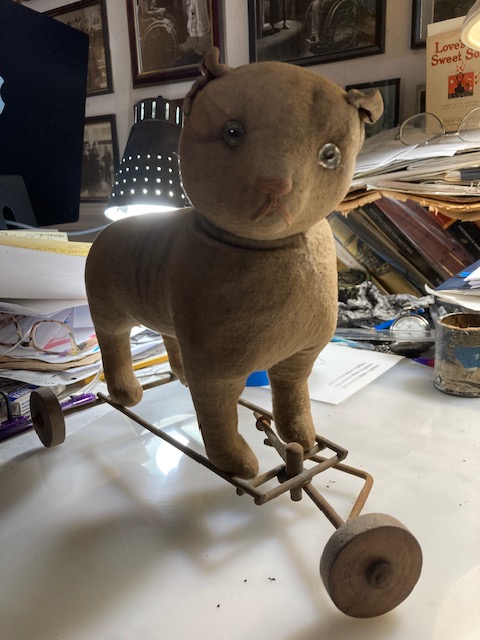
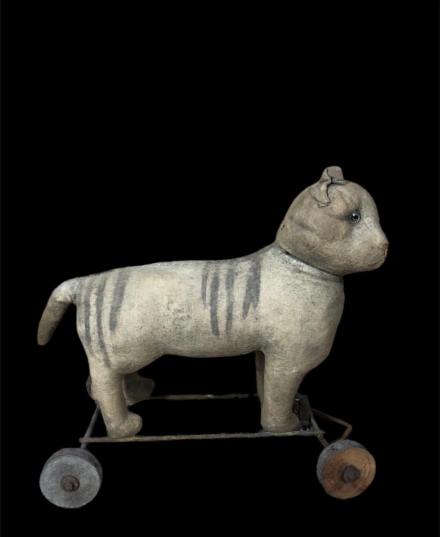
Anyway, this is a very early cat and he came to me via Brussels. I purchased him via an online sale on Facebook and Kim bought him for my birthday. He is the first wheeled fellow of this sort in my collection. He is missing one of his four wheels otherwise he is remarkably intact. The wheels are nicely made bits of wood with good hardware so I doubt that I can make or find much of a substitute, but luckily he will spend his days quietly.

A glorious and sturdy device he sits upon, ready to take turns as needed.

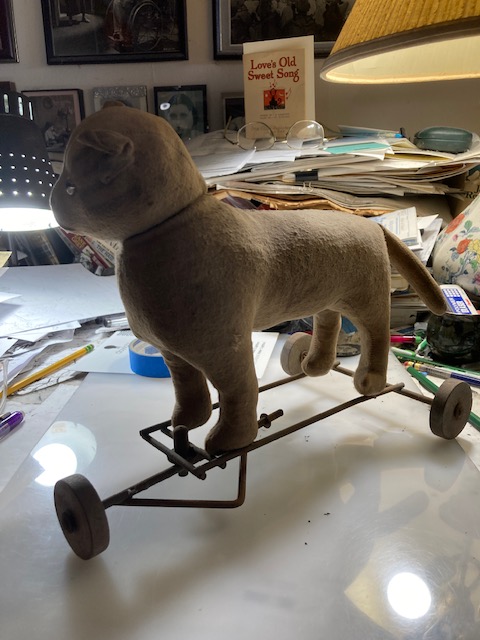
If you look at the front wheels you see that there is a nice bit where you could attach a lead of some sort to pull him around and the ability to turn the front and direct him that way. His ears are a bit less pert than they probably were in the day, but fully intact, as is his tail. He has a few tiger-y stripes and his stitched mouth and news were likely very red originally. He’s a solid citizen and is heavier and perhaps a tad larger than you might think he is.

Rear view with his tail shown.

There is evidence that at one time he had a bow around his neck which may have been red or pink, just a few faded orange threads. There’s something about his neck which made me wonder if his head moved at one time, but if so no longer.

Not surprisingly for a toy of this type there is no marking so I do not know if he was native to Brussels (a place which does oddly seem to cough up antique toys – one prior post to something I bought from a very sweet dealer there can be found here, Brussels may turn out to be an El Dorado of antique toys) or an import. I am looking at him and have decided he has a very sweet face. A beloved toy, probably from the earliest part of the 20th century which has made his way to me. My birthday may make me feel old, but I am a youngster compared to this fine fellow.

Red Cross Girls!

Pam’s Pictorama Post: I think I will always look back on this year and a half (heading into two year) period as my plucky young woman literary fiesta. It probably isn’t a coincidence that this, difficult period of time has made these stories of achievement under great duress appealing. Working my way through the work of author Margaret Vandercook in particular has been wonderful and these books have contributed to a longer reading project which builds on the changing role of women during the first part of the 20th century. Nursing on the front lines during the war, even driving ambulances there, was an enormous departure for young American women and according to these books they also lead the way for young European women to do the same.

As long-standing readers know, I started my journey with Margaret Vandercook via her many volumes of Camp Fire Girls books, took on the somewhat more raucous Ranch Girls next and am now investigating and celebrating the ten volumes devoted to the Red Cross Girls. (Some of those prior posts can be found here, here and here.)

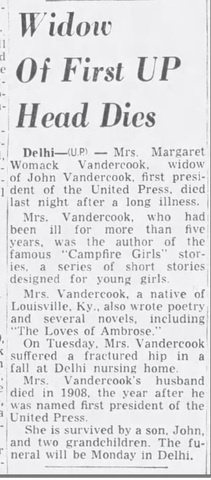
I came across an obit for Marjorie Vandercook clipped from an unknown, undated source – very little information seems to survive on her and this is the first obit I stumbled onto. It doesn’t supply much information, but I include it here for anyone else who might find it of interest. Of course they lead with her husband’s accomplishments and barely touch on her own contribution!

My first question was, did young women really do this? I mean did young women volunteer and head out to Europe to work with the Red Cross? Seems a bit crazy and it’s a bit hard to say. Obviously Red Cross nurses served in Europe during WWI, about 300 lost their lives working on the front lines. It isn’t clear what qualifications were expect however and if young women who had “a nursing course” or even less experience actually went over such as our heroines did, is hard to track down. Nurses, it seems for the most part, were from working class or rural backgrounds although some were indeed from affluent families, a mix like we have in volume one. So let’s assume that the role of our heroines is relatively realistic for starters.

Via witness2fashion.com as noted above.

Certainly the war that was being described was more or less torn from the headlines of the day since these books were published starting in 1915. Four women start out from New York City on a ship heading to Europe. Their first adventures and a few plot points that will reach several volumes occur onboard ship before making landing in Britain which is their first stop before nursing wounded British soldiers in France. (Vandercook must have had several of these books outlined to some degree, dropping in opportunities to come back and layer on plot in future volumes.)

I wondered how Vandercook would handle the sheer horror of nursing on the front lines with the sort of story line she generally develops and I report that she does an admirable job of it. Admirably, somehow she neither downplays the dangers and horrors of war, nor does she dwell too much on the gore. Of course the tales of valor are overblown, but after all these are fictional volumes for younger readers.

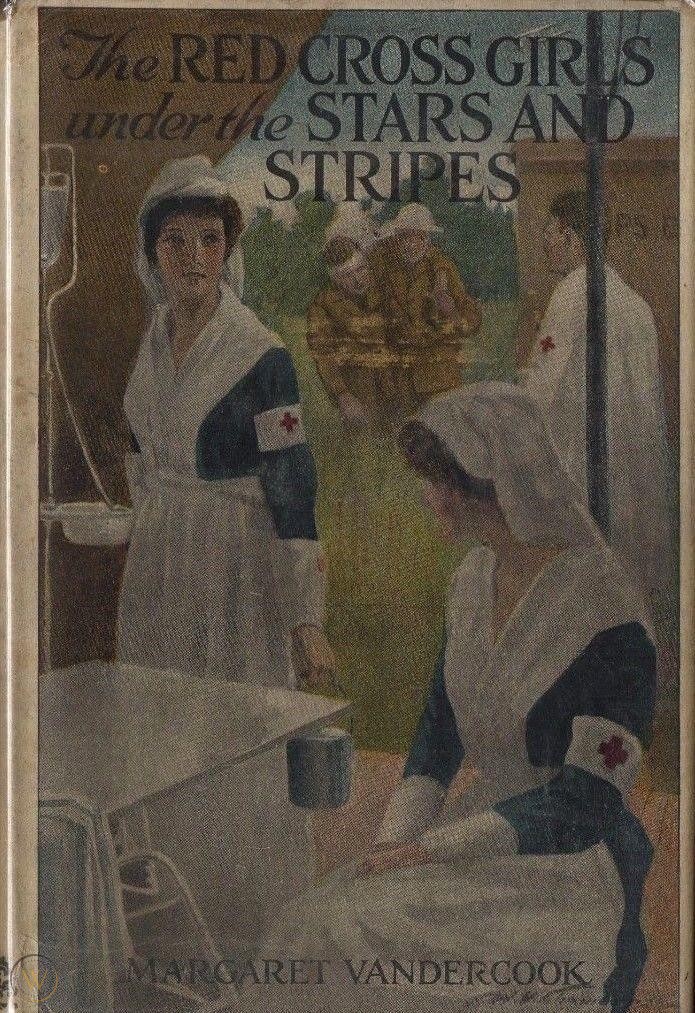
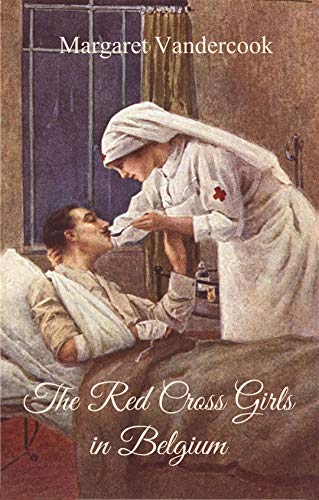
Dust jacket from volume 3.

Plucky indeed these young women are too. While the Campfire Girls had an interesting creed and much ceremony, the Ranch Girls just had a sense of the wild west where they had their origin. The Red Cross girls fall somewhere in the middle – there is a code for behavior and there are references to their need, like soldiers, to follow orders and fall in with the greater good for the whole. It would seem there is a creed – whether it had a basis in reality or not I cannot really say, but I would imagine that the spirit was there at a minimum although it isn’t as codified, nor as lore filled, as that of The Campfire Girls.

It is interesting to be reminded that the Red Cross nurses and doctors were of course technically neutral by definition. The United States would not enter the war until 1917 and the ethos of the Red Cross was (is) apolitical. However, these were stories going out to an American readership and the clear lines of sympathy for the British and French soldiers and a fear of the Germans is evident.

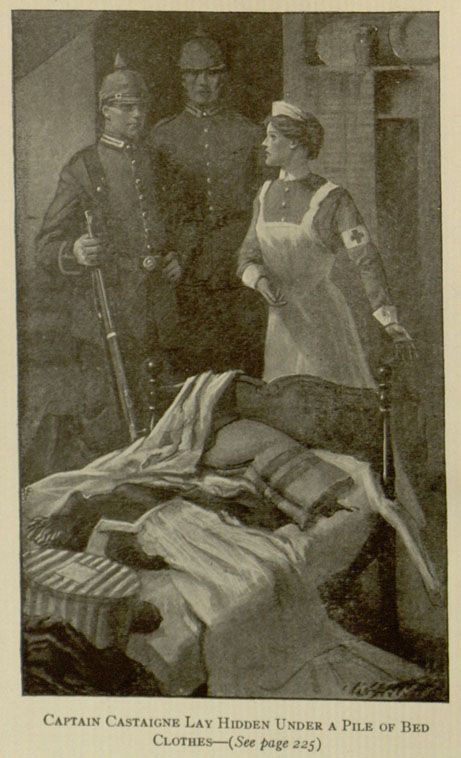
Illustration also from volume 3.

As of the volume I am currently finishing – The Red Cross Girls with the Italian Army – the fifth and published in May of 1918, there is no mention of the influenza epidemic which would certainly take headlines later that year although I assume will find its way into subsequent volumes. The first four volumes form a story arc and the fifth, harder to obtain as an e-book, seems to mostly to be tying up some loose ends and perhaps planting some new plots for the remaining second half of the series. The United States will be entering the war soon, presumably in the next volume.

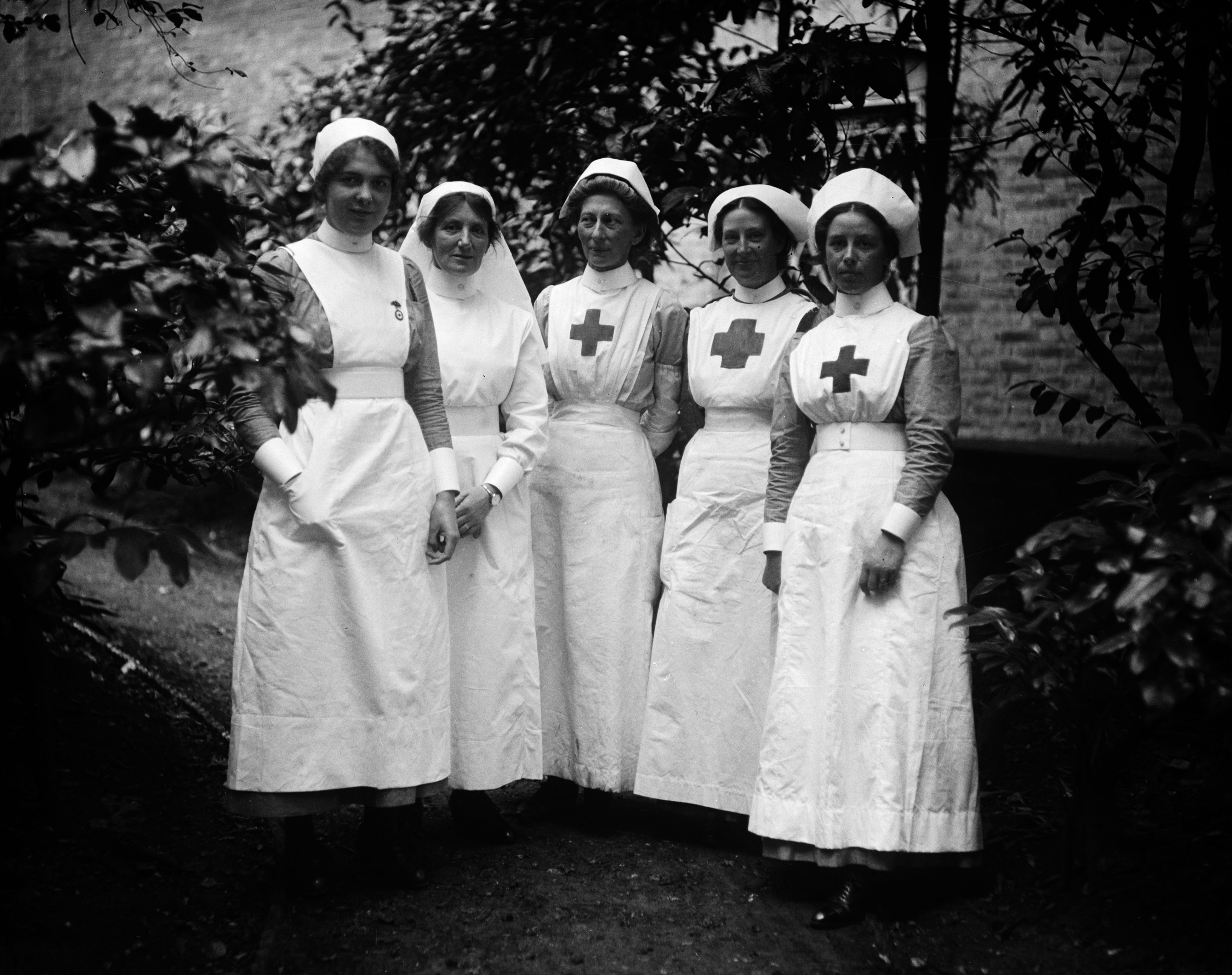
September 1915: A group of nurses at Hamworth Hall which is serving as a Red Cross Hospital during WW1. (Photo by Topical Press Agency/Getty Images) via Time magazine.

I am reminded that we are reading these books with the benefit of historical hindsight. Marjorie Vandercook had no way of knowing that it wouldn’t be be that many years before the world was back at war, barely a generation, and the fictional futures she thought she was securing for her heroines would perhaps be less than untroubled. It is hard not to read them knowing of the tumult of the political upheavals of Russia and that the sons of this generation would be the soldiers of that next enormous war.

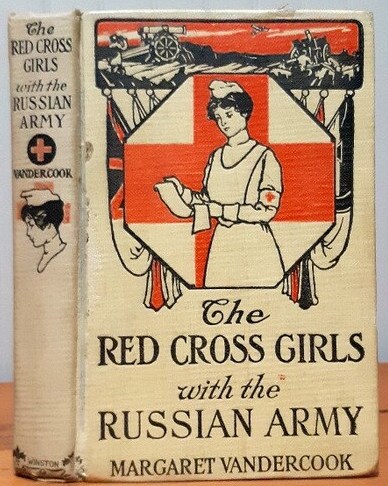
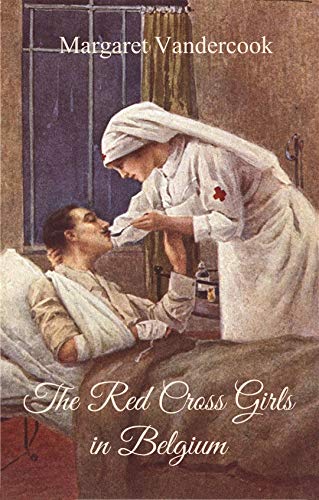
The first three volumes of the not quite five I have thus consumed, were the most compelling with The Red Cross Girls in Belgium being my favorite. I found the novel concerning their time in Russia, The Red Cross Girls with the Russian Army, a bit hair raising actually. What on earth were they thinking going to Russia? How did they even get there? Of course you should read it, but I am warning you, it puts you a bit on the edge of your seat.

This may be the only accessible volume from the second half of the series, but you know I will try to ferret them out!

As alluded to above, the first four volumes were easily available on Project Gutenberg as free e-books. After a bit of searching I located the current volume on the Internet Archive site. While they e-books don’t seem to be technically downloadable they are still easily read online and they have bailed me out on obscure volumes before. I think I will have some trouble acquiring the remaining volumes of the series which seem to follow the American army through other parts of Europe and then home. With any luck, I will be able to report on those in subsequent posts.

Margaret Vandercook and the Ranch Girls

Pam’s Pictorama Post: For fans of my writing on series books of the early 20th century, I am back at it today with something to say about the first few books of this grand and lesser known series. Like the majority of the books about The Camp Fire Girls I have most enjoyed (my posts devoted to these books can be found here, here, here and here), this series was written by Margaret Vandercook, or aka Margaret Love Sanderson.

The only photo I can find of Vandercook.

Now even in the age of the internet Ms. Vandercook is a bit of a cypher. Between 1912 and about 1924 she published several dozen books under her own name and the pen name above. (I can tell you she wrote the heck out of these books too.) The meagre biography that is available sites that she began writing professionally after the death of her husband, presumably to support herself and her son. Although there are some allusions to magazine work done after that time and a book of poetry published in the 1940’s, the internet provides no trail for what happened in the mid-1920’s that caused her to cease publication, at least under these names. I speculate that possibly she remarried and continued to publish work under that name is not attached to her. She lives until 1958 and given how prodigious her output was during the decade above it is hard to imagine that she ceased writing altogether. (I am unable to even find an obituary attached to her.)

For my money Vandercook is a very good writer and despite the fact that she was juggling a myriad of characters and storylines, every series and each book remains quite distinct. I have said in former blog posts (I have written about The Camp Fire Girls here, here and here) that it is a wonder she had time to eat or sleep when we consider how much she produced. I somehow imagine her spending mornings with the The Campfire Girls, lunch with The Ranch Girls, late afternoons with The Red Cross Girls and evenings with The Girl Scouts.

Merely because these are juveniles and series books they should not be dismissed lightly. I have come to realize that, at least for now, I am tracking her more as an author than I am following a series as such. And as beloved as my Judy Bolton books are, (I wrote about those here and here) these are in no way as formulaic. Working for a series of lesser publishers Vandercook may have had more freedom. There are indications that she plotted these way in advance and perhaps wrote them straight through, splicing them into volumes of the right length along the way, the storyline continuing with the turn of a page.

Margaret Vandercook has an odd habit of engaging you with a lead character for a few volumes and then utterly sidelining that character for one or more volumes. This allows her to explore and develop others more thoroughly. It is a bit jolting if you were really attached to that storyline though – you may not pick it back up for a volume or two.

As I turned my attention from The Camp Fire Girls to The Ranch Girls I expected to lose the sense of wonder and lore that had made The Camp Fire Girls novels so wonderful. They were filled with the ceremony, rites and values of the early days of that movement. To my happy surprise this series is infused instead with admiration for the women of the still young West – the frontier spirit and how it could be found in this subsequent generation.

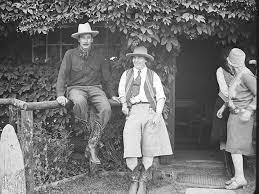
Wyoming Dude Ranch of the same period.

This is best seen in volume two, The Ranch Girls’ Pot of Gold, when the main character, a young woman name Jack, is injured and lost. She struggles through a storm to find her way back to camp and there is a ringing passage about the plucky stuff today’s girls still have, much as the prior generation of westward bound women exemplified.

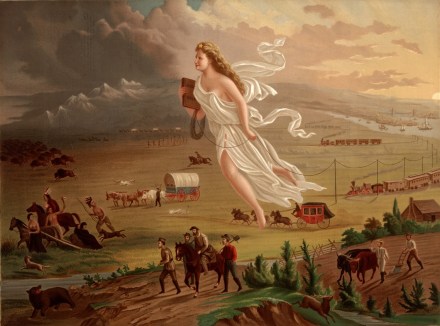
In the teens and early twenties the Western genre was of course a mainstay in literature and film. While much tamer then the days of its origin, it remained remote and the imagination seems like it was endlessly stoked by storytellers using it at this time. Tales of gold strikes, disputes over land and water rights and the hardship of the elements make up an almost endless backdrop of lives lived in a saddle and the “taming” of this part of the country. The myth of the west is endlessly embellished.

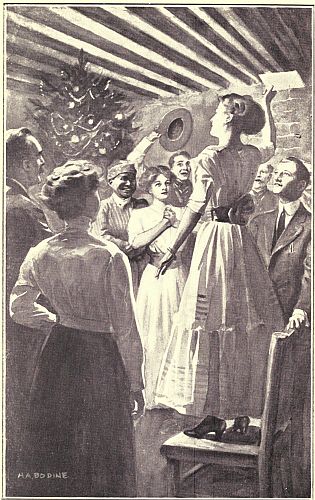
From The Ranch Girls at Rainbow Lodge.

The Ranch Girls embody these same themes and spirit with the addition of being three (and then four) young women left to fend for themselves on a ranch in Wyoming after the death of their father, their mother having been lost at a much earlier time – as evidenced by the fact that she is almost never mentioned. They live under the (somewhat) watchful eye of their guardian and ranch overseer, Jim, and ultimately a cousin who comes to live with them to the end of civilizing them. The adult supervision being benign enough to allow them to get into a fair amount of trouble and adventure.

It is interesting that only two are sisters, the third a cousin who has lived with them since since childhood, and then the adopted fourth. A wonky thing happens with their ages and somehow the youngest sister ages a few years and catches up to the others between volume one and two.

If The Camp Fire Girls allowed Vandercook to explore those rites and rituals, it also underscored a favorite theme of mine, the emergence of women during this period as they fought their way through the right to vote, but also the right to work, be educated and marry for something other than economic advantage. The Ranch Girls takes this theme and expands it even further. These somewhat untamed young women of the West are sort of noble examples of what girls growing up outside society can produce.

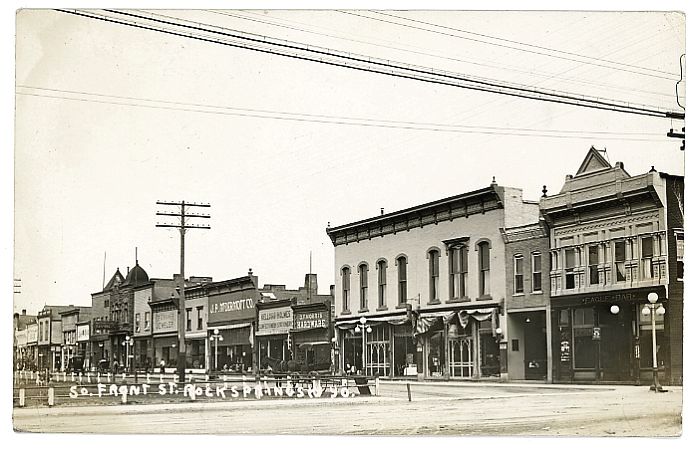
Rock Springs Wyoming, 1915. Wyomingtalesandtrails.com

Their broader and less hidebound perspective is shocking to many as they move through society in the East during a stint in boarding school. However when the series takes them to Europe, it is this easy going nature that almost makes them prey for bounders and fortune hunters. Their refreshing American West personas do make them great favorites among the more staid Europeans they meet along the way. (While many of these series books take girls from the East and first send them out West and then to Europe these obviously work in the reverse!)

Where from our 21st century perspective, a full hundred years later, this series is well meaning but misses the mark is the exploration of the relationship to Native Americans it undertakes. It is an underlying theme and storyline and I was frankly shocked by the racism that one main character, Olive, is the center of in the first few volumes. She is assumed to be half Native American and the prejudice that must have been very real for the day is portrayed as she is thought at best to be given a position as a maid.

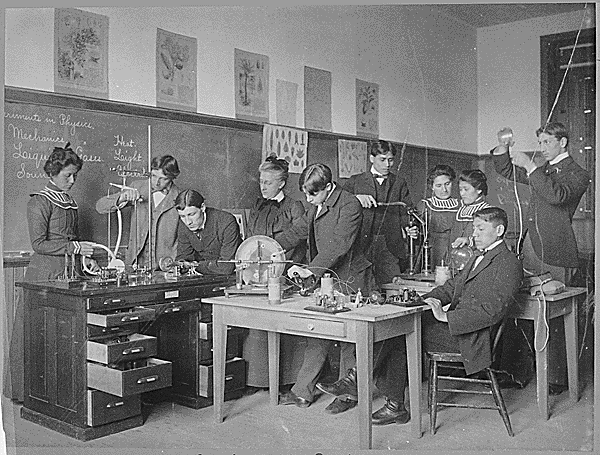
Physics class at Carlyle school which sought to eradicate Indian culture.

While the Ranch Girls adopt Olive as one of their family, there is still the undeniable relief when in subsequent volumes she is discovered to be half Spanish instead, born of a wealthy father and European mother, both dead. Evidently the character was not going to be allowed to flourish unless she was white. Later in the series Vandercook is still working through resolving attitudes toward Native Americans with another character in the story. I believe that in reality she was very interested in making people recognize the culture of these native tribes and to respect them. However, given both the pressures of her publishers, the readers and being of her own time, by today’s standards it is ham handed at times and can still be painful to read. For me it is valuable reminder of the prevalence of such attitudes and useful to understand the attempts to change it which did not just happen with the stroke of a pen.

For me these volumes are rollicking good stories with a nod to the highs and lows of dime novels mixed with the loftier ideals of instilling new values in young women of the time. These books are asking them to take a new look at the world around them and to consider how the modern young woman might make a difference and change the world. These books helped, one story at a time.