The Cat’s Party

Pam’s Pictorama Post: So today I take us back to the world of cat ephemera with a bang today. This little treasure came to me via a new dealer who I imagine I may see a lot of, Eldritch Oculum Antiques. (The website can be found here although I found them on IG as @eldritch_oculum_antiquarian.)

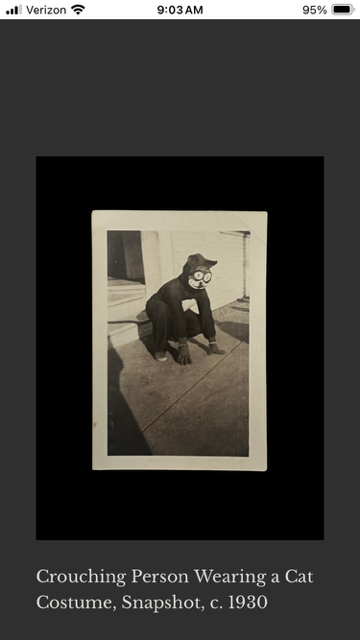
Our story unfolds, as it sometimes does, with an item someone (I believe it is my IG friend and gad about @fatfink) gave me a heads up about but had quickly sold. This was a photo of someone in a Felix costume that I would have loved to have scored for my collection – not least because I appear to own other photos from the same session!

Longstanding readers may remember a very early and popular post of these tiny photos I featured in the early days of this blog. I seem to have bought a few and then found more from a different dealer. When I told the story to the folks at Oculum I misstated that they came from Seattle but I just read my own post and it says that the came from Portland, OR – right where these folks are located. Portland seems to be an odd El Dorado of early Felix photos and I have that post and a few others devoted to this which can be found here, here and here!

Not in Pams-Pictorama.com Collection – sadly!
Pams-Pictorama.com Collection

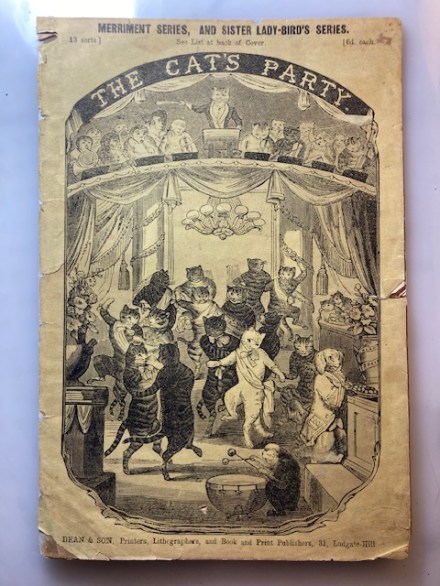
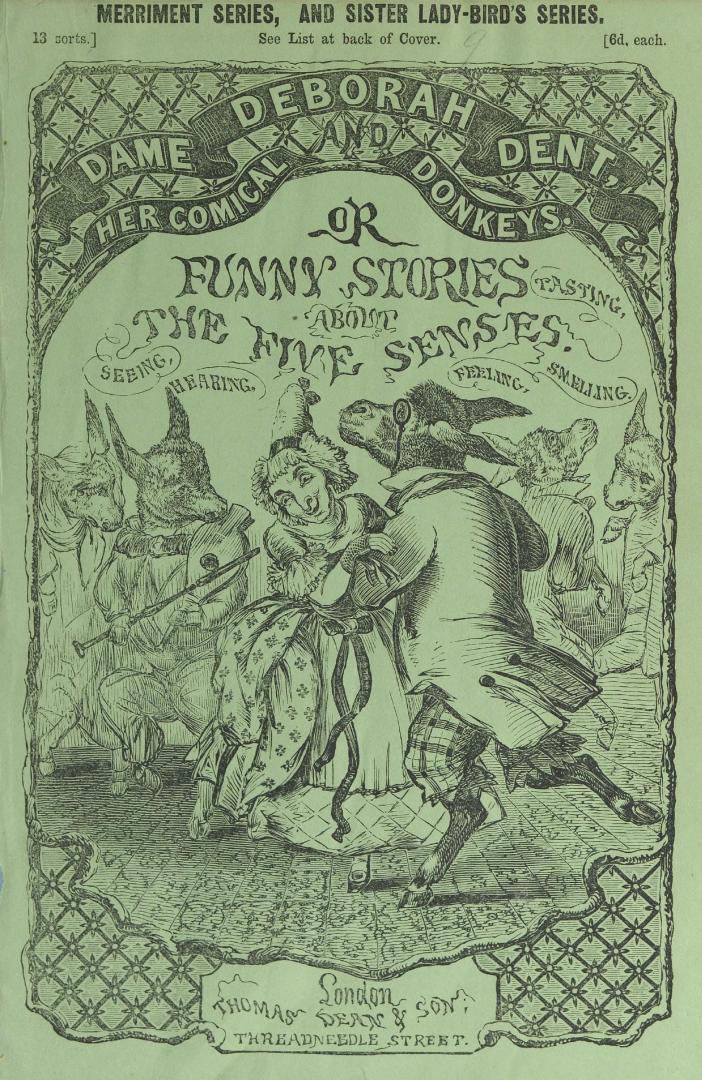
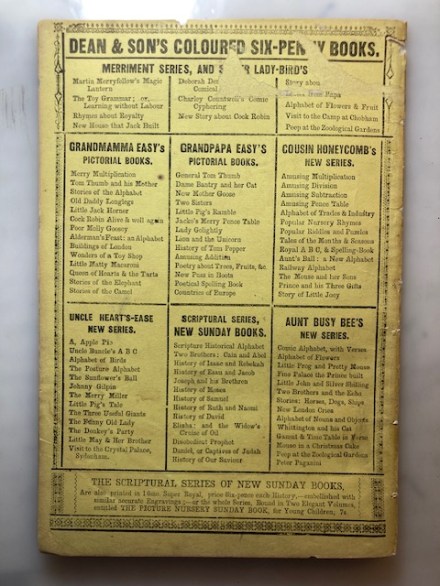
However, this was clearly an account I wanted to follow! It wasn’t a month later when I spied this gem and snatched it right up. This is an unusual piece and further nascent searching on the internet only turned up two other editions of the Merriment Series, and sister Lady-Bird’s Series. One edition I did find, shown below, devoted to Funny Stories, and the other on the Internet Archives (see my Rosa Mulholland post of last week!) which is a scan of The Alphabet of Flowers and Fruit.

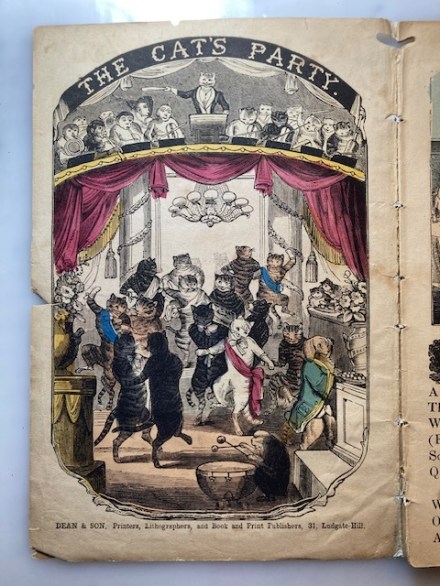
It was published by Dean & Son, Printers, Lithographers, and Book and Print Publishers, 31, Ludgate-Hill. This company, founded in 1800, became known for children’s pop-up books in the latter part of that century. They are noted for publishing into the mid-20th century but it is unclear to me if they exist today.

From the Ontario Digital Archive.

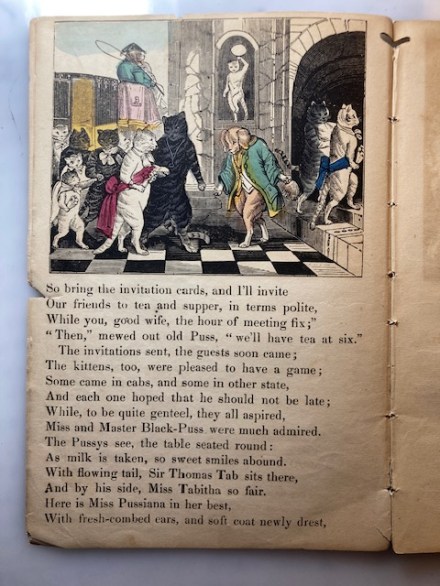
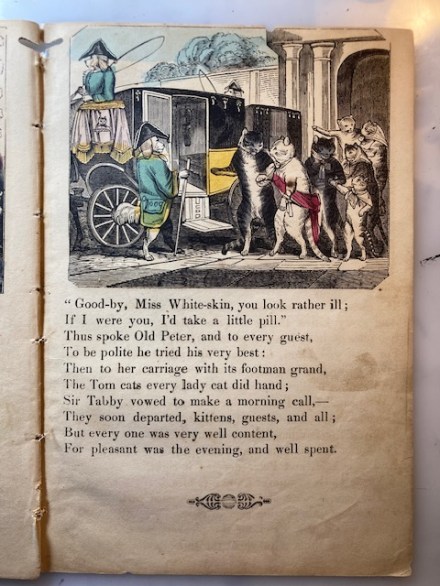
So, to get to the heart of the matter, this little missive is the tale of a party in Cat-o-Land, where cats rule and dog servants in livery are footmen and butlers. (Although the monkey playing the drum on the cover is notable as well. A careful look at the top shows one half of the orchestra as monkeys and tthe others as cats – one with his bow in the air and dropping his fiddle.) This is a jolly affair hosted by Mister Peter Pussiana.

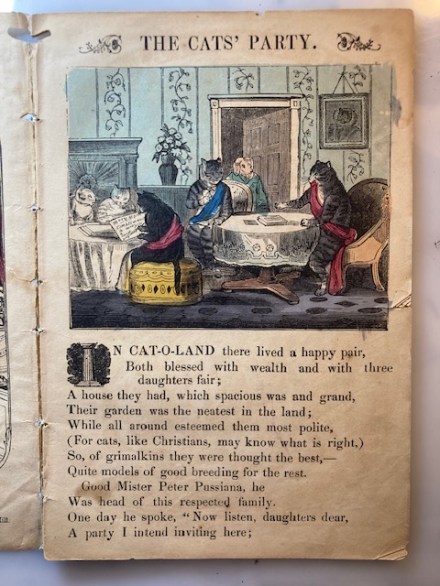
It is written entirely in rhyme – …While all around esteemed them most polite, (for cats, like Christians, may know what is right/So, of grimalkins they were thought the best, – Quite models of good breeding for the rest… No author claims credit. Printed oddly, a pamphlet (9.4″x 7.4″), it has blank pages inserted throughout – something having to do with the printing? It is in fair condition, with the binding still tight but worn with dirt and folding and cuts or tears on some pages.

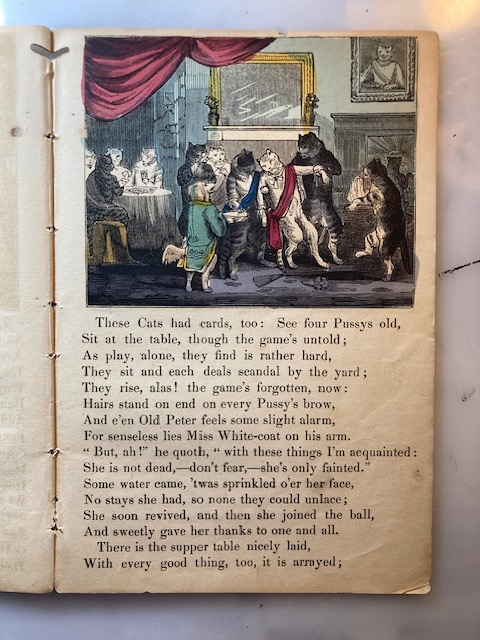
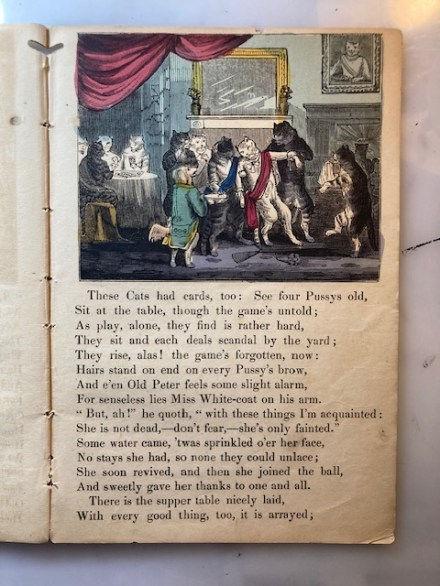
Fainting after hearing a bit of gossip scandal. I like the art!

While the cover is without color (although the first page is the cover with color), the rest of the illustrations are in a sort of limited color, looking applied on in subsequent layers. The backcover has a rather tantalizing list of other titles in the series that were available. Every thing from The Toy Grammar; or Learning without Labour to Mouse in a Christmas Cake. There is no publication date.

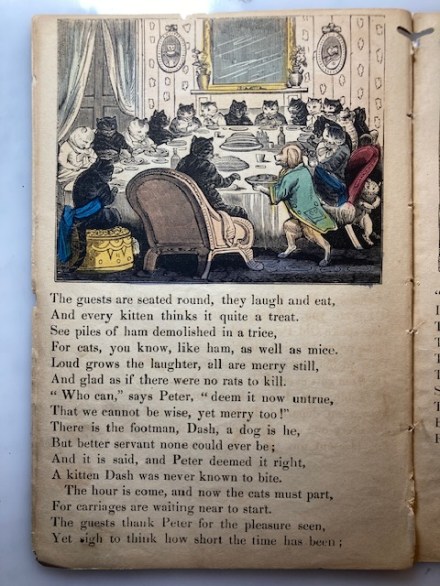
The tale takes us thoroughly through the evening and its entertainments – from dancing and eating to playing cards and gossiping. (Some scandal so salacious that Miss White-coat actually faints!) One of my favorite pages is the company around a large table eating, kittens lurking behind chairs, family portraits on the walls and a dog serving.

I share it with you in its entirety below to flip through – blank pages deleted. Pay special attention to the art on the walls and sculptures!

Narcissa’s Ring: More Mulholland

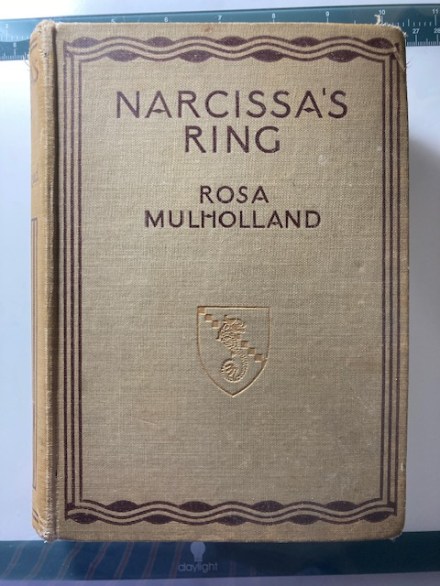
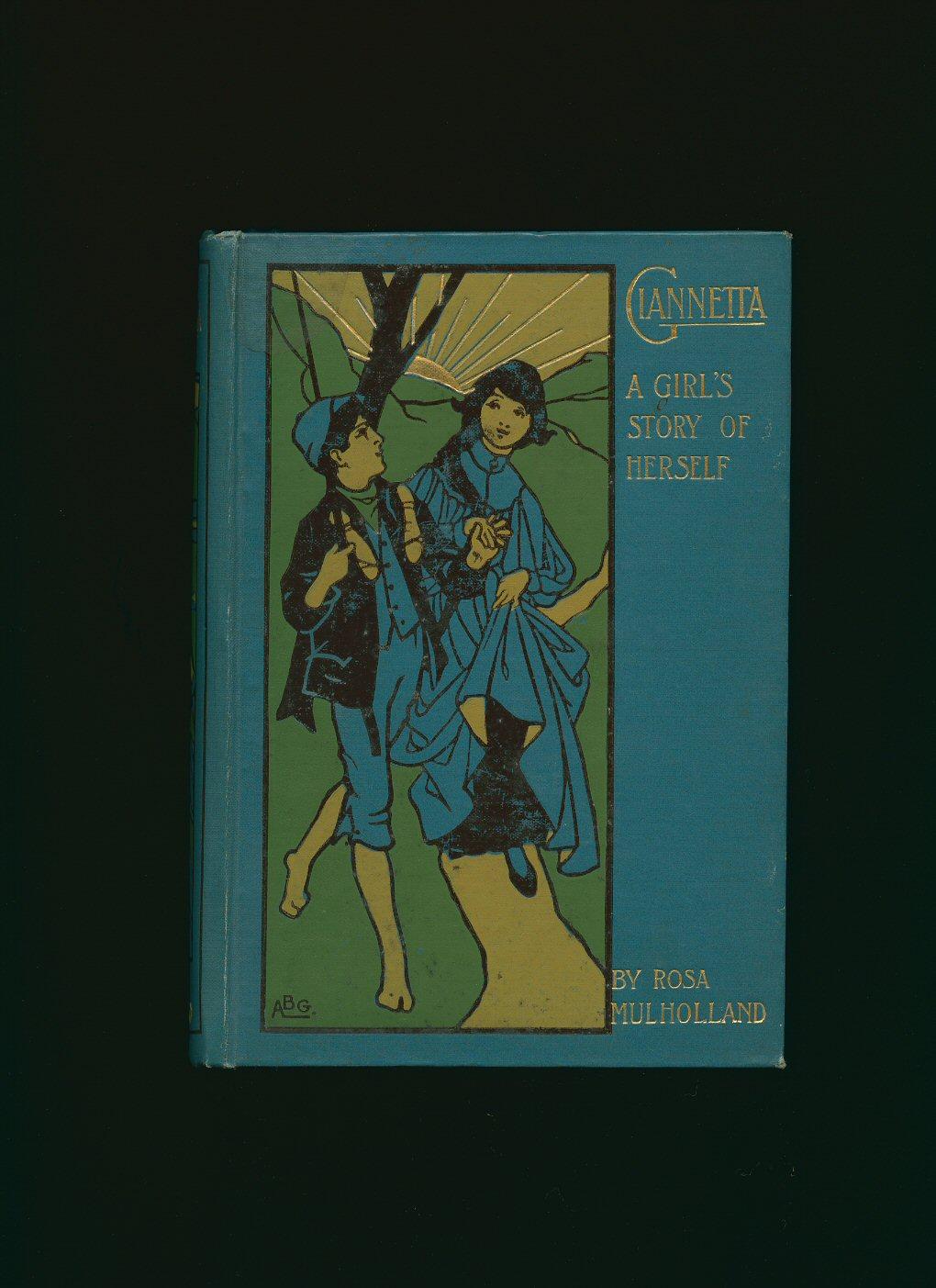
Pam’s Pictorama Post: I did not plan to post about Rosa Mulholland so soon on the heels of my most recent post (found here if you missed it just last week and the first one about her books here), where I zipped through a number of her works, mostly early, that I had read. However, Narcissa’s Ring, was a recent acquisition and a later work which kind of knocked me off my chair. As it happens, I was also lucky to find an internet site with a number of her books – including The Daughter in Possession: The Story of a Great Temptation. Both of these interesting works were published originally in 1915 and’16 respectively and they are worth note and comment while they remain fresh in my mind.

Before I get to them, a heads up about where I found The Daughter in Possession which I had not even seen copies or mention of for sale or otherwise. A site I have used occasionally in the past called Internet Archive (find it here) turns out to have a number of these hard to find volumes available for reading online. The did not come up in a general search for her books initially and it wasn’t until I thought to look there that I found them. This is very good news!

The somewhat bad news is that it is not the easiest site to read a long book on – I have had trouble saving them to my “account” although perhaps it is just most easily done on a computer rather than a phone or iPad. I am still working that out. Actual volumes are scanned for every page which is a charming way to read them – inscriptions and all in some cases. It also means if the volume was illustrated (which these virtually all were) you get those too. I am thrilled to be able to offer a place where some of these are available online, not to mention for free.

As far as I can tell, the Internet Archive exists out of California and I have not attempted to tap it for the many, many other categories it lists (everything from television shows to Russian literature). Of course I am curious about film and assume that, like the books, the films archived there may not show up in more general internet searches although may for specific books. I will need to send them a contribution as they have done great work in making some really obscure volumes available.

I had not in fact had I heard of Narcissa’s Ring either until I stumbled across a copy on eBay for sale here in the US. (I search for new ones online on a regular basis and eBay seems to pop for one periodically. The shipping from the UK where many of these reside makes the cost untenable.) It is the real find. In 1916 Mulholland was 71 years old and from reading this she may have in a sense been at the height of her prowess as a writer. While the style remains the same and some of her favorite tropes (romance, class divisions, astronomy) remain intact she goes for a full on sort of mystery in this now favorite novel.

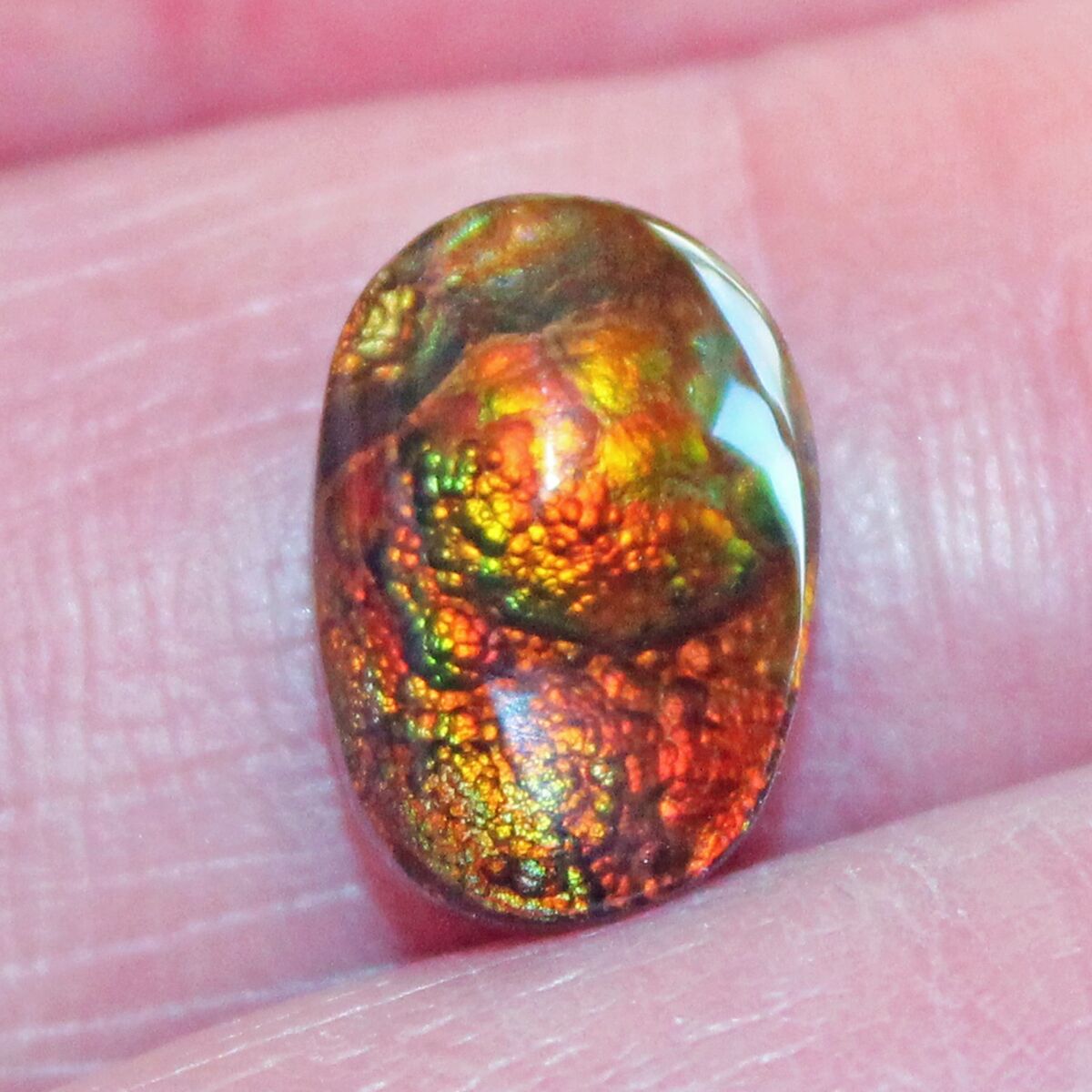
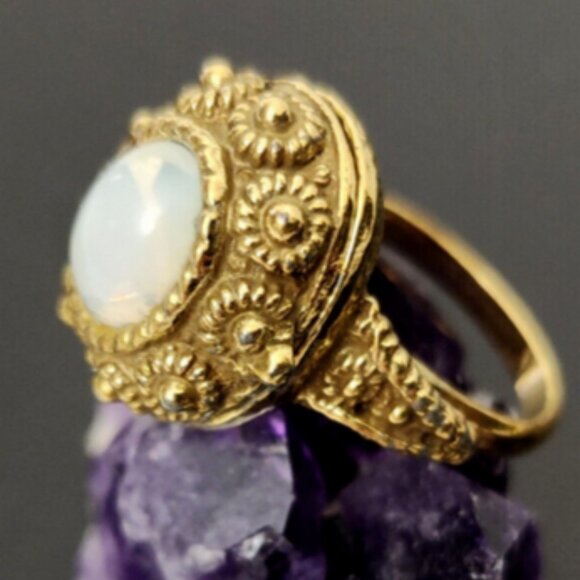
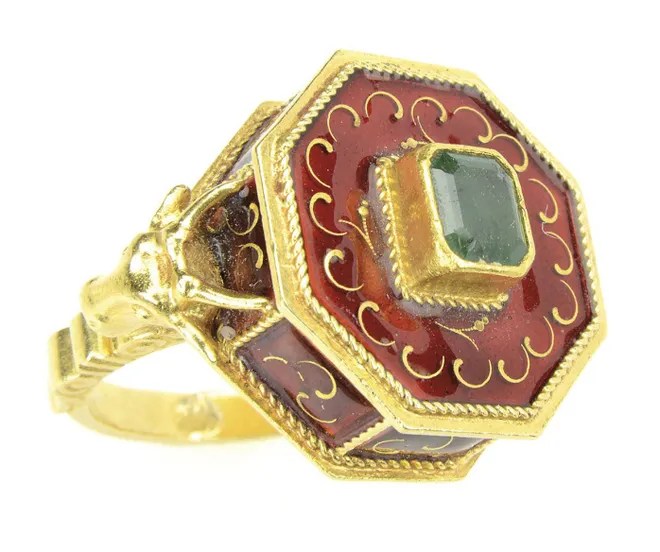
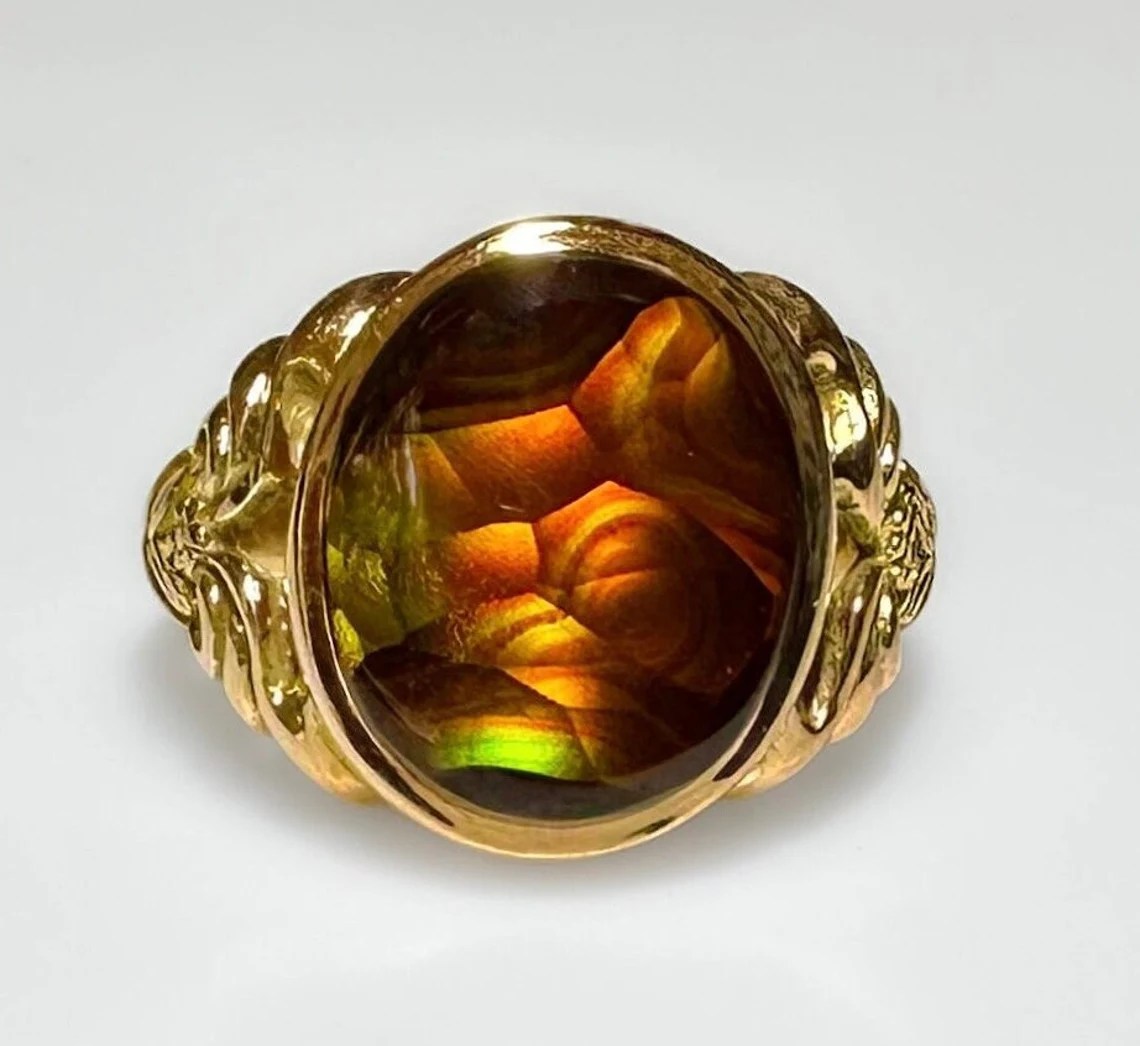
As the story opens we find a young Russian teen with a penchant for chemistry in London, before long he is shifted to her favored locale of Ireland, but not for long as he is chasing clues to rescue his father from a life sentence for murder in Moscow. The search leads him to a certain perfume found in an antique ring – the sort which might have also stored poison but instead house a bit of sponge or other substance scent would be added to and worn. The scent in the ring never dissipates. It has a cabochon of glowing red stone on it – one that takes on an almost supernatural glow in certain lights. (Two stones to engage your imagination above.)

Mulholland leads us on a most wonderful chase through Britain, a sojourn in Egypt and ultimately the Moscow of the day. Because Mulholland is writing about these places as they are being experienced at the dawn of the 20th century there is a more than usual time capsule quality to her record of what these places were like at the time – not so much with her usual eye to recording what she knows may soon drift away in her native Ireland, but with more of a sense of the here and now in these places.

This slightly cheesy version kept coming up in my searches. The stone is really beyond the beyond!

I wouldn’t dream of spoiling the intricate plot but am here to say that it is a corker and I would have to put it at the top of my list of her books!

It also left me wandering the internet looking at these rings – presumably there was one in particular which must have inspired her. The concept goes way back to the Middle Ages and all sorts of examples still abound. As for glowing fire stones there are many – from fire opals exotic agates.

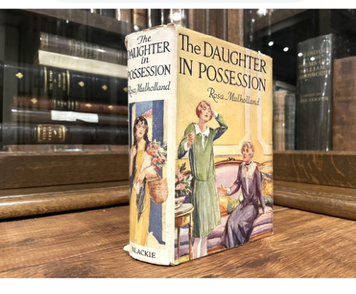
Immediately on the heels of Narcissa’s Ring I was able to hop back a year for The Daughter in Possession: The Story of a Great Temptation. (It’s a bit of a title, right?) This is an interesting lead into Narcissa’s Ring if you are considering her oeuvre as a whole because there is a developing sense of mystery and plot in this novel which is a prelude to the other.

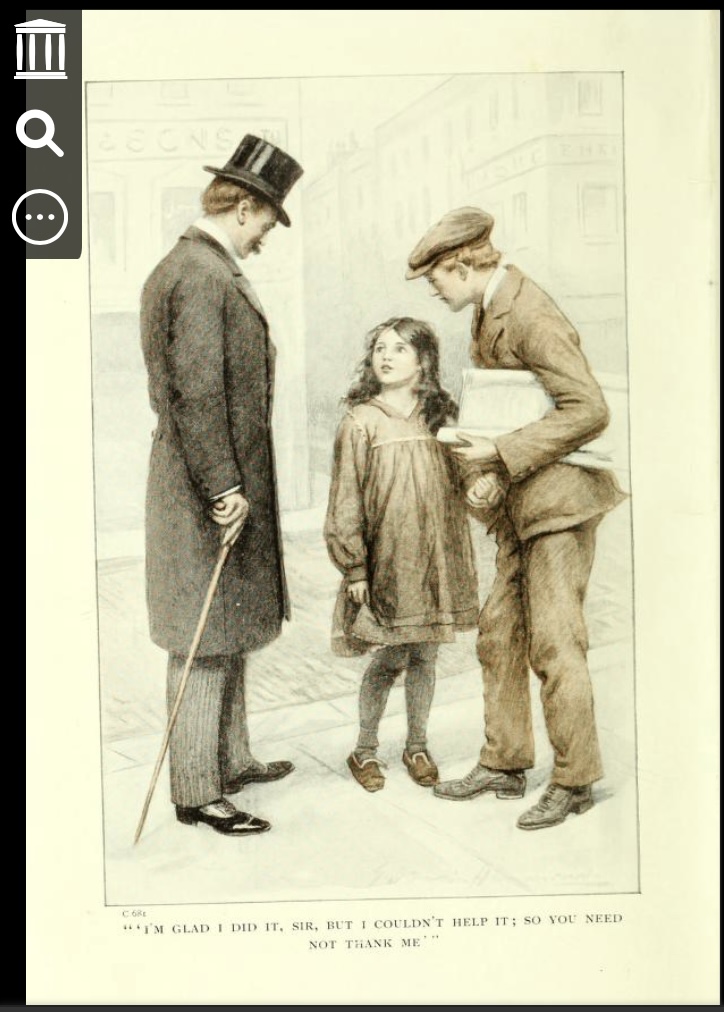
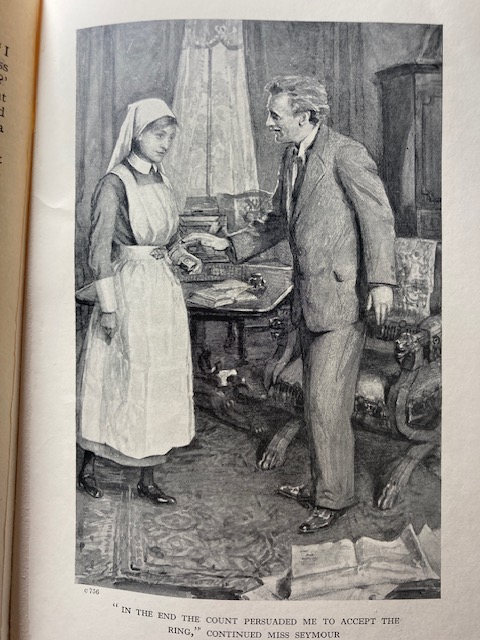
Illustration from the online version of The Daughter in Possession.

The Daughter starts off with a favorite baby rescued after shipwreck set up (see Marcella Grace for another example) but turns into a multi-faceted plot following several lives as they set off together in one place and diverge wildly before all coming back. Like Narcissa’s Ring, locations in Ireland are briefly paid tribute to but the majority of the book takes place in London and then Europe, largely France which is a bit of a surprise. (There is an interlude in Toledo and sometimes I feel like we are treated to a travel log of her globetrotting.)

Illustration from Narcissa’s Ring.

We have a narrator for part of the story who is a bit unreliable, and we don’t quite know how the ending will or won’t surprise us. Like Narcissa’s Ring the trip is definitely worth the journey here. I would not rate it quite as highly but must say that she was going full throttle with her writing powers at the end of her life and seems to have only continued to improve.

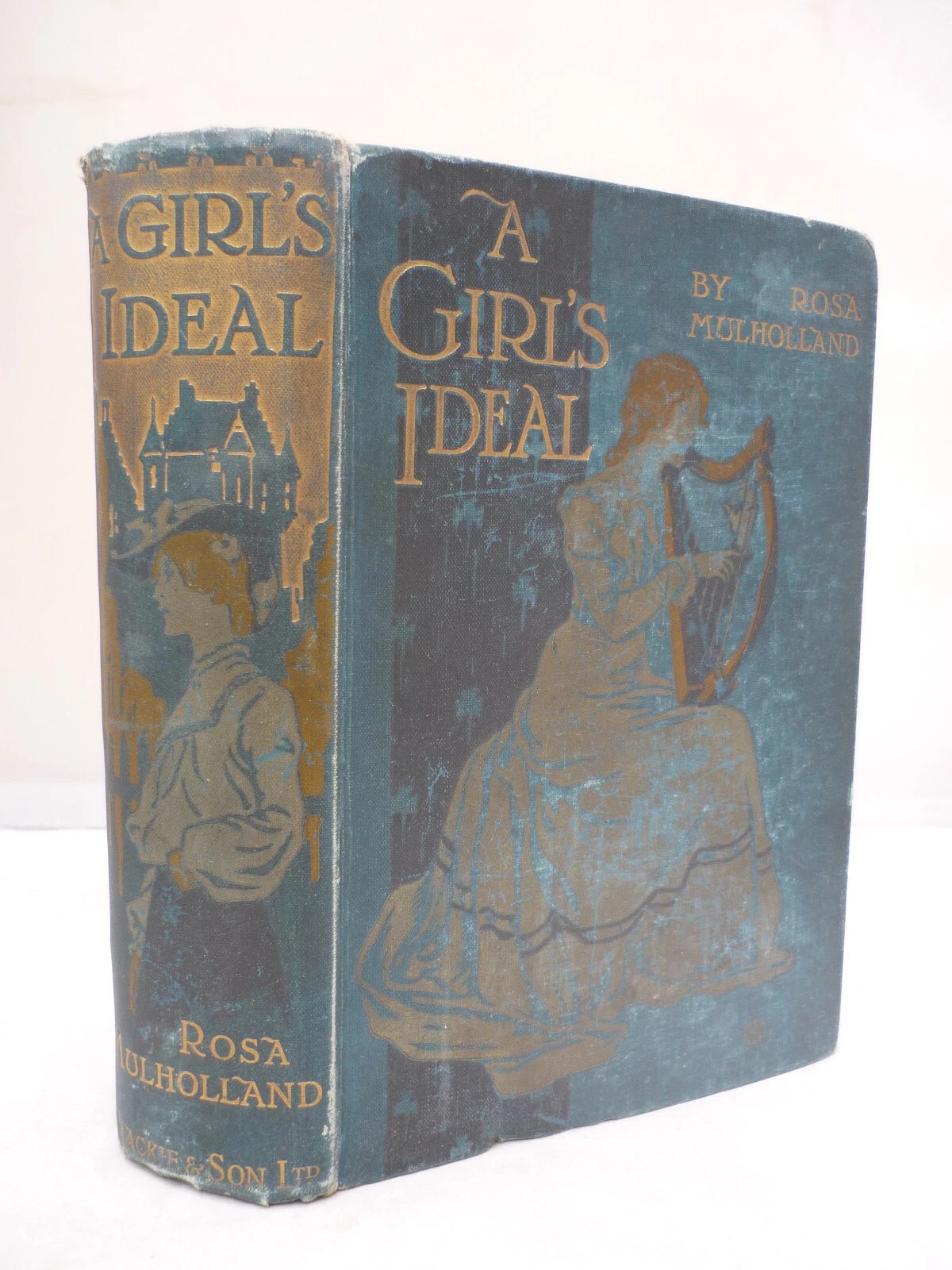
The next one slated for reading, A Girl’s Ideal (1905), appears to start in the United States but will likely shift to Ireland shortly. (It is also available via the Internet Archive.) It is not clear to me that she ever made it to this country and her nascent description is a bit barren. This one is a you inherit a large fortune if you agree to marry this fellow you don’t yet know story!

Rosa Mulholland Part Two: Searching for the Sweet Spot

Pam’s Pictorama Post: Several weeks ago I embarked on reading a new late 19th-early 20th century author, Rosa Mulholland, and wrote a post about her that can be read here. I’ve subsequently read several more books and thought I would update you a bit on my findings. (Recovering from mouth surgeries has given me much reading time – in addition to these books I polished off at least as many contemporary novels!)

For those just tuning in, Mulholland (who also wrote under the name Gilbert) was a prolific Irish writer of the late 19th to early 20th century. Many of these volumes, virtually all illustrated fairly profusely, are beautiful old editions which is what attracted me when I bought the first volume.

I have read several more since I last reported and found one I cannot seem to get into, but more about that in a bit. Terry, Or, She Ought to Have Been a Boy, was one of the few books I was able to find and read online. It was published in 1902 and is a novella that seems to have been a sort of chapter book for older children, or one that could be read to them.

I didn’t love it – for me it felt like it never quite got all the way off the ground. It is about a very obstreperous and wildly undisciplined little girl and her brother who tags along with her exploits. Said children are left with an infirm grandmother who leaves their care largely to a housekeeper. A lot of chaos ensues. Terry is a Rosa Mulholland-type character as a child who we never get to follow into adulthood.

Not my copy as I read it online. Pretty though!

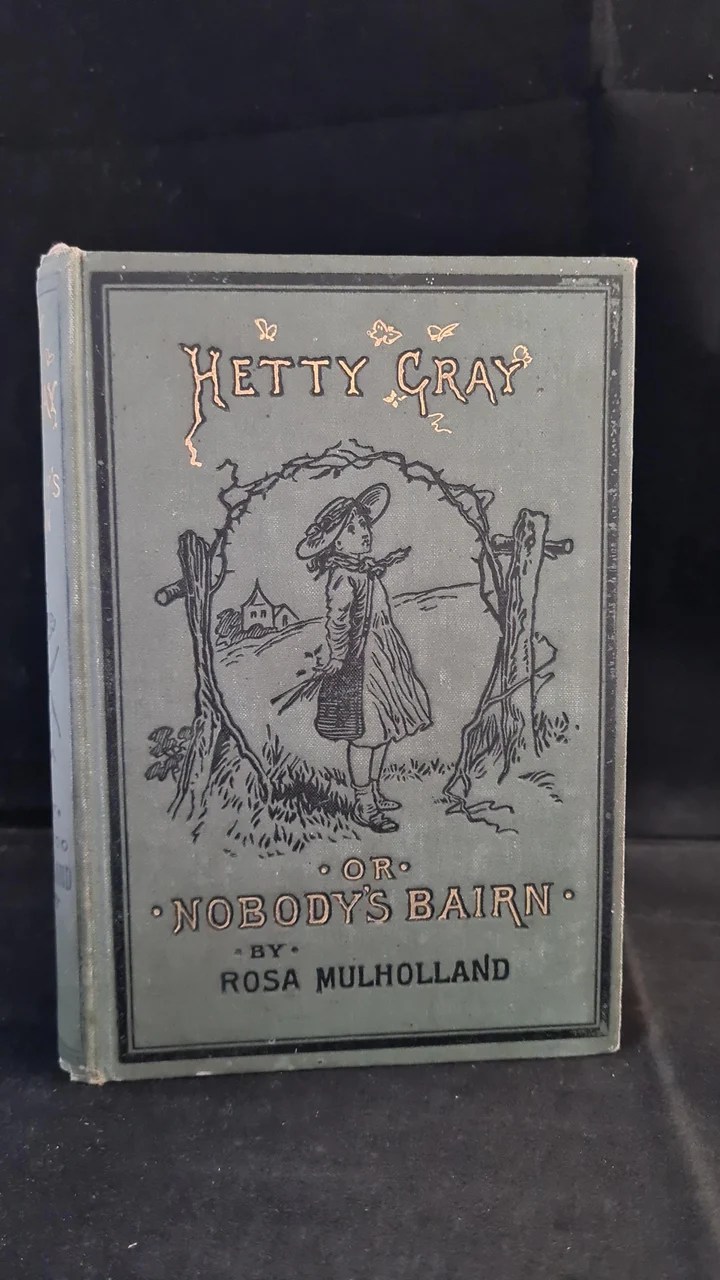
Hettie Gray: Or Nobody’s Bairn (1883) is short novel, also available online and I gather there is a reprint that is widely available. This is a more interesting story where Hettie is a foundling (of high birth of course) who literally washes up ashore and is taken in by a poor village couple. As a small child (with a bit of a wild streak) she is found one day by a wealthy woman who literally scoops her up and takes her off. She spoils her terribly and makes her into a bit of a wretch and then the wealthy woman promptly dies leaving Hettie largely friendless. We watch her original good nature re-emerge under adversity.

Mulholland has a few ongoing fascinations she returns to again and again in her writing – one is strong willed women and the difficulties they have fitting into the narrow society of the time (they are generally somewhat tamed but that will also pays off in other ways), and another is class structure. These two things play together as evidently to be poor and strong willed is seen as one thing but to be rich and strong willed another.

I don’t own this one yet, but there seems to be a fair amount of noise about it so am looking for it (1895).

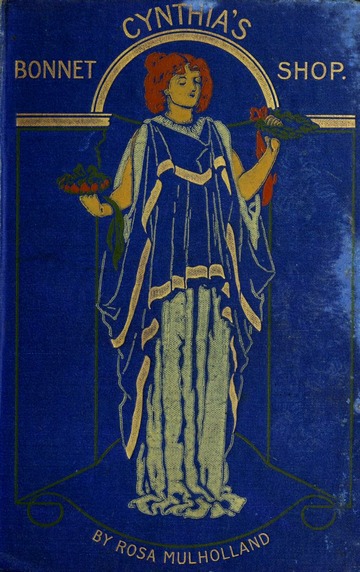
The best of this lot was Cynthia’s Bonnet Shop (1900) and it is for me Mulland at her best. (I did purchase one of the first editions as shown here, but had to settle for one that is quite tatty in order ot make it more affordable!)

Although some of the usual tropes are present, Cynthia is part of a fatherless but otherwise large and intact family which is a nice switch. There is the requisite wealthy (but unpleasant and selfish) relative who inadvertently sets Cynthia on the path to establishing her own bonnet shop. There is a mysterious benefactor. Her London shop becomes wildly popular. Romances for the sisters ensue but skew some with a patent Mulholland, I love him but I think he loves you not me so I’ll step aside, bit of plot. It is a pleasantly long read and the characterization of the two older sisters is great and good fun.

Mulholland notably also has a thing for astronomy. This is the second book (My Sister Maisie being the other) that has a story line about a woman who aspires to being an astronomer. I have to imagine that it either was a personal interest of hers or she was close to a woman who was or wanted to be one. That is another quality of these novels – the women are striving for something but consistently fall short of achieving in the man’s world. I assume this was a factor of the time and place. Mulholland is several decades earlier than let’s say Francis Hodgson Burnett (I wrote about her adult fiction which I enjoyed immensely in a post here). Europe was behind the US in progress for women and I would guess Ireland a bit further behind still. People looking at Suffragettes more than a bit askance as they emerge there.

Another I don’t have but am interested in (1905).

The final book for today, Marcella Grace, An Irish Novel (1886), is a plot that is devoted entirely to class distinction and the inflammatory politics of Ireland at the time. As someone without a lot of background in the political history of Ireland I am not equipped to comment on the position she takes. It is clear that she is leaving some room for a dissenting view (some sympathy for the downtrodden who took the paths of taking up arms) although for all of that they are the evil forces who drive this particular plot forward. This does make for a different book and I appreciate that as she could start to feel a bit repetitive. However, while I enjoyed it I cannot say it was an absolute favorite.

There is one on my bedside pile that I have been unable to penetrate, Father Tim (1910). Unsurprisingly it is about a priest in Ireland. I’m not saying I won’t end up reading it but I have not yet been able to really engage with it. Perhaps the fact that it seems to be written from a man’s point of view isn’t working for me. If I manage to read it I will report.

Another one I am hankering for, 1889,

I’m not sure looking this over that I have precisely found the sweet spot in her writing. I want to say that 1900 seems to be a high water mark, but Terry, Or, She Ought to Have Been a Boy is shortly into the 20th century and was less promising. (I think I have to be careful to avoid these books meant for children – not true of all authors but for me it may be for her.)

I have one more hardcover book in the house to read, Narcissa’s Ring, 1916. I have been acquiring them as they become available. They are more widely available in Britain but the postage to ship a book is so outrageous it puts most of them out of reach. Given what I wrote about in the earlier post and this one, a true sweet spot has not yet emerged.

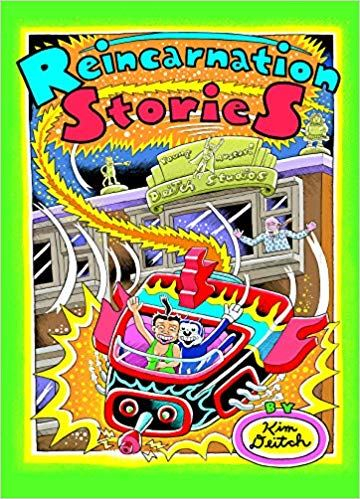
Reincarnation Stories: A Very Biased Review

Pam’s Pictorama Post: Yesterday I kicked off my thoughts about Reincarnation Stories by taking my readers down the road of my bird’s eye view of how Kim makes his comics. Today I get onto the all important discussion of the new book at hand tackling it both as an uber Deitch fan and, well, a wife.

******

Kim did a preview gig for Reincarnation Stories with Bob Sikoryak’s Comics Carousel a few weeks ago and I was surprised to have a good look at some of those pages again and on a screen for the first time. I was also surprised at how visceral my reaction was to remembering the opening scenes where Kim is recovering from his eye surgery. I literally could smell the dreadful hospital smell again and how afraid I was that the surgery wouldn’t work – and how awful it was to watch Kim in the chair, head down for more than a week.

I knew he wasn’t sleeping which also seemed like torture and I felt bad that there were few if any ways I could make him more comfortable. Having said that I pretty much had to help him with everything (a service he repaid more than in full when I had foot surgery a year or so later and was confined to bed for weeks) and our best discovery was that he could watch movies on tv if he was in a certain position and used a small mirror. Reading, surprisingly, was somewhat possible for him but in general it was hard to concentrate. Frankly, it was a miserable time – so odd to have it all rush back. However, as always, it seems he used the time wisely and it was the genesis for this book.

DtGnS0iXQAErmmG

The chair, which you rent after this eye surgery which, of course, requires assembly upon delivery, is sort of an instrument of torture although a definite necessity. It stank of disinfectant and hospital plastic.


Having said that, the glory of the pages was totally fresh to me seeing them on the screen. So many eyeball kicks! So much to look at! The introduction seemed new to me again (despite having lived some of it) and my fan self was immediately sucked in. When I then sat down and opened the book to start reading it again and I am struck by the density. It is satisfyingly thick – a really big dollop of Kim Deitch, unlike any serving of his work I remember receiving in one sitting before. Although I was there for every step of its creation I am struck by this and the fan side of my brain whirs with excitement. The drawings are reproduced at pretty much an ideal scale and this is delightful as well.

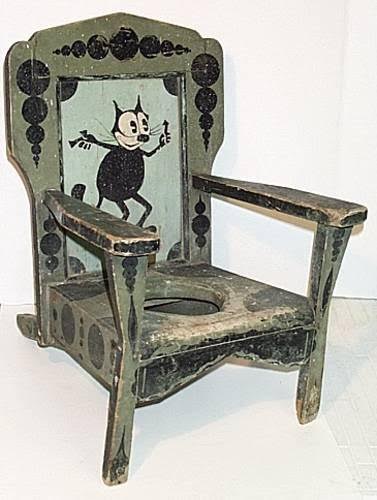
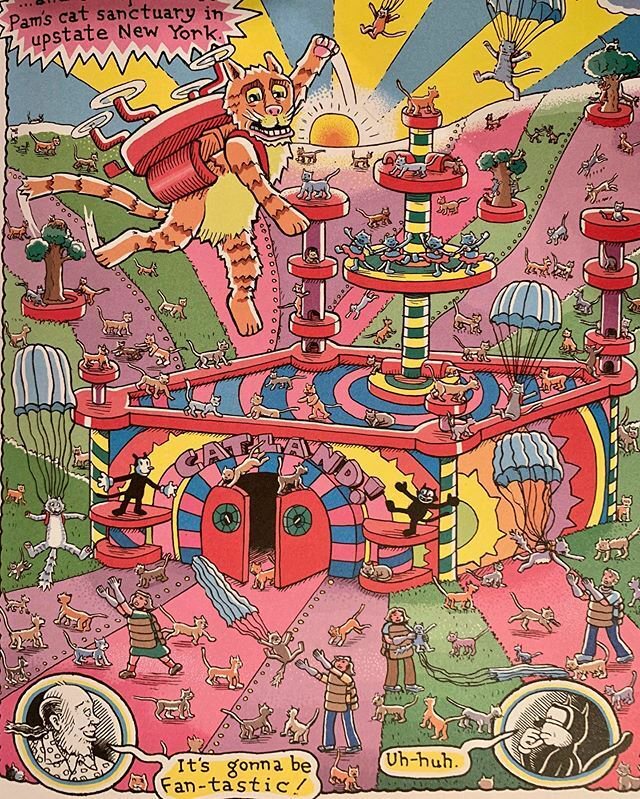
I am realizing now that sitting down to write this is in its own way a pretty Herculean task, there is so much and the themes (mortality, the meaning of life and creativity for starters) are so huge. How not to stroll endlessly through – the color section of my toy museum alone could be the subject of a blog post and perhaps will be in the future. (The Felix the Cat potty chair is real folks although I do not own it – and for that a shout out to our friend Mel!) It is the strange actualization of Kim mining my obsessions and personal mythology which is of course pretty amazing for me to see.

unnamed-1

Photo of Felix potty chair as supplied by Mel Birnkrant


EHBYiskWkAI_8eb

This is a delightfully Deitchian color page!


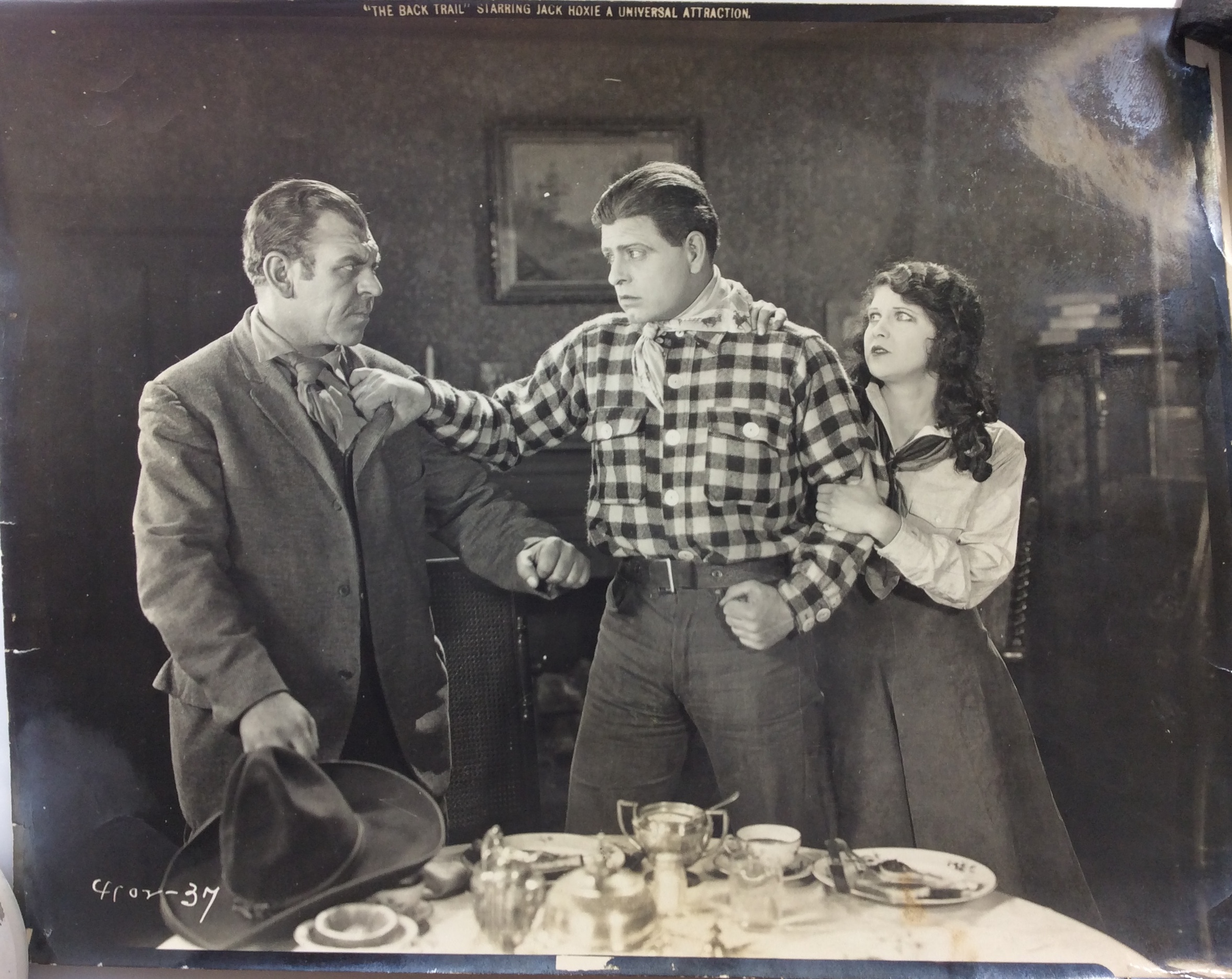
The beginning of the book spends a lot of time with a young Kim and while it is obviously a somewhat faux Kim it is sort of wonderful for me to contemplate a kid Kim visiting the monkey diorama (The Shrine of the Monkey Gods being one of my favorite Kim Deitch story titles of all time), discovering the Plot Robot, meeting Jack Hoxie on a family vacation with younger brother Simon and baby Seth. Family lore, real memories (for we all know the general litany of our spouse’s stories and I know where Kim’s fit) and Kim’s persistent personal mythology and vocabulary (silent and early sound cowboy films, traveling carnival shows, biblical apocrypha) mix and meld in these stories.

Meanwhile, almost unconsciously, the book has an undercurrent that persistently carries us gently, but decidedly, along on a tide of certain themes and to an ultimate conclusion. The most prevalent theme is about the place of art and creativity in the universe and the value of putting something good out in the world. The other is about somehow relating to and considering a universe that cares (at least a little) and what our place in that universe is. The Hidden Range story, Jack Hoxie’s own biography and what he took from his somewhat tragic childhood, Young Avatar (Kim striking it rich by putting Jesus his own comic as a super hero in an alternate universe), a young Kim and Spain taking a creative page or two from the Plot Robot in a pinch – these all boil down to a lesson about making a positive contribution in the world. Live right, entertain, contribute – simple but all important goals.

jack hoxie

Detail of a still from The Back Trail which Kim uses in the Appendix. (He adds that this film is available on DVD – in case you are wondering!)


Even I was fascinated by the extravagant Appendix as it grew like topsy. That there would be an Appendix was clear early on – that there needed to be an opportunity to provide some real life background on Jack Hoxie and Buck Jones. Their personal histories and mythologies are now faded over time and Kim knew he wanted a place to bring them back to life. However, that it would burgeon into more than forty pages was not immediately evident. (It was even a bit alarming – how long would it stretch on? Um, honey, is this maybe another whole book?) In retrospect, it is not only some of the most entertaining stories in the book (Kitten on the Keys, Who Was Spain?), but it serves to tie it all together.

buck-jones-and-silver

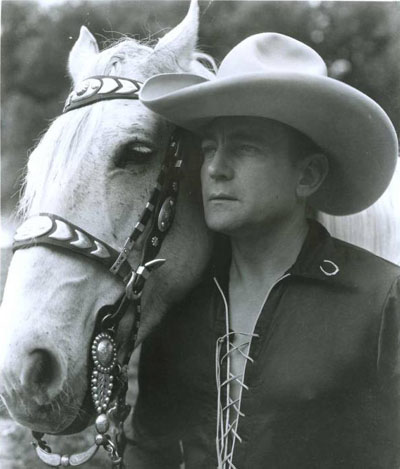
Buck Jones and his horse, Silver


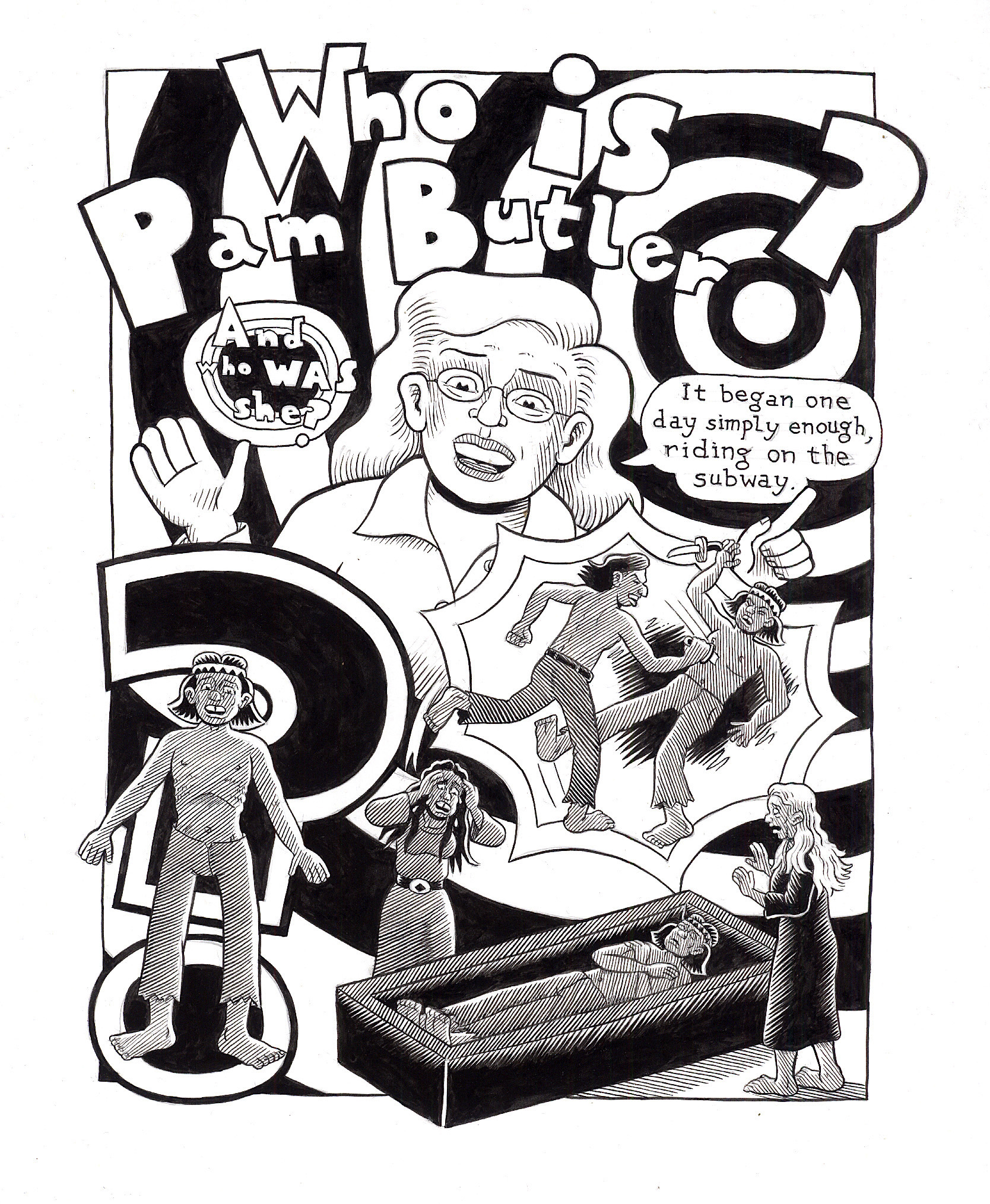
In looking it over I am undeniably pleased to find my own small contribution at the back – longer than I remember it being, illustrated at the start by Kim. It is my personal reincarnation story – one that has taken frequent turns at dinner parties and other occasions when I am called on randomly to sing for my supper – or when the subject of past lives comes up for some reason. I published that story in this blog while the book was being prepared for publication. You can find that post here if you missed it.

20180526-00012


I will say that I have a somewhat complicated relationship with Waldo which in some ways resolves to a degree in this book, with his granting that my toy museum has its points – perhaps I am not all just a piece of cheese! While I started life as a Waldo fan, I will say living with him is a bit different than just seeing him on the page and as with all having to do with him, perhaps the less said the better. But Kim’s relationship to his maniacal muse balances out the end of the book and in a sense, Waldo’s cynical world view almost gets the last word – without being a spoiler, I will just say Kim snatches it back at the very end.