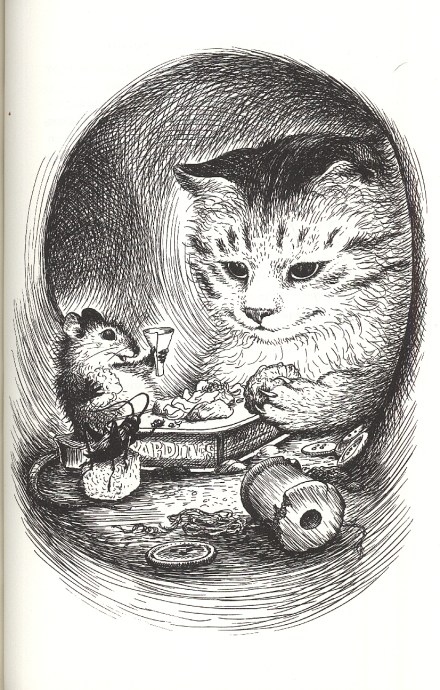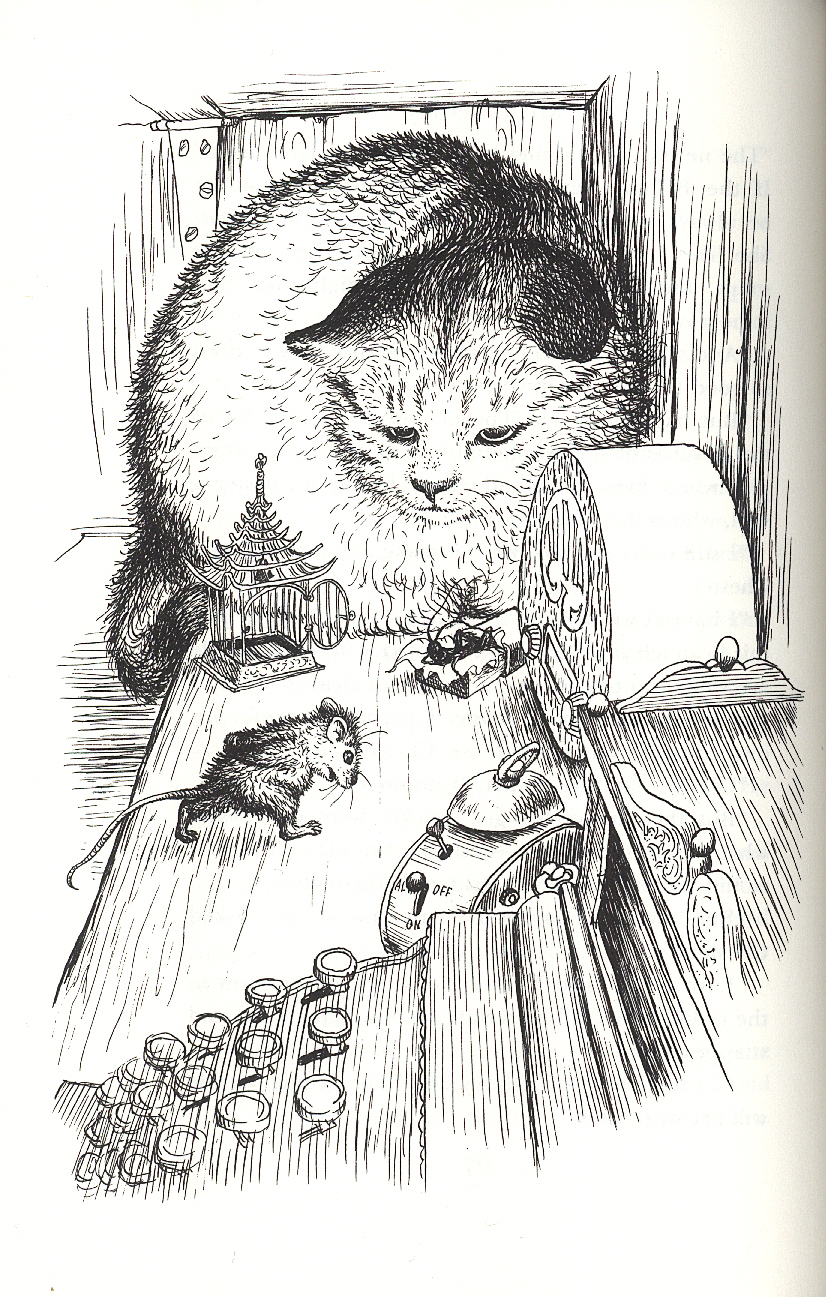
Pam’s Pictorama Post: This is one of the many books from a backbreaking pile we brought home from Bethesda where we purchased them at a grand and glorious used bookstore. (For last week’s post with pictures have a look here.) The store was enormous; the books were cheap and interesting. Today’s book is one Kim spotted in a pile of kid’s books, all neatly wrapped. His eagle eye spotted that the illustrations were by the genius illustrator, Garth Williams.
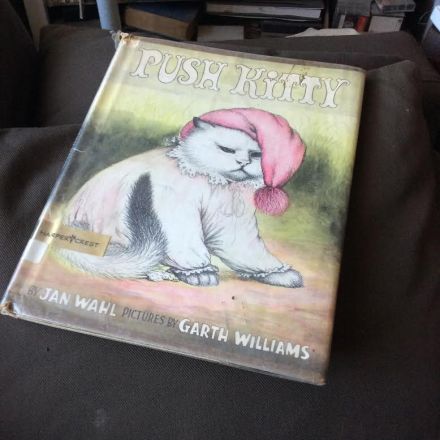
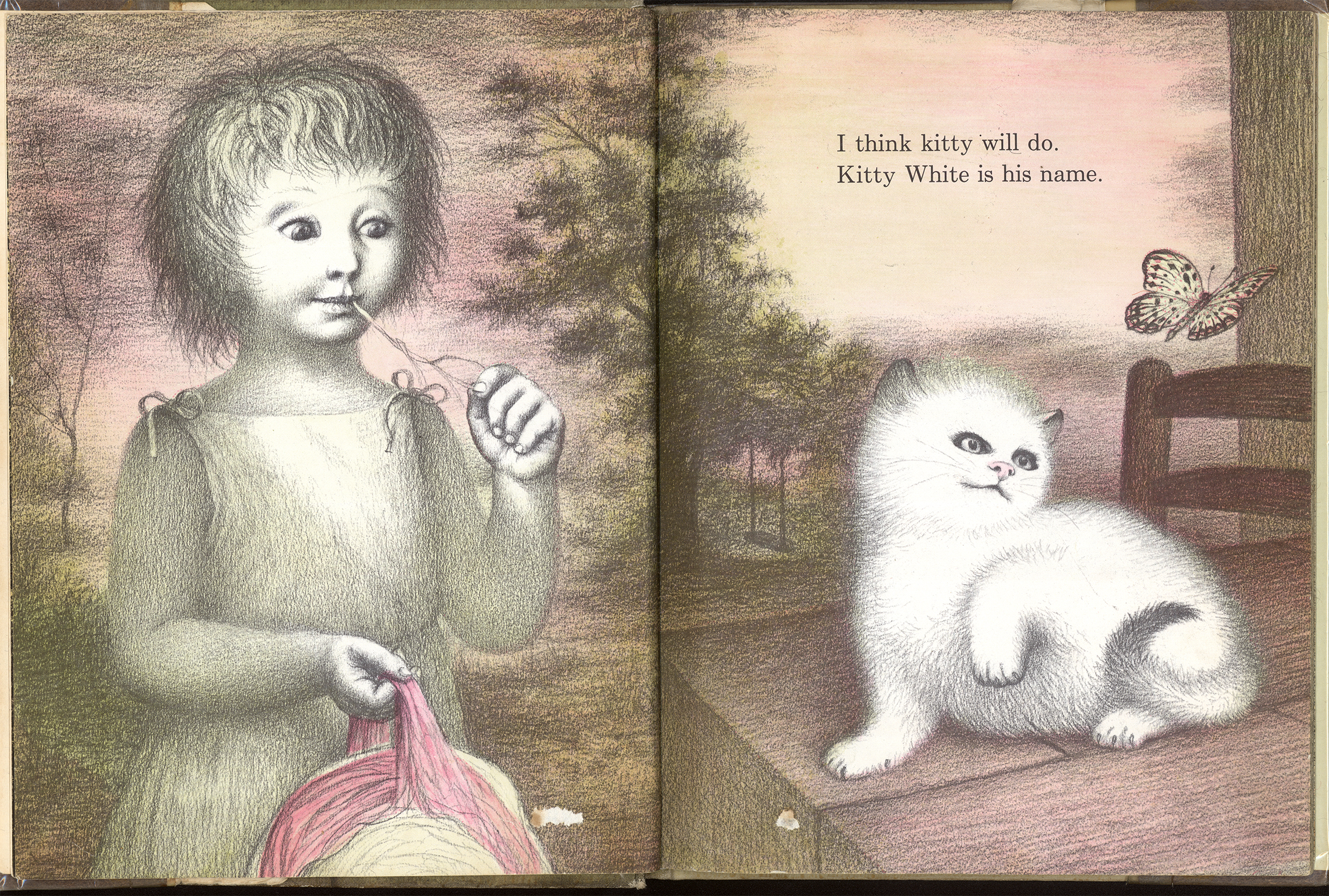
I have written about two books illustrated by Garth Williams before. The first time I wrote about his illustrations was a book I reacquired as an adult called Push Kitty. It was a childhood favorite I had forgotten about and then remembered one day. It was easy to find a used copy on eBay and a real pleasure to see it again. It wasn’t until I looked through it as an adult that I realized that the memorable illustrations were by the same man who did those for books like Stuart Little and Charlotte’s Web. (That post can be read here.)
The second time I wrote about a Garth Williams illustrated book was A Cricket in Times Square. (The post can be found here.) This book with his illustrations remains one of my very favorite childhood discoveries. Garth Williams is sort of the platonic ideal of kid’s book illustrators for me and he was at the top of his game. The writer George Seldon’s story puts it at the top of the list. This book is my (albeit sort of odd) baby gift go to. (I secretly figure it will ensure kids growing up in New York City will want to stay here, while it will plant the idea in the minds of those whose parents were silly enough to move away that they have a hankering for the city. Yes, this is slightly subversive.) All I can say is if you haven’t read it, go right now to Amazon and pick up a copy and you will thank me.
That brings us to this little morsel today. Like virtually all of us I was raised on a shifting and vaguely never-ending pile of Little Golden Books. Having a sister two years older than me and a younger brother, Little Golden Books entered the house aplenty. Strangely I don’t actually remember buying them or where they came from at the time; they were just omnipresent. Perhaps I was just too little to remember. Such things, like many toys, came from variety stores rather than bookstores at the time.
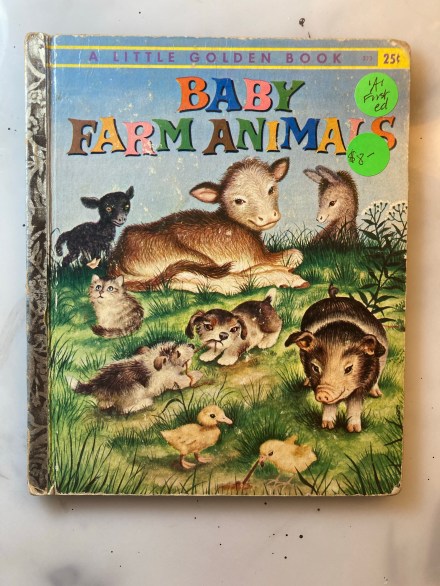
I have to imagine that Baby Farm Animals was in the Butler family library. According to my copy, the original copyright was 1953 (AI has this wrong and only has the later publication date of 1958, noted in this edition. Additionally strange that a small sticker on the front of the book – defacing it incidentally – identifies this as a first edition. Can’t anyone read?) Anyway, this means that as a small child I was already looking at a much-reprinted book. (Later editions and even brand news ones are easily available right now.) Other, later I assume, editions seem to feature just a single one of the animals on the cover – the bunny or the donkey.
There is however, still a thrill when I look at the gold and black pattern of a Little Golden Book spine. This one sold for a princely 25 cents originally. (Despite the price tag of $8 I paid $4 the other day.) The cover on this edition is an illustration all its own featuring highlights of the animals inside. The puppies are playing tug-o-war with a bit of string and the pig watches the ducklings eat a worm. A kitten is staring off into space at something (bird?) and a baby lamb and donkey are on either side of the baby calf featured at center.
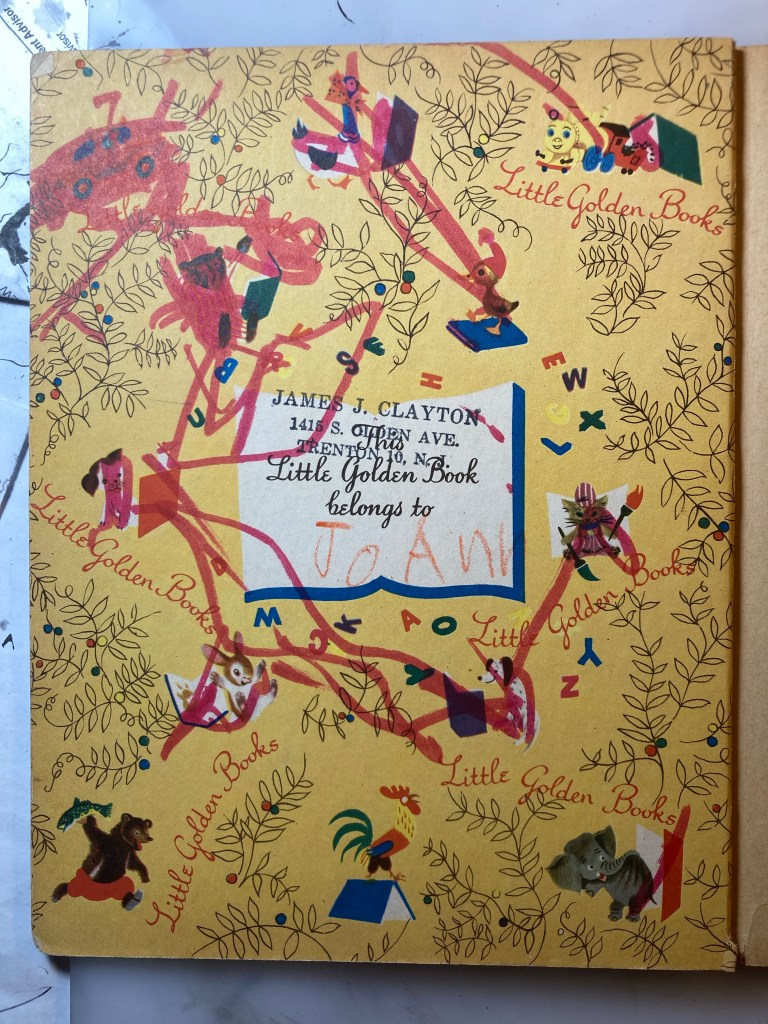
The inside covers are the cheerful yellow print with animals I remember and a spot for This Little Golden Book belongs to…. Joann has attempted to write her name in this one with some red scribbles although she luckily contained herself to that page. Meanwhile someone else has liberally stamped their name and address throughout, James J. Clayton, 1415 S. Olden Ave, Trenton 10, NJ. That just seems odd and I can’t imagine why Mr. Clayton felt the need to do that.
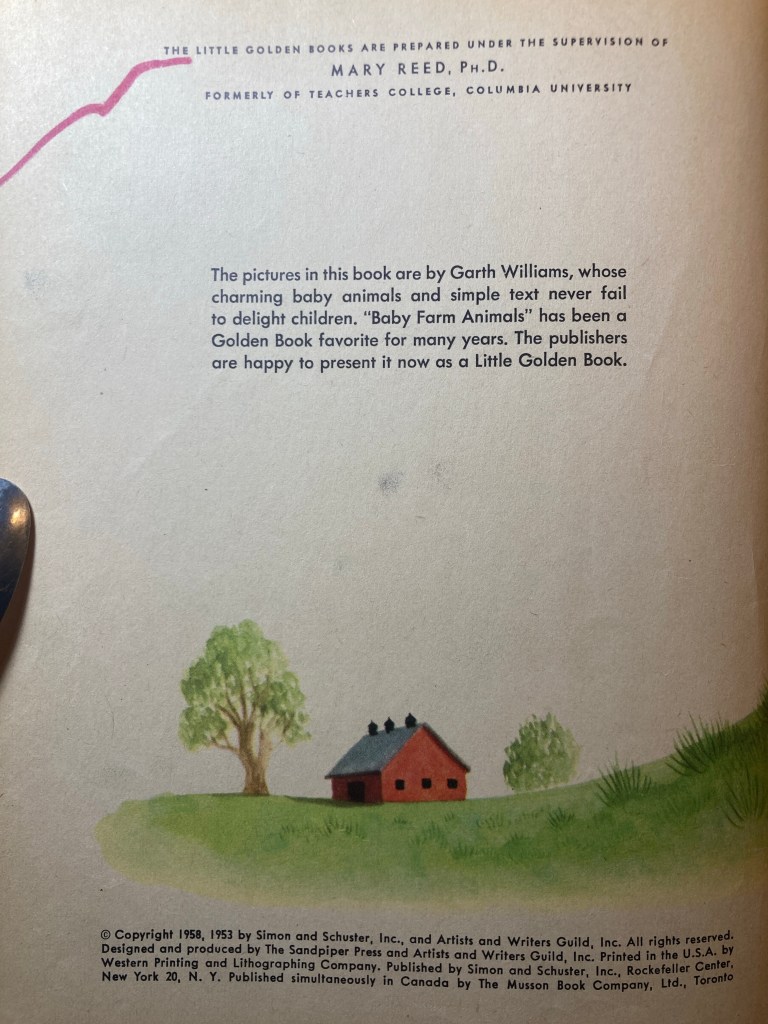
Inside I learned that, The Little Golden Books are prepared under the supervision of MARY REED, Ph.D. Formerly of Teachers College, Columbia University. Below that, The pictures in this book are by Garth Williams, whose charming baby animas and simple text never fail to delight children. “Baby Farm Animals” has been a Golden Book favorite for many years. The publishers are happy to preset it now as a Little Golden Book. So perhaps it had an earlier publication life?
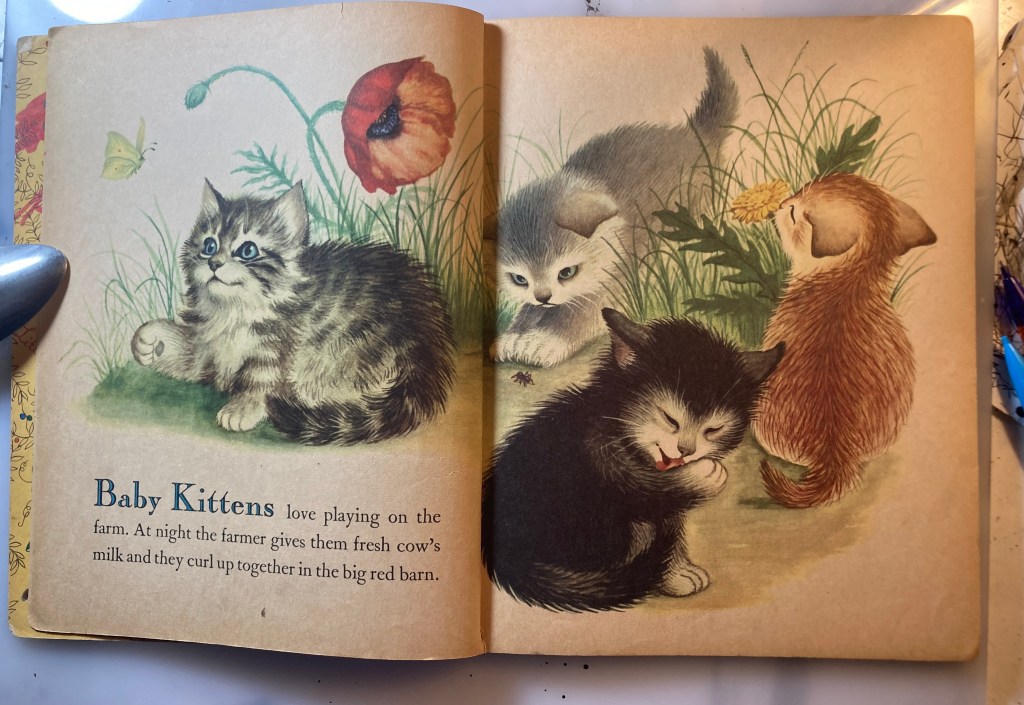
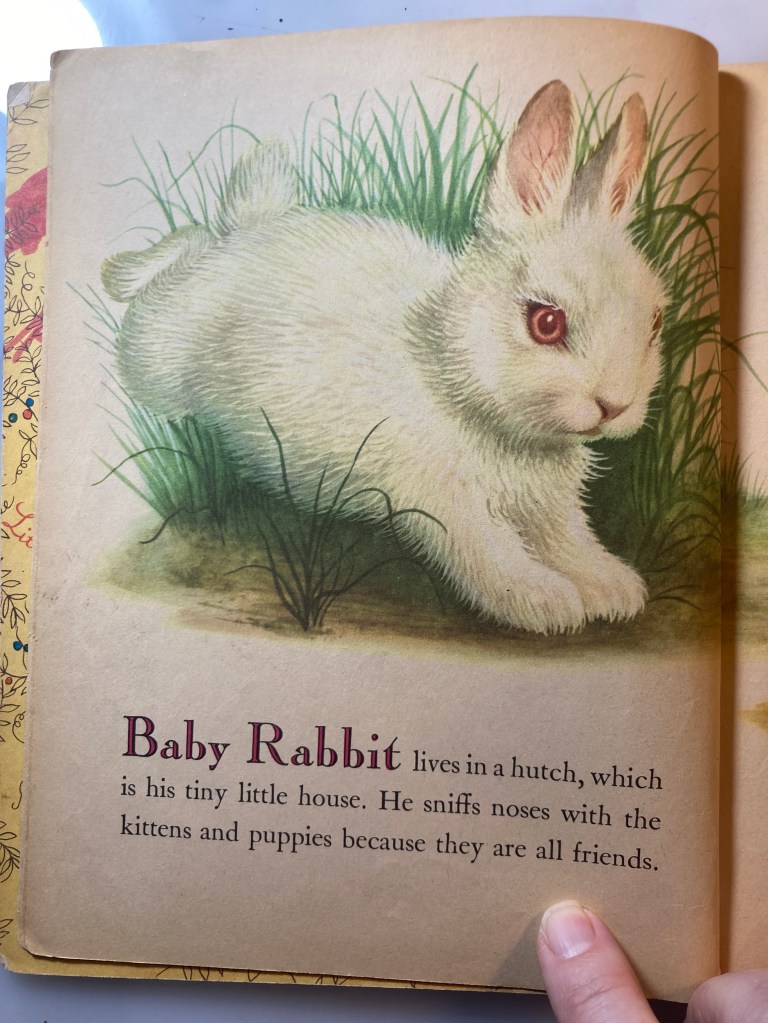
I have favorites in this book which I am showing here. Not surprisingly the Baby Kittens [who] love playing on the farm. At nigh the farmer gives them fresh cow’s milk and they curl up together in the big red barn. I especially like the little tuxie cleaning himself although the gray one playing with a bug is pretty hotsy totsy too. However, for illustrations the rabbit on the next page blows me away. So fluffy and there is a point made about him being friends with the kittens and puppies although I wouldn’t want to put that to a test.
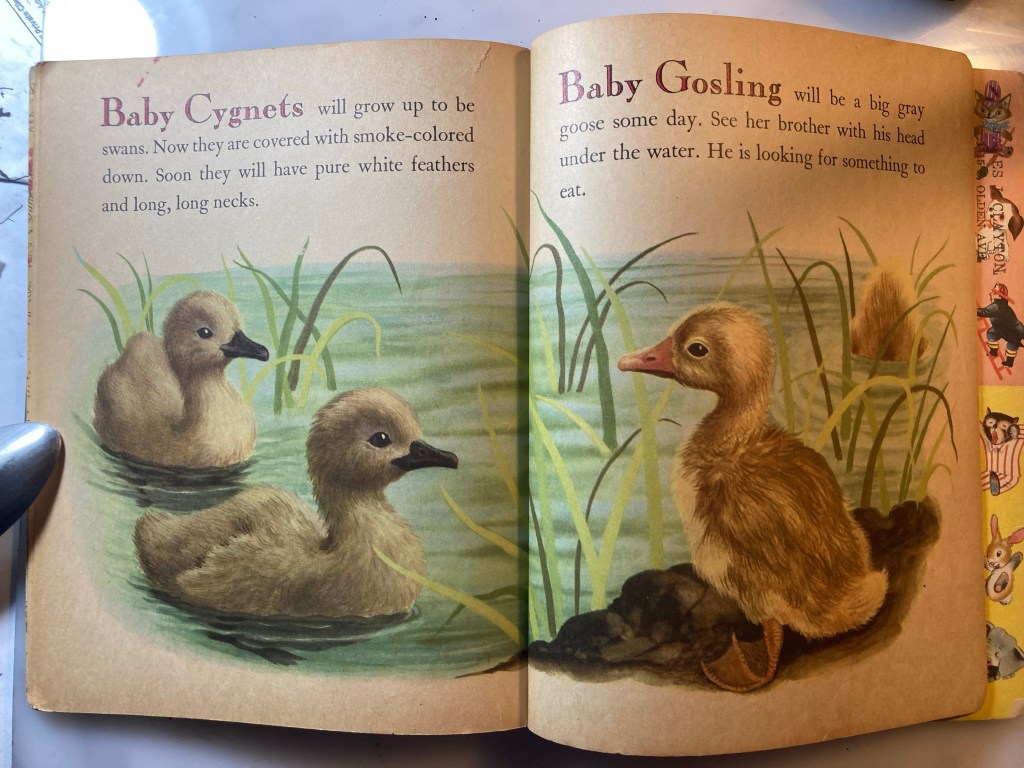
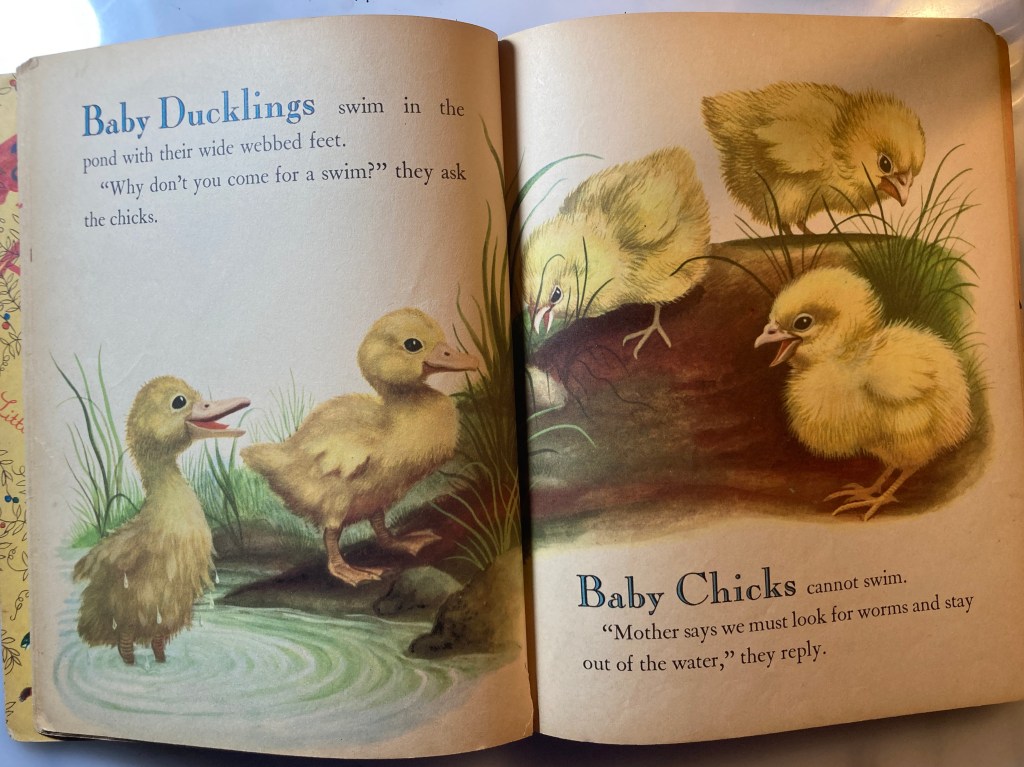
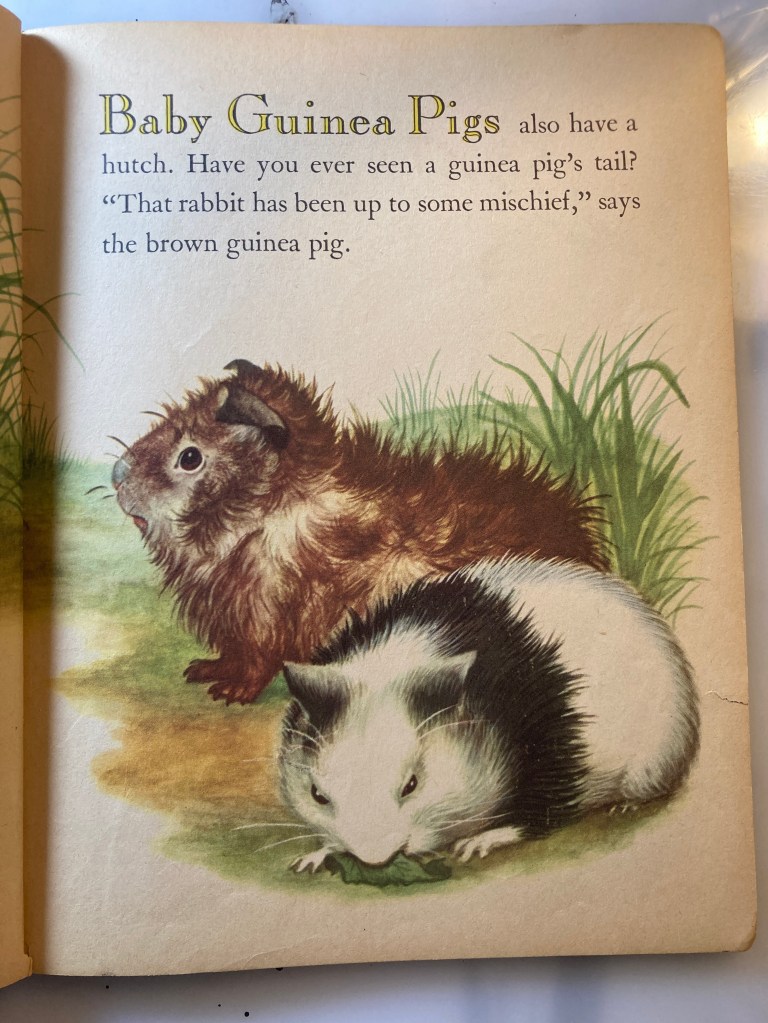
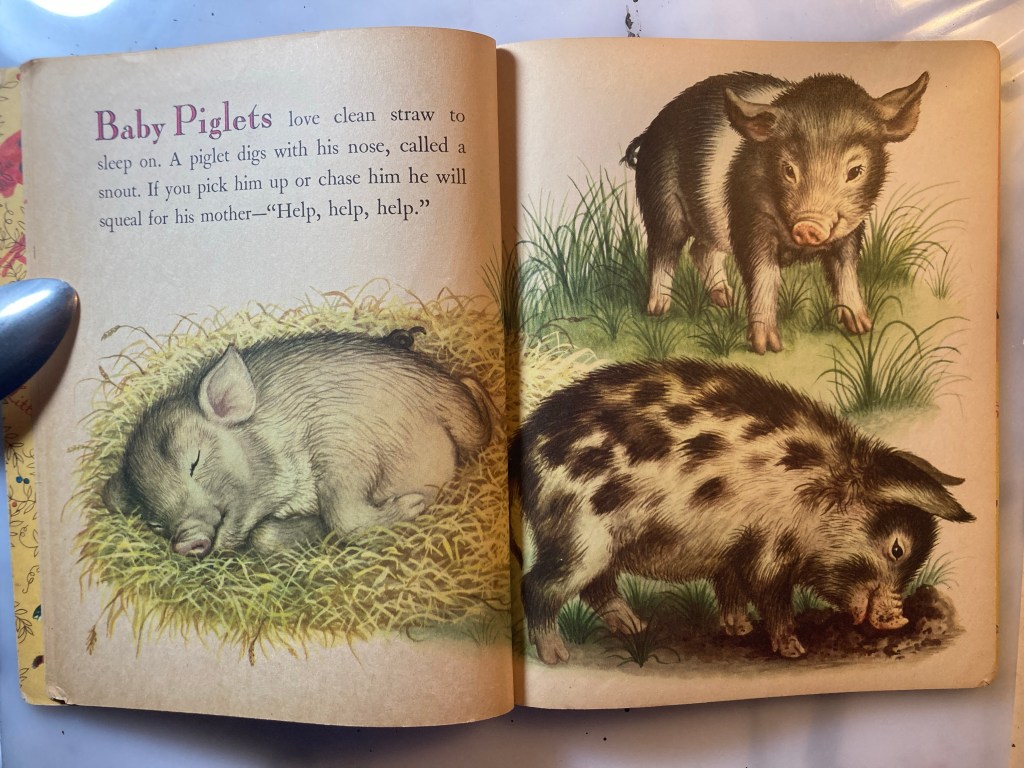
Beyond that guinea pigs are featured – a mainstay of childhood pets it seems although it as a farm animal seems like a bit of a stretch. Ducklings and chicks are on facing pages, all downy cuteness. And it interests me that he has both cygnets and goslings and mentions that one will grow into a swan and the other a goose. (Trumpet of the Swan anyone?) For Pam’s picks, the two pages of piglets are next – bringing us back to Wilbur, the man could draw a sweet looking baby pig!
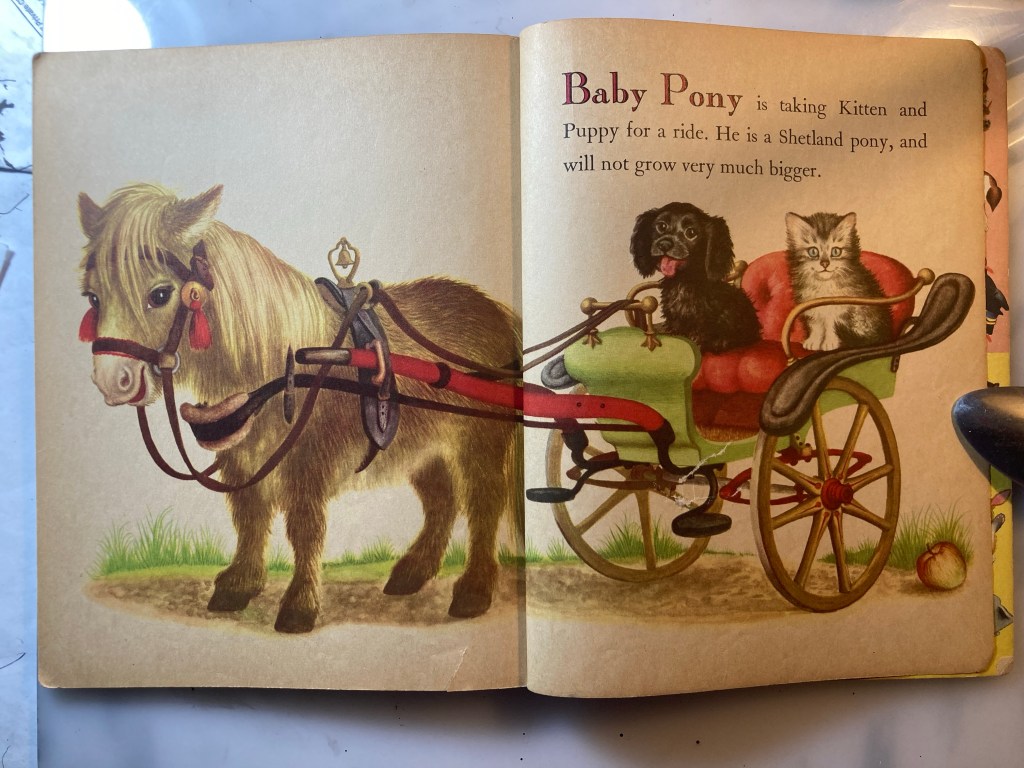
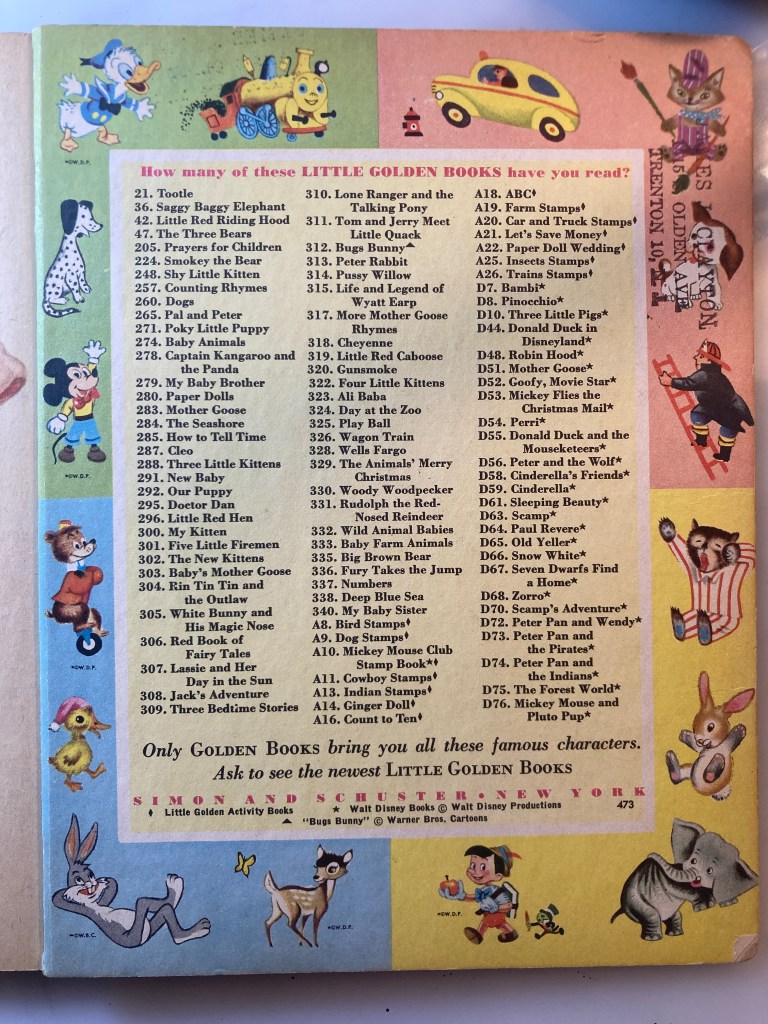
The animals get bigger in size toward the end of the book – a horse, a pony (who won’t grow much bigger…) and ending with a baby calf. The end paper has a list of all the Little Golden Books you could order (with an order number) and I remember pouring over this list and the little illustrations around the edges. Bugs Bunny! Bambi! I wanted them all. (Was it a conscious decision that we didn’t have any of the ones with popular characters? Somehow I think it was more coincidence or unconscious on Mom’s part.)
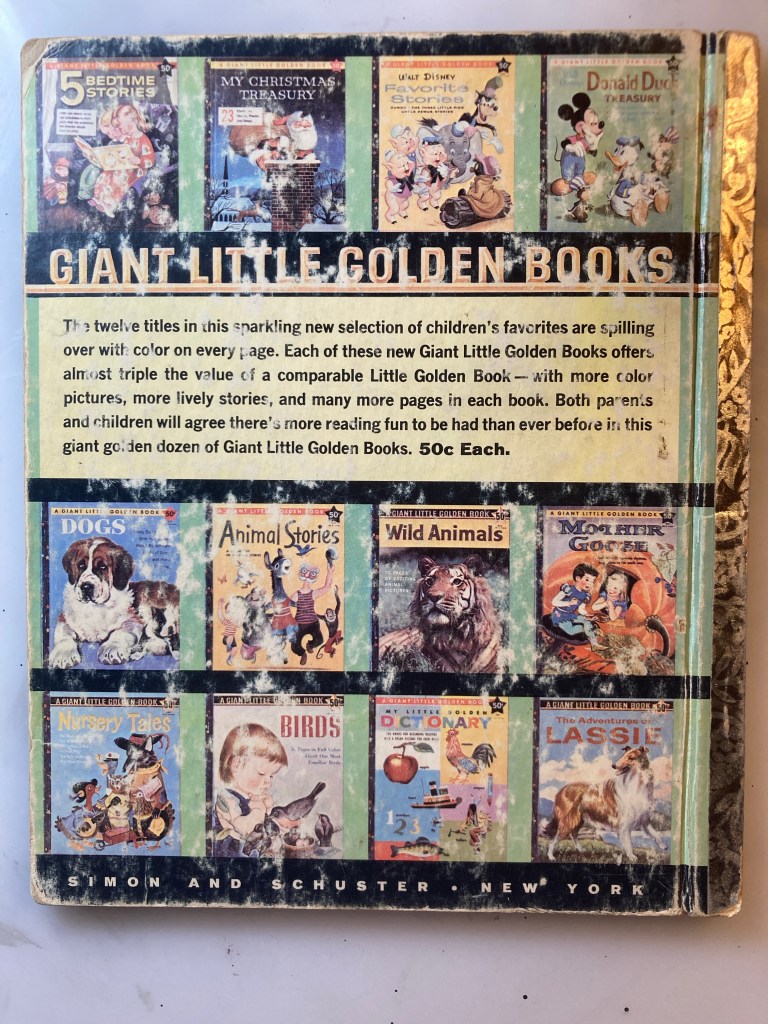
The back cover is very worn and features Giant Little Golden Books. These bigger books offer almost triple the value of a comparable Little Golden Book and cost 50 cents each.
For me although the incentive was definitely Garth Williams, it was nice indeed to have a trip through a Little Golden Book again as well. Simon and Schuster held onto this imprint until it was purchased by Penguin in 2013 and now they continue to produce the line.
This turned out to be a long one so thanks to those of you who made it through!