Overwhelmed

Pam’s Pictorama Post: Recently I started our tale of renovation woe and adventure and now we stand on the threshold of it. If all goes with plan, our windows will be replaced on Tuesday and work will begin on our kitchen shortly after. (That original post can be found here.) Today I sit, surrounded by boxes that need to be filled, wondering how exactly we will do it.

Generally speaking I am very good at managing things. A friend at work once compared me and my then colleagues to border collies. Efficient, sometimes nipping, exacting little canines, herding and organizing otherwise errant sheep. (Fundraising at the Metropolitan Museum often seemed that way. It was about steering things along and executing them. At Jazz at Lincoln Center a bigger and toothier animal is needed – another colleague used to refer to something called shark-itude, and for now suffice it to say more of that type of animal is required in this job.) Fundraising breaks down into many exacting tasks to be executed ongoing and your success is largely your ability to continually hit those marks, or as many as possible.

Therefore, the fact that I sit in our 600 square foot apartment (at least they told me that was how many feet it was when I purchased it – I have neither tested nor challenged that fact, but I have wonder occasionally) worrying exactly how to do what needs doing is a bit unlike me. I have been examining the challenge for days, weeks in fact pausing (only when in South Africa and other things overtook my daily consciousness) and frankly it seems mathematically beyond reason to arrange our furniture in a fashion which allows the window folks to do what they claim to need. That is without actually removing any of the furniture to another location.

IMG_2958

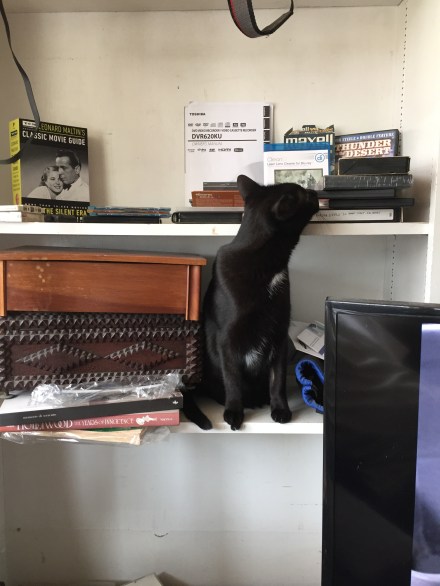
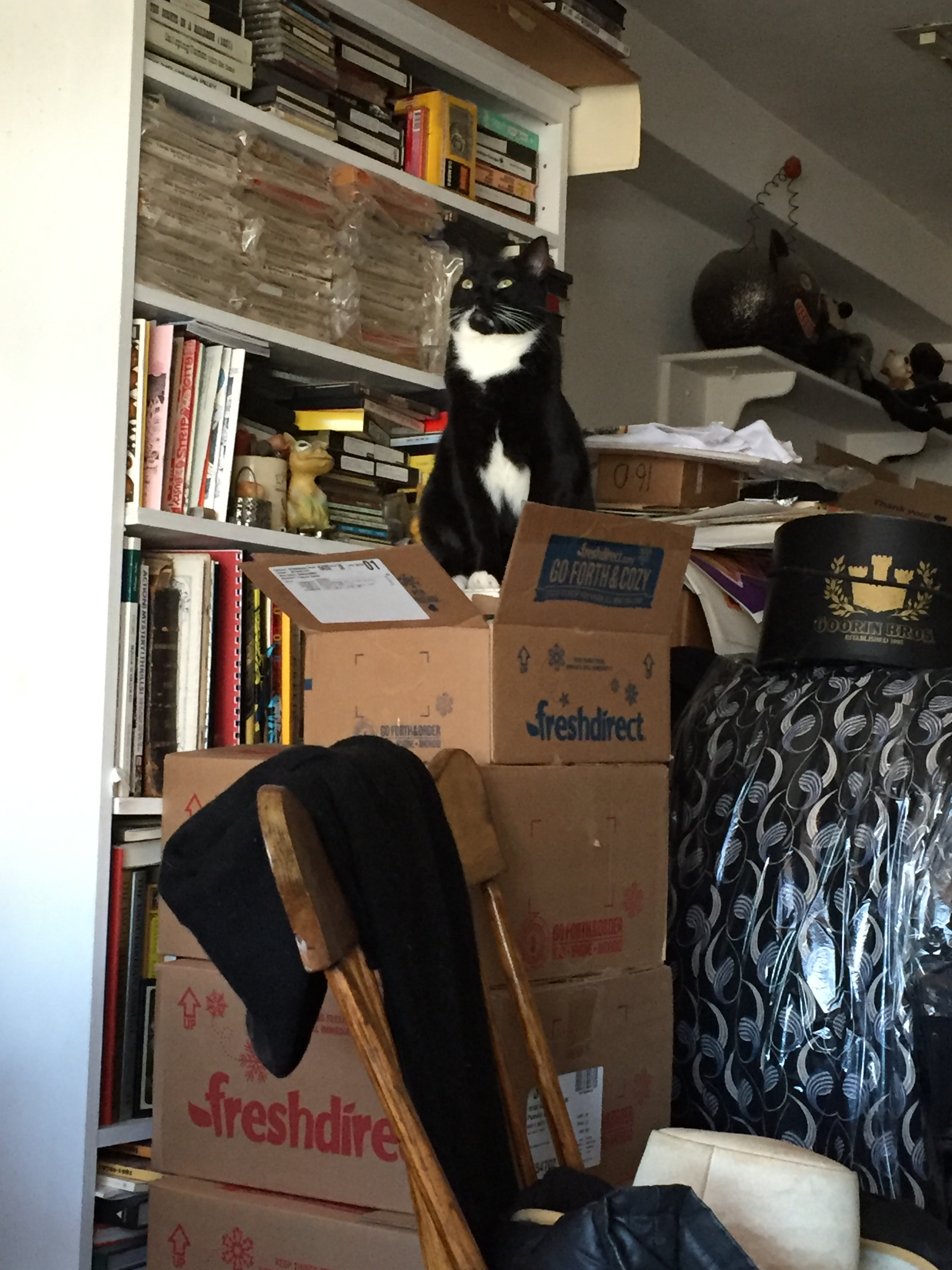
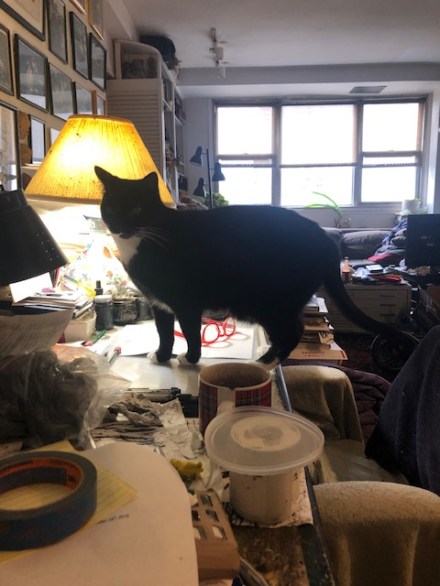
Cookie is ready to help


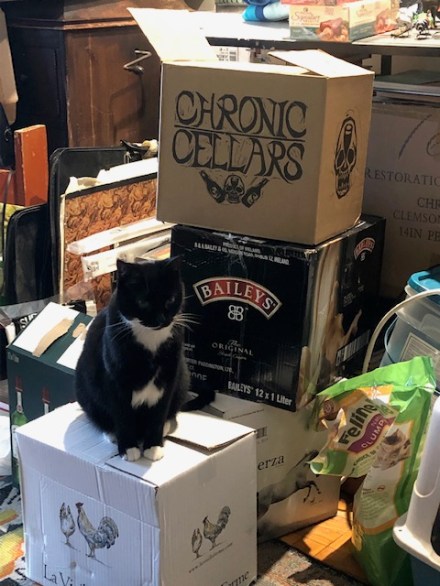
A friend was over last night and suggested turning the couch on its end and propping it up against one of the bookcases for the duration – the best suggestion I have heard to date for increasing access although the execution of it concerns me a tad despite the fact that I consider Kim and I reasonably fit. (Thank you Bill!) Boxes of our beloved (and admittedly a few still unread) books are being packed today in a wild variety of liquor store boxes – Bailey’s anyone? Kim’s to be maintained in his own mystical reading order requiring his own packing. (I just piled mine in by size.) A couple of real dogs are heading to the thrift store where perhaps they will find a new readership. These boxes will theoretically, in turn and when we are in a post-window replacement world, hold dishes and pots and pans from our kitchen. They seem inadequate for that and there will need to be more I suspect. Hopalong Cassidy is playing on the tv although we are not watching, somehow his voice has a soothing Saturday morning aspect to it.

7816-2

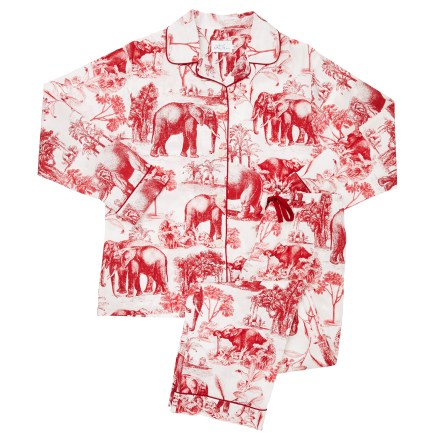
My pj’s are still available online from a company with the great moniker, The Cat’s Pajamas.


I prefer to do rather than to fret, but as I sit in my elephant pj’s this morning, cup of cold coffee at my side (night attire and coffee drinking habits have indeed been examined here and here for new readers) I am somewhat unsure how to proceed. I apologize that you, Pictorama reader, have to be along for the ride, but truly it is the only thing on my mind today. I wonder if the great generals and other masterminds have had these moments – sort of knowing somehow you will have to drag a camel throw the eye of a needle and wondering if you are up to the challenge.

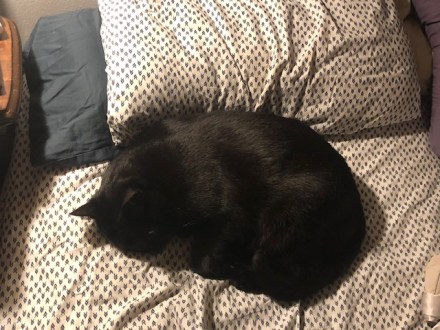
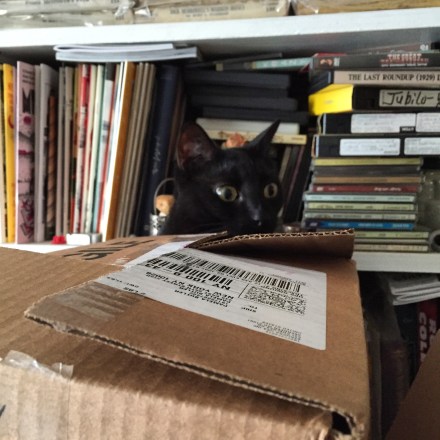
I guess I figure come what may, somehow furniture will find a temporary perch, room will be made and windows replaced. Hopefully no furniture, toys, cats or people will be injured in the process. I will then find the stamina to empty our tiny but packed kitchen for phase two. (I’m sure you will hear more from three weeks of kitchen work and at least a week of take-out eating as a result.) As you see above, Cookie is at the ready to help. As I write she is supervising Kim packing Frank Merriwell paperbacks. (Blackie is snoring on the bed having assumed the warm spot I left upon rising earlier, as is his habit. For now he is unconcerned with this adventure. I am cat-like in my own craving for home quiet and routine. My own fur is therefore ruffled greatly.)

IMG_2576 (1).JPG

Blackie slips into my spot in bed for a nap when I get up each morning.


After all is done I will see if I can muster the energy for a last maneuver for me and my troops – erecting a wall of bookcases which would enable us to see portions of the floor we haven’t in years. Wish us luck!

Johannesburg

Pam’s Pictorama Post: Yesterday’s post poked around a bit at some of my underlying thoughts about heading off to South Africa for a week of work around the Joy of Jazz festival. My internal resistance to the trip pointed to something more than the inconvenient travel. Nonetheless, I hopped on a plane for upwards of 15 hours, and only after only a bit of intermittent sleep I found myself on the other side of the planet where I stumbled off the plane and began my adventure. While I usually write more about myself when traveling Johannesburg was surprising enough as place that I am taking a departure to do a bit of an overview in this post today.

Those of you who are Pictorama readers already know I have traveled a fair amount with two trips to Tibet under my belt, Bhutan and a bit of Nepal along the way. (I had reason to examine those trips in a recent post about a trip to California which was somewhat disastrous in August. That post can be found here.) I did a brief turn in South America (Peru, Buenos Aires, Santiago) many years ago on my first trip representing the Metropolitan Museum. Shortly after taking the job with Jazz at Lincoln Center I had traveled to Shanghai. (That adventure was memorialized in my post which can be found here.) Mostly I note this because I have traveled a fair amount for comparison. To my surprise, Johannesburg is not the Third World, but neither is it the First and I will write more about that below.

I had not really considered what I would find when I got to Johannesburg and frankly there were things that surprised me. On a very basic level, I had not realized that Johannesburg is at an altitude of almost 6000 feet. While that wasn’t really high enough for altitude sickness (Lhasa for example is almost 12,000) the first time I went to run up a flight of stairs I couldn’t catch my breath. It is indeed high enough to get winded with exertion and perhaps to make me a bit dumber than usual – not good when you are trying to work in a foreign country!

It is extremely dry which I had considered (no umbrella in my suitcase, lots of moisturizer), but I was surprised that instead of desert vegetation there were deciduous trees (leafy) and even some evergreens, although also the occasional cactus. It was spring there (the seasons are opposite from ours) and we saw an abundance of beautiful flowering trees at the height of their bloom. It was one of the nicest aspects of the trip, the smells of these flowering trees (beautiful purple jacarandas) and other plants as well as seeing them in flower. At unexpected times I would wonder at what I was smelling and ask what it was. Generally people just looked at me like I was nuts – clearly enough of their day to day that they don’t think about it and no one could ever tell me what plant I was smelling. Giant aloe plants also seem to grow wild and at one point I am fairly sure I was enjoying wild jasmine when outside taking a break at the Apartheid Museum.

The food was simply amazing everywhere we went – much of it South African, but with an especially memorable Portuguese meal tucked in there. While, by nature of my business, many of my meals were in fine restaurants, even the more modest meals were notable. I was concerned that as a pescatarian my options would be limited, but there was a remarkable profundity of excellent fish and vegetables while meat of all kinds was indeed in abundance. The extreme spiciness which I experienced that time in London was evident – although the hot spices were full bodied and nuanced, not just a matter of blowing your head off. Many of the upscale restaurants based their menus on either traditional South African or pan African cuisine. Several meals will live in food memory.

IMG_2696

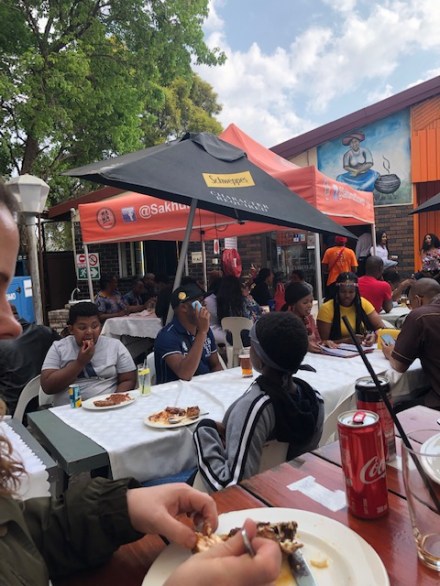
Lunch at a cafe in Soweto.


The extreme dryness however surprised me by making me cough and, perhaps along with the altitude, caused my nose to ooze bloody congestion endlessly throughout the trip – which I gather is not unusual for visitors and tormented me, waking me occasionally despite exhausted sleep. I battled these issues by drinking what must have been gallons of water. Although some of my colleagues drank the tap water I never do in foreign countries (it may be safe, but that doesn’t mean I want to take the time for my stomach to adjust to it) so I felt responsible for a vast number of plastic bottles which will need to be recycled. (I did spy a staff person at the hotel carrying out those bottles in a bag almost as large as himself.)

As I mentioned above Johannesburg defied category of First or Third World so I Googled it out of curiosity and discovered that it is indeed in a somewhat new category of Second World. We drove to Soweto for a Jazz for Young People concert and on that drive there was poverty not unlike what you see in Nepal or India – shanty towns, vast areas of trash. There are people begging, although my experience was that it was mostly at traffic intersections and of course you see that (to a lesser degree) when you enter Manhattan via the Holland Tunnel. I was told that these were largely immigrants from the neighboring Zimbabwe who came to South Africa starving and looking for work. (Their immigration is controversial there.) Much of where we spent our time was like any cosmopolitan city however. We could have been any number of generic urban places. Joburg was a strange mix of things and in the end not quite like any place I have been.


It is no secret that parts of Johannesburg are dangerous and women in particular are told to be very careful. Night travel in particular seems to be considered carefully. As a result, and because I worked almost every waking hour I was there, I did not attempt to go anywhere alone which was unusual for me as well.  We saw some wealthy enclaves with walls around them which reminded me of Lima, although I didn’t see many individual homes this way – mostly sort of gated communities. When being driven to the north and the Apartheid Museum on the one morning we had to ourselves, our driver gave us a most interesting impromptu tour. He began by discussing the immigration issue – in his opinion the people from Zimbabwe had a right to come looking for a better life as had generations who had migrated to Johannesburg in prior decades. This is clearly a controversial issue there.

As we drove down a highway that could have been I-95 in Connecticut, I was fascinated when he pointed out a developed area of high rise buildings (could have been Stamford) and said that it had once been the heart of Johannesburg, but as the commerce moved to Sandton (the area we were staying in) this area had become desolate, deserted and ultimately unsafe. All the buildings we saw were now in disuse and inhabited by the aforementioned immigrant population. He pointed out a brick building that had been the stock exchange, a high rise hotel and said they were empty now and had been for years despite periodic attempts at urban renewal. (As Kim said, it begs to be the beginning to a story.) Further out he motioned to mountains covered in yellow sand that contained the famous (infamous) gold mines which were responsible for the creation of Johannesburg and said the mines of platinum and diamonds were further to the north.

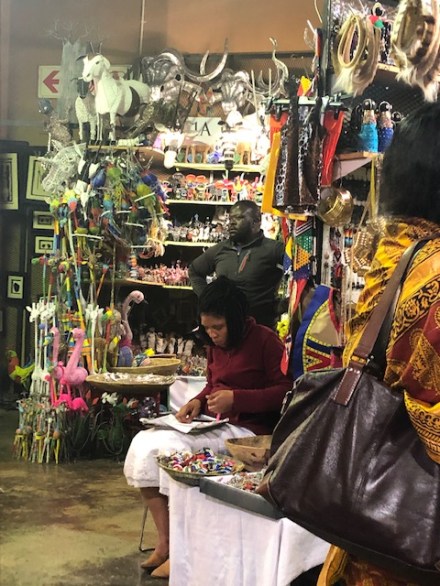
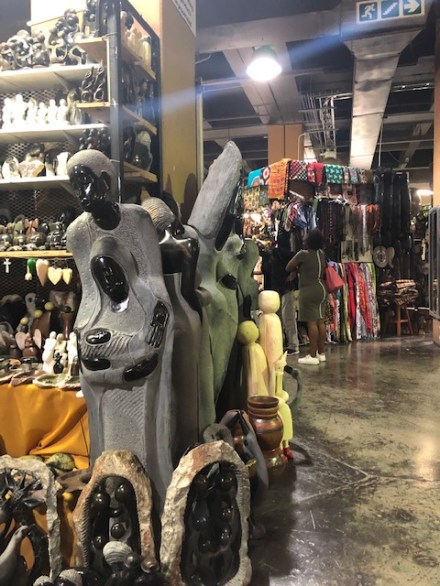
Later that day we found ourselves at what was called a craft market which appeared to be the prescribed place to buy our tourist bits and pieces in a sort of one-stop shopping. Despite (or perhaps due to) my travels in Asia I have never been good at bartering. I might occasionally offer someone less for something, but that sort of expected to and fro has never been my strong suit. Therefore I was hesitant to even begin the game.

IMG_2919 (1).JPG

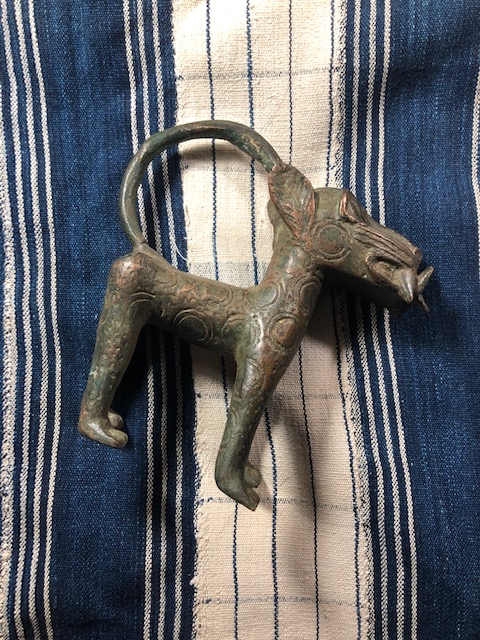
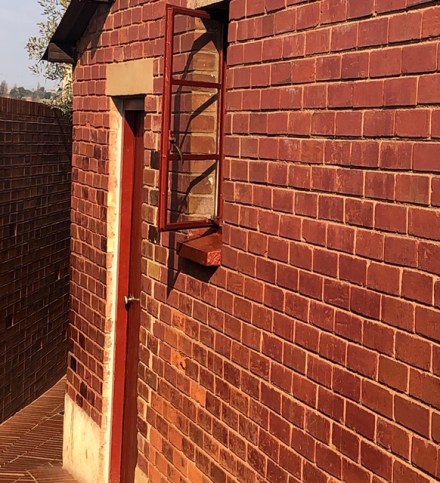
Eventually I put my toe in the water with this cat figure which I gather is a leopard (their version of the king of the forest) and based on Benin bronzes. The seller had a few versions that were larger than my real life kits Cookie and Blackie and weighed five times what they do. He tried to tempt me with one of these, assuring me that he could ship it. (I didn’t think I could make him understand that I lived in one room in New York City with a husband, two cats and a heck of a lot of stuff already which made the size undesirable. I was the only person visiting the Mandela three room house in Soweto and thinking that the space was pretty good and about a third larger than our apartment.)

DE8C708C-7BB2-4D46-B89F-74A6DC9F77A4

Side entrance Mandela house museum in Soweto.


The seller then set his sights on selling me a pair of leopards – how lonely one cat would be without the other! I assured him that it was going to a destination with many, many more cat friends than he could imagine. We finally arrived at a price for the single cat and I dashed away while he shouted after me that the other cat would be waiting. I found a quiet corner where I purchased some fabrics made in traditional patterns and with vegetable dyes that would become gifts.

IMG_2761

Craft market from my bench perch, resting!


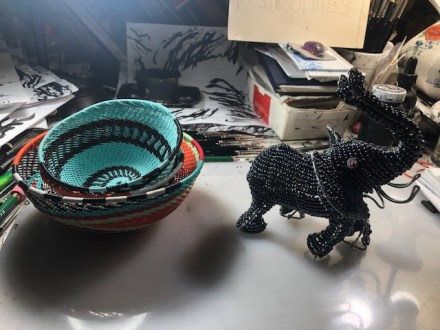
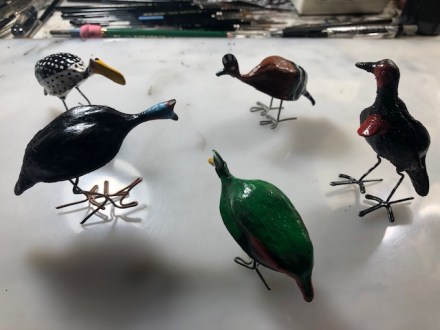
I chose one among a myriad of beaded elephants for Kim who spent several months drawing elephants earlier this year – trunk up for good luck. Lastly I added these few birds below and a couple of beaded bowls and then found a bench to rest on while my colleagues finished their shopping. Several members of the orchestra were also there and we compared acquisitions as we planned a route back to the hotel. Whew!

IMG_2920.JPG

IMG_2921.JPG

We were to travel home on Sunday and the orchestra had been invited on a tour of a lion park early in the day so my colleagues and I joined the group. While it turned out to be a glorified zoo (which reminded me remarkably of my childhood trip to a then spanking new Great Adventure park in South Jersey which ran more to baboons than lions) it was interesting to finally get out of the city and see the non-urban landscape.


IMG_2870

Petting zoo where this cub uses a tree as a scratching post.


Working in another country (even out of state domestically) is always hard – event planning is most easily and successfully done when you can eliminate the unknowns and nothing is known to you in a foreign place. Therefore, this was a long and difficult trip (two seated dinners, welcome packages, a reception, a lunch, a lecture, four concerts – two which didn’t start until midnight – all tucked into five days) from a work perspective. Suffice it to say I had no trouble sleeping on the plane coming home.

However, when I consider what I actually thought of the country I am torn. South Africa, and perhaps especially Johannesburg, is earnest in its self-examination and forth coming about the issues and history they wrestle with which are real and difficult. The politics of their situation is well beyond my capacity to comment on in an intelligent way. However, I found the people of Johannesburg to generally be lovely and welcoming of us as visitors, but also well informed and involved in the continuing evolution of their city and their country.

Below is a few moments from our Jazz for Young People’s concert in Soweto which was so well received it ran over by more than half an hour as Wynton and the orchestra improvised for the appreciative audience of students. In the end I believe our music brought joy to all those who encountered it and in that way was indeed successful.


South Africa

Pam’s Pictorama Post: As I have occasionally done in the past, I write today from an airplane as I speed home (if a 15 and a half hour flight could be called speeding by the stretch of any imagination) from a far flung destination. I travel not infrequently for my job and this time it was to join the Jazz at Lincoln Center Orchestra in Johannesburg, South Africa for the Joy of Jazz festival.

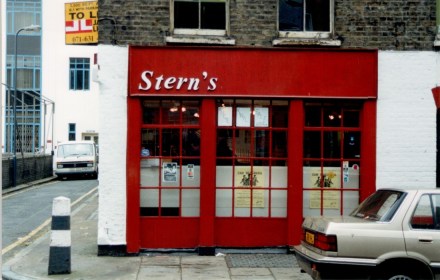
While I mostly groused about the very long flight and the difficulty of leaving Manhattan in the fall, a very busy time for fundraising, the truth was I was extremely ambivalent about going. The history of the country, within my living memory, tainted it and I tried to unwrap my hesitancy and it wasn’t easy. I reached back my mind to the time I spent living in London when I was in college. I had made friend with a man who went by the name of Don Bay (his given name is Azad Bayramian) and who owned an African music distribution business, Stern’s. It was through him that I first heard High Life music.

 

L-62643-1433778667-2627.jpeg.jpg


While it never quite established itself the way jazz ultimately did in my sensibility, I enjoyed it immensely. Don brought me to concerts – often outdoors in summer, going for hours over steamy British summer afternoons into evening and then into night, lines of dancing women in colorful, brightly patterned cotton outfits, the audience drinking, smoking and of course dancing, dancing and dancing. I was twenty-one and living on my own in a city for the first time and exploring every new thing that came my way and this was certainly far different from anything life in New Jersey or Connecticut had to offer. The music was a big part of it.
6070911_orig

The shop, which I believe is no longer there, as it looked when I lived in London.


In this way I also seriously contemplated the continent of Africa for the first time in my life. While the lure of India and Central Asia had ignited via studying the art in high school, I had never deeply considered Africa. For the first time I became curious about it in a real way and because of my friend Don I was meeting a never-ending stream of African musicians as they passed through London, playing gigs and promoting their music. I remember being told that at home in Africa they might fill a stadium with fans while playing more modest festivals, theaters and even clubs in London.

Meanwhile many would stay at Don’s house in Putney which always seemed to have a room enough for a few more people. Don and I both enjoyed cooking and we would make wild lavish meals and invite all sorts of people over for massive dinners and the musicians were frequently in attendance. However, they could often be found just as often, making themselves dinner or a coffee on a quiet evening.

king_sunny_ade_4-1

King Sunny Ade – I did meet him and loved his music, although he was too famous to join our gatherings in Putney.


On one occasion in particular I remember coming in just as one fellow, I do not remember his name, was just putting the finishing touches on his meal and he asked if I would like to join him. In the pan was a very small fish in a red sauce and a large pot of rice. I felt dubious about depriving him of any. However, he explained that the fish was so spicy I would only need a small amount to a large amount of rice. I can still remember it – the spice just about blew the top of my head off and it was great!

To be very honest, this was the first time in my life I met a large number of black people. It feels odd to say that but it is the truth. I had grown up in a very white town in a wealthy enclave in New Jersey. Quite simply it was extremely white. Our minorities, as such, were Jews and Catholics. (I lay claim to a fair portion of both but have come out looking sheer WASP – more about that another time.) It was the sort of town which would turn on its ear when one of its own football types dated a fellow student who was Asian and brought her to the country club. Now here I was living in a foreign country and meeting people from Africa. Amazing!

Earls-Court-Street-View-1-1024x684

I lived in the basement of the building on the far right and on the right side of the entry. It was much more run down back then!


During this time I dated any number of people – a random cross section of mostly British young men. One I discovered to be a heroin addict (fascinating and another first for me), another a very short good lucking man who was trying to break into modeling, but whose height barred him from success in this area. (Oddly he got one gig in a party scene for a liquor ad and I saw him plastered all of the tube for weeks.) He was a bit mean and we only went out a few times.

I don’t remember how I met David, probably at the coffee house I used to frequent for the only decent cup of coffee in all of London (a sort of a cappuccino – this was long before the Starbucks-a-fication of the world) and it was also an inexpensive warm perch on cold evenings when my flat was largely without heat. He was a white South African and that alone oozed romantic unknowns. Older than me by a few years and clearly more worldly, he was living in London in a sort of self imposed exile, north of where I lived, in what was at the time a somewhat suburban enclave.
9721dbcfed6656e240ef3b4769c514d6

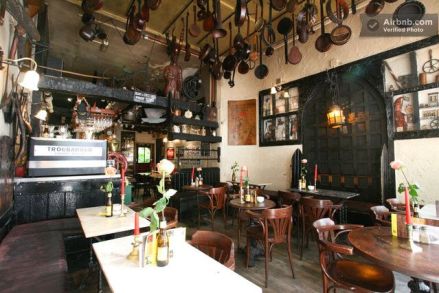
The Troubadour Coffee House pretty much as I remember it from the endless hours spent drinking coffee there. It is still in business although the owner, Bruce Rogerson who I knew well, died a number of years ago.


Opposed to Apartheid David had left South Africa without fulfilling his mandatory military commitment. He did not wish to fight on behalf of a country with politics he did not agree with, however his exile stung him and he opined on missing his homeland frequently. I did some reading up on Apartheid and I guess I couldn’t figure out why he’d want to go back to a country which sounded horrid to me – nor did exile in London sound especially bad. Admittedly, while very enamored of his exoticness, I was perhaps in my naiveté unfairly unsympathetic.
IMG_2744

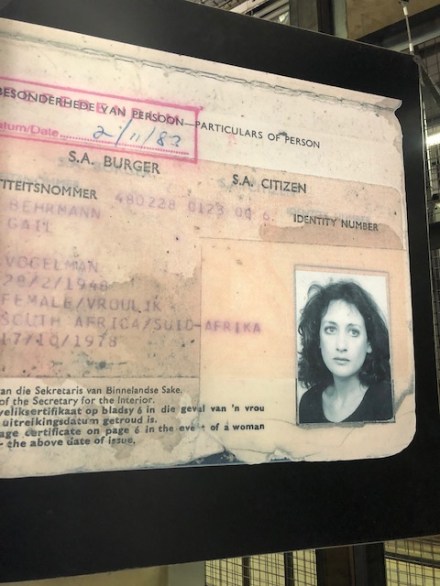
Enlargement of an early pass carried by all individuals in South Africa under Apartheid – this is from the entrance to the Apartheid Museum in Johannesburg.


However, where I encountered my real nexus of confusion was around David’s discomfort with interacting with actual black people. (We never discussed other races and I have no knowledge of his thoughts about let’s say Asians although they certainly suffered under the rules of Apartheid as well, and I now wonder if his unease extended to them.) In retrospect, all these years later I want to hope I can have more compassion for someone who was struggling to find his way out of the dubious lessons he was raised with, even if unable to fully transcend that formative training. Despite an inclination to support a view that was different from he how was raised, his discomfort with people of different races mingling was extremely uncomfortable for him and I was simply flummoxed by his inability to accept.

Needless to say, my interactions with the musicians and my new found fascination with High Life music was an insurmountable issue for him – he was horrified – and our relationship never really got out of the gate. It wouldn’t have anyway – we did not have much in common other than my romantic fascination with the exotic and whatever it was about me that had a passing fancy for him. I was just sizing the whole world up at that point.

We parted genially, but it stayed with me and to some degree I wrestled with it all through the subsequent latter part of the 1980’s and early 90’s as the fight against Apartheid received more international attention. Along with AIDs it became the a central political issue of my young adulthood, although to be frank I have never been politically active. Oddly, he wrote me a letter when I was back in the United States. It didn’t really say much as I remember and I can’t imagine why he did; perhaps the encounter with me continued to nag at him. He still was in the no man’s land between England and South Africa. I wrote back and never heard from him again. I remember wondering later if he was ever able to return home.

In some ways all this to say, while there is no excusing prejudice and everything about Apartheid was heinous, looking back I think my youth made me self-righteous in a way that I understand now was simplistic. We all want to believe we are free of the tribalism of whatever clan we claim, but the reality is more tangled than that. Even with the best intentions I think in reality we have to struggle to understand the other guy – whoever that is at the time. I know that better now that I am a few decades down the line. And that truth is far more uncomfortable to live with, but more real.

My friend Don’s business interacted largely with Nigeria and Ghana as I remember, and there had been an opportunity to travel to Nigeria with him but I could not come up with the money. I regretted the missed chance for years – it would have been fascinating to travel that way and a great introduction to that country. Although Don and I stayed in touch for a long time (he was at our wedding – our 19th anniversary is coming up in a week or so), he stopped traveling to this country post 9/11, when his Iranian place of birth on his passport (he was a naturalized Iranian of Armenian descent and faced painful prejudice his entire life which is its own story) became an entry issue each time he attempted to enter into the country.

Stern’s shut down the New York office of the company in the early 2000’s. They also had a location in San Paolo, Brazil which I believe may still be in existence as well as an online presence. I am unclear if they have a retail outlet in London although the location I knew on Warren Street was sold and redeveloped. Don removed himself from the daily operations of the business in the early 2000’s and was spending part of each year in Thailand in semi-retirement.

All came slowly back to me as I tried to unpack my resistance to this trip, confronting my discomfort, as well as some anticipation about finally setting foot on the continent of Africa for the first time. I have already gone on too long for today and I will attempt to tie up the story about my trip tomorrow.
Winding up Felix

Felix cymbal 1

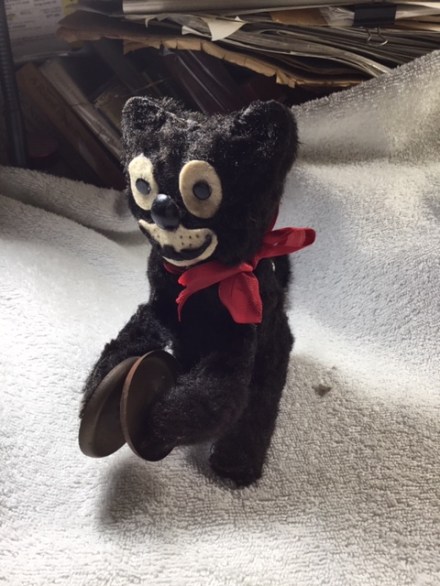
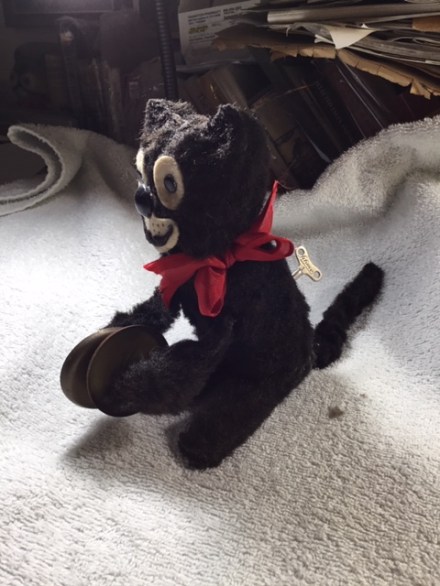
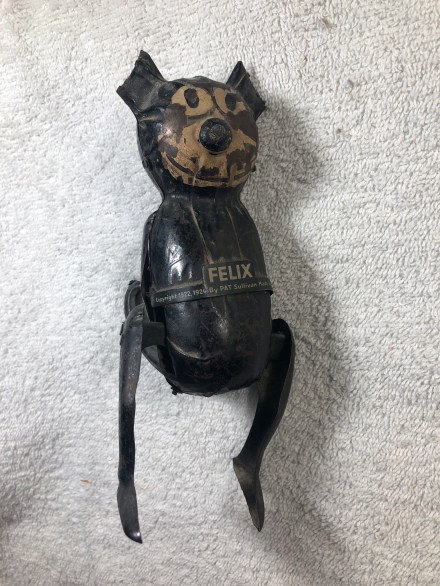
Pam’s Pictorama Toy Post: This post is the tail end of a bunch of Felix posts that were pent up for awhile, awaiting their turn at publication. While last, he is by no means least, and although his mechanism is a familiar one (from the virtually archetypal cymbal playing monkey, who can be seen doing his thing on Youtube here), I have never seen this model of Felix before.

He has an almost homemade look to him, although ultimately we know he is not. The design screams off-model however and really, he barely passes for a Felix. I purchased him from a US seller on eBay.

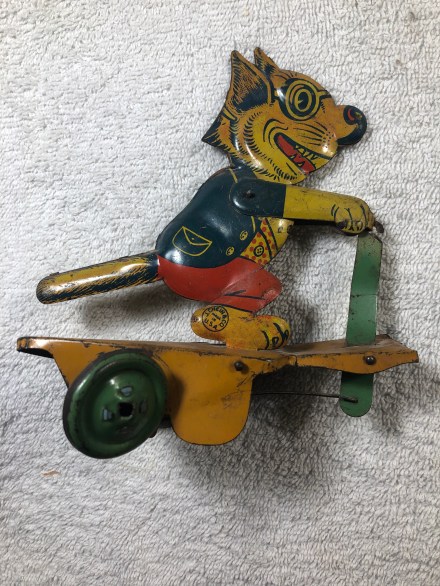
For me, it is a bit of a surprise that there are not a few more Felix toys with wind-up mechanisms in general, mostly a few variations on walking ones – trying to capitalize on Felix’s specific animated motion. I show a few of mine below, although none walk much these days. I also have the remnants of this scooter Felix, although my example is sans mechanics. Still, given the popularity of Felix – I would have thought they might have proliferated further.


In my mind, the wind-up is to toys what animation is to drawings – I love when things come to life. In that regard might have been quite happy with a career in animation – or tinkering with wind-up toys, making things move. (Instead I watch cartoons and purchase and play with toys which is a nice option too.)

This Felix fellow has no markings aside from his key (permanently affixed to his back) which is the giveaway as it is marked Schuco. His motion is not as enthused as some I have seen (I show my own bad film of this below.
He appears to have received a certain amount of hard, loving use. I don’t remember having these solid sorts of wind-up toys as a child and perhaps that explains my fascination in part.

I have made up for lost time by purchasing numerous Schuco wind-up toys in the past few years however. A relatively recent purchase was this wind-up pig which was featured in a 2018 birthday post. (It can be found here.)

Still pic of pig

I am frankly a bit surprised that Schuco is his maker as I hadn’t realized they made the cymbal playing monkey. I cannot find a single other example of this model by searching for wind-up Schuco Felix the cat and wonder if there is a war-time production, unlicensed explanation. However, given how prolific Schuco was it is surprising more of these aren’t still knocking around.

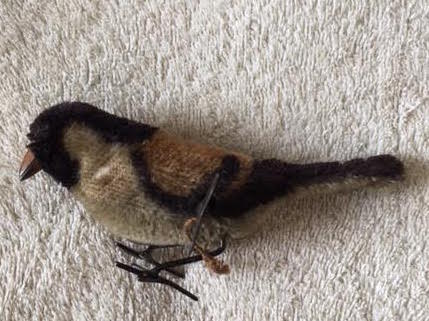
I wrote a little bit about Schuco, a German company founded originally in 1912, it found its groove with this Pick Pick Bird toy, one of my own first wind-up acquisitions and which I wrote about back in 2016. (You can find that post here.) These are such solidly built toys – they have great heft – and their movement is expert. I am a sucker for them when I see them move.

Schuco Bird

This post was written several weeks ago for posting while I was working in South Africa. I apologize for any unedited mistakes. More from the US soon!


Smooth

Pam’s Pictorama Post: I am writing this today, drafting it a few weeks in advance, with the intention of sharing it with you all as I sit endlessly idle on a plane heading for a stint with the Jazz at Lincoln Center Orchestra in Johannesburg, South Africa. While that 15 or so hour flight might provide me with some blog scribbling time, posting from an airplane is more than my experience with shoddy internet leads me to believe I should endeavor to do. So instead, I write in late August, knowing that the few short weeks until my departure will dissolve before my eyes as soon as I am back to work after Labor Day.

The specter of long distance travel and time away from home has me pondering, among other things, the interruption of my daily intake of green smoothies. Upwards of five or six years ago my mother became a green smoothie enthusiast. She began extolling their virtues and since she is a vegan this was not especially surprising. I took note but did not feel compelled to follow her down this path – that is until she sent me a book about them and a blender. I did feel that if someone goes to the trouble of sending you a blender (and a book) the least you can do is give something like green smoothies a try. So I did.

To my surprise I not only liked them, but attributed some things like a boost in energy and better sleep to a daily dose of them almost immediately. In turn, I quickly converted Kim. (Kim is never one to ignore a health improving opportunity – he is extremely open to these self-improvement paths I head down and has, most notably, followed me into yoga and more recently working out with my trainer, Harris. One day Harris will get his own post.)

My smoothie recipe contains mostly greens (bok choy, salad greens, chard, sometimes broccoli but excluding kale – which makes my tummy hurt – skirting all the heavy greens like spinach which Kim’s body takes exception with) and in my case topped off with a half a banana, a couple of strawberries. At some point I added gogi berries (as someone who is always looking for a shot in the arm for my liver which is inclined to be sad about some mediation I take) and there the recipe, give or take, stands to date.

71Xcfxdh5DL._SL1500_.jpg

Kim is all-green for his, eschewing fruit entirely and being very virtuous. At some point, after several years, my place at the helm of smoothie making was handed over to Kim who makes them on a more dependable schedule than I do – two, made every other day and providing a daily dose. He does a splendid job.

I have illustrated today’s post with a photo from a site call cookingclassy.com and chose it for its shade of green, a good approximation of the one I drink. The lurid color is, for me, part of the appeal.

Until my vacation this year I had avoided fruit smoothies entirely. I found myself with a meagre handful of strawberries and two very small and over-ripe nectarines that needed a plan however. I whipped out a container of yogurt, added a touch of milk and the fruit and wowza! I was in love! I have subsequently replaced that bit of milk with water to much the same effect. While it can be a pow-o sort of amount of fruit one can keep it to a reasonable amount and still have a lovely treat. (It is, I should note, a rather electric pink which is quite cheerful as well.)

Our devotion to smoothies has turned us into blender experts. We generally burn the motor out on a blender in the 18-24 month (on average) period. For a very long time I had Oster blenders and was able to acquire replacement parts for everything but the motor. Therefore, with replacement carafes, blades, etc. I was able to extend the life of one or two blenders across several years. After that came a series of Cuisinart ones – meh. Bad designs that made leaking possible and ended with a recent catastrophe of smoothie spillage. (It should be noted that green smoothie is hard to clean up and stains tenaciously. Rinse glasses and carafe from blender immediately. This goes for teeth too – my dentist does not love them.) So committed am I that we generally keep a spare blender in anticipation of breakage. We try never to be without.

This brings me back, alas, to travel. On my longer trips I find myself missing my daily smoothie. Some upscale hotels, especially in Los Angeles although one memorable hotel with a spa in Florida, have come through with credible replacements for my smoothie. They tend to use apple instead of banana (I like the texture of banana as well as the taste, but nothing against apples – my mother’s go-to fruit for them.) Generally speaking however, my trips are smoothie droughts. Like many other daily aspects of home which I will miss (Kim, cat petting) smoothies are generally a casualty of my business travel. I have no particular reason to think South Africa will prove differently, although you never know.
Renovation: the Beginning

IMG_1174

A much younger Blackie during an earlier version of packing up the apartment for work to be done.
 

Pam’s Pictorama Post: Into everyone’s life eventually home renovation of one kind or another must come it seems. For better or worse I have kept it to the absolute bare minimum in my adult life time, but despite all efforts stuff gets old, worn, breaks and has to be replaced. I spent the first decade or so of my adult life in a rental apartment – renting might be the only way one can really avoid the need to do home repairs of substance, although I understand from my renting compatriots that renovations can be wished on you even in a rental when the landlord has a plan as well. (Sigh.) I renovated this apartment when I bought it and before I moved in, but now it is more years ago than I want to put in writing and the useful life of many things has come to an end.

Our upcoming home improvement is a combination of work that our co-op needs to do dovetailing in an unfortunate way with a renovation of our kitchen which is at least five years beyond when it should have been done. (Suffice it to say that I am afraid that if the Board of Health in New York City rated home kitchens like restaurants that we would be found sub-par and they would have closed us down.)

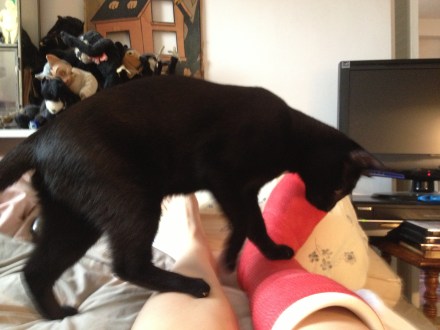
After my convalescence post-foot surgery about five years ago, I became aware that the kitchen needed a serious re-do. With a massive plaster cast on my foot I spent three weeks in bed, with it propped higher than my head, followed by another few weeks on a “knee wheelie” which was too large to negotiate our tiny, closet-sized kitchen. (A Great Dane could not fit in the space.) Recuperation ended up being about five weeks without seeing the kitchen at all. (Kim was top chef under my bedridden direction and of course there is take-out) and when I finally saw it again I realized the time had come and it needed some work. However, with some building mandated work coming out of the blue, then changing jobs soon and finally Dad’s illness, it didn’t happen. Suddenly years have passed and here we are and it is in a wretched state.

IMG_0653.jpg

Blackie examines my foot cast while I recuperated from this surgery about five years ago.


I had hopes of executing the kitchen renovation over the summer, but alas, I had underestimated the difficulty of finding a contractor in NYC for my relatively puny job and instead spent the summer chasing those until I found Mike who seems to be a responsible citizen of the world. For my readers (I will assume most) who do not live in Manhattan co-ops all of this will seem strange and dreadful – which it is. In order to do more than change a light bulb (I am exaggerating but only slightly) in a New York co-op apartment you need to file paperwork – and more paperwork. Then you wait and they ask for a bit more paperwork – licenses, plans, spec sheets for stoves and the like. I understand they want to make sure you aren’t moving walls, ruining pipes or generally bringing the place down around our ears, but it gets a bit absurd.

While Mike and I are in the negotiating with the management agency stage paperwork stage of the project we are in a honeymoon phase of us-against-them. Hopefully we will remain a good team but let’s face it, that is like the difference between dating and marriage. Nonetheless, no complaints, at least he’s been willing to go steady with us.

Somehow, simultaneously, our building which has dawdled along on a project to replace all the windows (they too had planned for the summer) has scheduled this to happen at the same time. I don’t know if you reader are like me, but the idea that some day in the next few weeks someone will come and rip the windows out of our sixteenth floor apartment and tuck new ones in kind of freaks me out. I mean, inconvenience and packing up notwithstanding. There’s going to be a period (hours? minutes?) when our beloved single room home is just nakedly entirely exposed to the outside, sixteenth floor outside world? Yikes.

So we will wrap bookcases in plastic, pack antique toys away (it means everyone will get a good dusting at least) and cats too will have to be spirited into the locked bathroom or to the vet for the duration which we understand to be a day. I’m not sure if I will stay and huddle at my computer perch for the duration or abandon ship for the office after work has commenced. We do not have a firm date yet, but it hovers (menaces, lurks) immediately upon my return from South Africa, a week long trip which commences tomorrow as I write this.

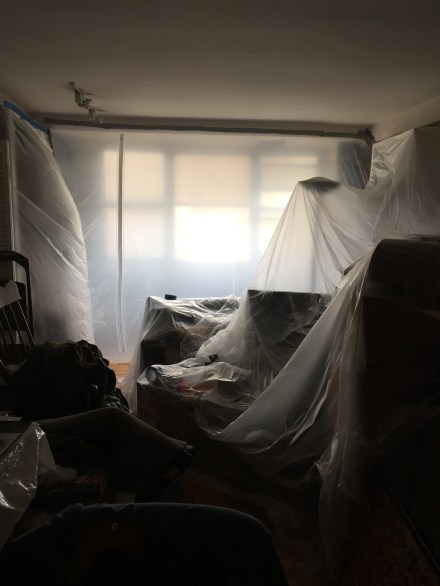
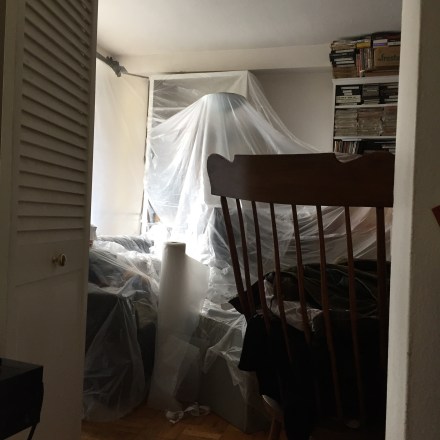
Meanwhile, Kim and I are not strangers to work being done in this apartment. As I alluded to above, the building had a project of pipe replacement a few years back (yes, they re-piped the entire heating system – I guess pipes give out over time, who knew?) which required that a large swath of our ceiling and some of our floor be ripped out for what turned out to be several weeks of work. They encased the work area in plastic, with a little zipper to get in and out, but dust and plaster were everywhere and we remained shrouded in plastic for weeks – more or less living perched in bed and only Kim’s work table otherwise accessible.

IMG_1183.jpeg

Swathing the apartment in plastic for the re-pipe project which ended up going on for weeks


Therefore today, in addition to packing for more than a week’s sojourn to Johannesburg with my beloved Jazz at Lincoln Center orchestra, I am assuming the hat of Director of Operations for Deitch Studio once again. I deeply suspect there will be more to say about this soon.

IMG_1179

Blackie slightly horrified at packing during for the re-piping project.


IMG_1161.jpg

Cookie having a grand time during the same packing project!


You Oughta Be in Pictures

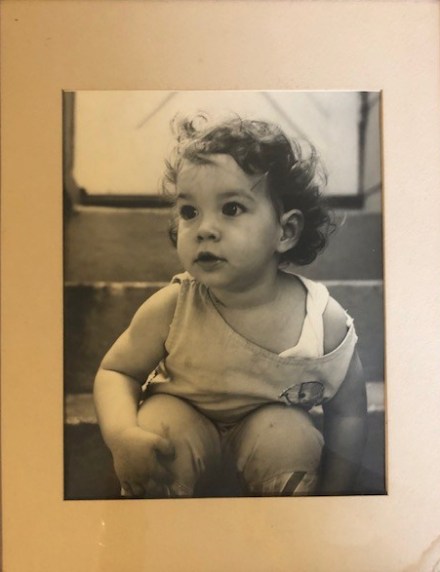
Pam’s Pictorama Photo Post: I now realize that I did a sort of lousy job taking pictures of these photos when I came across them while unpacking things at my mother’s a few month’s back and I apologize for that. These photos are large, at least 8″x10″, and both are matted the same and set in blond wooden frames. (I cropped them because my photos of them were uneven and a bit cockeyed – they are in reality more of a matched set.) These pictures are of me and my sister as tiny tots – apologies to my brother as he wasn’t born for another six or so years. I am the younger of the two, in the playpen, and my sister Loren is sitting on some steps, looking a bit like one of the Little Rascals in her slightly grubby looking garb.

Without knowing it for a fact, I assume that these were taken by my father. Pictorama readers know that dad, Elliott Butler, was a cameraman for ABC news for his entire career. Ironically this meant that there weren’t that many photos he took of us as kids because he was never content with the simple snapshot. Photo taking with dad involved a panoply of light meters and carefully considered compositions, and my memories of it are of the somewhat tedious variety of standing around as a subject – especially frustrating as a child, but the family tradition continued into adolescence.

The end result was that he didn’t bother with all the truck and nonsense that often and, like the shoemaker’s kids who go shoeless, we do not have all that many photos of us as small children. Despite all of that, somehow he captured us here pretty much in our native state of kid-ness.

This pair of photographs hung in my parent’s bedroom as long as I can remember. (Another set were in my grandmother’s living room and I was reminded of that recently. It popped a small bubble of memory in my mind, but I can’t say I really remember it.) These hung over a bureau – above a television at one time as I remember, but on either side of an antique mirror in more recent memory. (Many years ago I was flying home from Russia when my photo, which had already hung in the spot for decades, fell off the wall. My mother, who barely suppresses a superstitious streak, told me she was a nervous wreck until she heard I was safely on the ground. Luckily me and the pilot of my plane were ignorant of this incident.)

While retrieving these from a leaky garage before they could be ruined, I piled up a few others and perhaps we’ll get future posts on those. Most memorable are the photos of my mother and her brother John, also large, framed professional photos taken when they were in high school. These have the skillful hand coloring of the period. Ironically those I remember distinctly from my grandmother’s living room, hanging on silver-gray wallpaper with a design of green vines. I used to stare at them in fascination and try to mentally equate them with the adults I knew at the time.

I think Kim and I agree that I do not make a case for an extremely attractive child here. As he put it kindly this morning, I grew into my looks. On the other hand, Loren looks very charming here with her wild curls. Knowing my sister and her restless energy, it must have been quite a coup to get her to sit still as long as it would have taken to achieve this photo.

Anyway, I rescued these, cleaned them up a bit and set them up in the room I stay in at my mother’s house. As it would happen, they sit on an old bureau of my father’s, on either side of a television and I will be glad to see them each time I visit.

This slideshow requires JavaScript.

Score

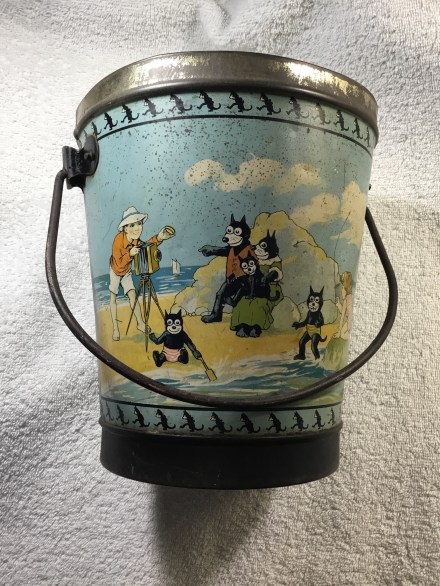
Pam’s Pictorama Toy Post: This is one of those lovely occasions when I get to write about acquiring something I have wanted for ages! Today it is this wonderful Felix toffee tin turned toy pail.

Allow me to start by saying that I love toffee. Seriously, caloric concerns are thrown out the window as soon as I see sticky toffee…followed by virtually anything written on a menu. It is a little known fact about me, but a fact nonetheless. I came to it late in life, but I think that has more to do with having had limited exposure to it when younger. I believe if I had been introduced to it earlier I would have been a life-long toffee fanatic. Somewhere in a parallel universe I am simply ruining both my teeth and my waistline contentedly stuffing myself silly with toffee.

e828ba91-0804-48b0-97a5-833a81a96188.jpg

So if nothing else for me the vision of this delightful pail stuffed with British toffees is a wonderful one indeed. Oh the gluttony! Oddly and somewhat mysteriously, the tin bears no label for said toffees sold, only the maker of the tin, E.T. Gee & Sons and this pail is always advertised by that name. One might imagine that a toffee maker of the time like Mackintosh’s might have filled it. The candy descendants of Macintosh’s Toffee exist today and are the makers of Rolos and other delights. Macintosh was definitely selling similar pails of toffee, but those are all emblazoned with their name leaving me wondering and somewhat stumped. It is possible that the lid had a name embossed inside perhaps, or that there was a paper label/sticker. One version online seems to have the remnants of an odd sticker that says …sweet little babies.

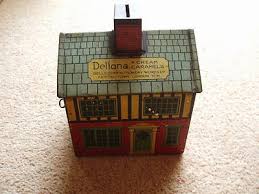
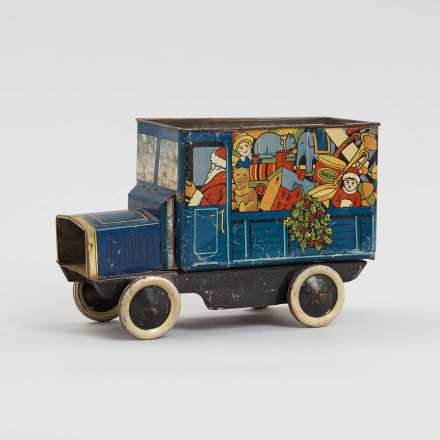
E.T. Gee & Sons is not especially well documented as a company – I could not find much history on them. However, I find tracks showing they made a whole line of similar candy containers that were also tin toys once emptied of their confectionary treats so this must have been the side of the street they were working. Although the Felix pail is the most prevalent one, I found evidence of two others online and sadly could only fine this single small image of the house which held creams. (Google images revealed no larger photos nor additional examples.) The house, doubling as a bank, is a photo from the Worthpoint auction site and the biscuit tin wagon from an auction site called Bukowski’s.

download-2

At auction on Worthpoint, a toffee tin that doubles as a bank.

10573906_fullsize

A biscuit tin that doubles as a toy truck, image from the Bukowski auction website.


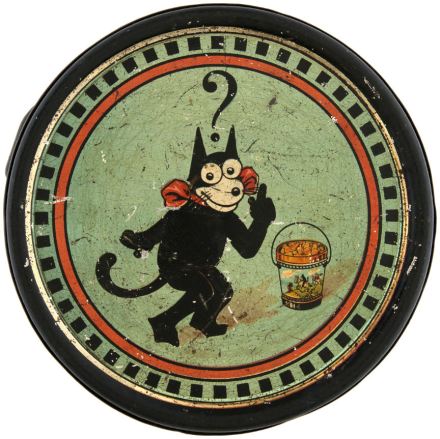
Meanwhile, I have been admiring this Felix pail for a number of years now, stealthy hunting of it on eBay, tracking prices and failing each time to be the high bidder. A version in condition only somewhat superior to my own, but with the top (shown below with this mischievous Felix whose tiny rendition of the toffee pail is stuffed with toffee – mine does not have the top sadly) went for more than $3,500 just several years back at Hake’s. I have lost several on eBay that went for much less than that, although probably all without the top. My example does come from Hake’s – just a bad day at auction?Maybe, but clearly for whatever reason the price of them has dropped considerably. I paid a tiny fraction of that for mine.

image-1

From a Hake’s auction catalogue, lid to the Felix pail which mine is sadly missing.


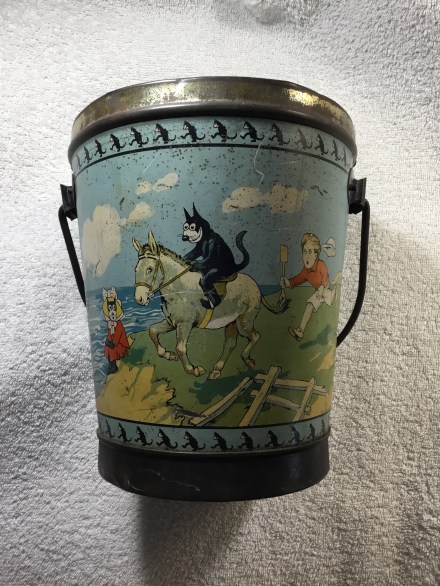
The decoration is decidedly and delightfully cryptic – the scenes are certainly comical, but you really have to wonder where they came from. On one side Felix rides a white horse or pony (sort of Felix as Lady Godiva in my mind) along the water’s edge. He is being chased by a young boy (with an outsized head) brandishing a spatula? Or perhaps it is the shovel to a sand pail? The boy seems to be running full speed while the awkward drawing of the horse seems to have Felix at a slower pace. (His toes curling upward in an interesting manner.) Most bizarre of all however, is the female Felix in an old fashioned bonnet and dress, taking the scene in at the water’s edge. A broken fence in the foreground leads the mind further down the path of an unknown narrative. The horsey hardly looks like he’d break down a fence. Curious indeed!

felix pail side 1

My very own Felix toffee pail! Pams-Pictorama.com collection.


The more benign scene on the other side is my favorite – a large family of Felix-es, Mom, Dad and three babies – having their photo portrait taken! Of course as someone who collects photos of people posing with Felix on the beach this is a very funny inside joke. They are dress for the occasion – the Dad in a vest, mom in a long dress – in this alternate universe Mrs. Felix evidently dresses like a Mennonite. One child splashes in the water with a small sand shovel, the other getting his feet wet while a small girl perched on a rock beckons to him. The photographer, complete with tri-pod, camera with bellows and (I think in my mind) long exposure film, appears to be a young boy. Daddy Felix is gesturing approvingly to the camera. A toy looking sailboat appears in the distance. A splendid Felix walking decoration rings both top and bottom of the pail.

felix pail side 2

Pams-Pictorama.com collection


My version of the pail is about 8″ high and I understand that there is a slightly smaller version with a single row of Felix around it. (I’m glad mine has those!) It has a satisfying sturdy handle for holding and swinging merrily as you walk, and I think it would make a jolly pail at the beach, although I am pleased this one doesn’t appear to have spent much time in that capacity.

As a child who grew up on the shores of the Atlantic ocean I know a little something about playing in the sand at the beach and I can assure you much could be accomplished with a nice little pail like this, accompanied perhaps by a small sand shovel. One could dig deep caverns, carry water to fill moats or to dampen sand into the proper consistency for the construction of castles and related buildings. One’s pail was essentially a ticket to hours of beach fun and this would make a splendid addition to any discerning child’s collection.


Of Tropes and War: Part 2

Pam’s Pictorama Post: Picking up where I left off yesterday, today I tackle what really made this recent Frances Hodgson Burnett read a bit different, the description of a WWI Britain. I am a bit fascinated with a lot of contemporary fiction which covers the period between the two world wars in Britain. It is an interesting slice of time as people recover from the horrors of WWI and then, in too short a time, the foreshadow of the second world war rapidly creeps over them. Conceivably many of those men who survived the first war had sons in the second and that alone is too horrible to really contemplate. This novel is an eloquent reminder of the reality of that war.

The sequel to her book, The Head of the House of Coombe, Robin occupies itself entirely with the war, the main male character of the story having been marched off at the end of part one, this second half takes place during the war which is central to it. There are things that surprise me about this description. Perhaps because it is so close to the actual events there is a vividness to the descriptions that I have not read before.

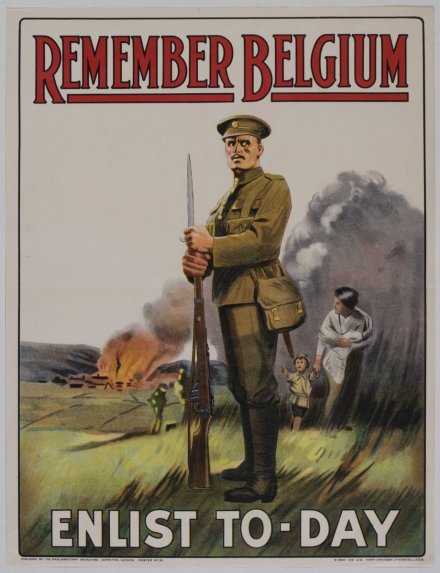
The horrors of the pillaging of Belgium is graphically described and a central motivation for young Brits, even from the wealthiest families, to join up. I was well aware that part of the horror of WWI was because of the brutal mix of modern warfare with what had sufficed for ages before – men killing each other on horseback and in hand to hand combat. Now men on horseback and fighting with swords were being killed by mechanized weapons and bombs from the sky. For all of that somehow the kind of on the ground rape and pillage that went on in a more Genghis Khan fashion had escaped me.

CpAXCkJXEAAQCRp.jpg

The cynicism of the British nobles about the Americans and if and when we would enter the war was also enlightening. Would the United States only enter if it was of economic value to us? They desperately needed the Americans in the war and as we are aware, for a number of our own reasons that commitment was not so quick to come. This was hugely frustrating and even terrifying for them.

Remember also, Hodgson Burnett had deep loyalties to both countries – that of her birth and the country she adopted as a teen and subsequently lived in most of her life and that conflict plays out here. I assume Burnett, in the final years of her life which were spent living in Westchester, did not see or experience WWI London firsthand. Perhaps these vital descriptions came from accounts from friends and newspapers of the time or maybe she did travel back shortly after.

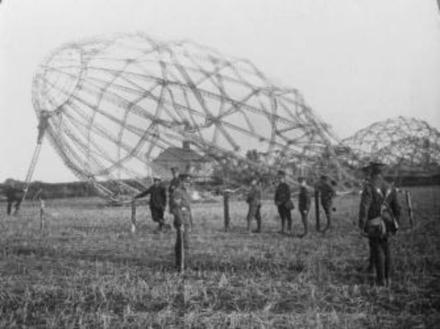
Finally I was surprised to read that, much like those folks who brought picnics to watch the first battle of the Civil War, there was a practice of going up on rooftops to party while watch the zeppelin bombings on London. Ultimately this ends badly in the novel (as I assume it must have in life) and a brief but horrific plot point turns on this event. There is a description of random body parts being found in the street after, only a hand left to be found and identified, that had a realism which was also chilling.

hith-london-wwi-zeppelin-terror-poster-wikimedia.jpg

I did know from other reading that the bombing of London during WWI was as devastating as that of WWII and again one is stunned thinking about a certain sandwich generation which experienced bombing during both wars fully.

Worst of all were the descriptions of the German prisoner of war camps however. One assumes that a few years after the war these stories were finding their way out and Hodgson Burnett shocked me with some of them.

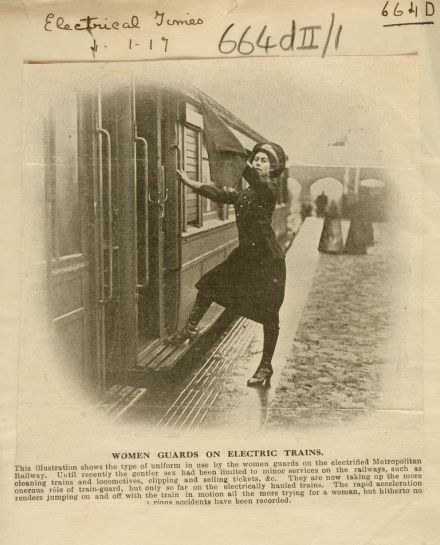
To me it is of interest that even at the end of her life, Hodgson Burnett was still delivering these very contemporary stories. A few decades before her stories described the emerging 20th century world – where travel between Europe and the New World became accessible to all and the role of women was rapidly emerging. (I have written about the emerging 20th century woman in her novels here.) As in WWII Britain, women took on all jobs at home during WWI which is also described in this novel. She also recognizes that sweeps many of the remaining social constraints and conventions for women aside.

6SdBbMDgiZ_HmzUeuzaNYTZpQhqlk4adGZTZxNPTpBE,9mNWrSn4wCr8GyT2ITRFhlJgQJeG1uz0pX6bEEHuMx4,tpp20Ucl9g7GMQmJyfiJFfME6r2IfQ42whT1iPAQ-8c

Knowing that the first half of this novel, filled with the aforementioned tropes of pining romance, rags to riches plot and unearthly communion (as outlined in yesterday’s post found here) was hugely popular in the United States I do wonder about the reception of this second half, originally published on its own the same year. While the first half is all flag waving for the war, this second half contains all the cynicism and pain. Somehow she wrapped all these things together and tucked them into one final novel.

Of Tropes and War: Part One

Pam’s Pictorama Post: I do apologize up front if you do not share my continued interest in these Frances Hodgson Burnett novels, because even I thought I would be done by now. Yet I find another aspect that had me in its thrall this week and has occupied my mind in a way that prevents me from finishing my next Felix post of a great new wind-up toy recently acquired. (For anyone who is joining me for the first time, a few earlier posts on Hodgson Burnett’s adult fiction can be found by searching this blog or herehere and here.)

For those of you who are following my passion for Hodgson Burnett’s novels, you may remember that early on I said that the worse the title of one of her stories, generally the better it is and The Head of the House of Coombe falls neatly into that category. As a result I had not grabbed it before this. However, I recently used Goodreads.com to help me figure out what remained of her works that I had not read and create a list of which are novels, as opposed to novellas and short stories, that remained for me to read. For all its greatness Project Gutenberg supplies no information before you download – could be a hundred pages, could be twelve and I like to know what I am getting into when I start a book or story.

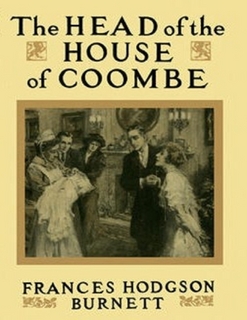
product_thumbnail.jpg

Written originally for serialization it was published as a novel in 1922; it was the fourth most popular book in the United States that year. The sequel, or second part of the book as it was served up to me, is called Robin. It also has a publication date of 1922 so the exact publication history and serialization of the two parts remains somewhat unclear to me. The publication date is mostly of interest to me because of the proximity to the end of WWI, which drives the plot of this novel, and that this book appears to be the last major publication of her life as she dies in 1924. Assuming these were actually written for magazine serialization in 1921 or so, it is a few years after the conclusion of the war and as many before she dies.

However, before we get to the war, we are treated to Burnett in all her glory reveling in several of her favorite Victorian tropes. Robin, the main character, is a commoner ultimately taken up by nobles. She is so purely good and innocent the more cynical nobles quickly become devoted to her. Meanwhile, her mother is a stunningly beautiful chippy, wonderfully named Feather, who it is well-known, a woman kept by the Lord of the House of Coombe.

FC Yohn Good Housekeeping

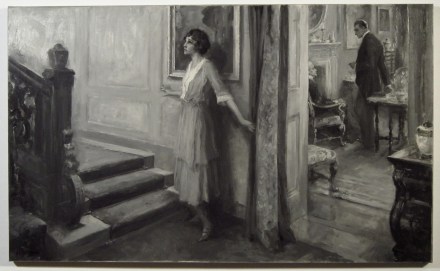
FC Yohn illustration of The Head of the House of Coombe as published in Good Housekeeping


Meanwhile, in addition to her rags to riches story line for Robin, she also puts her through her paces with two other beloved tropes, illness and spiritual communion or communication. Burnett just loved to plunge her characters, usually a woman but occasionally a man, into a mysterious consumptive wasting state due to separation from or rejection from a beloved, usually a lover. In some way s/he is miraculously revived when reunited with the person in question.

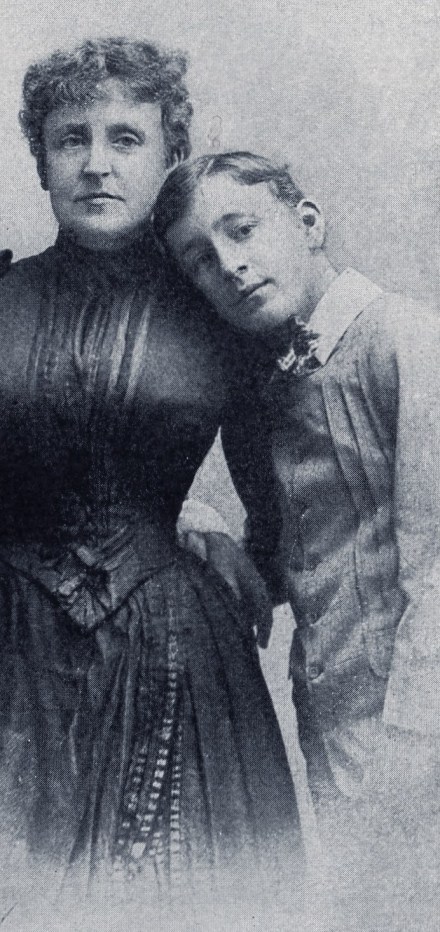
Again, for those of you who have been following me on this path thus far, know that Burnett’s own oldest son Lionel was lost to consumption (TB) just two months before his sixteenth birthday. While blogging about Frances Hodgson Burnett I was contacted by her great-great granddaughter, Keri Wilt, who has a website (fhbandme.com) and an active Instagram account also under the name fhbandme. I began to follow her and she recently posted a photo of a locket Burnett wore with Lionel’s photo. I was a bit fascinated by this post. She shows us the locket and the inscription Farewell to others, but never we part. Heir to my royalty, son of my heart.

39977263_1400629172

Burnett with son Lionel. The inscription on his grave, “Lionel, whom the Gods loved”.


She also quotes a letter of Burnett’s about her son’s death, It will seem almost incredible to you, as it does to others, when I tell you he never did find out. He was ill nine months but I never allowed him to know that he had consumption (tb) or that he was in danger – and when he died he passed away so softly that I know he wakened in the other world without knowing how he had left this one. I can thank God for that. Wowza – not sure what I make of that. Can a 16 year old boy, dying of consumption at that time not at least deeply suspect that he is dying? For me it is overwhelmingly moving though in its need to be true to her. She returns to it again and again in her fiction.

d41ba0a862492351dc512fc8572fe859

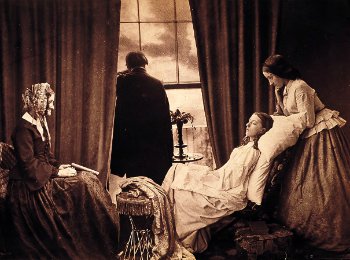
The wasting unnamed and consumptive disease illustrating an article on this topic.


Another deep vein of interest is Hodgson Burnett is her interest in spiritualism which I gather she takes up somewhat later in life. (I am assuming that it ties out to the death of her son but I am not sure I have seen this confirmed.) If I can find more information on where it parallels with her life it will definitely rate a post of its own – this may happen when I get to reading her autobiography which is already in the house. Spirit communication is a frequent plot device with some variations – mystical communication with both the living (but not present) and the dead. The novella The White People is one of several shorter works devoted entirely to the subject. Without being a plot spoiler I will just say that it makes up the major plot weenie (as Kim would say) to the second part of this novel.

1_M-8aEx_9g35r5FzeBNnueQ

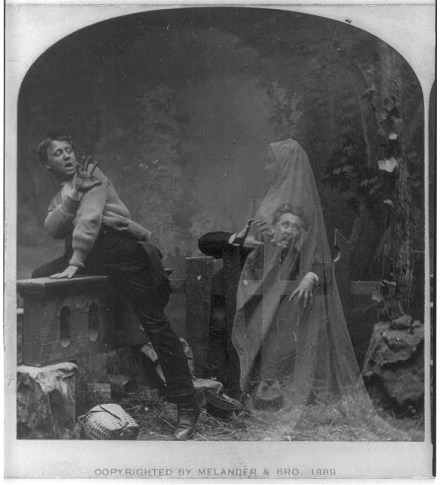
Library of Congress example of spirit photography.


Having covered wasting illness, rags to riches plots and touched on spiritualism I leave you for today. Tomorrow I will share the fascinating turn things take with Burnett’s surprisingly graphic descriptions of WWI England which was what really made this book stand out for me.