The Cat’s Party

Pam’s Pictorama Post: So today I take us back to the world of cat ephemera with a bang today. This little treasure came to me via a new dealer who I imagine I may see a lot of, Eldritch Oculum Antiques. (The website can be found here although I found them on IG as @eldritch_oculum_antiquarian.)

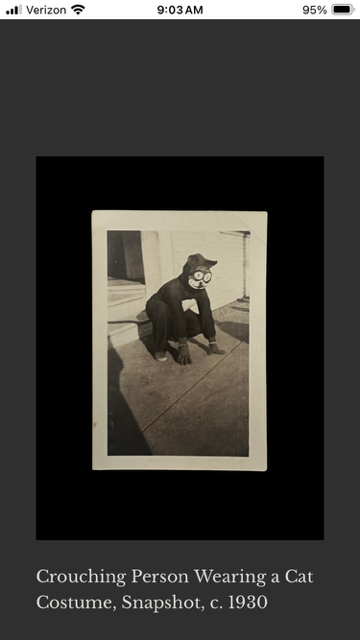
Our story unfolds, as it sometimes does, with an item someone (I believe it is my IG friend and gad about @fatfink) gave me a heads up about but had quickly sold. This was a photo of someone in a Felix costume that I would have loved to have scored for my collection – not least because I appear to own other photos from the same session!

Longstanding readers may remember a very early and popular post of these tiny photos I featured in the early days of this blog. I seem to have bought a few and then found more from a different dealer. When I told the story to the folks at Oculum I misstated that they came from Seattle but I just read my own post and it says that the came from Portland, OR – right where these folks are located. Portland seems to be an odd El Dorado of early Felix photos and I have that post and a few others devoted to this which can be found here, here and here!

Not in Pams-Pictorama.com Collection – sadly!
Pams-Pictorama.com Collection

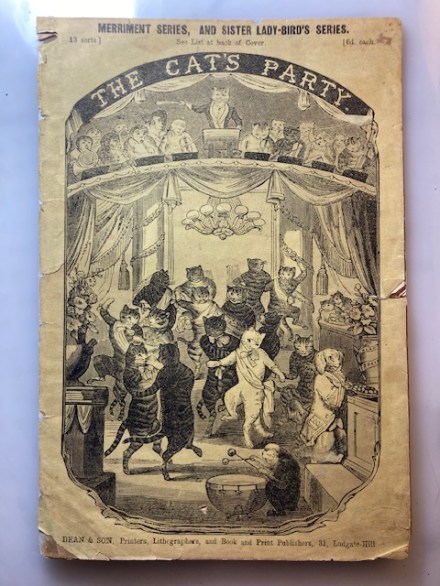
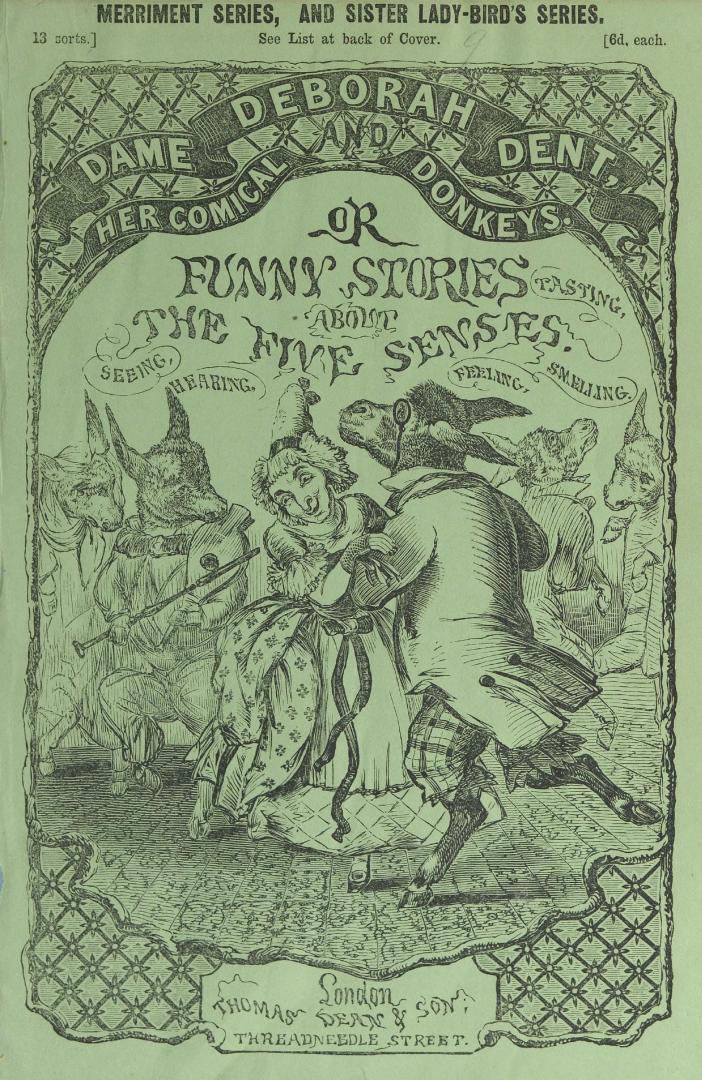
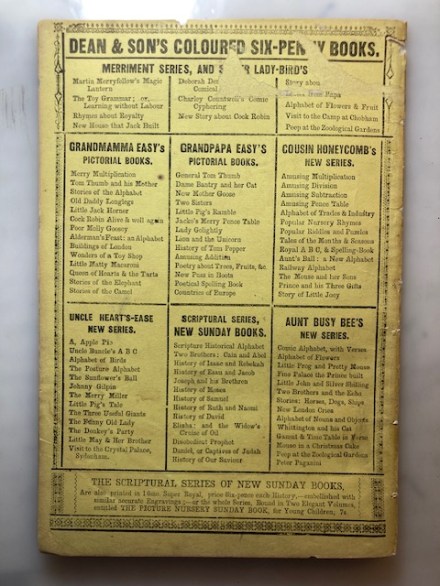
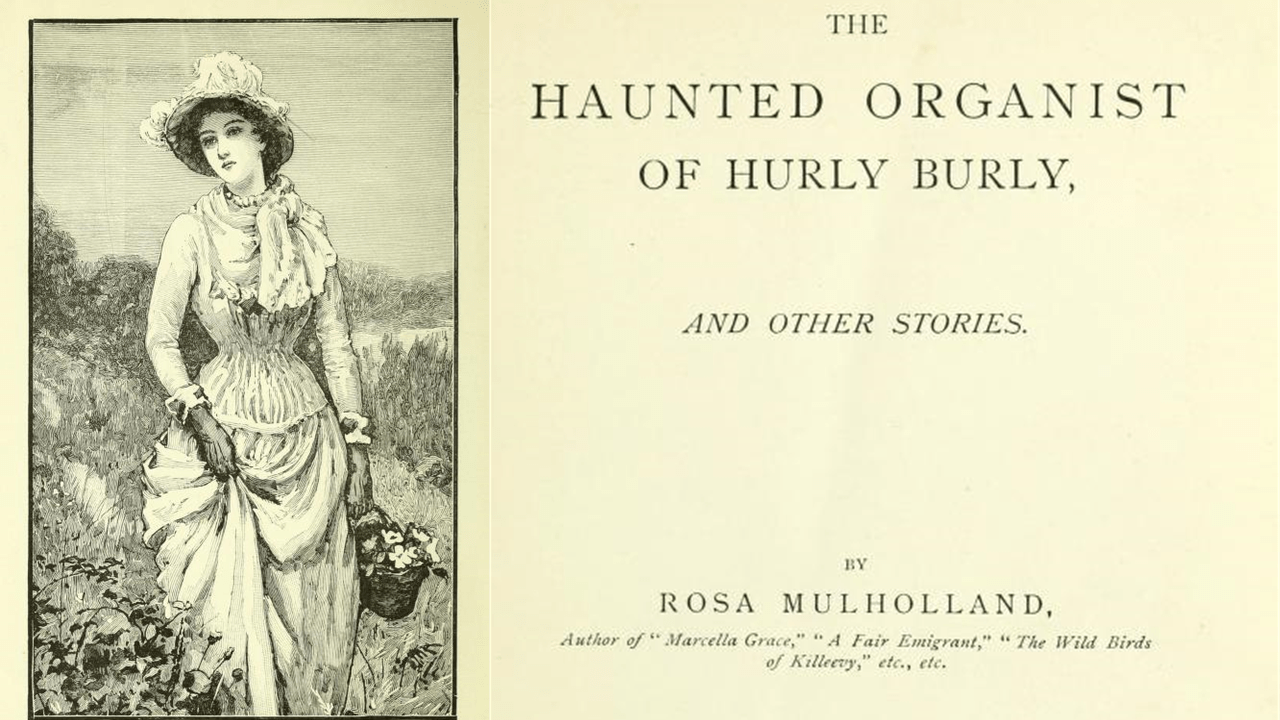
However, this was clearly an account I wanted to follow! It wasn’t a month later when I spied this gem and snatched it right up. This is an unusual piece and further nascent searching on the internet only turned up two other editions of the Merriment Series, and sister Lady-Bird’s Series. One edition I did find, shown below, devoted to Funny Stories, and the other on the Internet Archives (see my Rosa Mulholland post of last week!) which is a scan of The Alphabet of Flowers and Fruit.

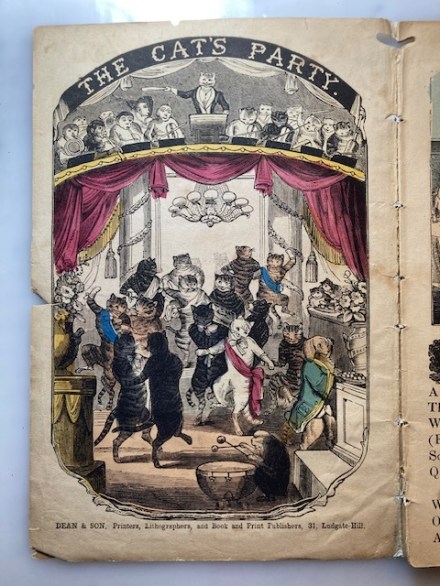
It was published by Dean & Son, Printers, Lithographers, and Book and Print Publishers, 31, Ludgate-Hill. This company, founded in 1800, became known for children’s pop-up books in the latter part of that century. They are noted for publishing into the mid-20th century but it is unclear to me if they exist today.

From the Ontario Digital Archive.

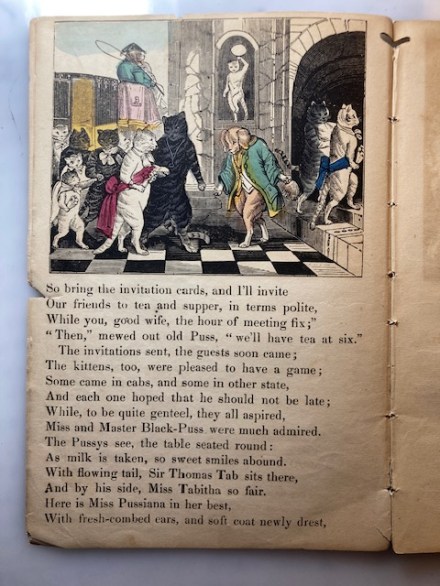
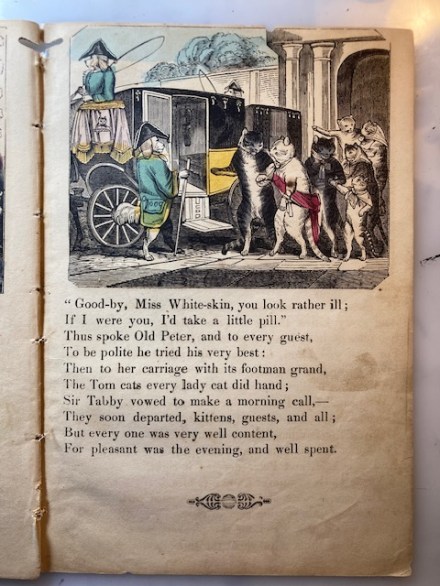
So, to get to the heart of the matter, this little missive is the tale of a party in Cat-o-Land, where cats rule and dog servants in livery are footmen and butlers. (Although the monkey playing the drum on the cover is notable as well. A careful look at the top shows one half of the orchestra as monkeys and tthe others as cats – one with his bow in the air and dropping his fiddle.) This is a jolly affair hosted by Mister Peter Pussiana.

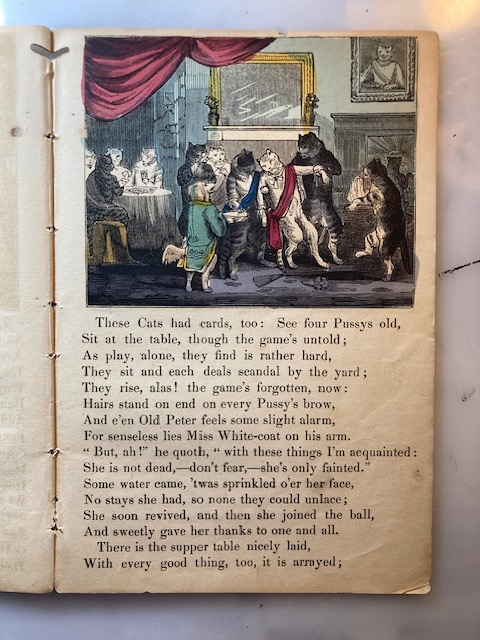
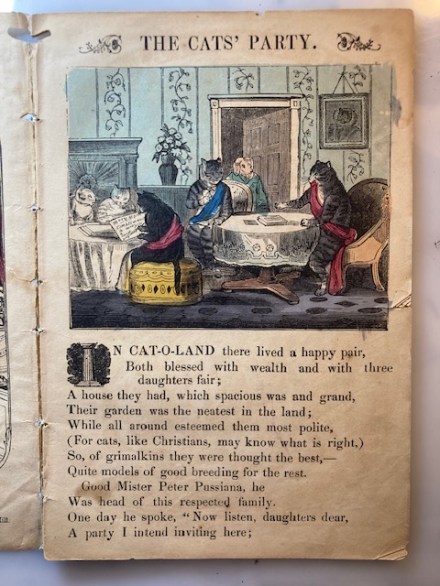
It is written entirely in rhyme – …While all around esteemed them most polite, (for cats, like Christians, may know what is right/So, of grimalkins they were thought the best, – Quite models of good breeding for the rest… No author claims credit. Printed oddly, a pamphlet (9.4″x 7.4″), it has blank pages inserted throughout – something having to do with the printing? It is in fair condition, with the binding still tight but worn with dirt and folding and cuts or tears on some pages.

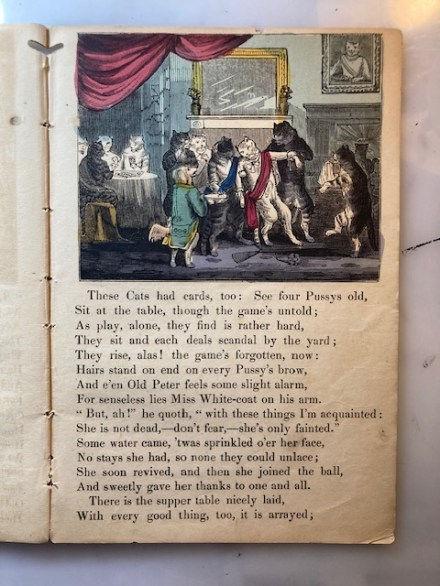
Fainting after hearing a bit of gossip scandal. I like the art!

While the cover is without color (although the first page is the cover with color), the rest of the illustrations are in a sort of limited color, looking applied on in subsequent layers. The backcover has a rather tantalizing list of other titles in the series that were available. Every thing from The Toy Grammar; or Learning without Labour to Mouse in a Christmas Cake. There is no publication date.

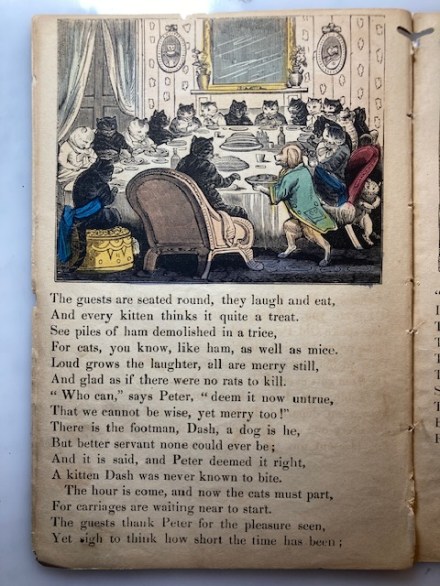
The tale takes us thoroughly through the evening and its entertainments – from dancing and eating to playing cards and gossiping. (Some scandal so salacious that Miss White-coat actually faints!) One of my favorite pages is the company around a large table eating, kittens lurking behind chairs, family portraits on the walls and a dog serving.

I share it with you in its entirety below to flip through – blank pages deleted. Pay special attention to the art on the walls and sculptures!

Narcissa’s Ring: More Mulholland

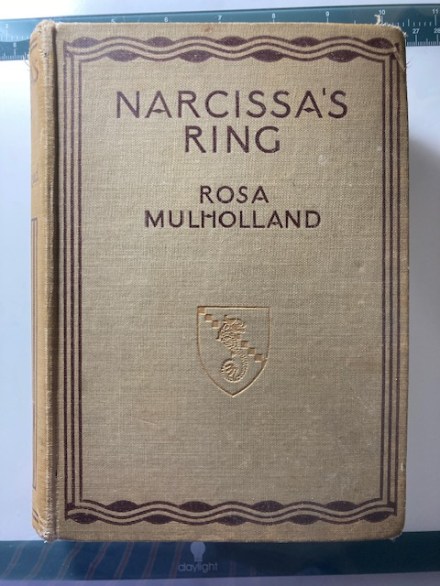
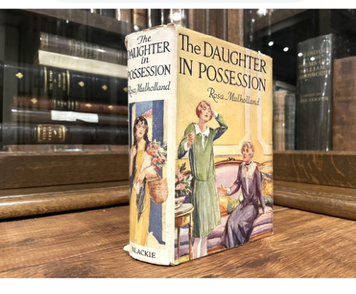
Pam’s Pictorama Post: I did not plan to post about Rosa Mulholland so soon on the heels of my most recent post (found here if you missed it just last week and the first one about her books here), where I zipped through a number of her works, mostly early, that I had read. However, Narcissa’s Ring, was a recent acquisition and a later work which kind of knocked me off my chair. As it happens, I was also lucky to find an internet site with a number of her books – including The Daughter in Possession: The Story of a Great Temptation. Both of these interesting works were published originally in 1915 and’16 respectively and they are worth note and comment while they remain fresh in my mind.

Before I get to them, a heads up about where I found The Daughter in Possession which I had not even seen copies or mention of for sale or otherwise. A site I have used occasionally in the past called Internet Archive (find it here) turns out to have a number of these hard to find volumes available for reading online. The did not come up in a general search for her books initially and it wasn’t until I thought to look there that I found them. This is very good news!

The somewhat bad news is that it is not the easiest site to read a long book on – I have had trouble saving them to my “account” although perhaps it is just most easily done on a computer rather than a phone or iPad. I am still working that out. Actual volumes are scanned for every page which is a charming way to read them – inscriptions and all in some cases. It also means if the volume was illustrated (which these virtually all were) you get those too. I am thrilled to be able to offer a place where some of these are available online, not to mention for free.

As far as I can tell, the Internet Archive exists out of California and I have not attempted to tap it for the many, many other categories it lists (everything from television shows to Russian literature). Of course I am curious about film and assume that, like the books, the films archived there may not show up in more general internet searches although may for specific books. I will need to send them a contribution as they have done great work in making some really obscure volumes available.

I had not in fact had I heard of Narcissa’s Ring either until I stumbled across a copy on eBay for sale here in the US. (I search for new ones online on a regular basis and eBay seems to pop for one periodically. The shipping from the UK where many of these reside makes the cost untenable.) It is the real find. In 1916 Mulholland was 71 years old and from reading this she may have in a sense been at the height of her prowess as a writer. While the style remains the same and some of her favorite tropes (romance, class divisions, astronomy) remain intact she goes for a full on sort of mystery in this now favorite novel.

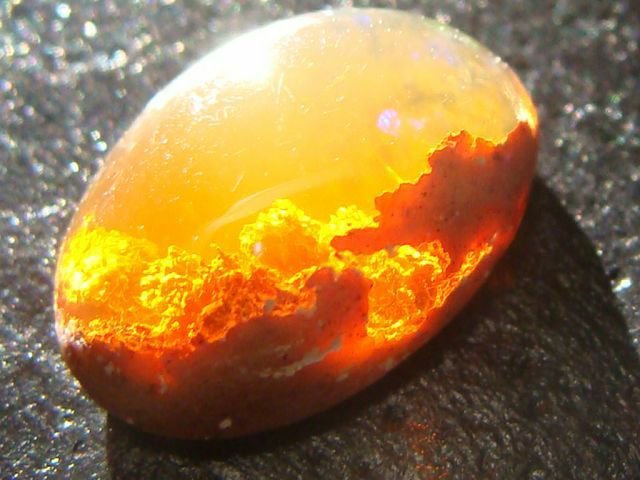
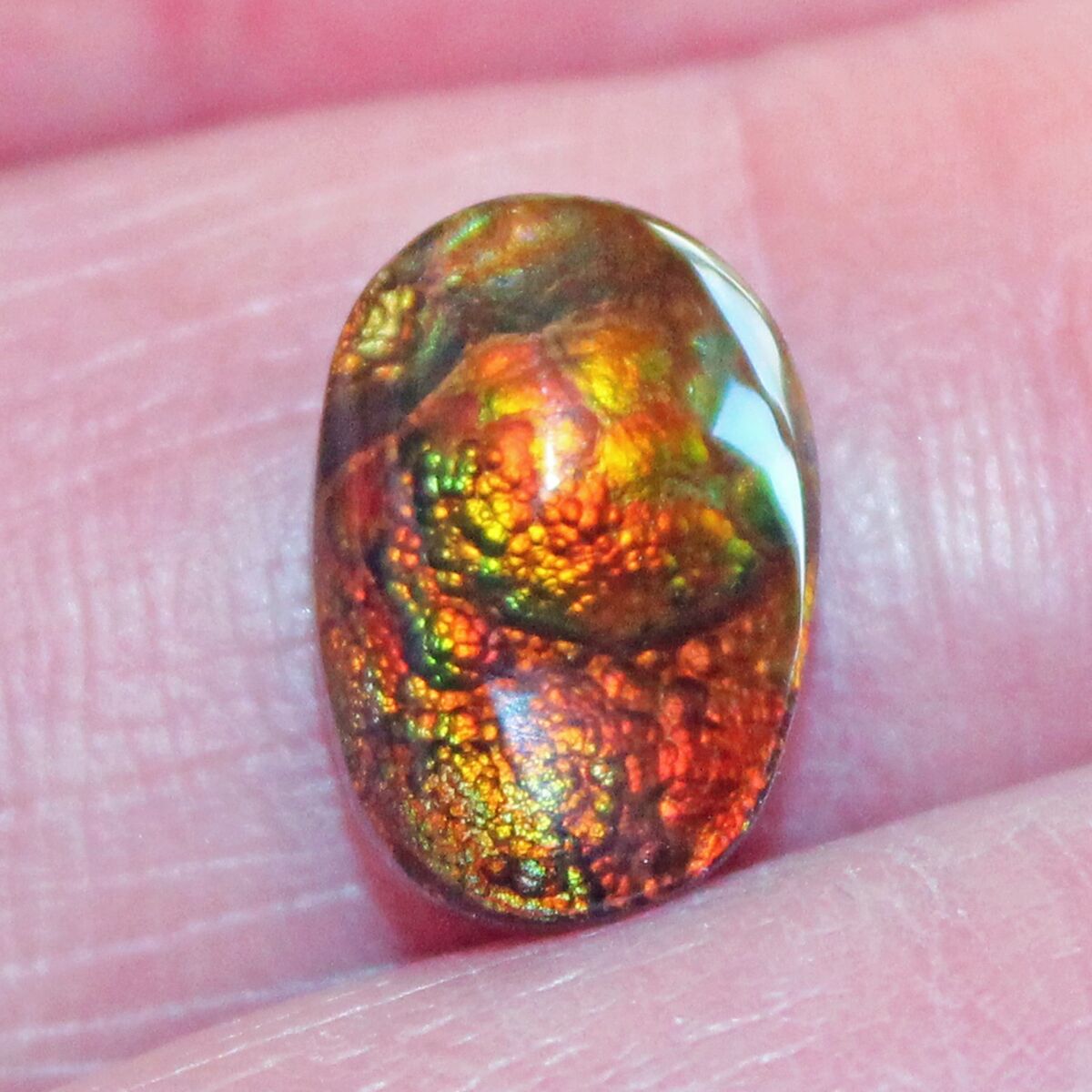
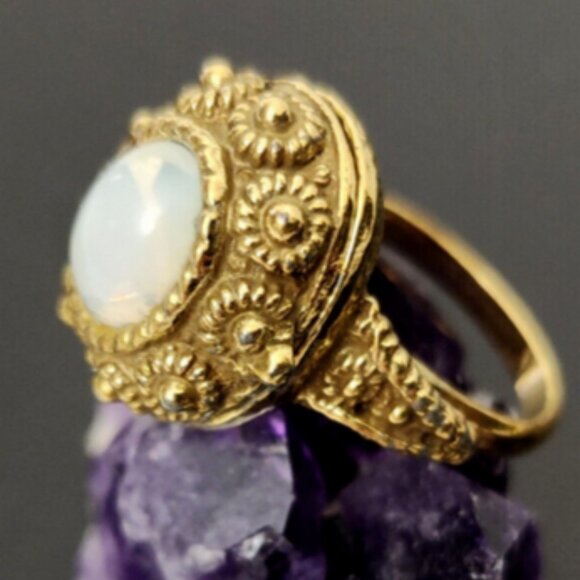
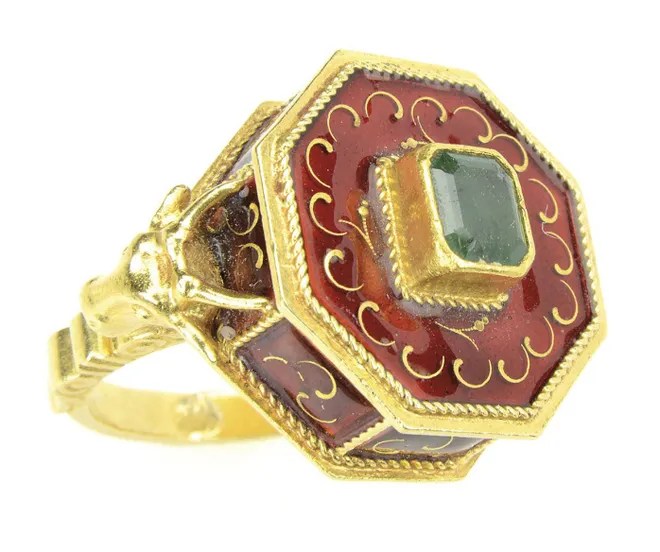
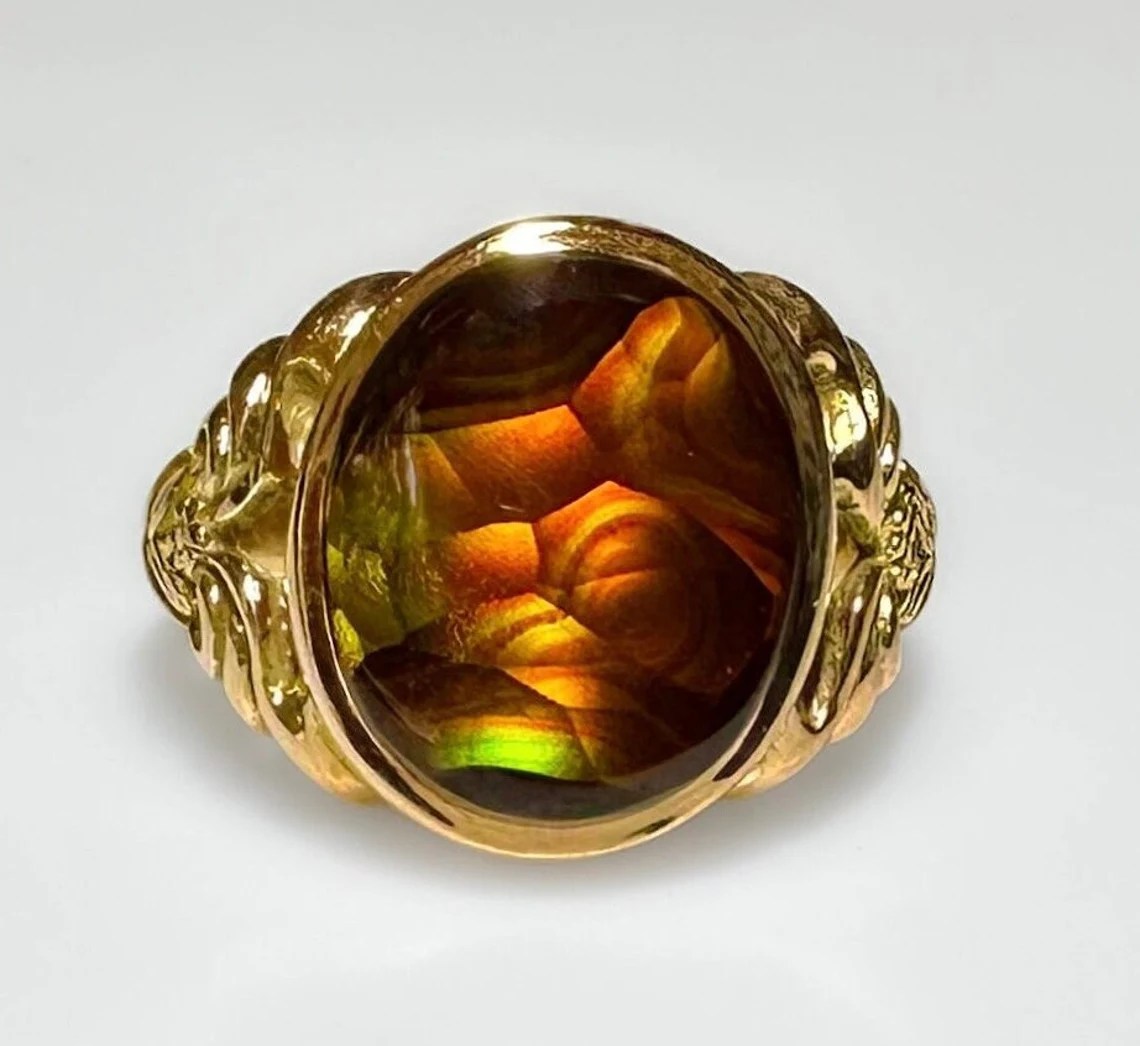
As the story opens we find a young Russian teen with a penchant for chemistry in London, before long he is shifted to her favored locale of Ireland, but not for long as he is chasing clues to rescue his father from a life sentence for murder in Moscow. The search leads him to a certain perfume found in an antique ring – the sort which might have also stored poison but instead house a bit of sponge or other substance scent would be added to and worn. The scent in the ring never dissipates. It has a cabochon of glowing red stone on it – one that takes on an almost supernatural glow in certain lights. (Two stones to engage your imagination above.)

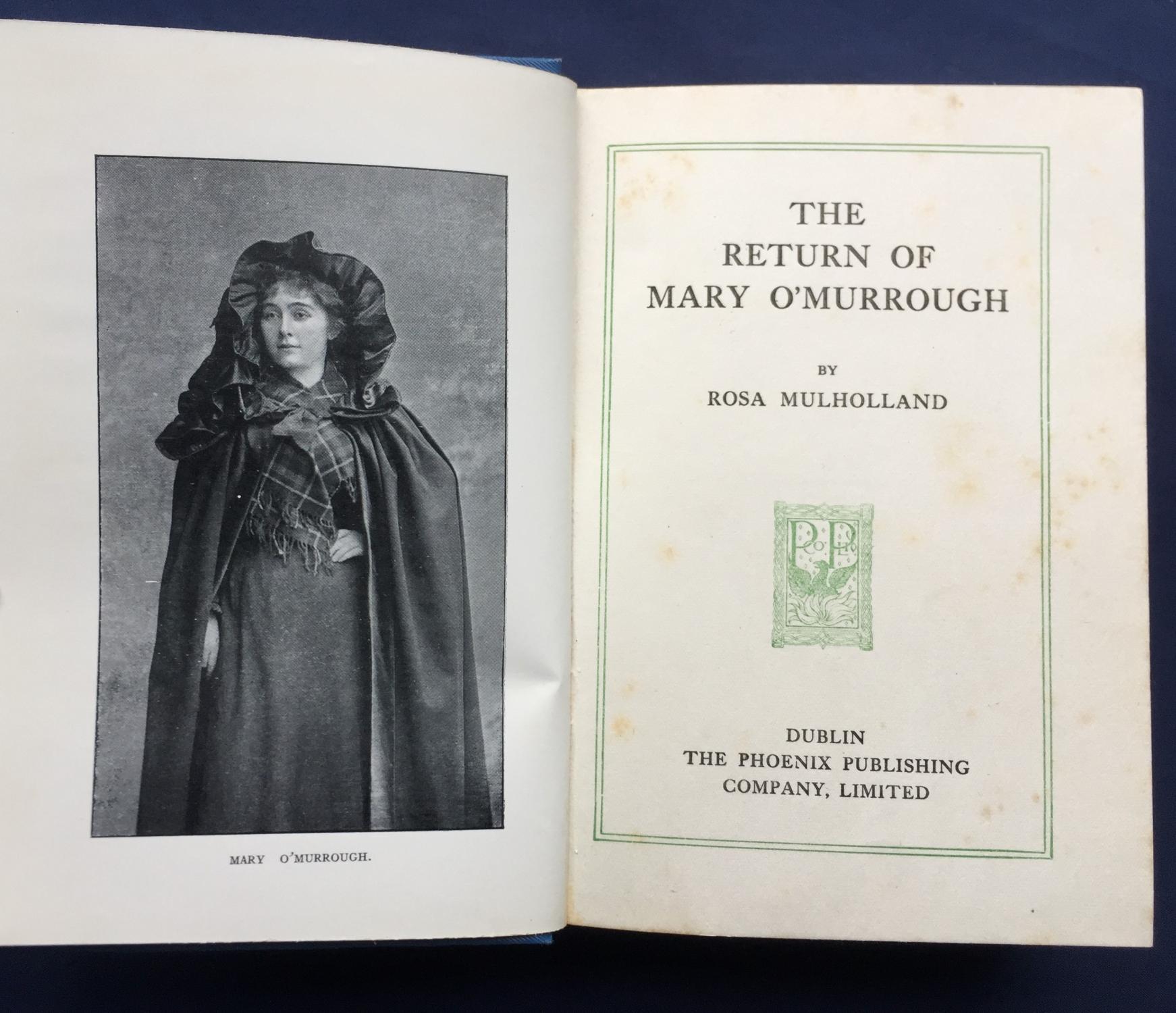
Mulholland leads us on a most wonderful chase through Britain, a sojourn in Egypt and ultimately the Moscow of the day. Because Mulholland is writing about these places as they are being experienced at the dawn of the 20th century there is a more than usual time capsule quality to her record of what these places were like at the time – not so much with her usual eye to recording what she knows may soon drift away in her native Ireland, but with more of a sense of the here and now in these places.

This slightly cheesy version kept coming up in my searches. The stone is really beyond the beyond!

I wouldn’t dream of spoiling the intricate plot but am here to say that it is a corker and I would have to put it at the top of my list of her books!

It also left me wandering the internet looking at these rings – presumably there was one in particular which must have inspired her. The concept goes way back to the Middle Ages and all sorts of examples still abound. As for glowing fire stones there are many – from fire opals exotic agates.

Immediately on the heels of Narcissa’s Ring I was able to hop back a year for The Daughter in Possession: The Story of a Great Temptation. (It’s a bit of a title, right?) This is an interesting lead into Narcissa’s Ring if you are considering her oeuvre as a whole because there is a developing sense of mystery and plot in this novel which is a prelude to the other.

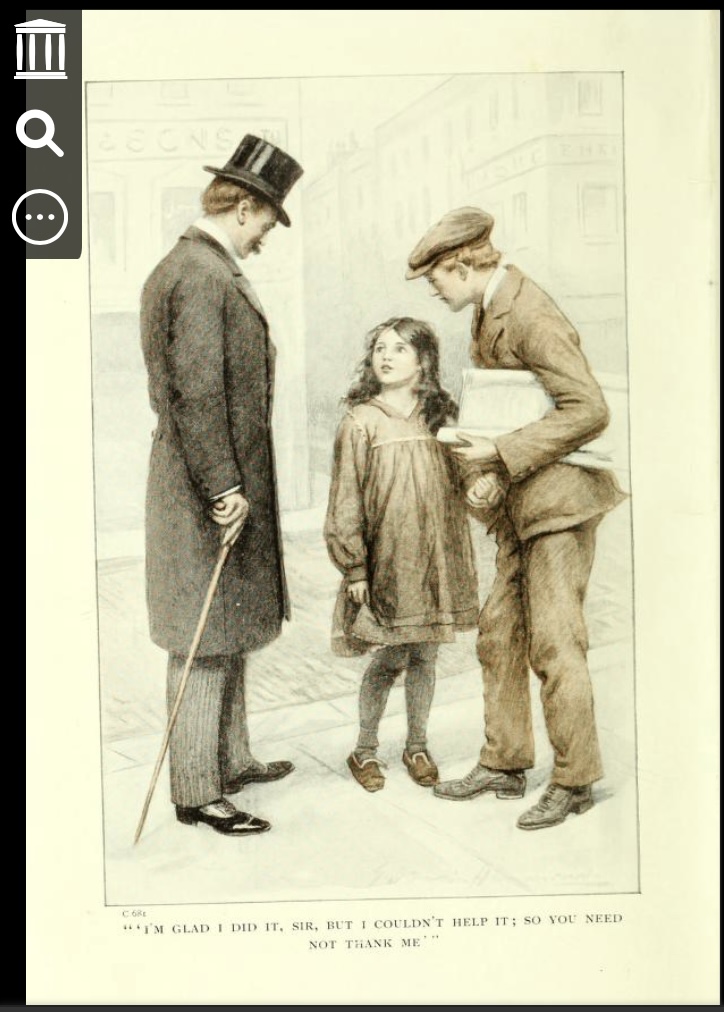
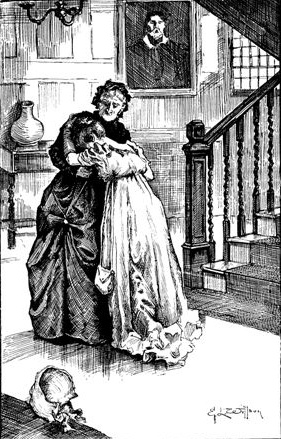
Illustration from the online version of The Daughter in Possession.

The Daughter starts off with a favorite baby rescued after shipwreck set up (see Marcella Grace for another example) but turns into a multi-faceted plot following several lives as they set off together in one place and diverge wildly before all coming back. Like Narcissa’s Ring, locations in Ireland are briefly paid tribute to but the majority of the book takes place in London and then Europe, largely France which is a bit of a surprise. (There is an interlude in Toledo and sometimes I feel like we are treated to a travel log of her globetrotting.)

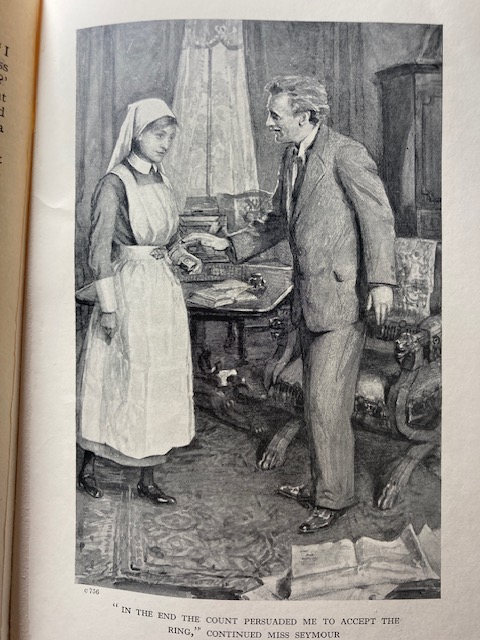
Illustration from Narcissa’s Ring.

We have a narrator for part of the story who is a bit unreliable, and we don’t quite know how the ending will or won’t surprise us. Like Narcissa’s Ring the trip is definitely worth the journey here. I would not rate it quite as highly but must say that she was going full throttle with her writing powers at the end of her life and seems to have only continued to improve.

The next one slated for reading, A Girl’s Ideal (1905), appears to start in the United States but will likely shift to Ireland shortly. (It is also available via the Internet Archive.) It is not clear to me that she ever made it to this country and her nascent description is a bit barren. This one is a you inherit a large fortune if you agree to marry this fellow you don’t yet know story!

Rosa Mulholland: Part One

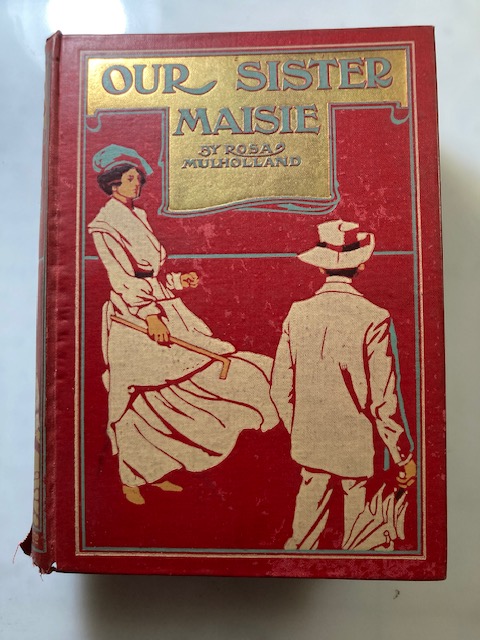
Pam’s Pictorama Post: If yesterday was devoted to a bit of what we’ve been watching here at Deitch Studio, today I will spend some time on what I have been reading. You may remember that as part of a much belated birthday celebration spent wandering around downtown with Kim, I purchased a rather beautifully bound volume by Rosa Mulholland with the intention of reading it. That volume, Our Sister Maisie, turned out to be an interesting sort of a point in her career to stumble onto and, written when she was 66 years old, it seems to have been one of her most popular books.

Volume I purchased as a belated birthday gift to myself in March at The Strand.

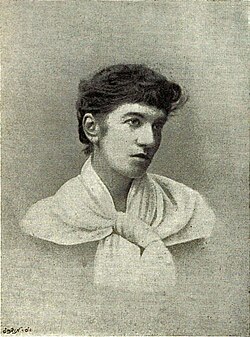
Her biography is interesting when considering her stories which deal a lot with the position of women in terms of money and livelihood at the time which she documents and considers. The daughter of a prominent doctor she came from a fairly well to do Irish family in Dublin. Other she first dabbled in painting (I have seen no evidence of it) she turned her hand to writing early and began trying to get published in her teens, including a novel at 15. One of the most interesting pieces of the tale is that early publication of her work caught the eye of an elderly Charles Dickens who not only encourage her but published her in one of his magazines and in a compilation with one of his own stories.

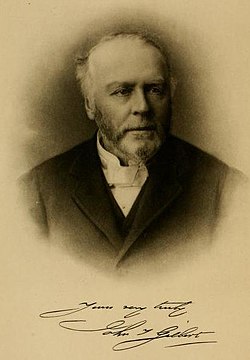
He bet on a good horse. She was very prolific with a list of upward of forty publications, mostly novels, to her credit. She wrote under at least three names I can find, Rosa Mulholland, Rosa Gilbert and very early on, Ruth Murray and seem to have published until a few years before her death and there was a healthy reprinting of her work which continues into the 1940’s. Gilbert is her married name – she married at the age of 50 to a well-known historian, Sir Thomas Gilbert, 12 years her senior. By marriage she therefore became Lady Gilbert.

If any of her writing was used for films I cannot find any evidence of it. I want to say that her books while very popular in Ireland and Great Britain they appear to have been less known here in the US. Really though the only evidence I have of that is that used contemporary copies of her books are mostly available in Britain.
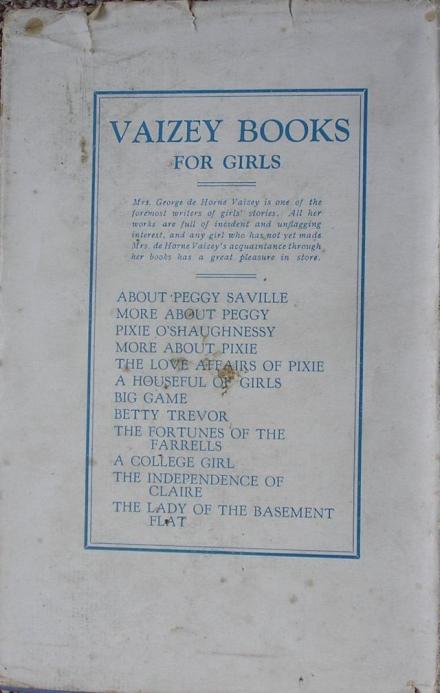
Much like some of the other women authors I have written about previously (for starters, the adult novels of Francis Hodgson Burnett which can be found here, one about Mrs. George de Horne Vaizey here and an earlier one on Edna Ferber here) she is writing about the changing values and culture evolving around women’s emerging role in the late 19th and into the 20th century. Of the above mentioned authors, Francis Hodgson Burnett writes a bit about the other side of the Atlantic and especially the influence of the more forward Americans who visit there – generally very wealthy ones at that. Mrs. George de Horne Vaizey also writes about Britain but is poised a bit later.

A pretty if damaged volume for sale. I am waiting for a less expensive but equally beautiful volume.

Mulholland therefore is a bit unique in her entirely Irish perspective and generally a bit earlier than the women above. She recognizes that there is a problem where women’s only option for survival is the money their family could supply in the form of a life-long bit of capital to earn and be spent down and the marriage they make. Therefore nascent attempts to work among them are plot points – smart and ambitious women (much like herself we have to assume) are trying to break the mold either because they have been left with no money or are a simmering genius whose talent must find an outlet.

For all of that and knowing of her own life she can be a bit hard on these women – perhaps as society at the time was and it was the feeling of the day. I have read three of her books to date and in Our Sister Maisie there is a younger sister who yearns to be an architect – much like the young Mulholland she even has some of her designs used when she is teenager. Against all odds she makes it to architecture school and, although it is a bit unclear, drops out just before completion to marry her wealthy and wonderful heart’s desire.

I don’t have this one yet either but great title and nice opening page.

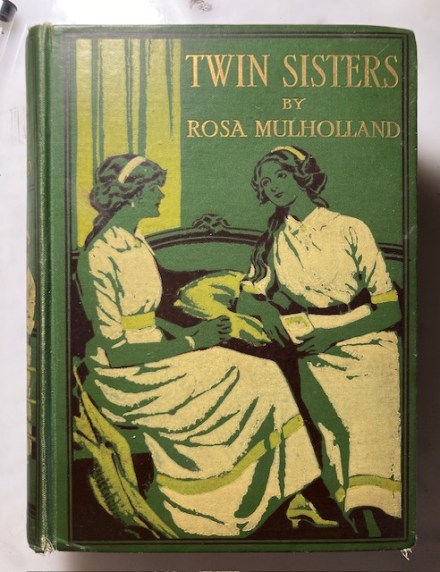
In a later volume, Twin Sisters, An Irish Tale published in 1913 she has a female character who, in charge of her late husband’s estate (it is thought of as her managing it for her son – as if she wasn’t also living off it in the meanwhile) invests aggressively in the stock market and makes but ultimately loses much of the fortune. She is criticized as having had no business trying to do the work of a man. But women like her are frequently left to their own devices and the heroine of the story arrives, along with her twin sister, in Britain from Spain as the wards of a family friend they never met. Penniless, the woman charitably agrees to help launch them into society and make agreeable marriages for them. Our girl Pipa isn’t having it though and takes work in an apple orchard in the country instead. Although she is roundly criticized for this, she is our heroine so needless to say she does the right thing – but of course she will end up with her best mate as well.

I’m also holding out for this illustrated version of this volume.

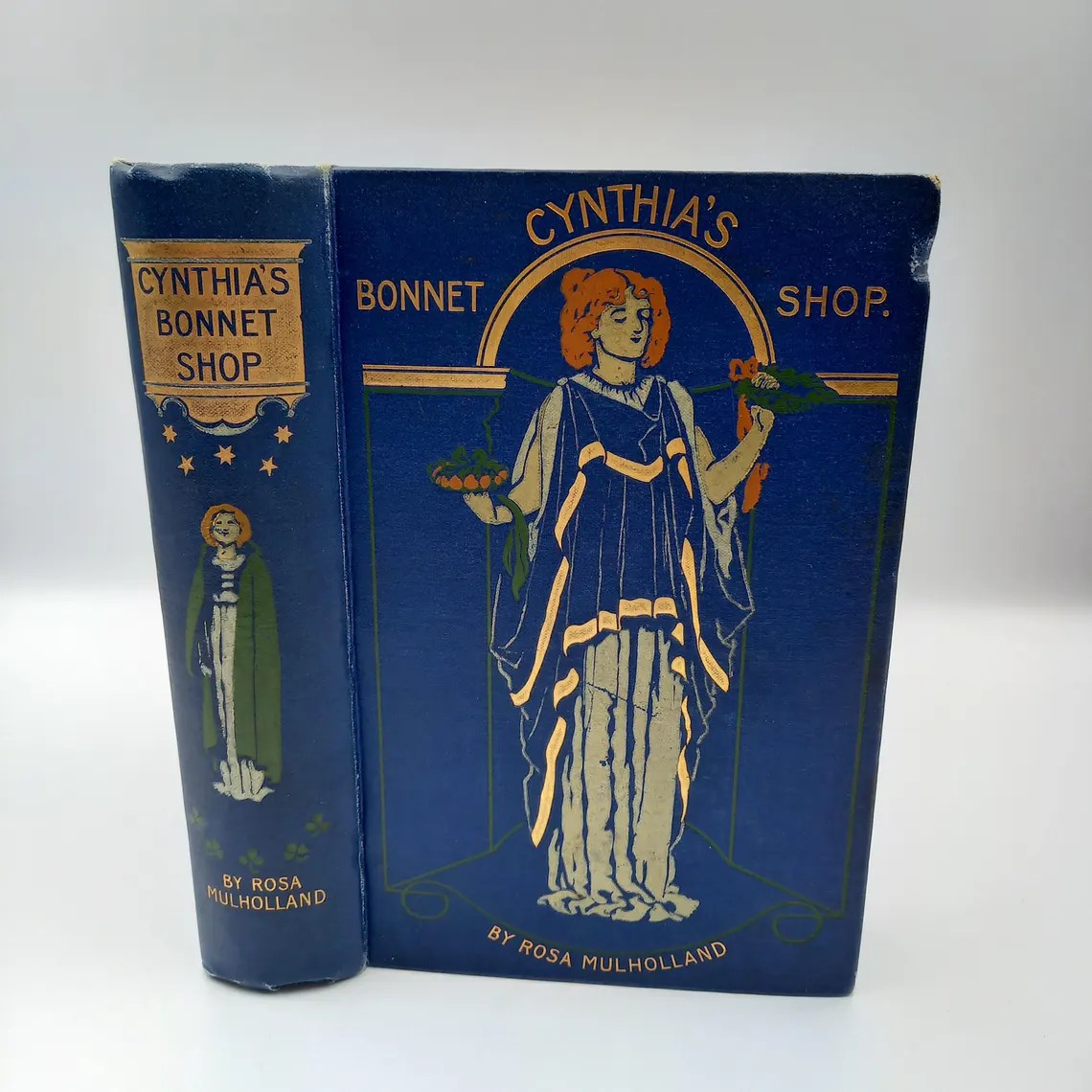
Mulholland’s books are a bit harder to track down than what I have enjoyed in recent years where there has been aplenty available online and in inexpensive used volumes. Rosa Muholland’s books tend to be beautifully bound, illustrated, volumes that are being sold at a premium because of that and despite the fact that there is not much demand to read them. Why more are not available electronically I cannot quite figure out. Perhaps she is just a bit early for for most people – or if the basis of those collections is based on American libraries and universities she may just not be in the right purview.

Clearly it would be a pity not to read this one in a beautiful illustrated volume like this one as well! Not in my collection – yet!

All this to say that while between the acquisition of physical volumes of her books, I grabbed one of her earlier works online and that was interesting and The Late Miss Hollingford was the story of hers, serialized in a magazine, that caught Dickens’s eye. Her descriptive powers were in greater force in her early writing, although her descriptions of the Irish country and seaside are also wonderful in Our Sister Maisie. The descriptions of the farm this young woman goes to live on are just cozy and great. (Yes, another orphaned girl-woman sent off to live with folks she hardly knows – this time her parents, who she barely knew, died of a fever in India leaving her a sufficient income although in reverse this time she is sent to live with people who don’t have money. The father was the perpetrator of a pyramid scheme and those seemed to be rampant at this time – I know the from the de Vaizey books among others!)

Illustration from the Late Miss Hollingford which I read electronically but with illustrations via Project Gutenberg.

I suspect there will be more to come on Ms. Mulholland and her writing as I am wading into the depths. I also suspect that Abe Books and others can expect to be seeing a whole lot of my pocket change in the near future. Stay tuned.

Part 2: Mrs. George de Horne Vaizey Cont.

Pam’s Pictorama Post: Apologies in advance for anyone who was peevish that yesterday was a book-ish post as I am going to wrap up (at least for now) my thoughts on Mrs. George de Horne Vaizey today as she continues to be my reading material of choice. (Yesterday’s post is here.)

I will confess I went for a long fallow period of not reading much and just one off books here and there when I was. Kim powers through all sorts of long and short term reading projects, both for his own edification and for things related to work, so I am jealous when I am without one too. However, I am there with the best when I find a rabbit hole to go down and therefore here we are today.

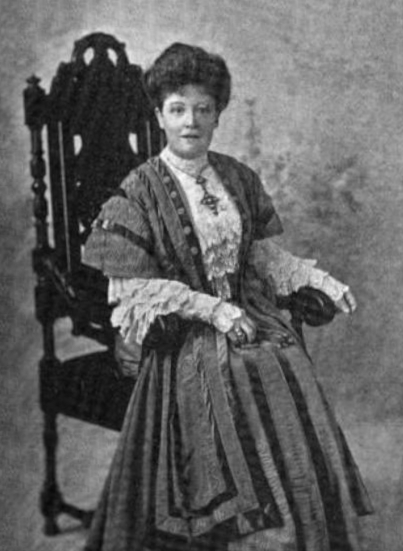
From Wikipedia and the only image of her I can find.

Mrs. G de HV as I like to call her, is fading from consciousness and seems to have barely been rescued for the digital age. If we are to look at the remaining availability of her published volumes, we have to assume that the Pixie books I wrote about yesterday were among her most popular, with a few other titles that seem to stand out. She wrote upwards of 32 books (I say upwards because Wikipedia does not always have every book published by an author although they do a good job of it) and clearly there were short stories. There is a collection of them mentioned as published in 1918. The list of her publications runs from 1897 to 1918, ending with that collection of stories. However, if I really want to read the widest swath of her work I will need to dig some. I would say about half is available online or for sale as antique volumes or occasional reprint.

From “Tom and Some Other Girls”, 1901.

Born Jessie Bell in 1857 as one in a melee of seven children (four brothers, two sisters) she was the daughter of a Scottish insurance broker. Her place of birth was Liverpool. She first married Henry Mansergh, a cotton broker, and published her first volumes under the name Jessie Mansergh. They had a daughter, Gwyneth Alice, in 1886. Mansergh was an addict which seems to have contributed to his early death. Reading between the lines so to speak, one wonders what part her early writing played in supporting them.

While I was certain that hers was a pen name of a type that was often adopted at the time, I learned that no, her second husband was indeed George de Horne Vaizey. She meets him while on a cruise which was a prize awarded for one of her short stories. They marry in ’98 and have a son, also named George, who goes on to be a writer. Sadly her own life ends as an invalid, confined to bed for many years. She dies in 1917 at about age 60 (her precise date of birth unknown) and therefore the final volume is posthumous.

From “A College Girl”, 1914.

Jessie uses her own life as whole cloth for her fiction. Large dynamic families, addiction, illness abound in her pages. Therefore, I have to assume that her evolving views on marriage and the relationships between men and women was also explored on her pages. If you’ve followed my previous musings on women writings of the early 20th century, you know that I found that even the juveniles such as The Radio Girls and Automobile Girls were gently ever pushing the line forward for what was permissible and acceptable for young women. (Some posts on those books here and here.)

Interesting to find Mrs. G de HV who is a bit earlier still than those authors and for me a logical forerunner of some. The line for women, the options they had in society for supporting themselves, is still more nascent although shifting all the time. An ongoing theme she explores is the unmarried middle class woman and her lack of options. I’ve already encountered several books where due to various circumstances the heroine is in some way prohibited or unable to marry and is faced with the issue of how to live their lives, preferably not just dependent on family. She seems to walk a narrow line – clearly a woman married to a man of means is the safest port in the storm.

She also confronts the daily reality of marriage – the idea that you are joining up with a mate who you will continue to make conversation with daily for decades. (I have often said that knowing that I would never be bored talking to Kim helped ensure a good union for us!) The sheer difficulty and exhaustion of running a house and caring for a family.

From “Lady of the Basement Flat”, 1917.

I am going to skip forward to An Unknown Lover, a novel published in 1913. (Some spoiler alerts ahead for those who care.) The author sets herself some unusual tasks. We have a heroine, Katrine, in her late twenties who has spent most of the last decade caring for her older brother who was widowed shortly after marrying. There are rarely effective parents in her books – adult children have either lost them or they are on the sidelines for some reason. I can’t even remember why they weren’t present to stop this hot mess of a situation – dead and forgotten in this case.

Anyway, both characters are beginning to chafe at the situation. The heroine opines on having all the responsibilities of housekeeping without the partnership of a true mate. She is also painfully aware that she is dependent on her brother for her keep, which comes to a hard point when he decides to remarry. She has no marketable skills and living in a small hamlet no prospects of marriage which is more or less what she is trained for. As a literary challenge, our author has placed an epistolary relationship through part of the book, which moves the storyline along. At first it seemed a bit awkward, but it grew on me. Despite some flaws and maybe questionable decisions, it is to date my favorite of her novels.

Love this title and looking forward to this one. Published in 1908.

De Horne Vaizey has beloved tropes – I’ve noted before a preponderance of gray eyed heroines, some have golden eyes as an alternative. An odd one seems to be a fondness for shipwrecks – I believe I may be up to three in her oeuvre to date. An interesting tidbit, while researching this post I came across the following in an Internet Archive version of An Unknown Lover which actually photographs the pages of a hard copy of the novel and included this forward below:

AUTHOR’S NOTE

Lest I should be credited with making literary material out of a disaster still painfully fresh in the minds of readers on both sides of the Atlantic, I should like to record the following rather striking coincidence.

On the fourteenth of April last, I was engaged in writing the description of the collision at sea in which the heroine of the present book plays a part; and after some deliberation as to the most forceful word to employ, wrote the sentence which originally ran as follows: —

”Mercifully it is not one person in many thousands who is called upon to endure so titanic an experience. …”

A few hours later my husband returned home and told me of the news which had that day thrilled the world — the foundering of the steamship Titanic on her maiden voyage.

Many weeks passed by before I could bring myself to continue the narrative.

Hampstead.

Jessie de Horne Vaizey.

Somehow she pulls out two parallel love stories and details the personal growth of Katrine as she makes some rather bold leaps forward to attain a measure of happiness and independence, gently breaking with at least some of society’s conventions.

Sadly Jessie de Horn Vaizey doesn’t live quite long enough to see the shift which occurs even in the early 20’s for women. At six or so volumes I have barely scratched the surface and if it is interesting enough I promise more to come.

Pixie and Mrs. George de Horne Vaizey: Part One

Pam’s Pictorama Post: It has been a very long time indeed since I have posted about a writer or books I have been reading. That is in part because the last year did not lend itself to reading. Helping during my
mother’s last illness and the months that followed, ultimately leading to my changing jobs at the end of the year, certainly there were books, but reading was sporadic. Love or hate my book posts, books are back and today kicks off an interest in Mrs. de Horne Vaizey, nee Jessie Bell, later Mrs. Henry Mansergh and finally Mrs. de Horne Vaizey.

Pictorama readers of long-standing know that in recent years (especially during the at home pandemic years) I chased down the writings of numerous authors including all the Judy Bolton mysteries (a post about those can be found here) and strolled through the collected works of several women who were writing short stories and novels that depicted the emerging woman in the US and Britain at the dawn of the 20th century.

These included the adult novels of Frances Hodgson Burnett (in several parts, but it all starts here),
the (glorious) short stories and novels of Edna Ferber (here) and the various series books including the Red Cross Girls, Ruth Fielding books and the many volumes of my beloved Campfire Girls. (Starting here, here and here if you are game.)

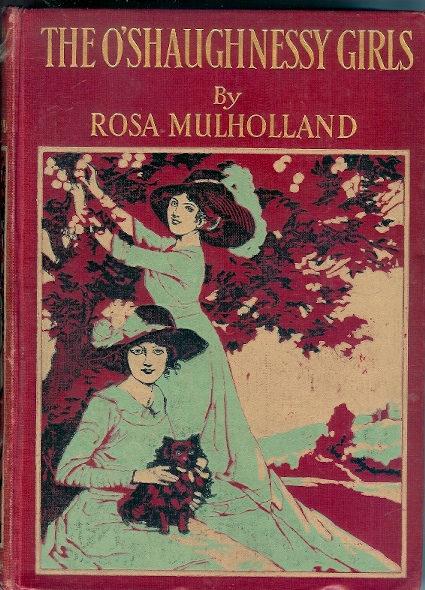
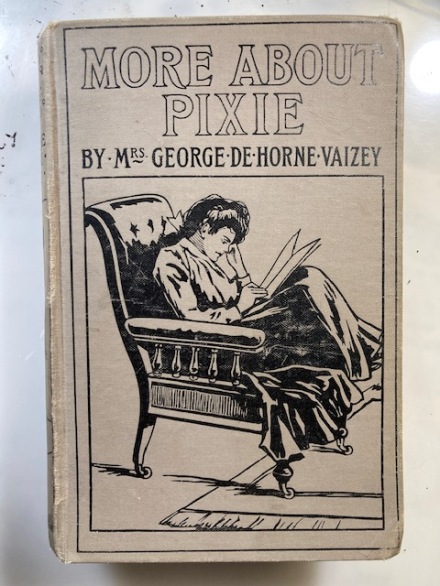
You might remember that my birthday this year turned into a day of poking around bookstores downtown, including The Strand’s re-opened rare book room. I picked up a copy of More About Pixie, the second volume in a three novel series by Mrs. George de Horne Vaizey (Mrs. GdeHV for my purposes going forward)

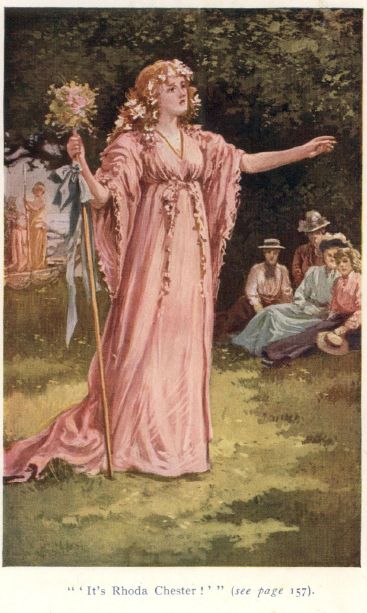
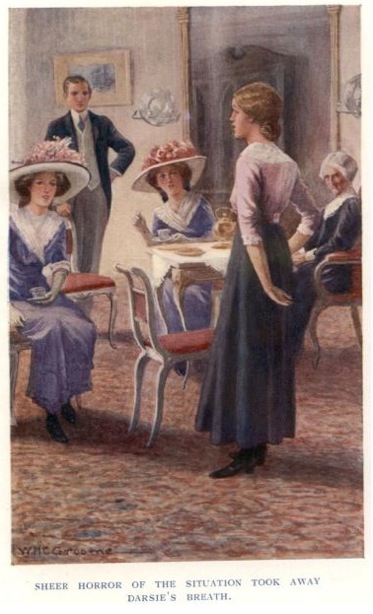
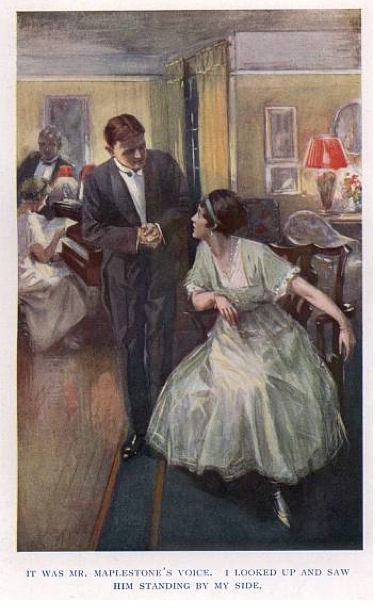
I was able to find the first volume of the books about Pixie online, Pixie O’Shaughnessy, with relative ease on my old friend Project Gutenberg. (All three volumes mentioned here are available on this free online resource as well as some others, although beyond these books only about half of her publications seem to be readily available. Many volumes of her work are also available at the Internet Archive.) I have largely been able to download illustrated versions of the books which I urge you to try to do as some of the illustrations are very good. (Oddly I can’t seem to open and share them here and show what I was able to find otherwise. I will add that the blog site isn’t actually allowing me to add images today so I apologize for the largely un-illustrated post!)

This first volume is a wonderful depiction of life in Ireland in the waning days of the 19th century. Written in 1902 it is a bit earlier than the copious volumes of my earlier reading I mention above. The impoverished, motherless (a recent loss) family resides in a dilapidated castle which becomes a sort of
character in the book, as does the backdrop of the small Irish town they reside in.

Pixie is a young child still at the start of this book – she is not a physically attractive youngster (this is an oddly defining characteristic that stays with her; her looks do not improve with age), however she has such an outspoken and winning personality that she always everyone’s favorite. To make up for her physical limitations as a beauty, she has two lavishly beautiful sisters (Mrs. GdeHV is a little obsessed with her heroines having gray eyes, they all do), Bridgie and Esmerelda, and attractive brothers in the bargain.
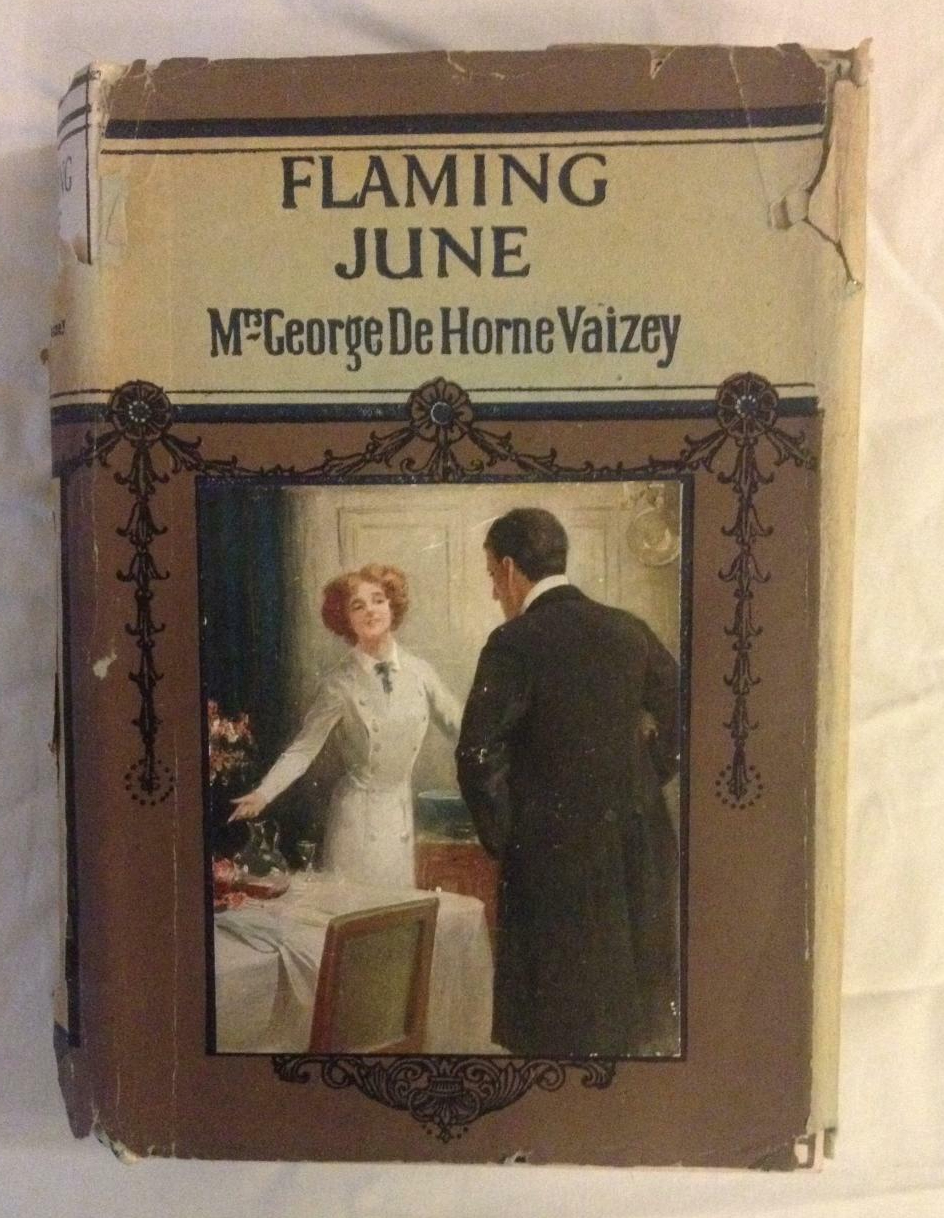
The funds are scraped together to send Pixie off to a private school in London and her adventures there make up the second half or so of the volume. (Esmerelda is hot tempered and so extravagantly stunning that she is somewhat done away with at the close of volume one.)

Written a year later, volume two, the one I picked up at The Strand More About Pixie, takes an interesting turn. It is in fact not so much more about Pixie, as the story is actually told by a young woman neighbor, a
recovering invalid, who lives on the street in London where the family decamps to at the start of this volume. Her encounters with the O’Shaughnessy family include Pixie, but in reality it focuses more on her friendship with one of the older sisters, Bridgie, who plays mother to the clan. Pixie does reassert
herself in the latter part of this volume, but it is Bridgie and the neighbor girl, Sylvia, and their friendship that is at the heart of the book.

Much of the book concerns the slow recovery of Sylvia (an illness which is given no name but has even affected her bones as they gravely consider needing to amputate her foot) who is another motherless child (life of mother’s was evidently cheap), living with an aunt while her father is away in India. (Mrs.
GdeHV likes to send men to India and bring them back after many years. To date I have barely been in India with her books, but wouldn’t be surprised if we end up there one of these days.)

It isn’t until 1914 that the final volume of the three is published, The Love Affairs of Pixie. Our prolific author has penned at least 17 volumes between these so it is a more mature writer who writes this novel. It interests me that she decided to turn her hand back to a now fully adult Pixie who returns as the heroine and focus of this story. Much of this story brings Pixie and the reader back to Esmerelda and Ireland, although the Ireland of this book is less lovingly described. Pixie remains unattractive on the face of things and in fact the book opens with her own discovery of this and is a theme throughout, but the pluckiness and good heartedness of Pixie has her as a sought after mate who (spoiler alert) finds her mate at the close of this volume.

Mrs. GdeHV clearly liked to assign herself challenges to keep things interesting. These are not formulaic series books (not that there’s anything wrong with those!), but instead you can see her making choices and setting up approaches to keep things different and interesting. I’ll cover more of her biography tomorrow, a sort of sad tale despite being a very prolific writer. She must have been popular in her time, but sadly volumes appear to be hard to find and I know she wrote short stories but none of those have turned up yet. However, I have only just begun my research so undoubtedly more to come.