A Variety Performance

Pam’s Pictorama Photo Post: As some readers know, last week was a satisfying visit to the Metropolitan Postcard Club show where I loaded up on a wide variety of postcards which I plan to revel in for a long time to come. However, having said that, the show seemed to be notably low on photo postcards in the categories I perused. Today’s card however was one of those photo postcards I did purchase. (And you can see I eventually wander into silent film territory today!)

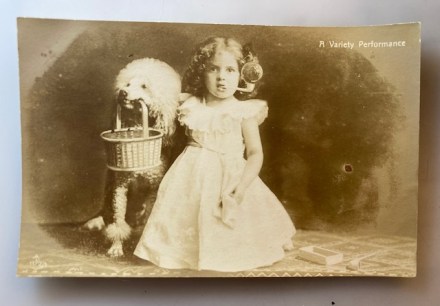
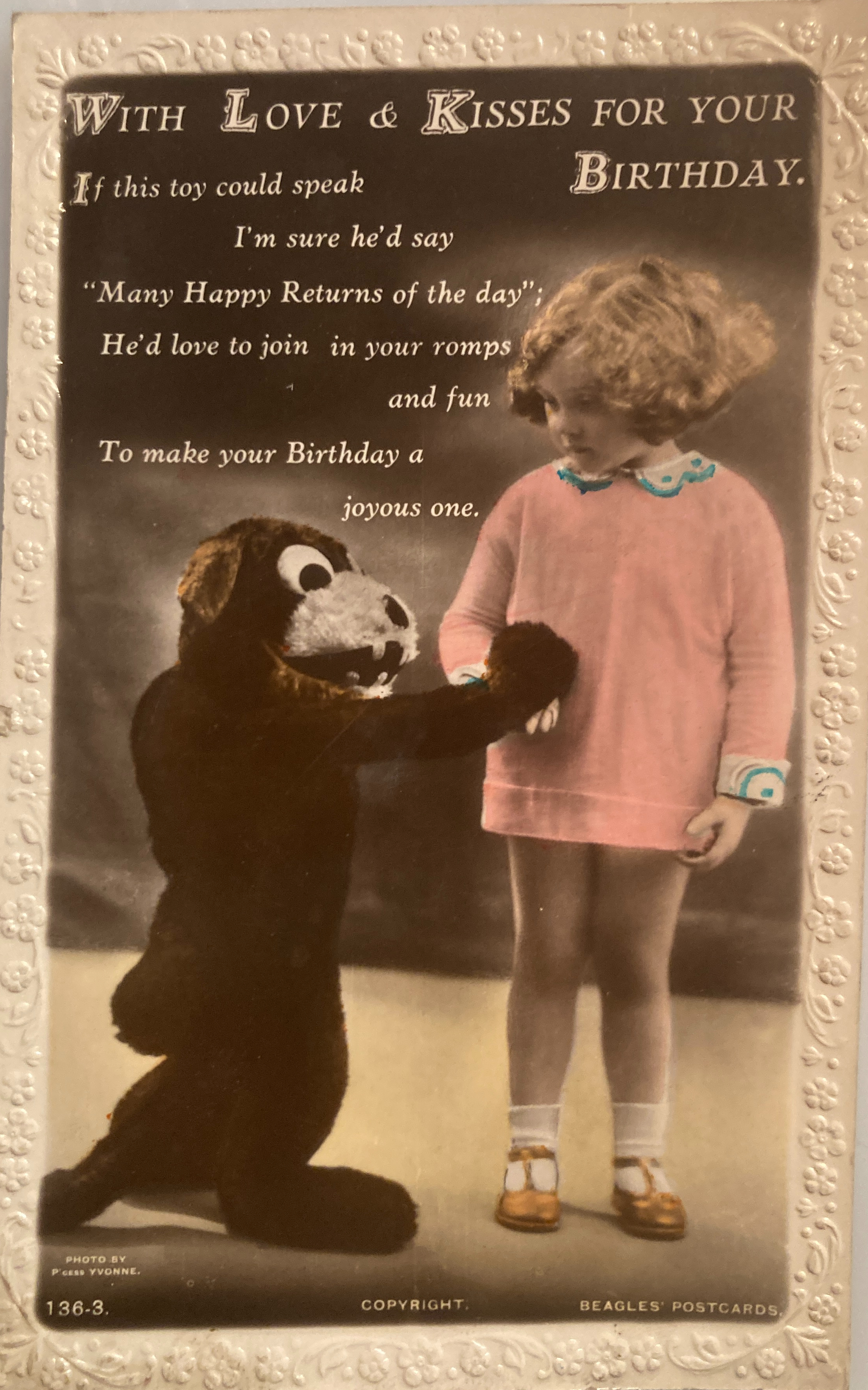
This card makes me laugh. It is hard to imagine what on earth a performance of these two, given the visible implements, might have put together – clearly you had to be there. Meanwhile, I had a moment of thinking that the bubble pipe had been applied after the fact but a close look under magnification shows that she was indeed holding it in her teeth. It is my assumption however that the bubble itself was a bit of photo magic, a bit too perfect and visible.

This little girl is well appointed in her dress, with her hair curled nicely and she holds what appears to me to be a handkerchief in her hand. (Her other hand, unseen, is probably resting on the dog.) It requires some imagination to envision any configuration of an act. There is, additionally, a box on the ground near her where there is also an additional pipe like the one in her mouth. Huh.

Kim especially recommends this Louis Feuillade film outside of Judex.

The much gussied up poodle holds a basket and it is my guess she knows a few tricks too. While I am not entirely a fan of the extreme, if classic, haircut she sports it fits the circus dog implications. They are both seated on some sort of print tile floor and best I can tell the dark background was smudged in manually in the making of the image. In the upper right corner in small type it says, A Variety Performance.

This card was never used or mailed and the only information on the back is for the company which appears to be called Aristophot Co. London. This company seems to have been active in the very early years of the 20th century, was sold and appears to have ceased to exist by 1909. However, it left many and a wide variety of postcards in its wake.

All 12 chapters and a prologue are available here at the the time of publication.

This card especially appealed to me this morning because last night I was catching up to where Kim is in a serial called Judex from 1916. A beautifully restored version done in 2020 is available on Youtube. Kim was turned onto it last week while we were watching the Pordenone silent film festival and in particular a series of shorts by Louis Feuillade which made Kim have a look around and another look at the director.

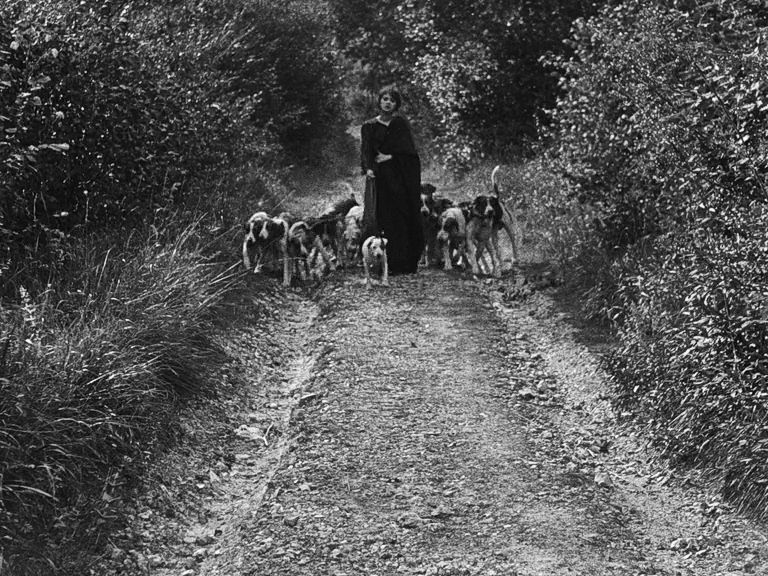
A great shot of the pack of dogs from Judex.

You may ask still, why might this postcard remind me of that? Well, without giving any of the plot away (because if you have any interest you really should watch it) one of the aspects of the film is that the protagonist, the mysterious Judex, travels with an enormous pack of trained dogs! Many hounds, one huge black dog with long flowing hair, and a well trained poodle trimmed up just like this one. Great shots of them all flying around the countryside abound.

Among the wilder looking pack of dogs this very perfectly clipped poodle emerging as one of several performing pups really helps lift this early series up into our Best Of Serial category even though we are only on the fourth installment. More to come there!

The Devil’s Circus

Pam’s Pictorama Post: Today I have an unusual post and not just because it is a dog day, but I am going down the rabbit hole of silent film, an occasional tributary. However, it has been a very long time since the films of Deitch Studio have been up for discussion. Those of you who know us, or have been readers for a long time, know that silent and early films are among the programming here at Deitch Studio. There are lots of film links and recommendations here so get ready.

While I have devoted some space to silent cartoons, stills like this one are most likely to turn up in my collection. My affection for Frank Borzage has lead me to several (nonanimal) acquisitions which adorn the walls here (posts about those can be found here and here for starters) and of course Felix, who posed with a number of actresses of the silent era, is robustly represented on our walls. Dogs do occasionally turn up and a post with Peter the Great can be found here based on a still of him with Bonzo. Sometimes even short stories of the period lead to a silent film discovery such as in this post here.

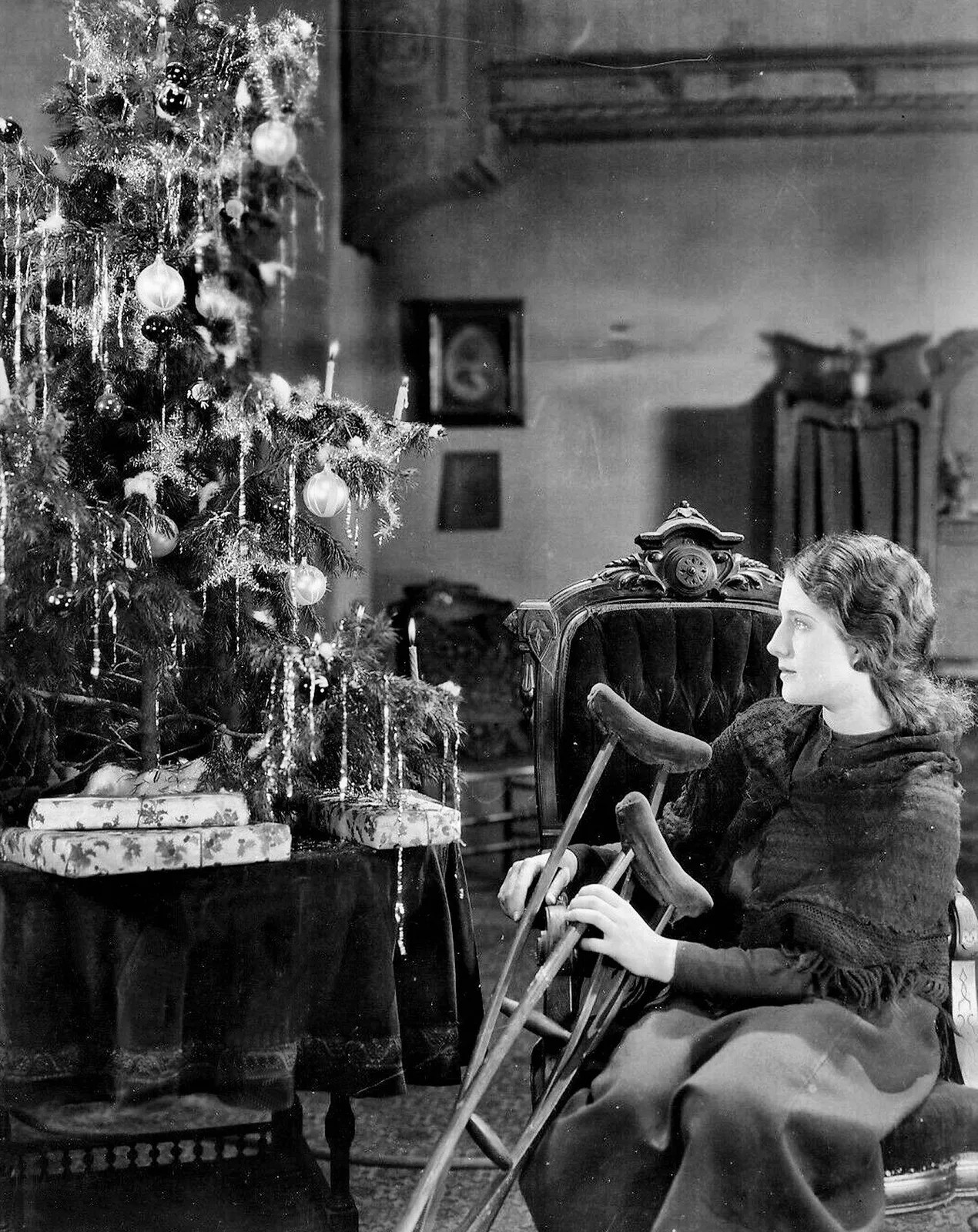
Another still from The Devil’s Circus. Not in Pams-Pictorama.com Collection.

Today we started with the film, not the photo which was acquired after. Recently Kim stumbled on this splendid Norma Shearer silent film, The Devil’s Circus, a 1926 film which neither of us had ever seen or heard of. We watched it on Youtube and a stunningly gorgeous print can be found there. I am unable to share the link but it is easily searchable there. (There are some much lesser bad print versions so look for the one in excellent condition.)

Directed by Benjamin Christensen, a young Norma Shearer is already getting her name above the title in this drama with co-stars Charles Emmett Mack and Carmel Myers well below. (Full credits for the film can be found on the IMDb database here.) A 24 year old Norma Shearer is playing a bit younger as a girl who, with her dog, is looking for work in a circus in a non-specific European locale, when she meets Mack and they become a couple. I won’t spoil the plot for you, but there are great circus scenes and my only complaint is that is would have been even better if Mary had come with a dog act for the circus because this little fellow was up for even more screen time. Buddy the dog emerges as the star of this post today, but really, I can’t say enough good about this film. Run, don’t walk, to Youtube to watch it.

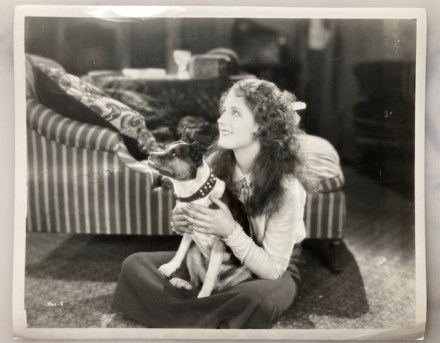
Buddy does his turns admirably with Shearer for about half of The Devil’s Circus and we miss him when he’s disappears. It is clear that they clicked together and he is very believable as her pup. This photo Kim found on eBay embodies it best – the two of them looking together off screen, joyfully ready for action. This photo was identified as having come from a print made in the 1970’s but it must have been from the negative as it does not appear duped. It came from the Marvin Paige collection and he was evidently a longstanding casting director in Hollywood. It is identified only with the name of the film written in pencil on the back. Additional photos of Buddy are not easily available online and are probably best found unidentified in film stills like this one.

The story goes that Buddy, a stray terrier or terrier mix, was found and trained, and was well into his film career when he made The Devil’s Circus. His working life seems to start back in a 1923 film call F.O.B., a Lloyd Hamilton short. (It’s unclear if F.O.B. still exists; I cannot find it at this time.) His big break was with Charley Chase in something called Speed Mad (1925, while prints appear to exist I cannot find it to show at the time of writing) and then he’s off to the races with one called What Price Goofy in 1925 where his name morphs from Duke the Dog to Buddy the Dog and sticks.

So his early days and his entree into films seems to be with Hal Roach and Leo McCarey. All in he makes about 25 films, a mix of shorts and features, from 1923 to his last film credit in 1932 in the sound film Hypnotized also linked below. The Devil’s Circus appears to be right after his rechristening.

So there you have a capsule history of film dog star Buddy, a somewhat forgotten but very talented canine from the early days of film and ample examples to watch him at his craft. Settle in and have a little film festival (like we are – catching up with these additions) celebrating this fine fellow.

Enchanted

Pam’s Pictorama Post: I guess I should put out a sort of spoiler alert here if you have a hankering to watch one of these versions before reading this post today! This post will be musings on both the 1924 (recent restoration) and the 1945 film. It’s likely I will touch on plot points. In addition to these two films, there is a 2016 version which I have not seen and I do not endeavor to comment on.

The first time I saw the 1945 version of The Enchanted Cottage I was in high school and getting ready to leave one morning and it was on television. I can’t imagine now what channel it could have been on since this was in the days before TCM. I must have caught about half of it. It was long before the internet so I had to hold onto this snippet of film for many years before I was able to catch up with it or even know much about it.

Full radio version with the 1945 cast.

Eventually I was able to catch up with it and have enjoyed multiple viewings over the years. (As a total aside, in researching this I also found a full contemporaneous radio version by Young and McGuire as above.) For those who aren’t in the know, the story centers around an unlikely couple who find happiness in a gently enchanted cottage in the British countryside. The man is a wealthy former bon vivant who has been disfigured in the war and the woman is an unattractive (in a plain Jane sort of way) local who helps out at the house. They enter into a marriage of convenience and thus the story unfolds.

Only image from the play I could find available. A bit confusing if she is to be the unattractive maid here getting married.

The genesis of the plot appears to be a play of 1921 by the English playwright Arthur Wing Pinero. The outline of the play’s history is somewhat scant, appears to have premiered on Broadway in ’23 with Katherine Cornell and run for a scant 65 performances. For something that has had such legs on film, it did not have an auspicious beginning.

However, it was clearly enough to kick the early film production launching the 1924 version which Edward Lorussa has recently so thoughtfully and thoroughly restored and released via a Kickstarter campaign. (The info on the restoration and the availability of the disk can be found here.)

Although we generally get on board with supporting all of Mr. Lorussa’s restorations, I was bouncing up and down excited for this one. Kim and I had seen a really ratty print a long time ago, I believe, at a branch of the New York Public Library – what used to be the branch across the street from MoMA. It really only served to make me want to see a better restoration.

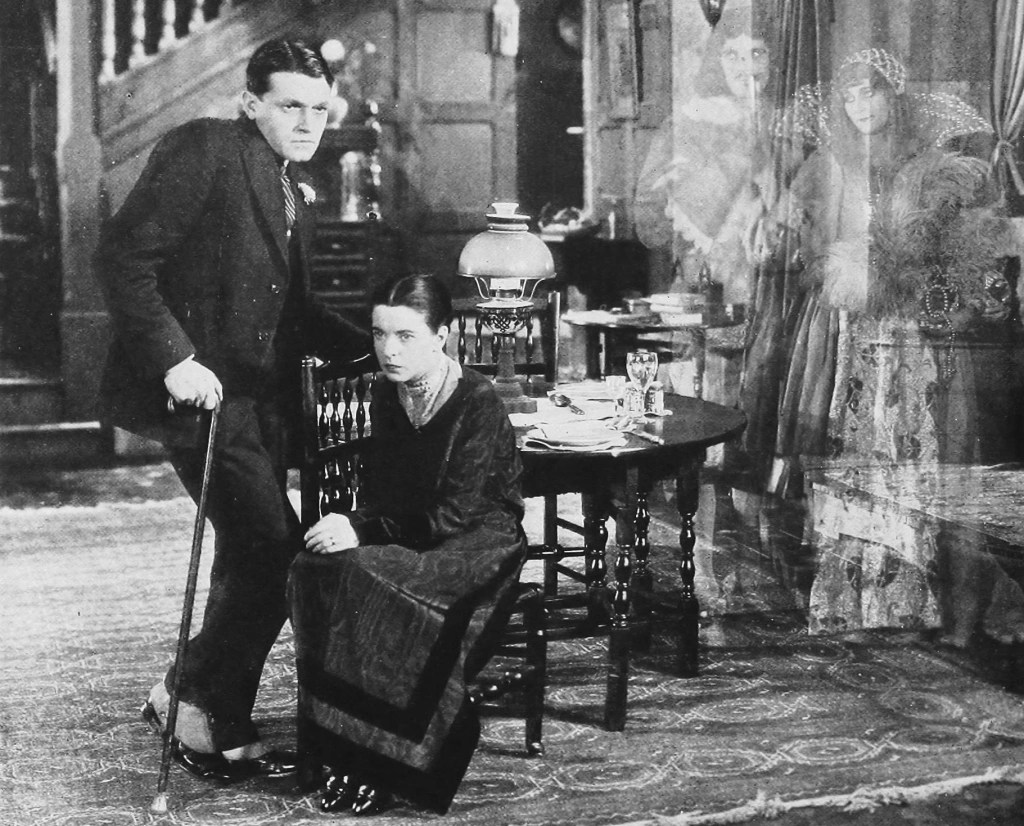
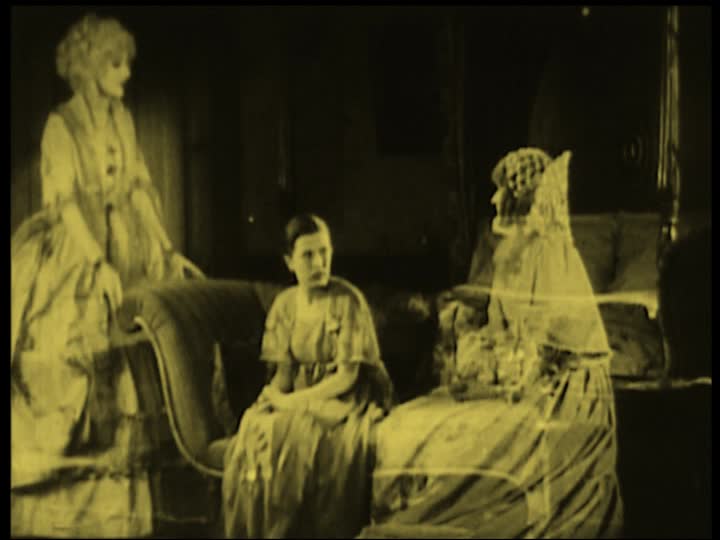
A ghostly couple considers the plight of these two, joined in a marriage of convenience only.

By now the 1945 film has become a longstanding, much viewed favorite of mine. (It does not appear to be available in full on Youtube, but you can find it on most streaming services.) Robert Young is the young war vet. In this version he and his fiance visit the cottage with the intention of renting it after they are married. They are gaily happy and somewhat dismissive of those around them. However, the war interrupts their plans and he returns from the battlefield a scarred and broken man.

Refusing to marry her after witnessing the shock that his transformation has had on her, he returns to the cottage alone where he shuts himself up and away from family and friends.

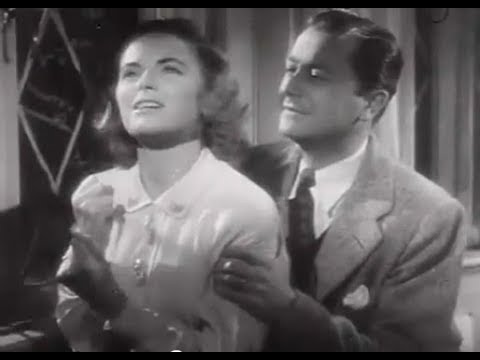
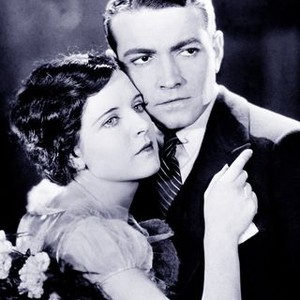
Pre-transformation McGuire and Young.

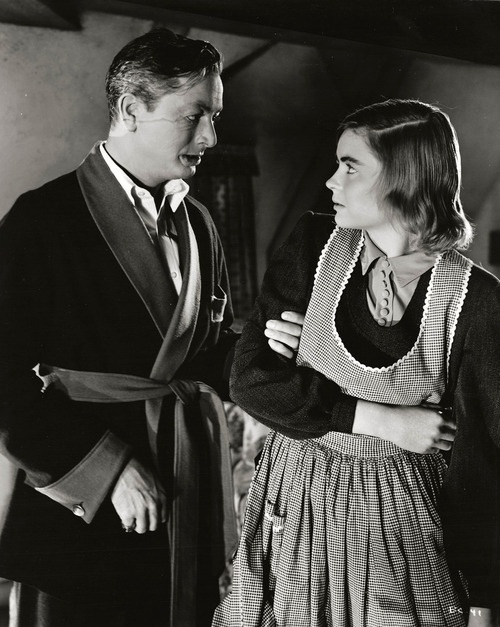
He eventually meets a blind Herbert Marshall and in this version I believe the allusion is to Marshall’s blindness having occurred as a result of the earlier world war. He is well adapted and embracing of his own life, complete with a nephew and pup who are his companions and help him navigate the world. Dorothy McGuire is the female lead. Always tricky to have to make an actress look unattractive or even plain. I would say they do a reasonable job with it.

Post transformation McGuire and Young.

At the heart of the film is the transformation of the couple, by their growing affection and an allusion to the magic of the cottage. This is tricky. You need Robert Young to change, but should his disabilities actually heal? They do a good job of transforming him short of his full-on Hollywood self. A variation would apply to Dorothy McGuire too. While it is a bit hard not to at least see her as a diamond in the rough, she is dutifully dulled down and restored to her requisite glory.

Barthemess with his sister – the specter of her coming to live with him chases him into his marriage of convenience.

Cold water is thrown on their cocoon of grace as they realize the outside world does not in fact see them as transformed. Their love ultimately conquers this turn and the cottage rewards them with it’s only real moment of magic in this version, when it spontaneously inscribes their name on a lovers window in the cottage.

At 91 minutes this version is somehow infused with a bit more background story and color than the 1924 version which is a scant ten minutes shorter. The ’24 version is darker, both literally and in essence. We have no opportunity to meet the vet in better days and while his fawning weak mother is a bigger part in the ’45 film a somewhat masculine and very bossy sister is added to a good effect. She even bosses the mother and father. In this version the fiance is also made fairly short shrift of as well.

Friendly female ghost visitation.

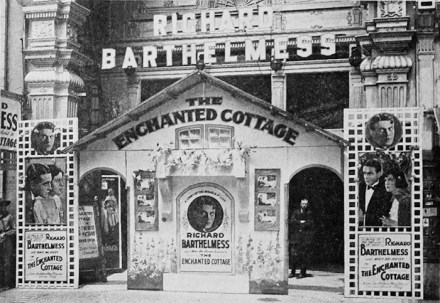
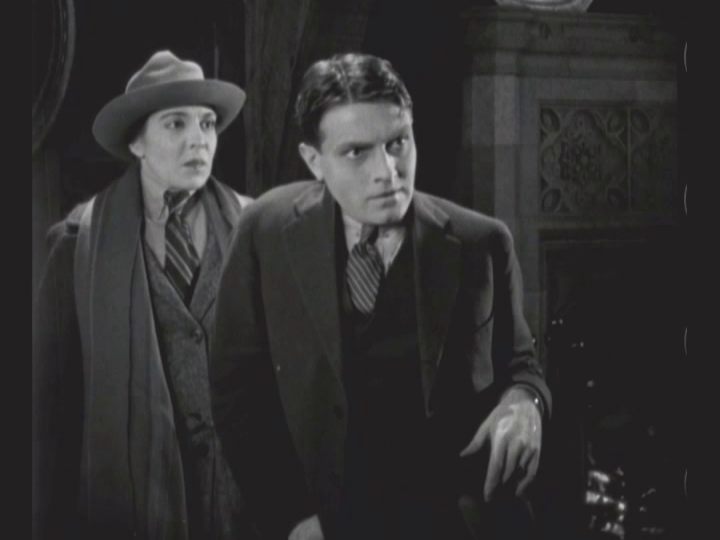
This cottage is kept quite dark for much of the film and unlike the later version we are treated to ghostly couples of the past romping throughout and one assumes they play a helpful role in getting this couple together. This time the lovers are played by Richard Barthelmess and May McAvoy.

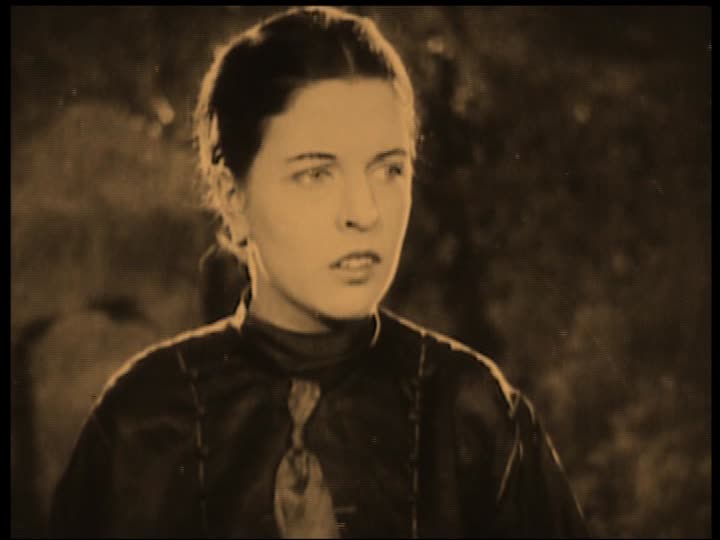
Barthelmess has impairment of leg and arm on one side, in addition to scars on his face. Even transformed, he maintains some trouble walking and a limited use of his arm. Meanwhile, May McAvoy is taunted by unthinking schoolchildren for looking like a witch. They walk a good line with her looking quite plain and her transformation is, I think, more pronounced than the Dorothy McGuire one.

McAvoy before being transformed.

I think the real difference here is there is a rawness post WWI which plays out differently in the post WWII version. The blind Major Hillgrove (Holmes Herbert in this version) is perhaps the most poignant difference. In this version they were actually in a war torn hospital together briefly and his own pain over his blindness is still visceral. At one point when asked about their transformation he longs for it to be true so that maybe he too will be healed. Perhaps the very real and sometimes raw sadness of the film accounts for the fact that it did not do well upon release. It was dubbed too cerebral among other things by critics.

The couple transformed in the ’24 version.

Mr. Lorusso has done a splendid job (as always!) with the restoration. Rodney Sauer of the Mont Alto Motion Picture Orchestra to create a piano and violin score for the film which helps create the overall ambiance. As you will see if you read the above description by Lorusso, you will see it was made from a rare 35mm print and it is largely beautiful if a bit soft in places. He speculates that there was originally tinting.

Also, freakishly, this print was somehow made over the sound track of an entirely different film. The story about how that came about is lost to the sands of time. Fortunately however the film is not and I highly recommend purchasing a copy and settling in to watch a double feature with it and the 1945 version. Three cheers for Edward Lorusso!

Borzage Birthday

Pam’s Pictorama Post: It’s a today is my birthday post. We’ve had some other post on the day or very close – here and here. The day will be spent, as is our habit, wandering around downtown, poking into stores or flea markets – precious few of both left here in NYC though! Kim will sport me to lunch and if we are in the East Village that will be a plate of perogies or matzoh brie. If it turns out to be Chinatown (which will likely still be ringing in the Year of the Dragon so maybe not) it may be dumplings. I will give a full report next week – which will also be a Deitchian Valentine reveal – an event unequaled except by the holiday card annually!

From last year’s birthday post! Pams-Pictorama.com collection.

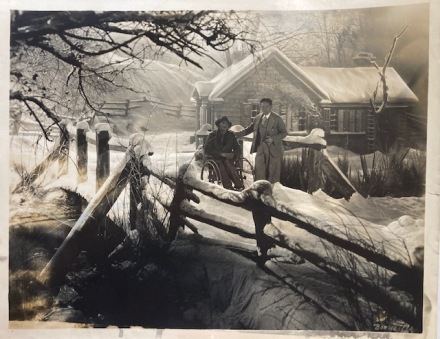
However, despite birthday prep, I do have a post for you today – this rather spectacular press photo from Lucky Star, an all-time favorite silent film directed by Frank Borzage. Kim and I found it on eBay about 10 days ago and snatched it up as a birthday gift (another one, a toy, to follow in a subsequent post – such riches) for me and I just opened it this morning. (I have written about these films at more length in posts here and here.)

In Lucky Star Charles Farrell, who is playing the main character becomes confined to a wheelchair after fighting in WWI. He is seen on the faux snowy set with Borzage. (The artifice of the snow is especially evident under the the fence in the front.) There is something about the nature of the artifice on an early Borzage set that I love – like a painting or a diorama. The snow is my favorite however and this film has about a third of it in the snow including the wonderful climax at the end. For a long time Lucky Star was not easily available but now you can (and should!) watch it on youtube here. The cottage in the background, this little bridge and pond which is seen at various seasons in the film, and the rickety fence are all Borzage perfection.

From Lucky Star. Pams-Pictorama.com collection.

There are some contemporaneous pencil notations on the back, but nothing of note. There is a very unfortunate modern sticker with the name of the film which concerns us as the glue may do a chemical chew through over time. One corner has a pushpin mark in the upper left corner.

Like my scant other stills from Lucky Star and another great film called Lazy Bones – the developer was sloppily applied and the result is odd bleaching and an unintentional sepia tone in the upper right corner. The lower left is the worst though, with a bit of uneven printer alignment too, a blob of chemical ooze is recorded on the lower right. (I have not watched Lazy Bones on youtube but you can try it here. It features Buck Jones in an atypical role – just darn great!)

From the opening of Lazy Bones. Not in my collection.

By coincidence, but perhaps also a bit of a tribute considering the purchase of the photo, last night over dinner we caught up with a later Borzage film we’d never seen via youtube as well – Until We Meet Again. (Find it here.) It would be hard to put this in the same category as the silents above, although some of Borzage’s signature aspects remain - star crossed romance, those interesting sets. Sound film, 1940. There is a rushed, low budget quality to it that works against it. Still, I was glad to see it. His films are still showing back up after years of languishing. We saw The Lady in an Italian silent film festival (via the internet) in ’22. It was good, although not really memorable. (The youtube of it is a wretched print and I cannot recommend it.)

Not in my collection.

I’m not entirely sure what it is about Borzage that speaks to me so specifically, but I will always go out of my way to see any of his work. It’s a combination of his esthetic and storytelling that speaks to some part of me deeply. Maybe I was a fan in a past life – seeing each of the silents as they came out. If you follow that logic, I will still be watching them, again and again, in a future life too. Meanwhile, it’s one of those “big” birthdays, so I will let you know what I think after I have digested it a bit.

More Lucky Star

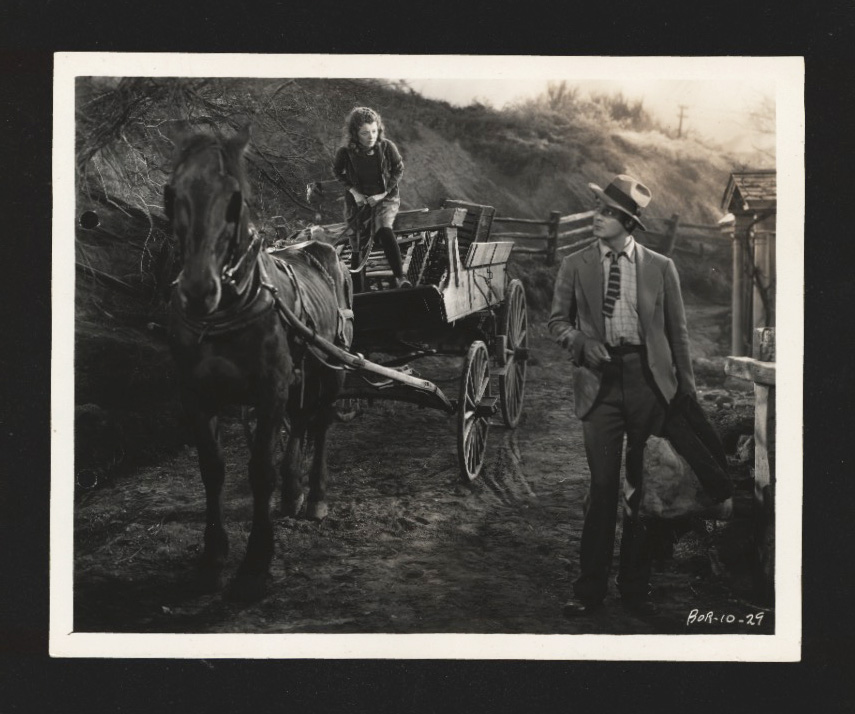
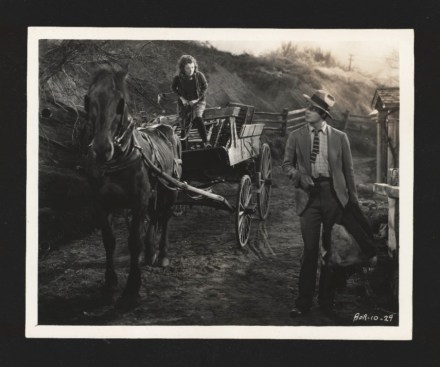
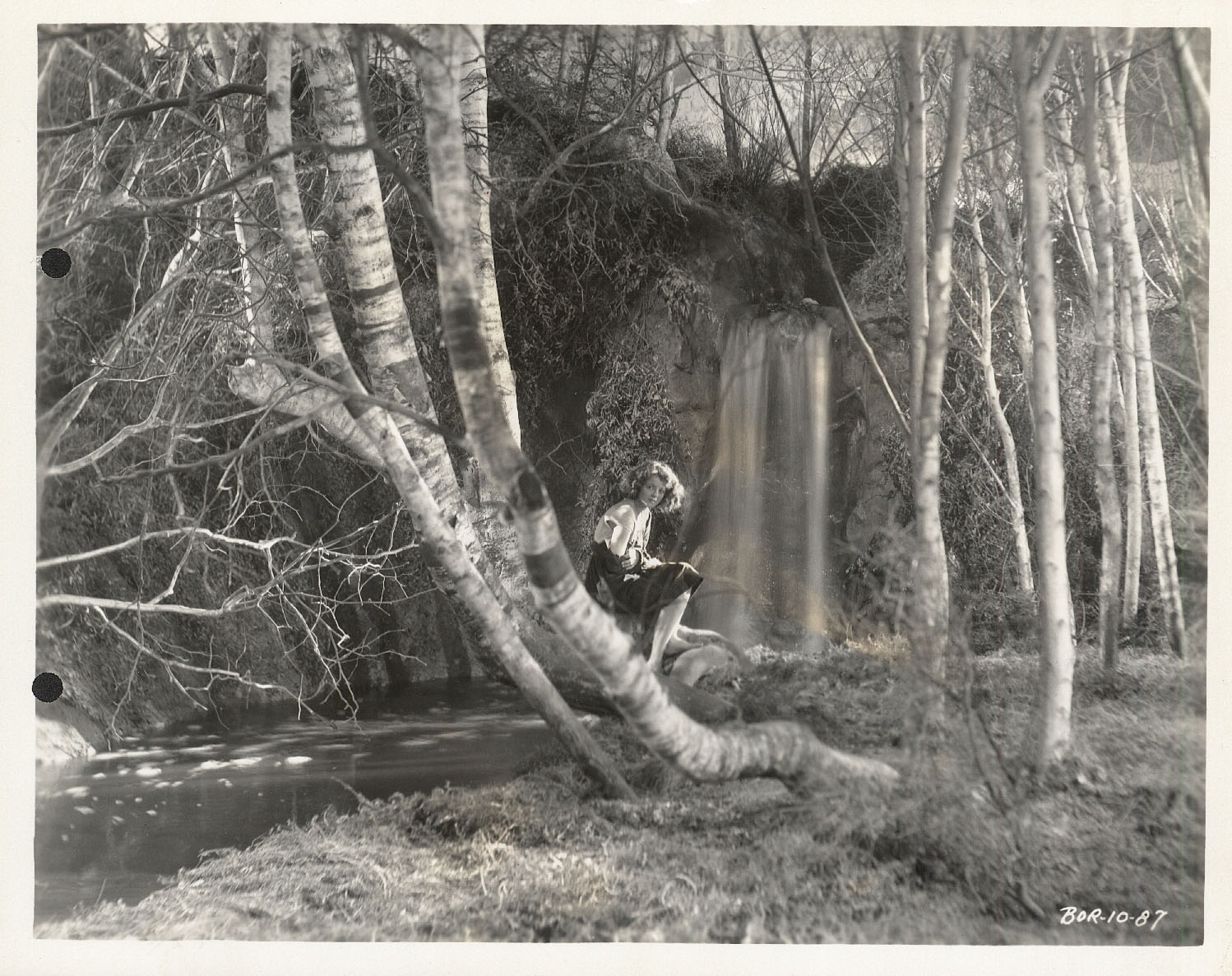
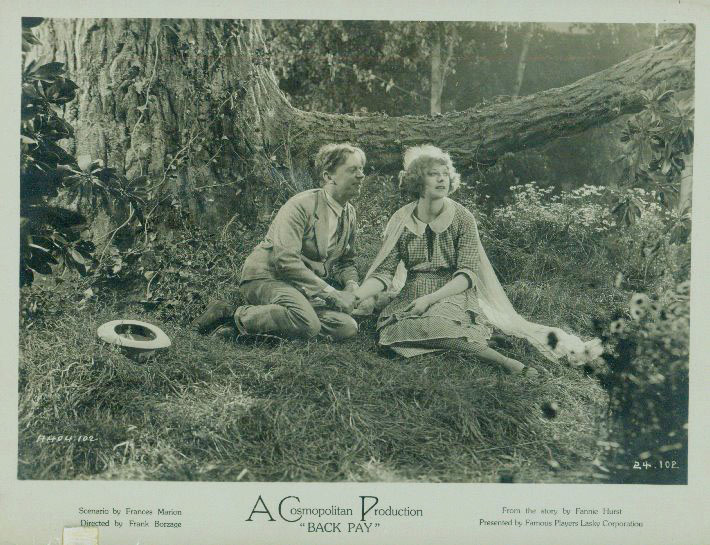
Pam’s Pictorama Photo Post: The purchase of this film still allows me to return to a favorite topic today, the films of Frank Borzage and in particular one of my favorites the 1929 film, Lucky Star. My original 2014 post can be found here, but as of writing now I can share a link for the entire film which can be found here. That post was inspired by the purchase of another Lucky Star still and one from another Borzage film, Back Pay. (For Borzage fans who may not know, a great restored version of Back Pay recently became available and as of writing it can be found here.)

This morning I was puzzling through my fondness for this film. Visually, the setting which is a wonderful mix of artificial and realistic and paints its own world is part of it. It is undeniably bleak, but there is something about the self-evidently constructed ponds, paths and buildings that seem to put my mind in a pleasing place. We know now that these sets at Fox were in use morning and night, a young Janet Gaynor was working day and night there on two films at one point and you wonder when she might have slept or ate a meal.

Lucky Star still from a scene never used in the film. Pams-Pictorama.com Collection.

In this story an impoverished young woman is mentored by a war-damaged WWI soldier in a sort of Svengali-esque remake of her. Ultimately his love of her ultimately eliminates all obstacles; this is the sort of perfect Borzage pathos leading to a love conquers all ending. In my opinion Bozage is at his best when given this sort of material and clearly he had a pretty free hand over the making of it. He’d give you a glorious wrap up with a sad ending if he had to (I’m thinking of his A Farewell to Arms as one example; you need to find the unedited version if you are going to watch it – makes a lot more sense including his ending), but he was in his glory building to a happy ending against all adversity.

Still from Back Pay, another Frank Borzage silent film. Pams-Pictorama.com Collection.

This photo is from early in the film, in the pre-War day to day world of the far reaches of a nowhere backwater. One of the through lines of this story is the way World War and ultimately change comes even to such a remote corner. Here Janet Gaynor is a wily and feral child to Charles Farrell’s relatively sophisticated adult. The lighting is dramatic and bright where it hits in high relief. The ribs of the poor elderly horse stand out and as does the fence. There’s something about Charles Farrell’s hat which is a tip off that the change he is going to undergo has begun.

I can cheerfully tell you that there are definitely other scenes from this film which, should I be lucky enough to find photos of, I would snatch up in a heartbeat. Should that come to pass I assume I will likely pass those onto Pictorama readers as well, understanding of course, that some of you may not share or understand my enthusiasm. However, the last part of the film takes place during a long scene in the snow and I would love to own some of those so I could lose myself daily in the wonderful silent film world of Frank Borzage and Lucky Star.

The Wolf

Pam’s Pictorama Photo Post: Pictorama readers may know that after months of Covid inflicted waiting, I recently turned our 600 square feet upside down and had a wall of bookcases and cabinets installed. If you live in one smallish room, such a project is pretty much a total renovation of the space and requires packing up about 85% of your possessions and then redistributing them. Once I have completed the unpacking process I will treat you to a bit of a tour of the shelves – toys newly installed. While I had my moments of extreme concern (What have I done?) in the end I am pleased with the results.

One of the byproducts of this kind of adventure is things you had forgotten about turning up. We purchased this photo, now many years ago, as part of a series of buys on eBay as a photo morgue was being sold by piece. We stumbled on the sale a bit of a ways into it or we probably would have bought even more, but this was one of the earlier buys, purchased just for its weird beauty. We framed it up and I think it did a stint on the wall before a reconfiguration moved it to our own photo morgue that (until recently) lived on my desk.

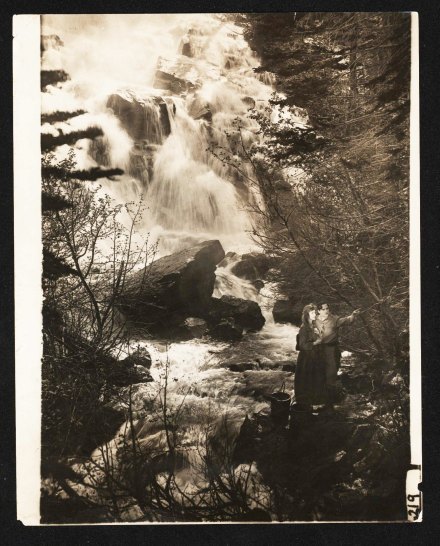
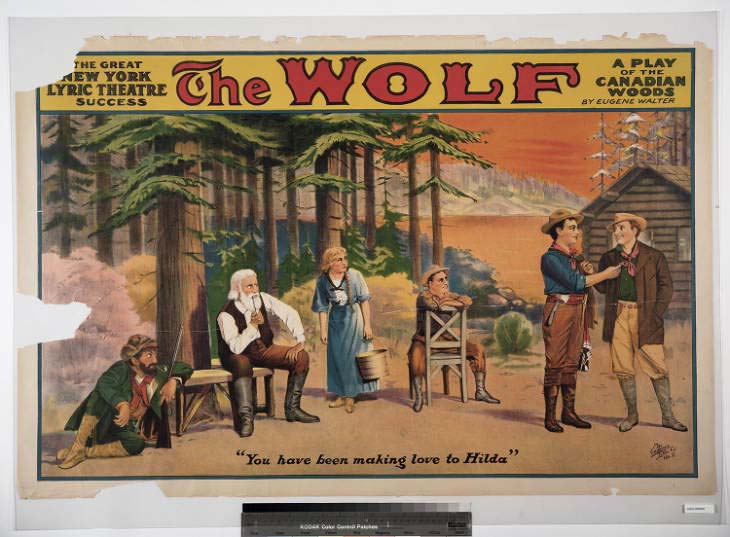
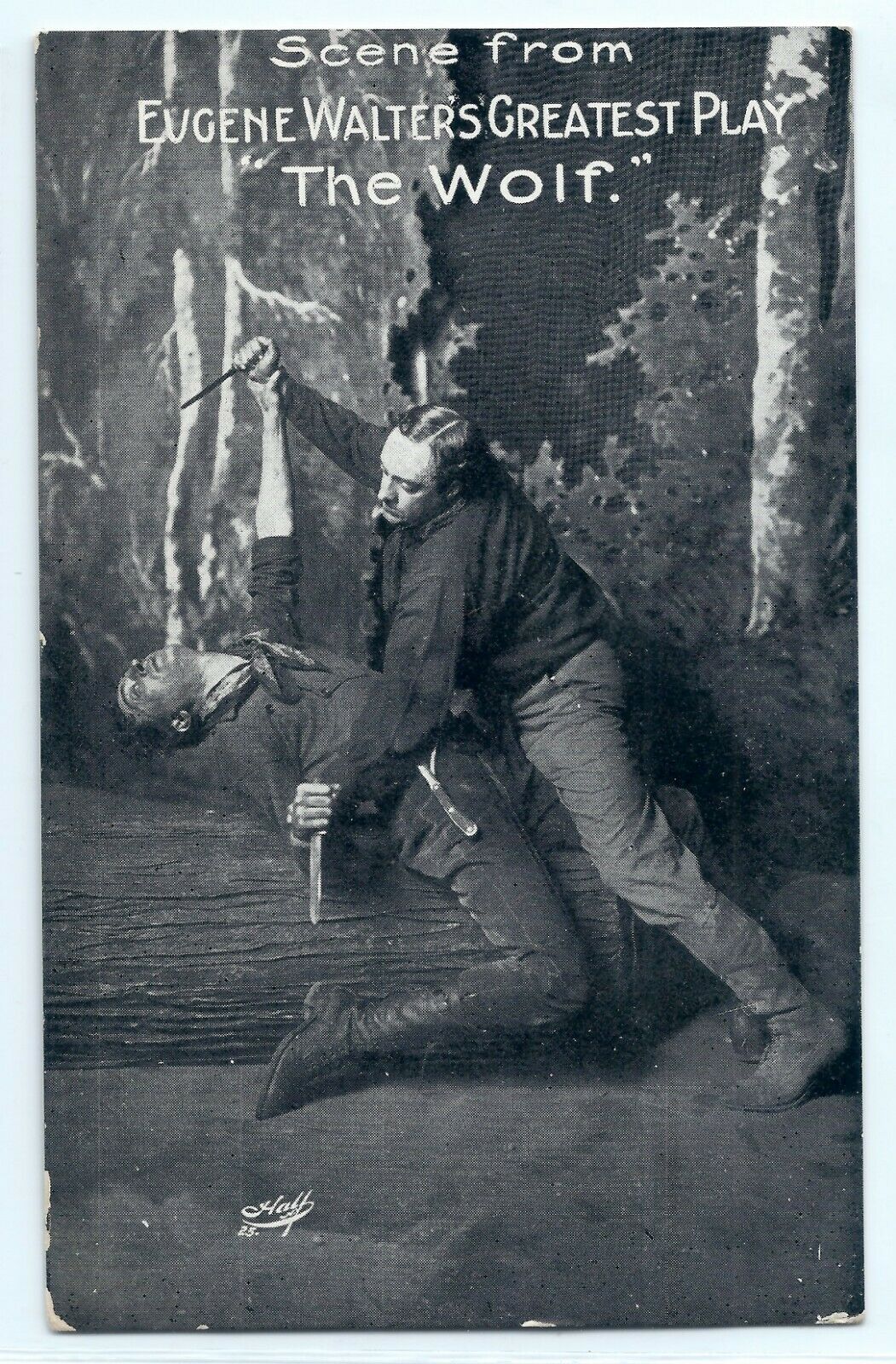
This photo is a lovely still from a 1919 Vitagraph film called The Wolf, based on a play of the Canadian woods by Eugene Walter. (That information is typed on the back of the photo, revealed when I popped it out of its frame.) This play, which appears to have been first produced about 11 years prior to the film, was an early hit in the career of Mr. Walter. I share a few posters for contemporaneous productions which were readily available online.

default


s-l1600-1

Eugene Walter (1874-1941) was a Spanish-American War vet with playwright credits starting in 1901 and ending with screenplay credits stretching to 1936. The sweet spot of his career seems to be seeing his numerous plays turned in early silent films like this one. The brief biography I read makes me think he may have lived fast and died fairly young. He was an athletic sort of man’s man. Left his wife for a New York showgirl he ultimately marries after running off to Mexico.

I think we can assume that my photo shows the stars, Earle Williams and Jane Novak, highlighted by a well directed reflector to get some light on their faces. The speed of the film means the water fall has turned into something more static, like ice, and despite the fact that they are clearly in a real outdoor setting, there is a charming artificiality to this photo which attracts me. It is both a gorgeous natural location and an early film set. I have no idea where it was taken, but it makes me think of spots in upstate New York, or where New Jersey turns to Pennsylvania. The cinematographer on the film was a man named Max Dupont. (His career seems to come on record in the year of this film, 1919, with a heyday of the 1920’s. It ends abruptly in 1932 with the film Mr. Robinson Caruso.)

Kim increased the contrast in this image, bringing out the pails at their feet and showing a bit more information in the darks than you think the photo has from this print. The photo is printed on paper which has become a bit perilously thin over time, corners a bit nibbled. I suspect I framed it upon arrival to help preserve it.

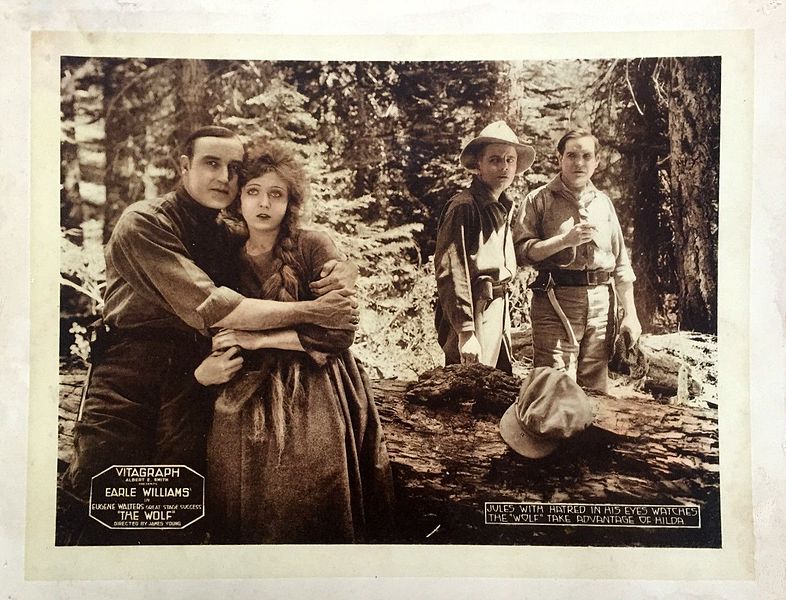
The IMDB film database has a lobby card from this film and below is another, nicer one, from a Wiki database. Other than that I cannot find other stills from the film which appears to be either lost or at a minimum unavailable. You can see it was the same location as my photo.

Wolf_1919_lobby_card-1.jpg

Wall space is always at a premium here at Deitch Studio, but I would like to find a spot to get this one back up where we can enjoy it. I think this photo is a bit of a prize item and we are glad to have it see the light of day again.

Nana

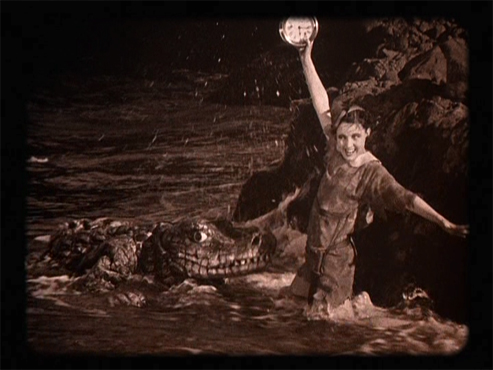
Pam Photo Post: If I hadn’t already been a fan of silent film, the 1924 version of Peter Pan would have sold me. I remember that the first time I watched it, a beautifully restored and version toned in sepia and blues, thinking it just doesn’t get better than this – the perfect incarnation of a film of its kind. The entire movie is beautiful and magical, but for me it is all about George Ali in a giant part-puppet and dog costume playing Nana in the first part of the film. (He also returns as a scary yet somehow jolly Tick-Tock the crocodile later in the film.)
peterPan-kino

This snatched off an online ad for the DVD of the film. A shot of Ali later in the film as Tick-Tock.


I cannot express how much I wish I had had George Ali-sized Nana as a nursemaid in childhood. I do believe I felt a bit that way about our huge German Shepard and childhood partner in crime, Duchess, who I have written about before. Barrie, the author of Peter Pan, must have had a huge and protective dog as a kid too. I find the father’s treatment of the beloved Nana unforgivable in the beginning of the film (the oaf), but of course necessary so that the ever-vigilant Nana is not able to prevent the action which sets the story in motion.

$_12

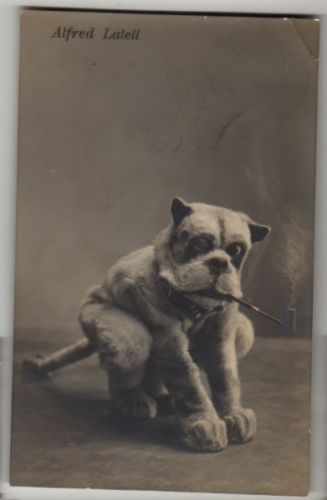
My post on Alfred Latell in 2015 remains one of the most popular.


Pictorama readers already know that I have a serious affection for animal impersonators. I have devoted past posts to Alfred Latell (those can be found here and here) and those are among the most popular posts on my site. I also count an early volume on constructing homemade version of such costumes among my prize possessions. (That post about the book How to Put on a Circus can be found here.) Ali was born in 1866 so he and Latell would have been working the same side of the street at the same time starting in the early 1900’s in vaudeville and stage acting, and then early film. Ali gets the breaks and today is the better remembered of the two, primarily because of this role in Peter Pan, although he was much in demand for his roles on the stage as well.

Scan 1

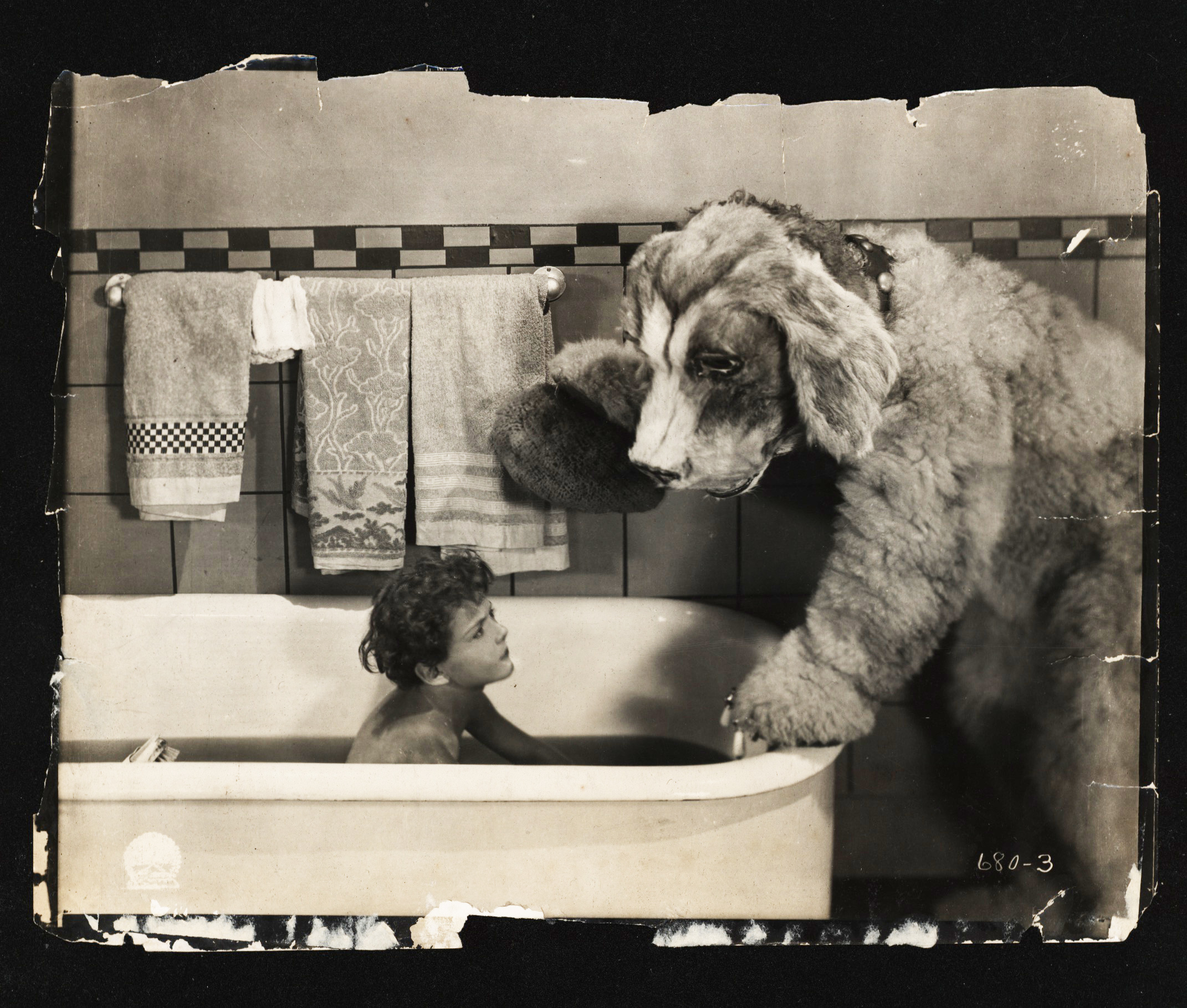
Ali as Nana is shown to great advantage in this tatty still I dug out of the fascinating box I keep on my desk – largely of photographs, only lightly explored, that were sent to us by Kim’s friend Tom Conroy and which continues to turn up the occasional gem. (I wrote about another of these recently in the post Art School which can be found here. If we dig a bit deeper, back in 2015, I also wrote about a more Felix-y one here.)

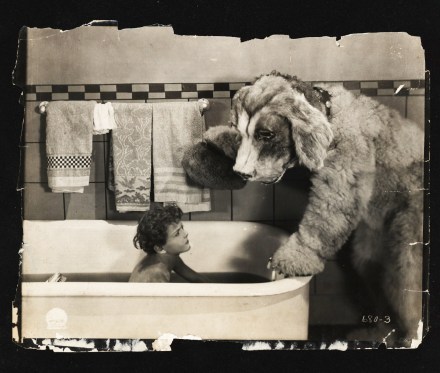
Shown in this photo with Philippe De Lacy, we get a nice close up of Nana’s costume, somehow wielding a sponge, fluffy fur, the smiling mouth and most importantly we get to see the eyes and brow, all which were controlled by strings allowing George to create the expressions and move the ears and tail. His (her?) collar is nicely visible. The tile on the walls is painted on and the towels are a sort of charming mismatch of strips, checks and floral.

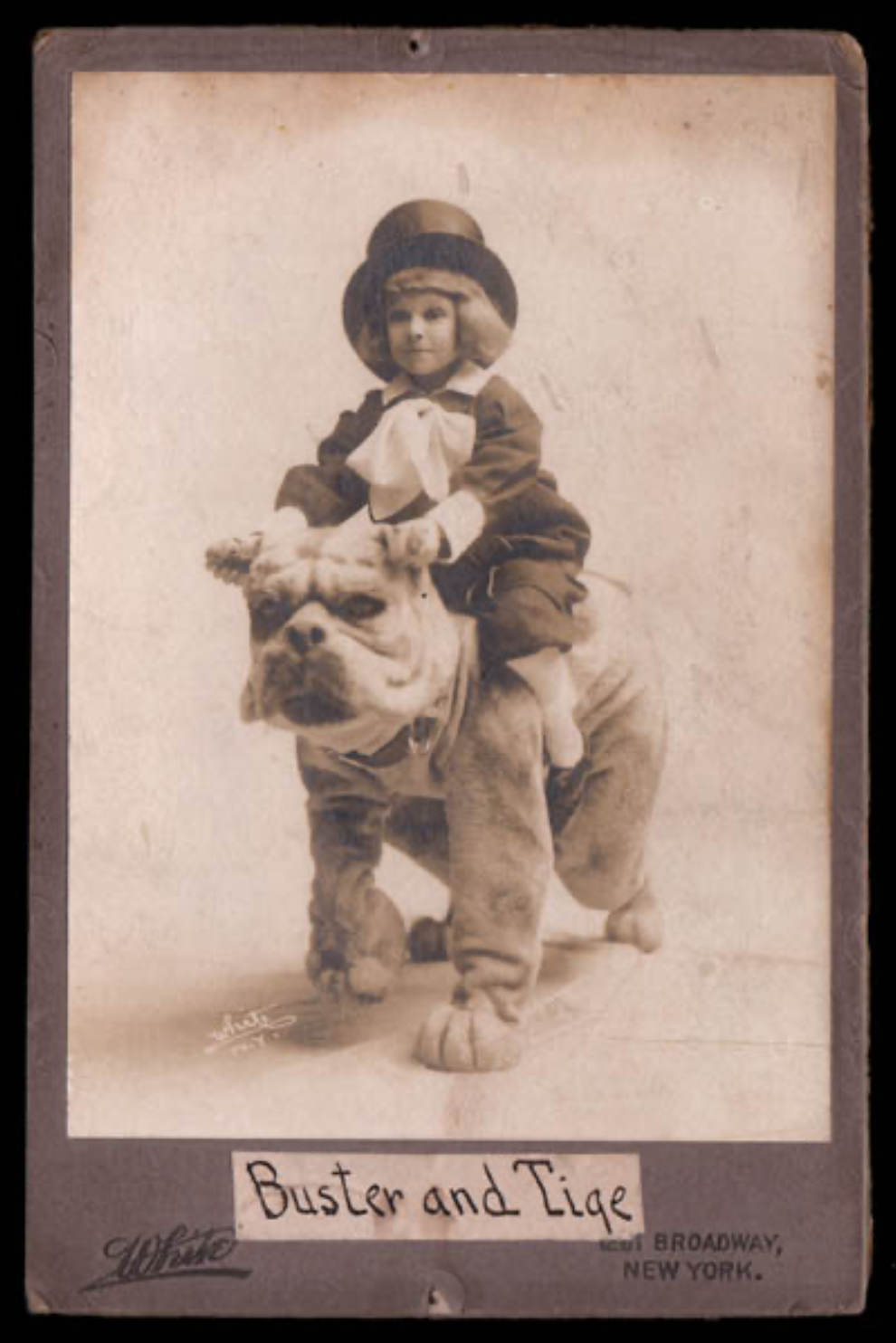
Ali is said to have started his career as a gymnast and scored the role of an out-sized Tige in a traveling show devoted to Buster Brown in the 1900’s. He stole that show with rave reviews throughout the United States and Britain. I share an excerpt below on the subject from fellow blogger Mary Mallory (her post devoted to Ali is here.)

The January 21, 1907 edition of “The Rock Island Argus” called him tops in the line of animal pantomime, stating many recognized him as “the foremost four-footed actor” for the past several years. Ali toured both America and England for several years playing Tige in various iterations of the show. In fact, during one production in Pennsylvania, Ali visited a local city hall and bought a dog license making “Tige” legal in town.

Buster Brown

The image for sale at George Glazer Gallery, NY


According to her Ali went on to play Dick Whittington’s Cat, a dog in Aladdin and several other roles, traveling across England, Scotland and then throughout Europe. He was 58 by the time he is back in the United States and takes the film role of Nana. Like Latell, Ali either made his costumes or, like this one, they were made to his specifications.

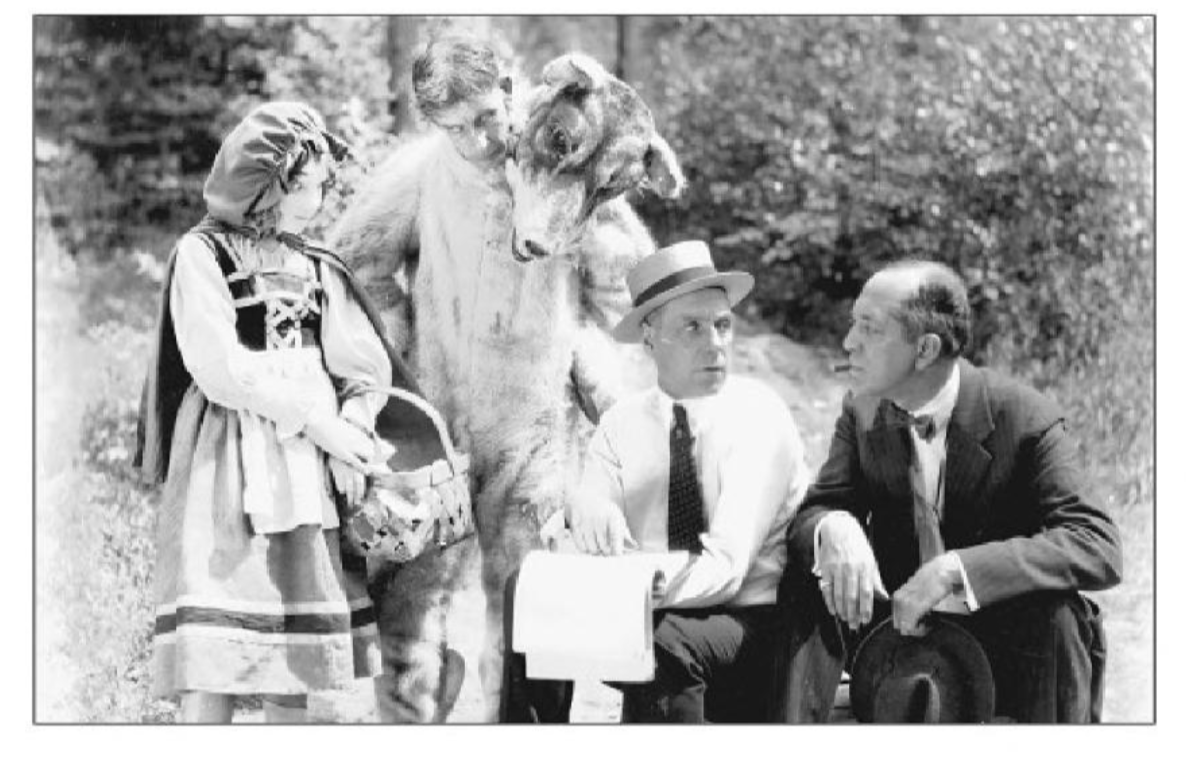
Sadly, the 1924 film of Peter Pan appears to be George Ali’s only film credit, although Mary Mallory sites a reference to an earlier 1921 film appearance in Little Red Riding Hood, where of course he plays the wolf, I assume it is not known to be extant and I cannot find any other reference to it. You never know with films, let’s hope this one materializes one of these days.

Little Red Riding Hood 2

From the lost 1921 film of Little Red Riding Hood. This photo is from the book, Fort Lee: Birthplace of the Movies.


Meanwhile, it bears mentioning that the original book of Peter Pan is definitely worth a read. The Disney version had never much appealed to me, but after seeing the 1924 film I found the original book and read it. Although the character of Peter Pan evidently appeared briefly in an early adult novel of J. M. Barrie’s (and Peter was to some degree based on a brother who died in childhood; their mother, comforted by the idea that he would remain a boy forever), Barrie developed it first for a stage play, where it was very popular. He wrote the book after. The popularity of the story in all its incarnations overshadowed and eclipsed all of Barrie’s success before and afterward.

I picked up an early copy inexpensively years ago and enjoyed it immensely. I would imagine it is available on Project Gutenberg or other online sites for free or also inexpensively; however I enjoyed holding that slim early incarnation in my hands. I highly recommend readers search out both the easily available film and novel. Treat  yourself to them today.


Editha’s Burglar: Book vs. Film, an Unexpected Review

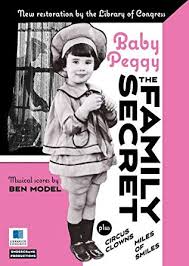
Pam’s Pictorama Post: Just when I thought maybe I had come to the close of authoring my thoughts on Frances Hodgson Burnett I stumbled across a rather splendid DVD of the 1924 film, The Family Secret, issued by the film accompanist Ben Model under the Undercrank name. The disk (which can be purchased here) came out in 2015. We missed it then and I came upon this release while reading a blog post by Ben, via Twitter one morning about a week ago, concerning the short in the same package, Circus Clowns. (Ben’s fascinating blog post can be found here.)

download-3.jpg

Needless to say, when I realized that The Family Secret was based on a Frances Hodgson Burnett story published in 1888 under the title Editha’s Burglar, I almost spilled my morning coffee and couldn’t wait to get my hands on both the film and the story for comparison. (For those of you who have stuck with me through these several posts on Frances Hodgson Burnett and her adult fiction, you will remember that while discussing the women in her stories I also delved into the early films made of her work, many now lost. For new readers, that post can be found here. The other Hodgson Burnett posts can be found here, here and, yep, here.) The whole disk features Baby Peggy which is a super bonus as well.

The DVD arrived just in time for the commencement of our vacation. A short list had quickly formed for film watching vacation activity – Kim is working his way through the available films of Jessie Matthews with mixed results, and something called Faithless with Robert Montgomery and Tallulah Bankhead, 1933, is up next for me. We reconvene together over the ones good enough to share with the other. There’s also lots of trolling through what’s available on TCM – a trick I only recently taught our tv and we’re having fun with that. (A raucous sounding Jessie Matthews film is issuing forth from the television even as I write this. Sounds like a winner.)

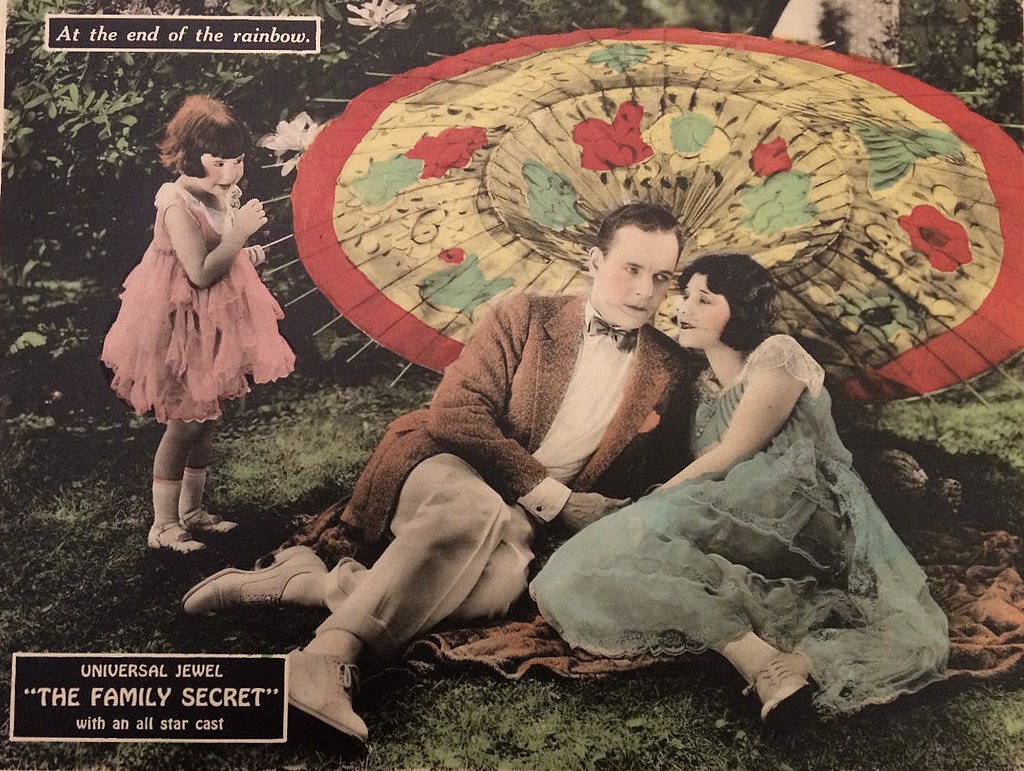
The print quality of the film on the disk is really great, pieced together from a few sources, an Italian print and a Library of Congress one at a minimum, to maximizing all. It is a complicated and twisting melodrama, worthy indeed of Frances Hodgson Burnett (whose short story is credited), complete with separated lovers and a little girl who doesn’t know her father. I won’t spoil the plot, although I have probably already told you enough to figure it out. Baby Peggy was great. I don’t know what I expected, but she really sort of ruins me for other kid actors because she just sparkles on the screen in a way I hadn’t anticipated. She really had something.

1024px-Family_Secret_lobby_card.jpg

This is definitely the print of the film you want and Circus Clowns is a treat too. The disk is topped off with another great short, Miles of Smiles (with Baby Peggy in a dual “twin” role), and some newsreel footage of Baby Peggy as well. All great and worth seeing – scoop up whatever copies are available immediately.

****

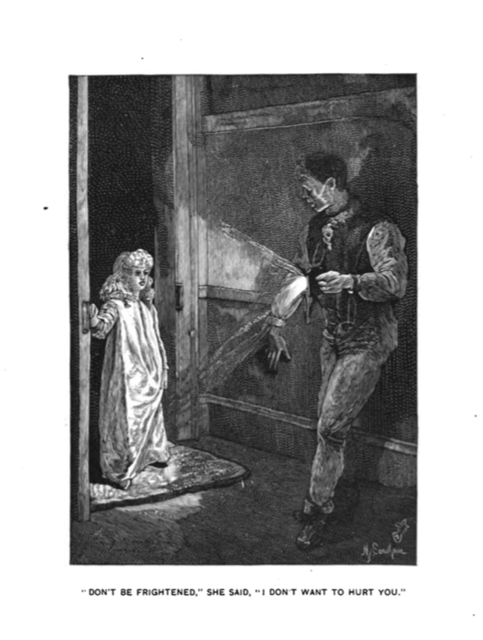
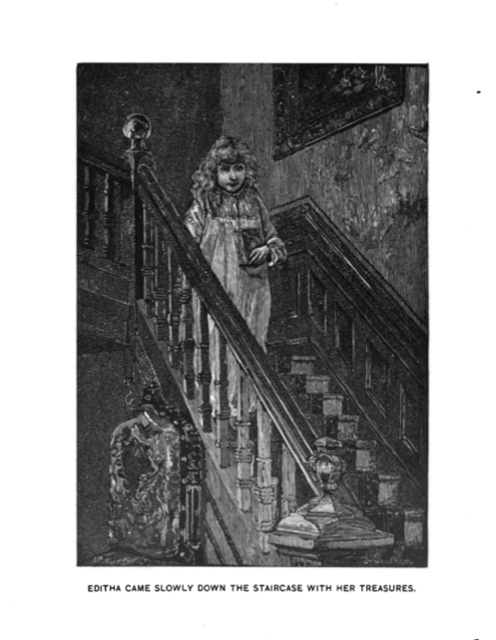
This time Google Books provided the short story in question rather than Project Gutenberg and it is a story that is appropriate for children as well as adults. I probably would have been better to have read the story first, but it didn’t work out that way. The version I downloaded provided very good original illustrations, by Henry (Hy) Sandham and I offer samples below. (I always select the option to include the illustrations if any when downloading, but they are rarely as good or as plentiful as these engravings.) I didn’t know his work, but Hy Sandham, 1842-1910, was a Canadian painter and illustrator.

Image-1 copy.png

Image-1

I am a tad confused about the letter that appears at the opening of the book and which I offer in its entirety below. Elsie Leslie is identified as the inspiration for Editha although what that has to do with Jordon Marsh (which I believe was affiliated with the Boston based department store) or what was written to Frances Hodgson Burnett I cannot say. The letter seems to always be included with the short story and Jordon Marsh is the publisher of the elegant, fully illustrated 1890 edition of the book. Elsie Leslie was the first child to portray Editha in a one-act stage version two years after the original publication.

March 25 1888

Dear Mr Jordan Marsh & Co

Mamma has left it for me to deside if I will let you have my picture for your book I think it wold be very nice. wont it seem funny to see my very own picture in Editha like the little girl that used to be in st Nickolas. I think mrs Burnet writs lovely storys I wrote her a letter and sent it away to paris and told her so and asked her if she wold hurry and write another story just as quick as she could I am looking for an anser everyday. I like to write letters but I like to get the ansers still better I am going to play Editha in boston for two weeks and I will ask my mamma to let me come to your store and see all of the butiful things I used to come every day when I was in boston last winter

your little frend 
Elsie Leslie

72 West 92 Street 
New York City

(Written by Elsie Leslie Lyde, the original Editha, eight years old.)

The play adaptation was written by Edwin Cleary and, from what I can tell from a (rave) review of 1887 which dates it to before the 1888 copyright of the Hodgson Burnett story – it is beyond my sleuthing to untangle what this means and if she adapted his play or the other way around, although the easiest guess is that perhaps the story was first published in a magazine under a different copyright, the thread of that tale now lost to us.

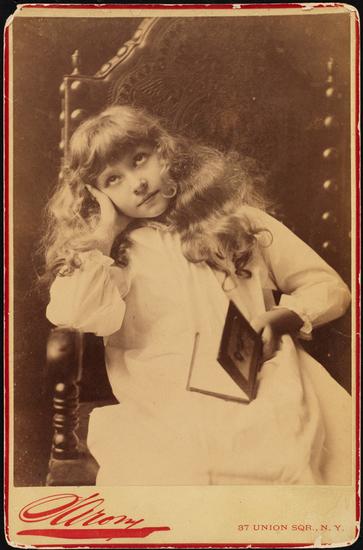
Interesting in her own right is Elsie Leslie (the Lyde somehow gets dropped in her professional moniker), who at age six was already three years into her stage career when she took the role of Editha which solidified her star billing. According to Wikipedia she is propelled into further stardom in her stage production of Hodgson Burnett’s Little Lord Fauntleroy and becomes America’s first child star, highest paid and most popular child actress of her day. William Merit Chase even paints her in the garb from Little Lord Fauntleroy. I have used a photo of her from the collection of The Museum of the City of New York to illustrate today’s post.

She doesn’t seem to make it into early film (an adult return to the stage in 1911 was not resounding), but was evidently a great correspondent and maintained contact with people from her stage career through her life. Wikipedia sites letters to and from her that can be found in the collected correspondence of such luminaries as Mark Twain, Helen Keller and Edwin Booth. Married twice, she was a great beauty, traveled the world with her second husband, lived to the age of 85 and in general seems to have lead a rollicking good life.

****

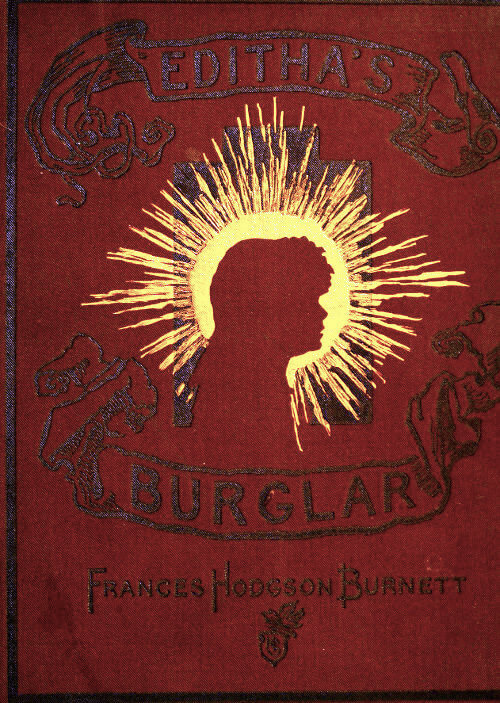
The bottom line is the short story is lovely with a very simple plot which is purely about Editha, a rather extraordinary small child, and a burglar in her home whom she convinces to burgle very quietly so as not to wake and upset her rather fragile mother. Instead Editha and the burglar have a conversation (he a snack as well, helping himself to the well-stocked larder including a very large glass of wine) where she also convinces him to take her bits of jewelry rather than the things of value which belong to her parents as it would make them very sad. He takes those, and also appears to pile up the family silver, although not much note is taken of that. The dramatic arc of the story is Editha meeting up with said burglar in prison later.

I can’t help but feel that if a film had instead been made of the original story Baby Peggy would still have been my pick to play her. I believe Baby Peggy could have pulled off the role that way as well, based just on the character of the little girl. I end by saying that I was anxious to compare one of her original stories to what was contemporaneously being made from and inspired by her work and I accomplished that here. To my amazement, very little of the plot survives and instead only the plucky spirit of the character Hodgson Burnett created.

book-cover


Frances Hodgson Burnett, Part 3: The Women

s-l1600-2

A still from A Lady of Quality, 1913, probably a lost film


Pam’s Pictorama Post: Back to my summer reading adventure and the third installment on the adult novels of Frances Hodgson Burnett. (If you have been on vacation and missed the first installments they can be found here and here.) Today I give you another favorite aspect of her writing, the women characters of her books. I have illustrated this post largely with film stills from the various movies made from her books, sadly mostly lost as of right now, as they started to turn up in my research. As an aside, it is worth noting that the first two books I mention below, were best sellers in the years they were published, plays (often adapted by her) as well as early films proliferated from Hodgson Burnett’s work. The books mentioned below are all available for download via Project Gutenberg for free.

Unlike Edna Ferber, who I have offered up as sort of an heir to Hodgson Burnett’s work (I fantasize about a meeting between them, and would be very curious to know if they ever did meet. I imagine the handing of a certain literary baton over lunch in a mutual city somewhere around 1917), Burnett writes about men more, fleshing them out further than Ferber when she did, although somehow a woman generally lurks around and is pivotal to the plot.

For example, T. Tembarom is a man (in fact the unfortunate name of the man) and the main character of the book by the same title. He is in every sense delightful and I loved the few weeks I spent in his head this July. It is hard to write about this book without spoiling the plot (and I urge you to read this book if you are the least interested), but suffice it to say it is a rags to riches story of a type – hard working orphaned boy who has both charm and grit and makes his way off the street and up onto the nascent rungs on the ladder of journalism. There are unexpected turns of event (and thoroughly, utterly, unlikely ones, but that didn’t bother me in the least), and he manages them and all quite adroitly. However, this character and the plot ultimately are entirely driven in his actions for the woman he loves who, by way of a refreshing literary change, is attractive although not beautiful and most of all very wise and, most interesting of all, has an excellent head for business.

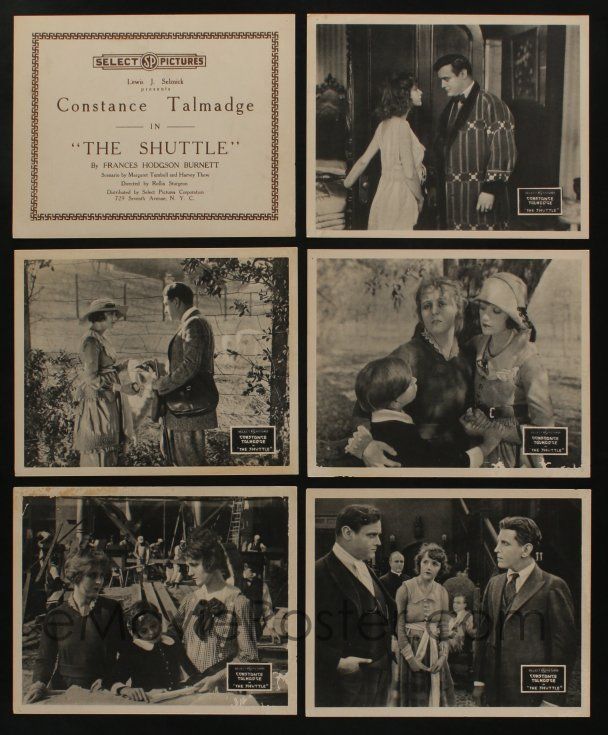
Very smart women with good business sense are a theme in Burnett’s books. T. Tembarom notwithstanding, these women are generally unusually beautiful and frequently have a more or less unlimited pocketbook. This does not make them less interesting and in fact makes the most enjoyable plot points possible in The Shuttle. This, my second favorite novel to date, begins with a bit of melodrama concerning a young heiress marrying a rogue of a titled Englishman who more or less locks her away, abuses her and isolates her from her American family. Her younger and very different sister (who clearly today would cheerfully run multi-national corporations if not whole countries) comes to her rescue quite literally – while making an entire village love her and ultimately finds happiness with one of them. I would love to see the 1918 Constance Talmadge version, lobby card set shown below. It is not clear if it is a lost film or not however.

f4937a9f364f7ed23af70af2feacc7b5

While these books illustrate the first sort of independence for women of the early part of the last century (contrasting the much more liberated American woman against her British counterpart) they also do a splendid job of embracing that made dash toward the modernity of that period. In my mind this is a lovely race, especially in the United States, headlong into the future during this period. It is a moment when developments like photography give way to moving pictures, and train and liner ship travel becoming prevalent and widely available to a broader part of the population. Cars and bicycles also liberate, literally and figuratively, and everything happens, faster and faster, bigger and better, until about 1918 when the influenza epidemic and WWI knock everything for a loop and it all stops more or less on a dime – or at least this power morphs into war energy and a new period begins, infinitely less hopeful than the previous one.

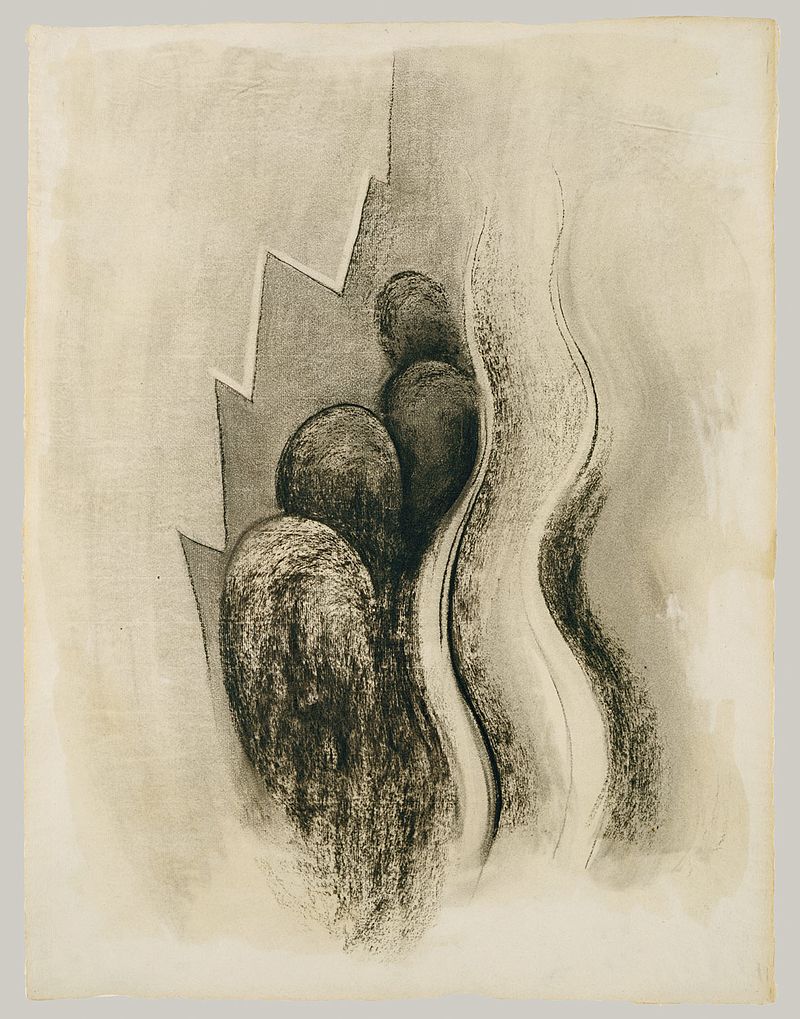
I remember once standing in front of a Georgia O’Keeffe early charcoal drawing at the Whitney and thinking what it might have been like to be in New York City on a day in 1916, seeing this drawing at a gallery and perhaps later in the day hitting a movie theater later and seen Fatty and Mabel Adrift or perhaps The Mystery of the Leaping Fish (I had just been watching films from 1916 and I can’t remember exactly what film I was thinking of), and how you would have felt like you had indeed entered a new, great, modern age. You were thinking, We are so lucky to live right now! These books and their storylines try to capture some of that enthusiasm and energy. And yet, Frances Hodgson Burnett is careful not to ignore all reality in favor of the vision of a promise land. There are impoverished characters who cannot and will never rise from poverty, the facts of what money cannot buy are recognized, and all not cast aside as some honoring of the old ways and tradition is also embraced.
Drawing_XIII_by_Georgia_O'Keeffe_1915

Georgia O’Keeffe drawing from 1915, in the collection of the Metropolitan Museum and possibly the one I was looking at that day.
 

Also, Burnett’s world had not quite developed into the world of Edna Ferber (or even Georgia O’Keeffe for that matter) and while the stage is set, poised for the emancipation of women, it has not yet occurred. Women are still dependent on fathers and husband’s for their financial security and their role in society, all society really, is still circumspect. You might push the boundaries here and there but in the end you were still only where first your family money could get you, and then your husband’s fortune. If you were a smart woman with an excellent head for business you applied it via the men in your life and in your advice to them. Men were your only conduit into the broader world, especially that of business. Your choice of a husband being your most important decision about your future – the push and pull of love versus financial well-being is a frequent part of many of these plots.

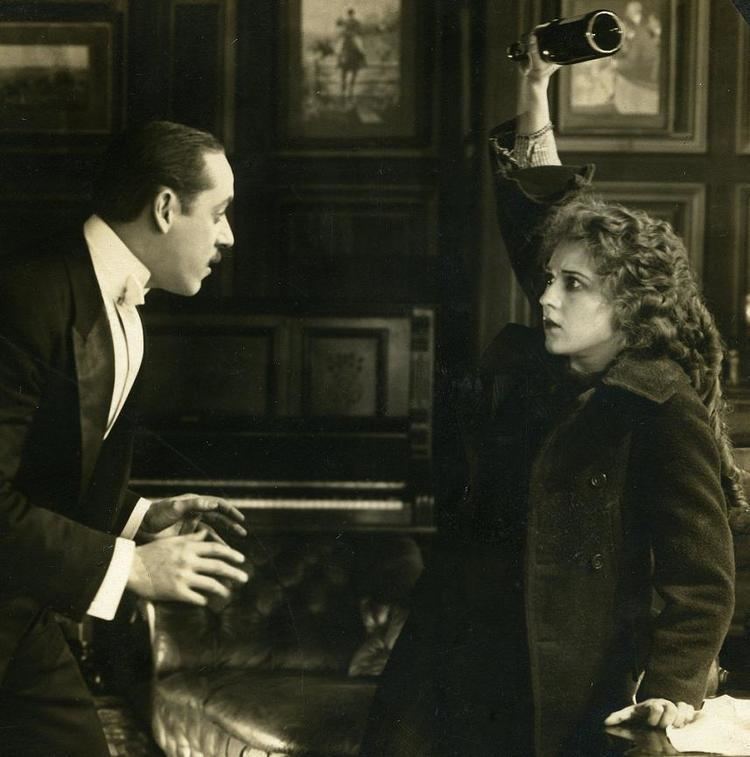
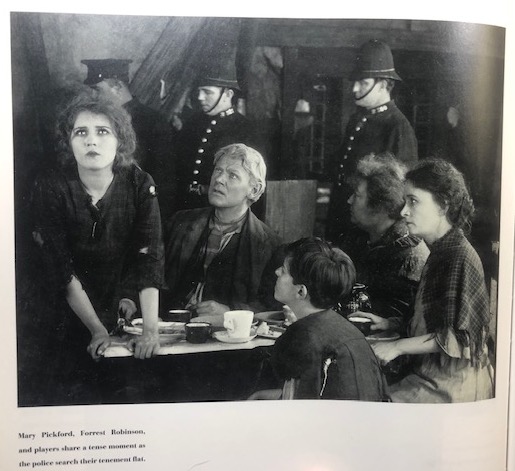
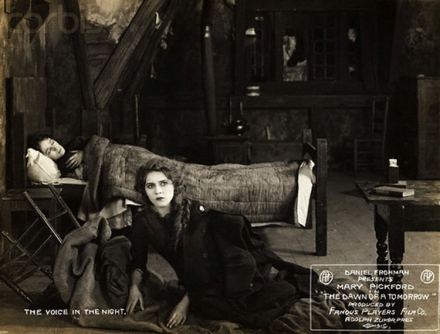
Finally, I will round out with a mention of yet another female character which drives a narrative, that of a girl named Glad, the protagonist of the novella, The Dawn of a Tomorrow. This is a very different type of story and takes up the Spiritualism vein mentioned in last week’s post. (It can be found here.) While the narrative of the tale is told from the perspective of a middle aged man, it is Glad, a filthy street urchin, who drives the storyline forward. The man in question is saved from suicide by Glad (portrayed above at top and here below, by a much cleaner and more beautiful Mary Pickford in the 1915 film version; one still from the internet and the other from Mary Pickford Rediscovered, by Kevin Brownlow, from the Kim Deitch library) who eventually takes him to meet an equally poor elderly woman who lives in the same slum. However, this woman has a strange, spiritual and somewhat mystical sensibility which imbues all who meet her with a sense of well-being and hope for the future, despite their wretched living circumstances and this is the turning point of the entire plot.

the-dawn-of-a-tomorrow-1915-film-1c1e749a-9a36-477b-bf42-a3ea44dc55c-resize-750.jpg

Mary Pickford book.JPG


The Pickford film version (rumored to be extant in a Swedish archive) seems to somewhat bastardize the story, perhaps making Mary/Glad the only dominant female character, pushing everyone else (as to be expected) into secondary roles. The film was remade in 1924 with a different lead and that one appears lost. The Pickford film has glowing period reviews and I very much hope it becomes available.

If you have stuck with me through this third post about Frances Hodgson Burnett and her adult novels, perhaps you will not be entirely disappointed to hear that there will be another (final?) post. That one will tackle the love Burnett lavished on her descriptions of clothing and fashion of her day which has driven me to the internet for illustration and explanation more than once.


Tin Hats

Pam’s Pictorama Photo Post: I stumbled onto this photo, somewhat outside of my usual bailiwick of cats and toys, and purchased it for its slice of life from the past quality. The woman is identified on the back where, despite evidence that it was pulled from a photo album, the neat pencil writing is still legible, April 1927 Marion Goodall 1495. West Adams Street. 

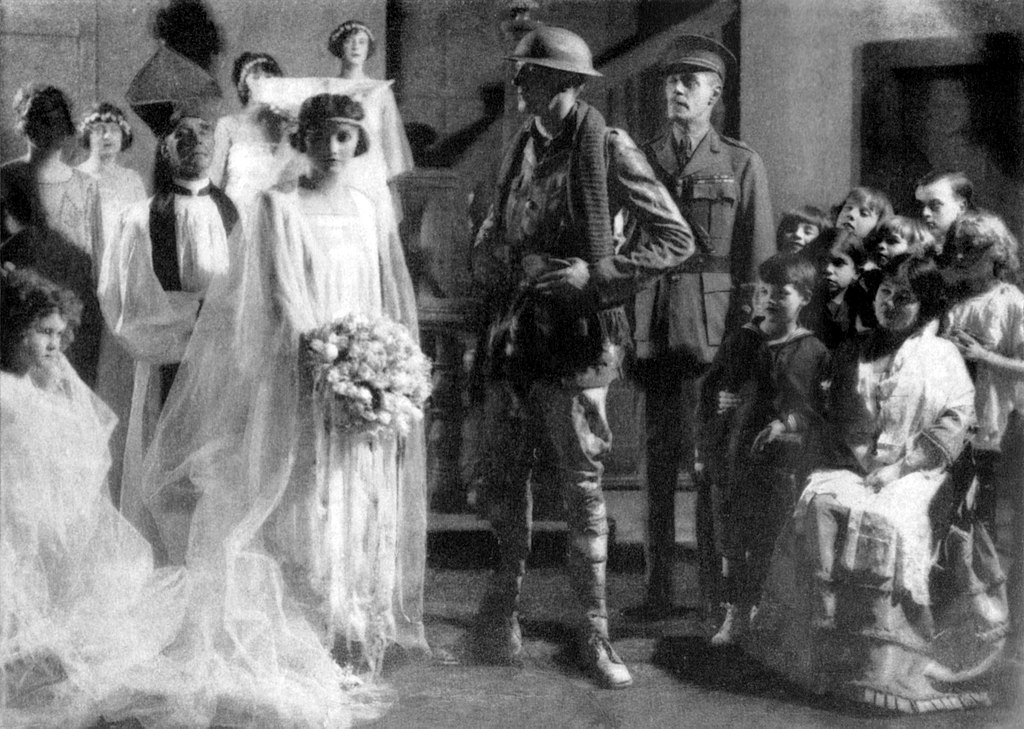
Marion, in her best bib and tucker, stands next to lobby cards for Tin Hats which, according the the IMDB database was a WWI comedy, made in 1926 starring Conrad Nagel and Claire Windsor. Although partially lost there is a rather detailed outline of the plot penned by a devoted individual who took the time to do so. (The author had seen some of it and filled in with a period description.) Roughly, it is a comedy farce that follows three soldiers who somehow get separated from their army unit in France just as the armistice is signed, and acquire bikes as a mode of catching up to them. Along the way, one falls in love with a German woman, they drink a lot of beer, and are hailed as heroes of the Occupying force (yes, there was a time when the French were really happy to have us there) and essentially have a jolly time of it. Spoiler alert – everyone gets happily married in the end.

Tin Hats was directed by Edward Sedgwick and his sister Eileen has a lesser role, as a second love interest. As an aside, Eileen’s twin sister was Josie Sedgwick who was a bit more of a rip roarin’ good time according to Kim. (A morning discussion about the merits of Josie is taking place as I write this.) The twin girls were born in Galveston, Texas on March 13, 1898 to a theatrical family which had a vaudeville act which ultimately incorporated the children, The Five Sedgwicks. While the girls were eventually plucked from the act, Edward on the other hand completed a university degree, went to a military academy, and contemplated a career in the military, before deciding to follow the family path into the theater and films as a director. Although Eileen made more than a hundred films (mostly serials) neither of the twins makes the transition into sound. Josie ultimately opened a talent agency. Eileen lives to be 93. Edward continued to work as a director however, until the 1950’s. His last listed credit is an episode of I Love Lucy in 1953.

Meanwhile, Marion Goodall’s interest in being photographed with these lobby cards is now lost to us. In her strappy shoes, good coat and with her marcel curled hair, she is indeed a snapshot of a woman of her time. More and more I notice silent films that are slipping into the category of having been made 100 years, or more, ago and even in my lifetime that seems amazing. It didn’t seem like they were made all that long ago when I started watching them with my dad in the 1970’s. These films, photos and music of the time remain little time capsules, ready to transport us back in time, at least for the flicker of a moment and these days at the touch of an internet button.