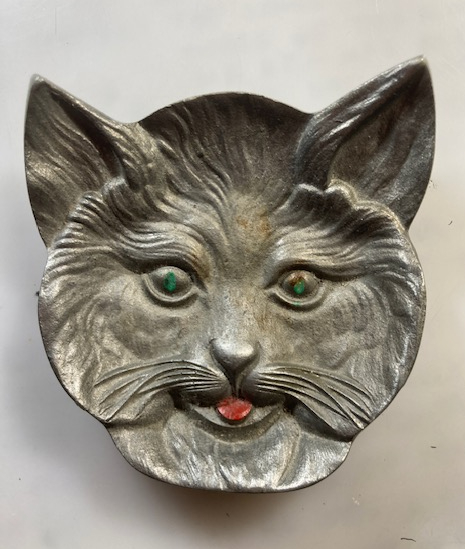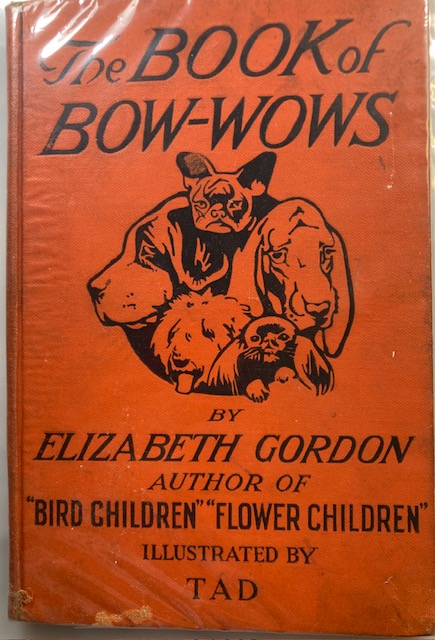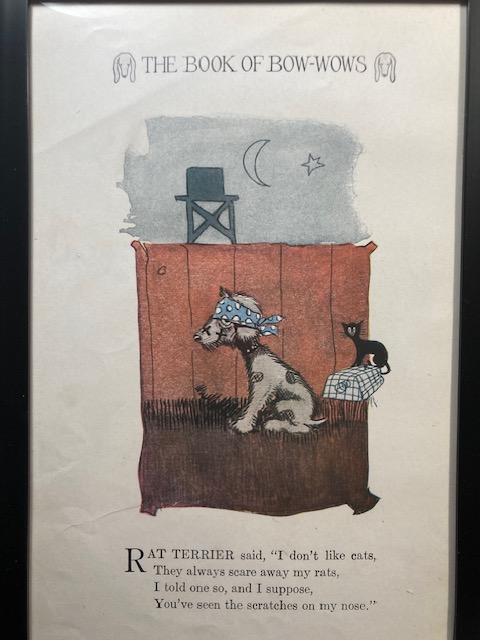
The Christmas Letter and The Fairy Godmother

Pam’s Pictorama Post: This was a lucky buy. I spotted it in a sale online (once again it was @missmollystlantiques on IG) and took a chance on it for a few dollars. It arrived several weeks ago and has been on my desk waiting for its turn. Apologies if I am jumping the gun on the commencement of the holiday season by a bit. Deitch Studio is at the mercy of the supply chain as well and I am waiting on the arrival of several items.

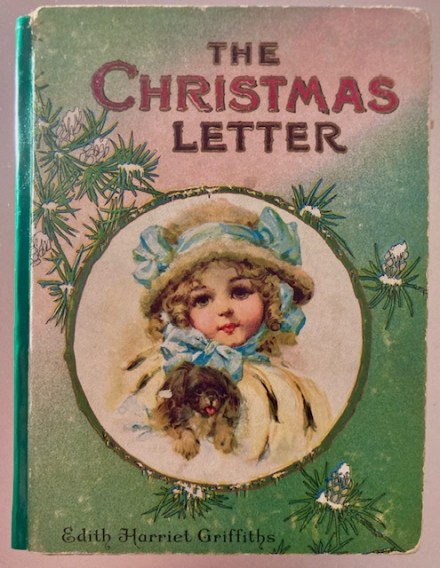
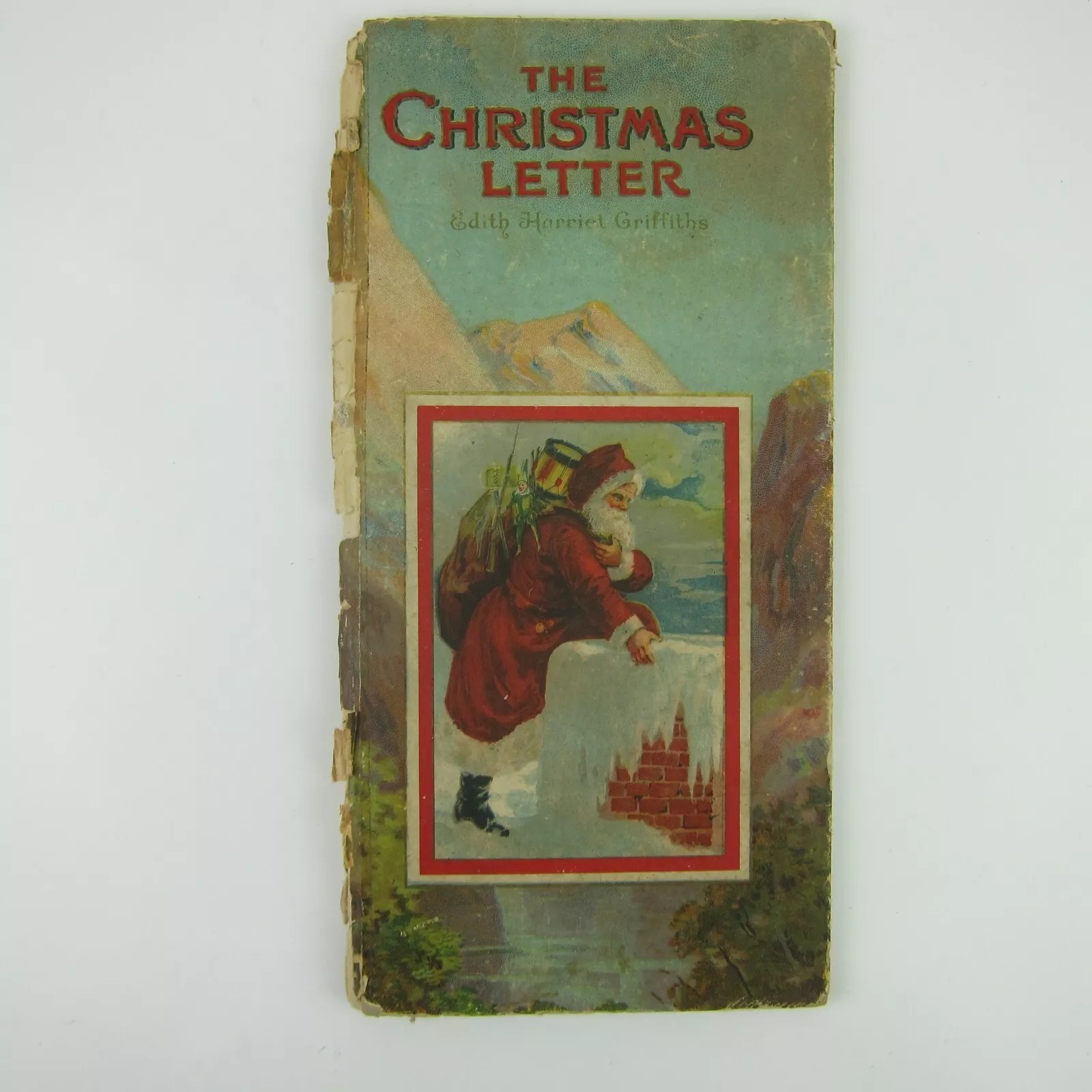
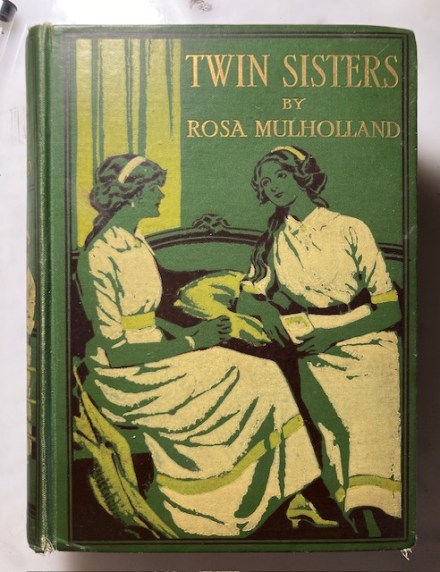
When I grabbed it up online I couldn’t have known how really charming it would be and I like it so much I sort of want to pass it onto someone else who will also appreciate it. It’s thin – about a dozen pages altogether with four or five illustrations. The two stories were written by Edith Harriet Griffiths and they are splendid. This volume was published in 1911 by something called The Hayes Lithographing Company and it belongs to something called the Christmas Stocking Series, as printed in tiny gold letters on the back.

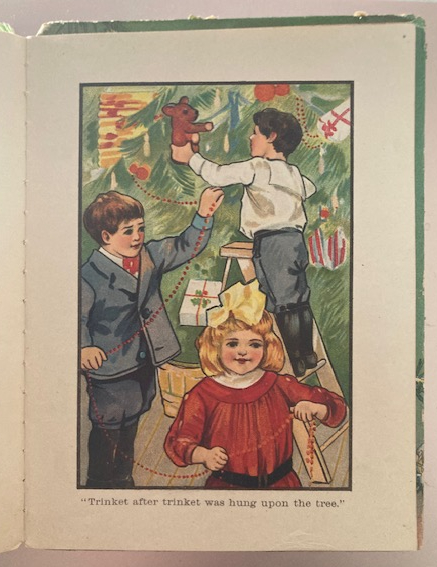
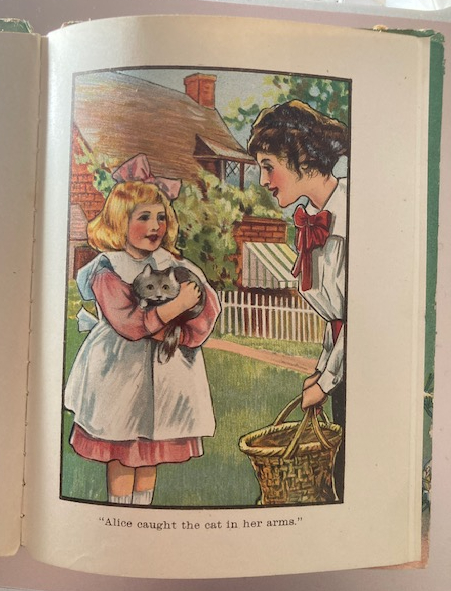
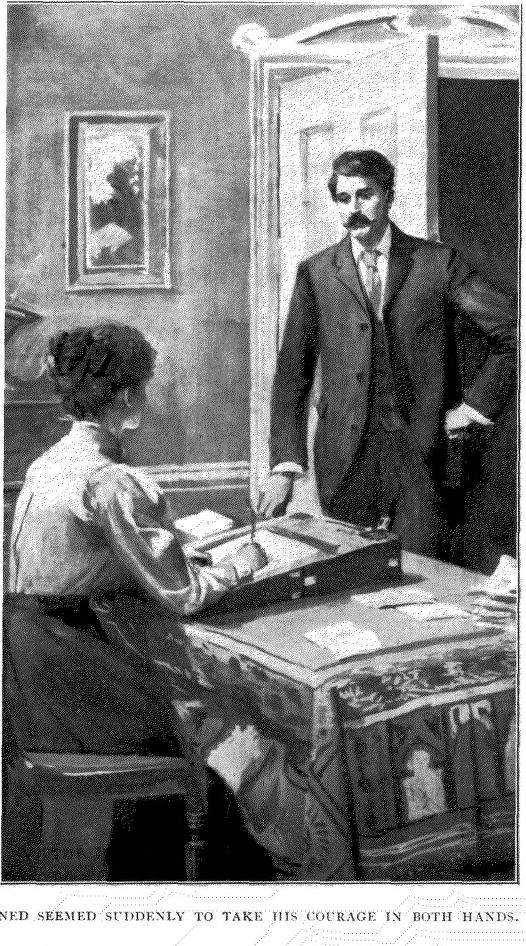
One of the internal illustrations.

The first title story is straightforward fare about a family where the father is ill and their financial straits spell a sad holiday for them. They cheer themselves up by writing to Santa with their modest list. My favorite part of the story is they send it to him by putting it up the chimney to be swept up and delivered by the draft. (Never heard of kids using that delivery system, but I like it.) The letter finds its way into the hands of a wealthy gentleman (who bears a resemblance to St. Nick – its not clear how these actually get delivered; down the chimney?) and in the form of a doctor who helps to deliver a happy Christmas Day complete with potential job for Dad when he is well again.

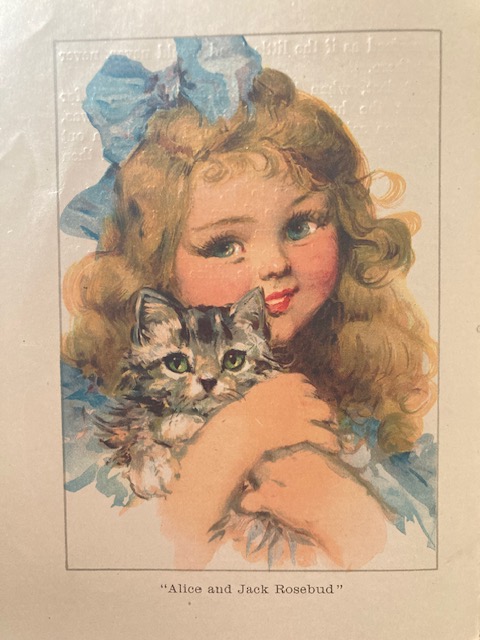
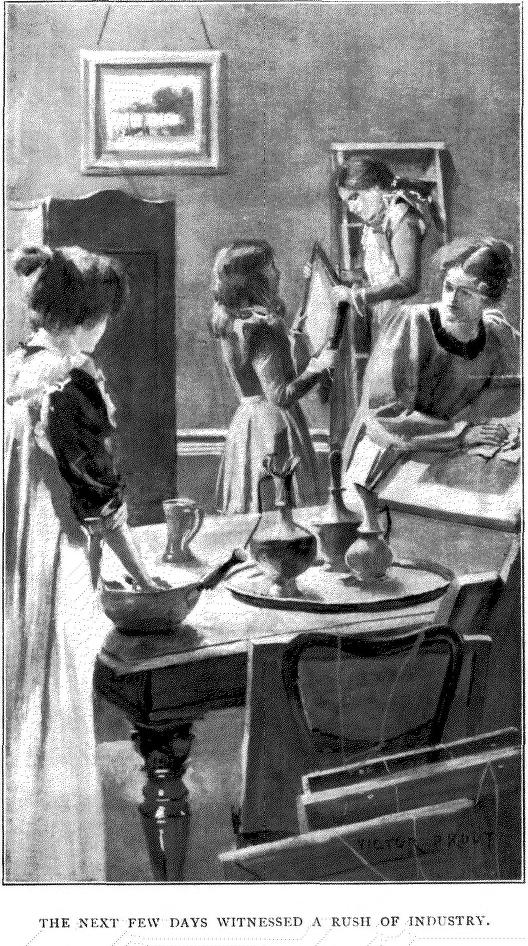
From The Fairy Godmother.

The second story is a nice surprise and it is about a little girl who is meeting her godmother for the first time and she dubs her Fairy Godmother. However the story ends up being about her imaginary pet cat who is banished – and later the godmother replaces him with a real kitten. Perfect story for me.

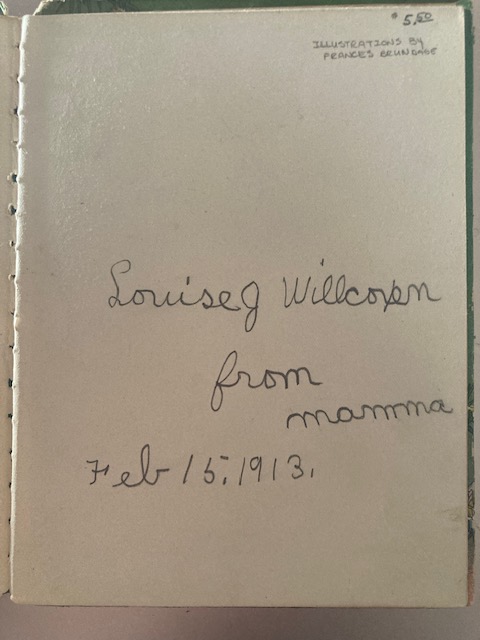
Inside inscription.

This particular volume is inscribed Louise J. Willcoxen from Mamma Feb 15, 1913 penciled in a child’s hand.

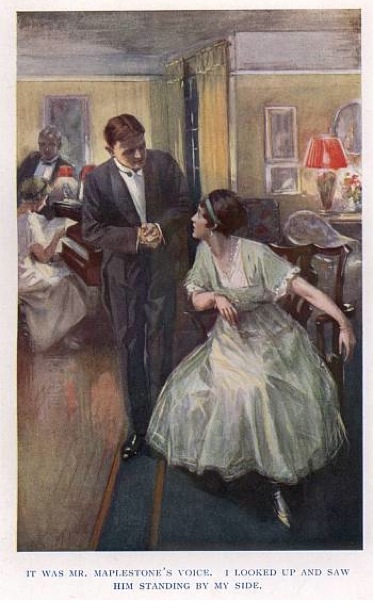
From The Fairy Godmother.

There is a later, and seemingly more lavish, edition a few years later and they appear to have added a few illustrations. While either volume is not impossible to find, there are not a lot available.

This volume was recently sold online. It is the later, more lavish volume with many additional illustrations.

I found one copy sold on eBay ($49.99 in bad condition) and it was a re-issue from a few years later. As you can see it is a more festive edition and a number of (nicer) illustrations have been added. It is only The Christmas Letter, without The Fairy Godmother and it ends with a poem The Night After Christmas which appears to be a comic take on the over-indulging at Christmas.
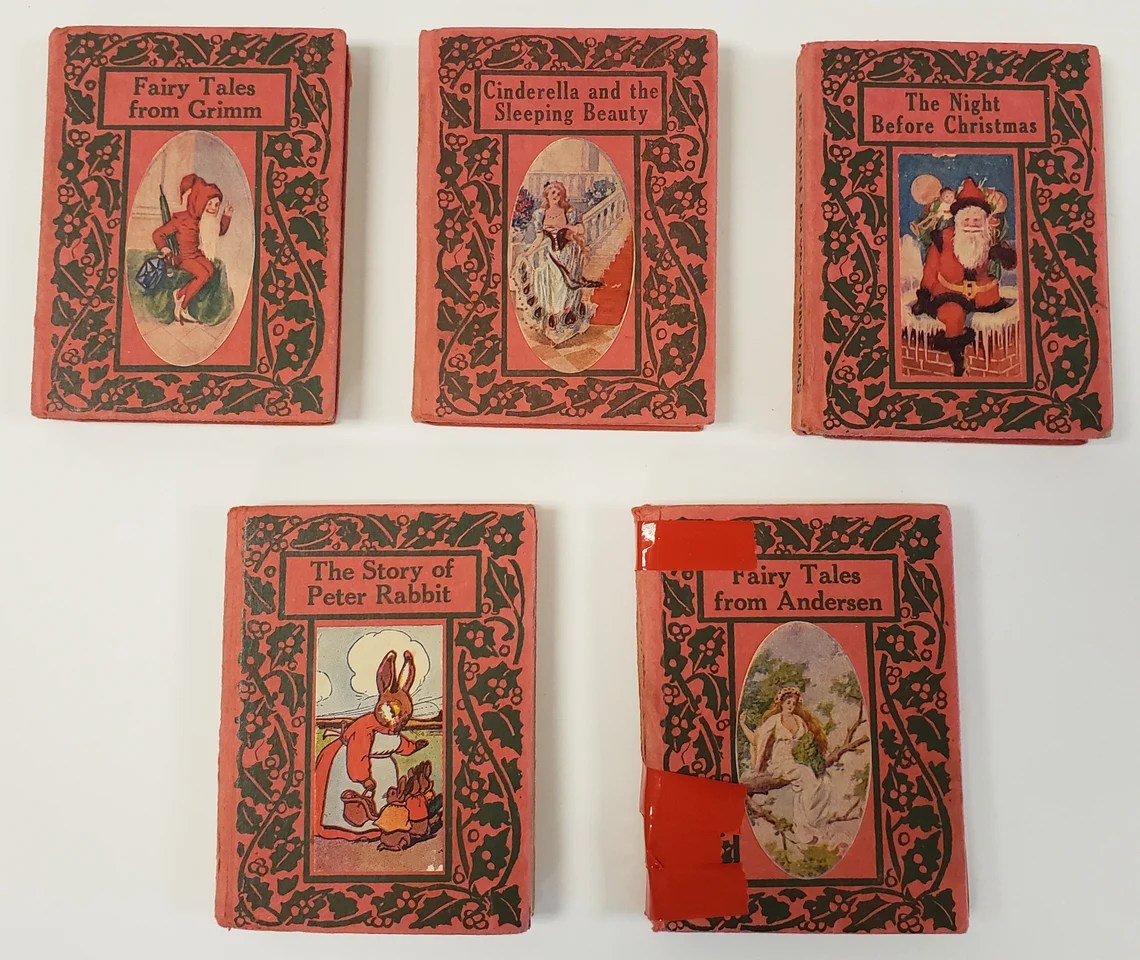
This series, also published as Christmas Stocking Series the same year – was five volumes which I think you could buy individually or as a nice box set.

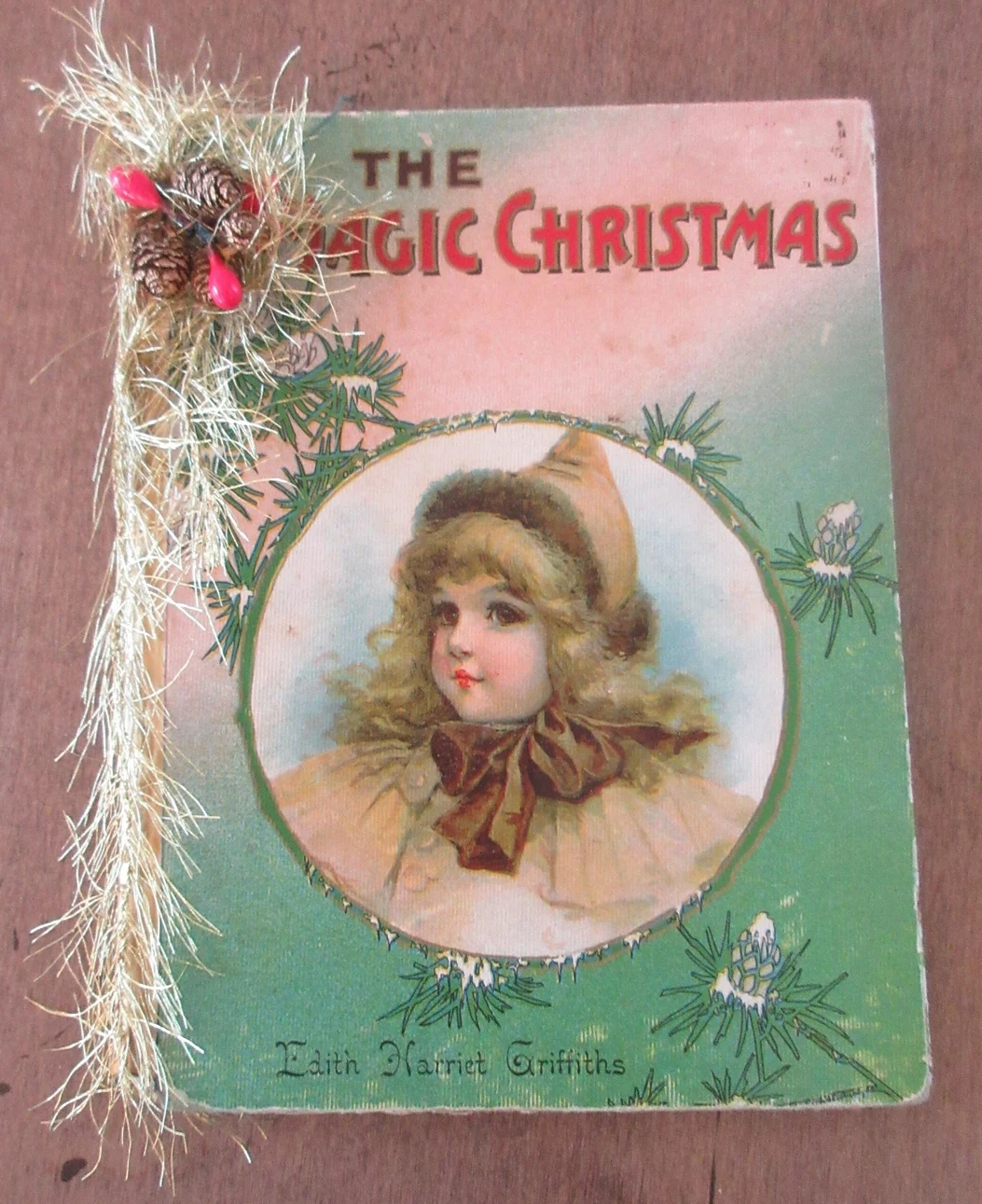
Another small holiday book by Edith Harriet Griffiths turns up a bit more frequently and it is The Magic Christmas and Missy and McKinley. It has the same 1911 publication date by the same Hayes Lithography publisher. (Available for $45.95 on Etsy at the time of writing this.)

Currently for sale on Etsy.

For all of that, in my light online research the trail is pretty cold on her as an author beyond these volumes which is too bad because she’s a good writer. I wonder if she published under another name or names and if that is just erased in the sands of time, at least for now.

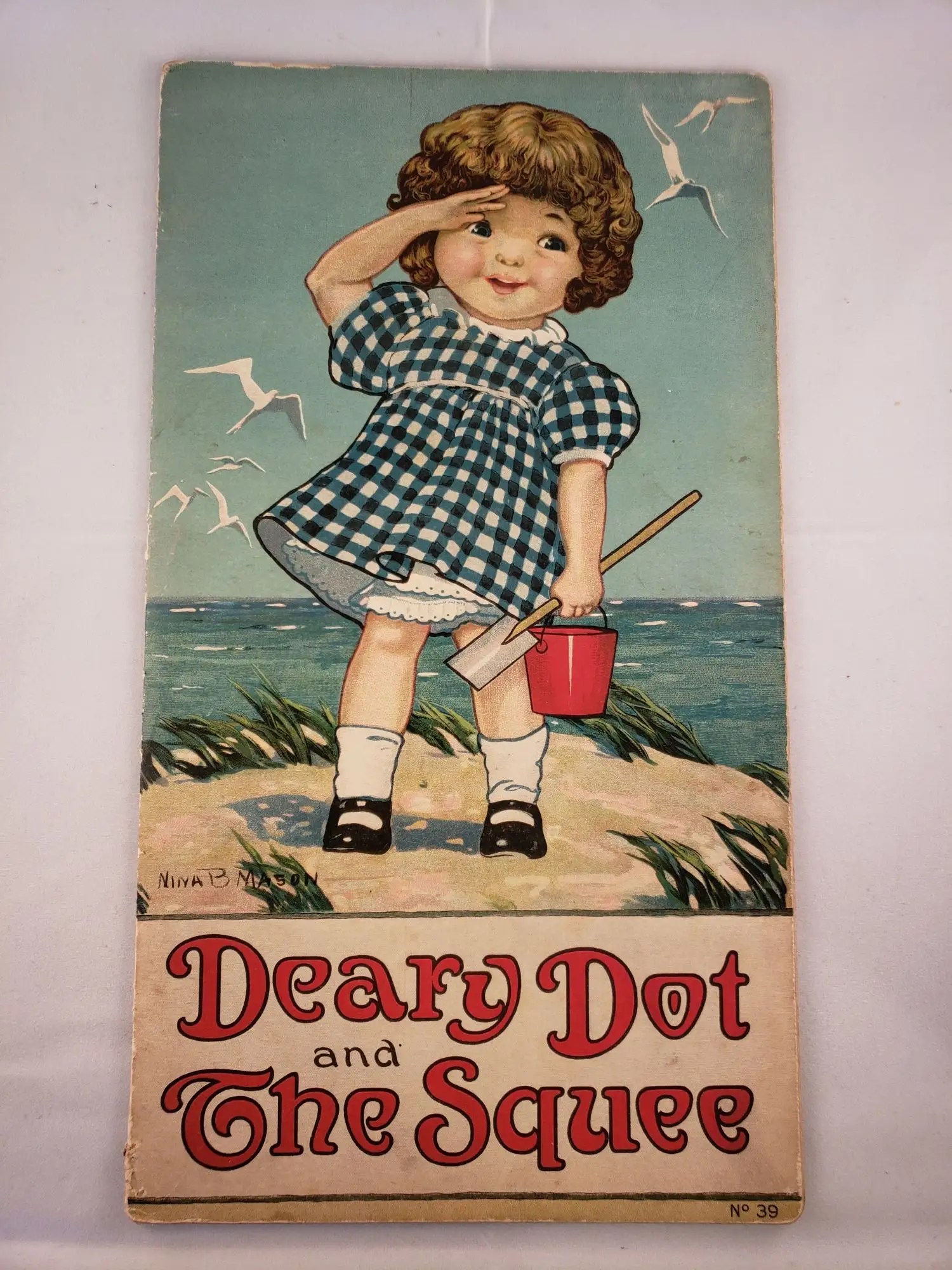
My volume is illustrated by Nina B. Mason and Frances Brundage and frankly the outside illustration and the overall package is somewhat more impressive than the inside illustrations. I don’t see them team up again although I did find a few further illustration jobs by each of them separately. I like them separately better.

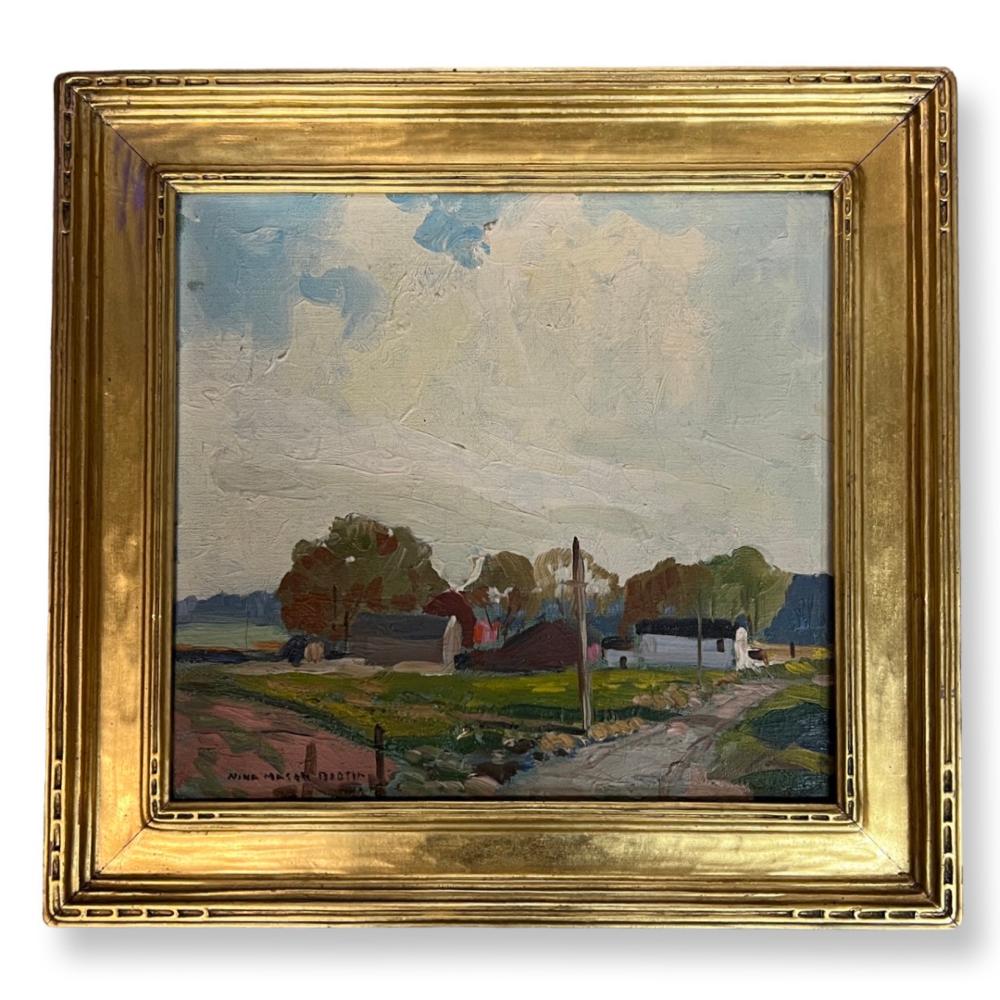
Nina B. Mason painting recently auctioned and sold for an undisclosed sum.

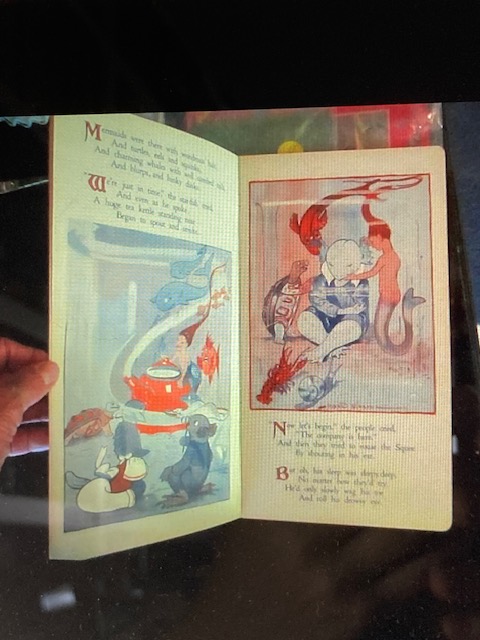
I believe that Nina B. Mason is Nina Mason Booth after marrying a few years later than this book. Her family was intertwined with engraving and lithography with a start in norther New York. A nice bio of her career can be found online here. She was notable for her portraits and illustrations. A quick look online shows some nice oil landscapes by her. There is one kid’s book which appears to be written and illustrated by her. I don’t love the look of it but the inside story and pictures are really loopy! Deary Dot and the Squee!

Apologies – best screen shot I could get. This volume on Abe’s Books will cost you! $167!

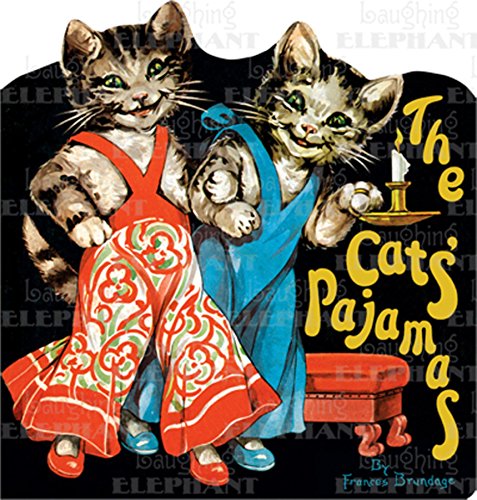
Meanwhile, last but certainly not least, Frances Brundage (1854-1937) who was older than Nina Mason and presumably more established. She is the only one of the three who rates a Wikipedia entry (it can be found here) and she had a long career illustrating cute children, cats and the like. Her specialty was Valentines, postcards and other ephemera, much published by our friends over at Raphael Tuck & Sons. (See my Felix cards produced by them here in a prior post!) My favorite antidote is that she sold her first sketch to Louisa May Alcott. It was an illustration of one of her poems.
Of course this caught my eye. It appears to be written by Brundage as well.
I suspect this is more typical of Brundage’s work.

So we kick off the holiday season here at Pam’s Pictorama. Holiday books from the 1910’s could be a deep vein to mine, although a pricey one for the most part. I will be keeping a further weather eye out however and we’ll see what we can find.

Catland: Louis Wain and the Great Cat Mania

Pam’s Pictorama Post: I haven’t posted a book review in a very long time and I am not entirely sure I have ever written one for a contemporary volume (Kim Deitch books notwithstanding of course), let alone a non-fictions one. (My reading and therefore posting runs heavily to very early 20th century fiction, largely by women. For a few examples you can look here and here.)

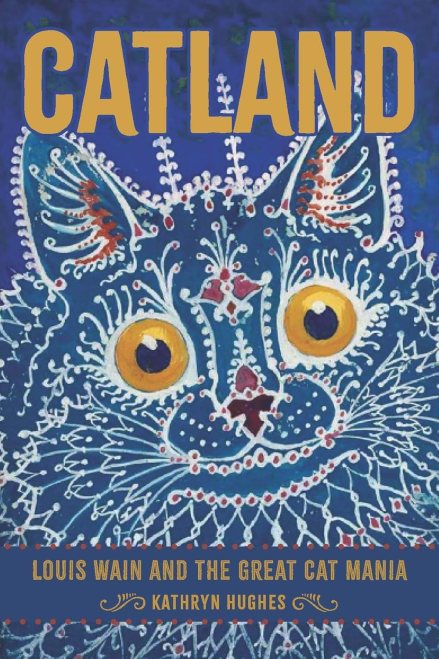
However, it seems quite logical that I would break that ground today with this recently published book as it combines Louis Wain (of whom I have posted often – try here and here for items from my collection) and the Victorian cat craze which helped launch the cat as house pet relationship as we know it today. Catland Louis Wain and the Great Cat Mania by Kathryn Hughes is more or less hot off the presses. Hughes has worked the Victorian history side of the street before and draws heavily on her accumulated knowledge for this sizeable volume.

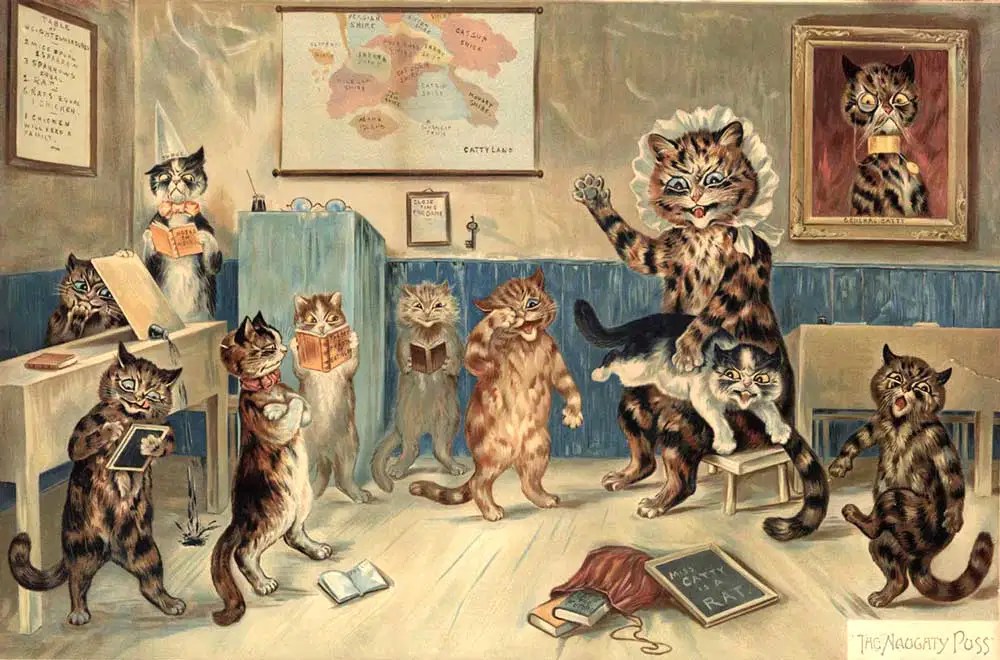
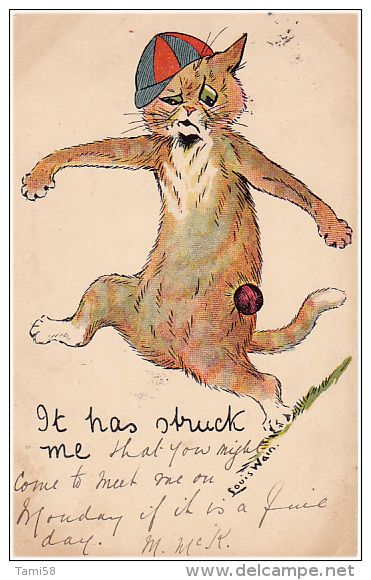
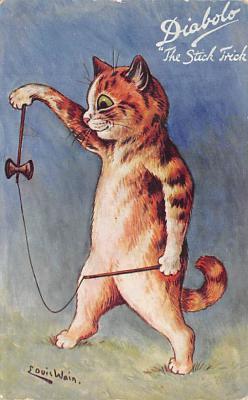
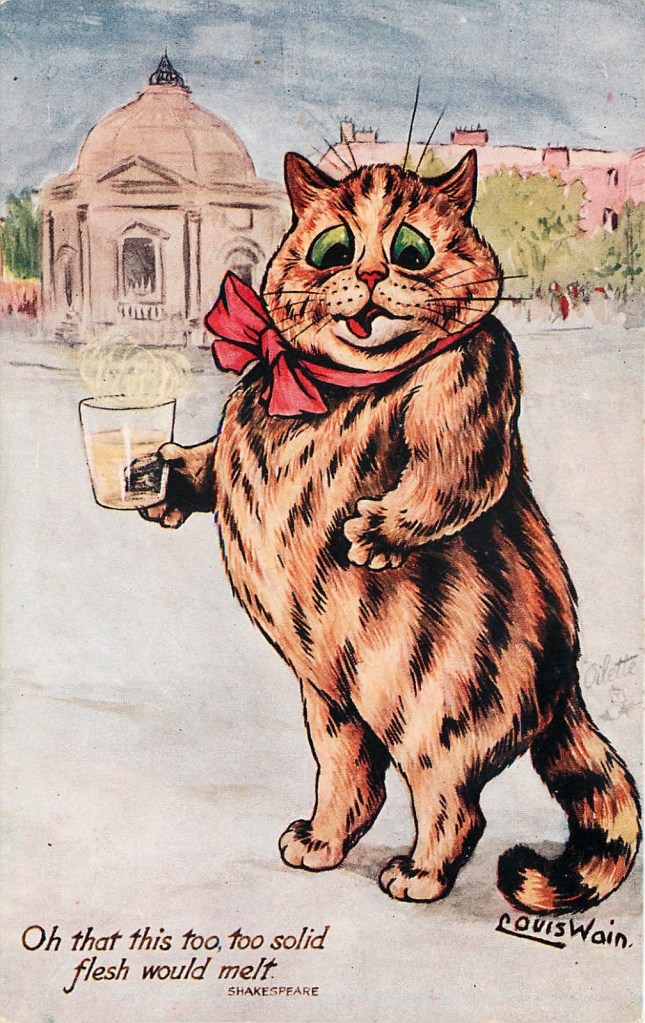
The Naughty Puss by Louis Wain.

Hughes uses Wain’s biography as a rough parallel to the rise of cat breeding and ownership – perhaps a fair measure as one could say that Wain’s art, intertwined with the newly found fondness for felines, helped drive the mania but was also driven by it. She loads it up with an equal amount of stories and tidbits from broader Victorian life, but centered mostly on a newly formed cat craze as it were.

While Hughes does take the opportunity to set both Wain’s autobio and previous chroniclers straight on some points, his biographical bits are interspersed throughout by chapters devoted to other aspects of cat related Victorian life. (Somehow I had missed the fact that Wain had a cleft palate which was largely hidden by facial hair as an adult and I had no knowledge of the family history designing and making liturgical fabrics – the latter being of much interest when you consider his sense of pattern and design.) Evidently Wain gilded the facts of his life liberally (lied) during his lifetime making some of it up out of whole cloth more or less.

circa 1900: Cat artist Louis William Wain (1860 – 1939) draws inspiration from a pet. (Photo by Ernest H. Mills/Getty Images)

Hughes’s Wain is a socially awkward fellow, albeit it with flashes of attempted showmanship, who was most comfortable wandering off into his own world, In his public persona he judged (the newly created) cat shows, gave demonstrations of two fisted simultaneous cat drawing, and wrote some vaguely (and then increasingly) unhinged editorial pieces for the papers of the time. On the other side of the coin, he and his family declared bankruptcy more than once; he had a tendency to wander off for periods of time, and of course eventually he sadly drifts (almost retreats) into his decorative cat laden world of insanity.

Much the same could be said about Victorian England and its relationship to felines. First, it is clear that there was a pretty hard line between the nascent “purebred” (often pampered) pets of the day, and the run of the mill kitty of the street. The practice of bringing a street kitten or cat into your home was not the norm and, aside from those which were kept for work such as mousing, those cats were at best left to languish in the streets.

Tabbies in the Park and black and white print by Wain.

Some of the Victorian practices concerning cats are not for the weak of cat-loving heart to read so fair warning here. There were descriptions and stories I glossed over at best and I suggest same for Pictorama readers. A chapter on Victorian taxidermy (including a woman with a literal cat hat and cat tail cape – Eeeck!) isn’t even the worst of it as the period does seem to have a glib cruelty to it. However, not all the cat tales are bad ones and there were numerous fun bits and pieces that I’ve been reporting to Kim in bed for weeks now.

The book is gloriously well illustrated including, but happily not limited to a color section. Wain’s work lends itself even to black and white reproduction and Hughes uses it to good effect in support of her points as well as being fun to look at.

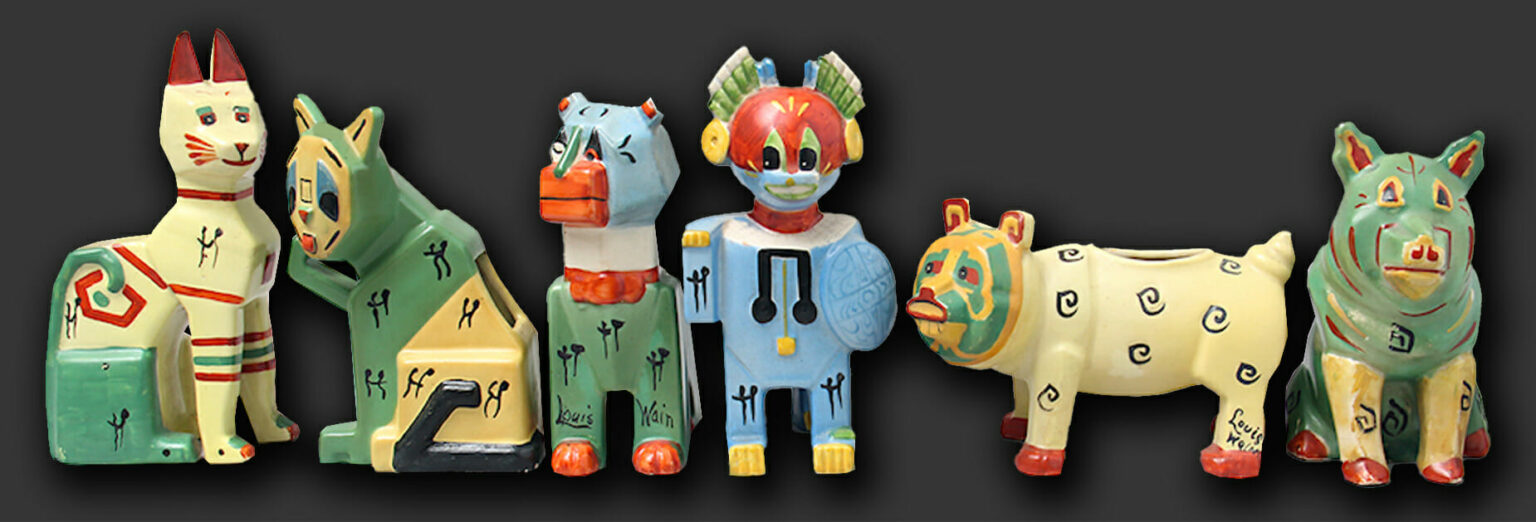
My favorite chapter in the book was on the Wain futuristic ceramics which I have always had an interest in and it answered at least some of my questions about these. A somewhat luxe line of teapots and the like in true Futurist forms, Wain had the bad luck of launching his line in June of ’14, just as war was overtaking Europe and Great Britain. Not the best time for offbeat ceramic cat-ware.

A bevy of the ceramics!

Produced by a company called Max Emanuel there were 19 patented designs in the first batch with names as diverse as The Mascot Cat and Road Hog Cat. The choice of colors where the larger designs were produced was referred to by a critic as an angry cake decorator on acid. Evidently there was even at inception a riot of designs, colors and finishes for the items, manufactured at two different plants which would make positive identification hard even then and almost impossible now that forgeries have flowed into the market. Still, I would snatch one up if I could and liked it and remain unconcerned about proof of origin.

The most disappointing chapter was on Wain and Felix! Other than the story of Sylvia Pankhurst’s Felix factory on the East End of London being told (Pictorama readers may remember that from a very popular early post that can be found here), Hughes does a rough retelling of a the plot of a silent cartoon that is easily viewed on Youtube. I’m mystified by why she included Felix if she was so disinterested.

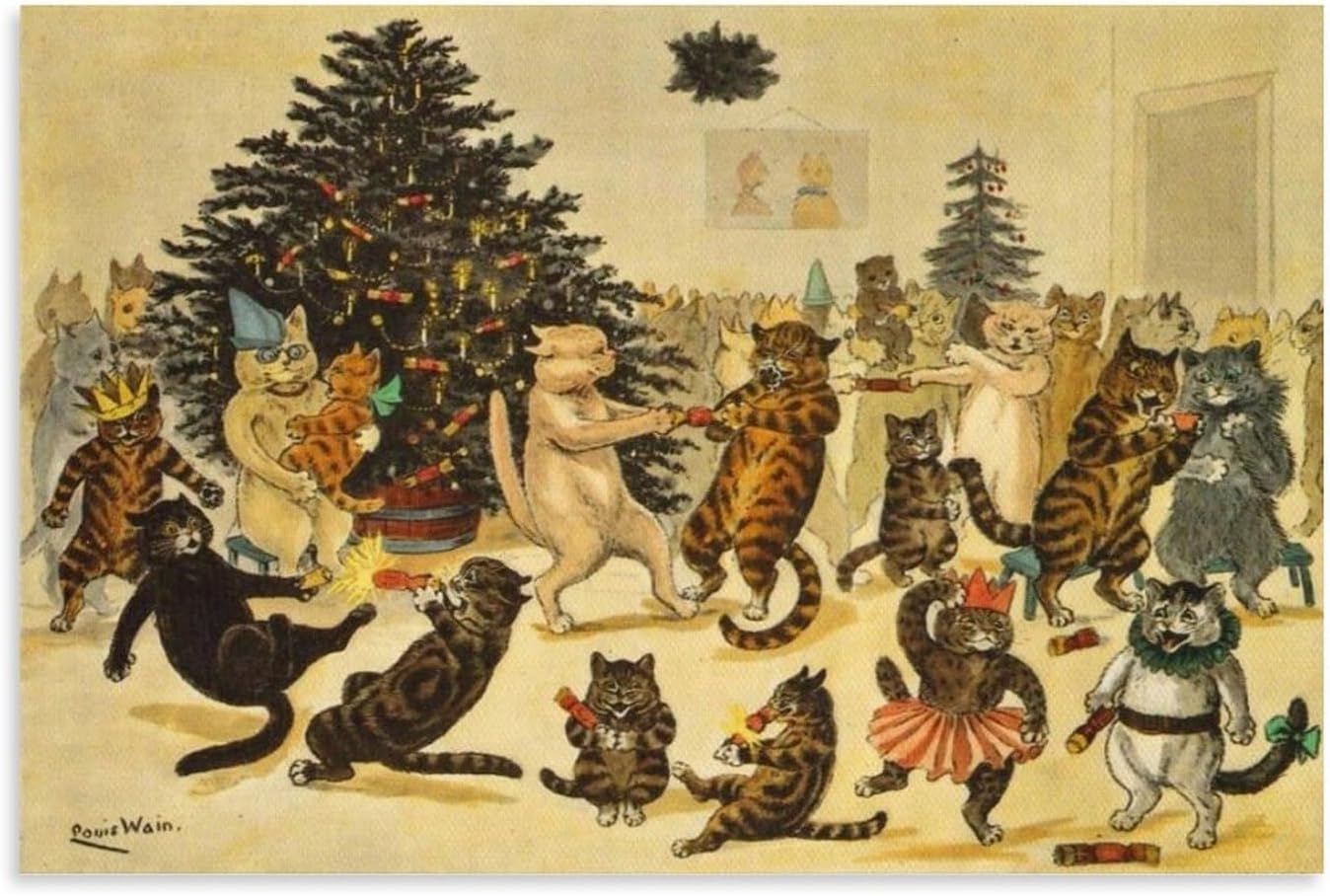
Christmas was a favorite and very lucrative time of the year for Wain from the beginning of his career.

Wain and his sisters eventually leave London to reside in a suburban seaside town near Margate (one of his boosters in the magazine world was an early investor and set them up there), and this holiday retreat lifestyle inspires some of Wain’s most entertaining cards and images – cats golfing, boating and swimming as well as sly social commentary found even in Catland.

From the Pams-Pictorama.com collection. Sadly not Wain and Eliot, not yet…

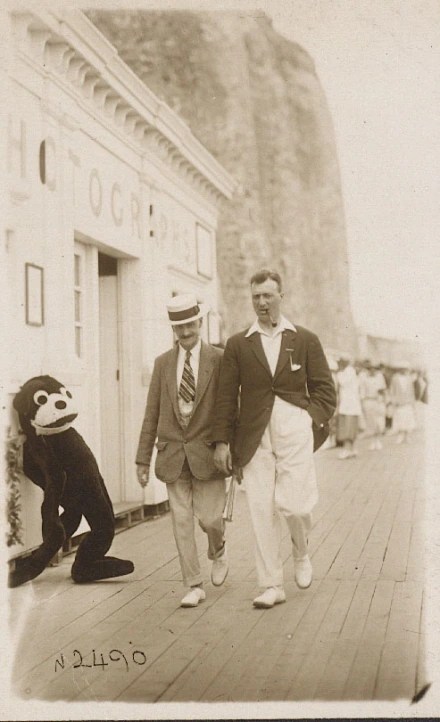
Meanwhile, of course I have wonderful day dreams about Louis actually wandering over to the Felix photographers in Margate where so many of my Felix photos were made and having a postcard made with an arm tossed around the shoulders of a tall stuffed Felix – this is now united with my day dream of finding one of the giant Felix dolls from those establishments.

Furthermore, as it happens eventually TS Eliot was also nursing a nervous breakdown in the neighborhood – in a town just on the other side of Margate. It is irresistible to imagine that they met at that time, perhaps had a coffee and were strolling the boardwalk together. And perhaps they wandered in and had a picture postcard snapped for posterity – to show up in my collection one day.

Cat Tales

Pam’s Pictorama Post: I have used the term little gem before, but I can’t think of an item it fits better than this one. Within days of purchasing the Neatness award (featured in a post from last week here) the folks at Curiosities Antiques in Texas (@Curiositiesantiques or via their website here) inquired if I would be interested in this little book – and would I!

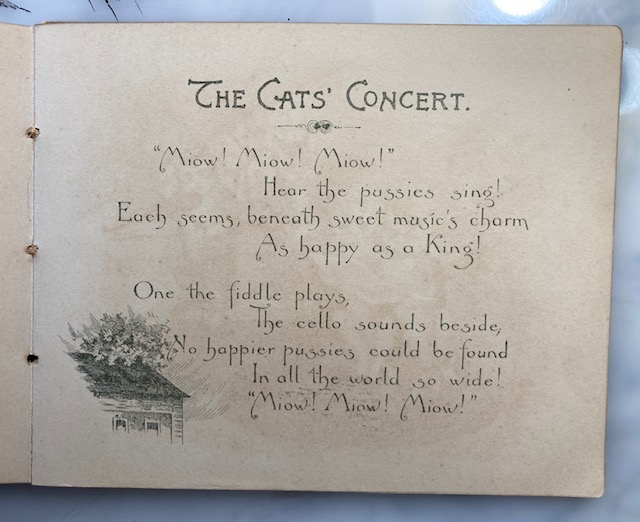
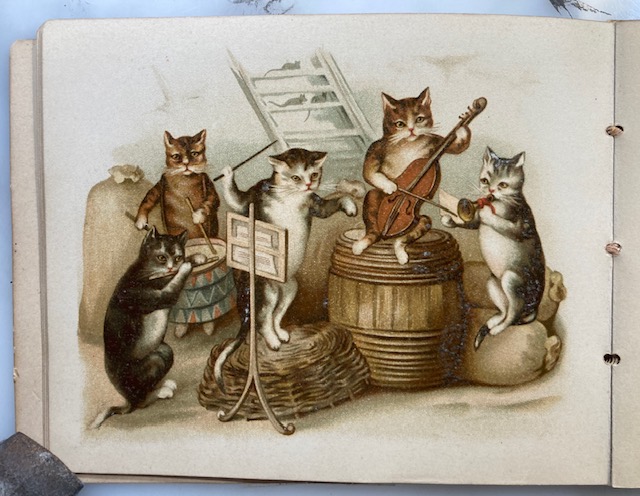
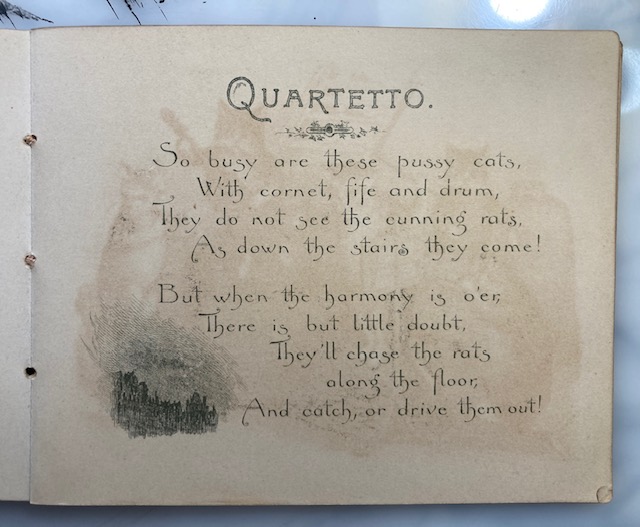
I have one or two similar period volumes in my collection, at least from the same period and sort of litho images. The one that immediately comes to mind is one I hunted for an ultimately purchased on eBay I think. It is The Cat’s Concert and a 2018 post about it can be found here.

Today’s post is going to attempt to give you the chance to really see this book so many images coming up. I hope I do it justice. Obviously I had to be careful about how I propped the book open in order to take the photos so they are less than perfect, but I would not have been able to scan them which would have required flattening the book.

Inside front cover which peeks through. Pams-Pictorama.com Collection.

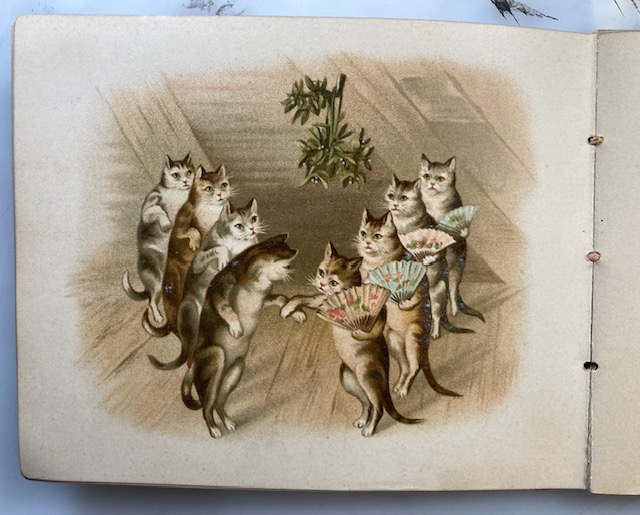
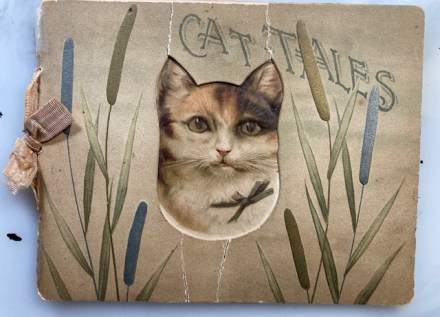
To start, the peek-a-boo cut-out cover which has kitty peering between the cat tails is the most fragile part of this book, folded almost to pieces from opening; the entire book held together with a ribbon. Kitty is a nice tortie and sports a bow in the same shades and shapes as the reeds decorating the front, very elegant and I assume that the gold and silver of the reeds were shiny in their day. These elements on the cover are embossed, the decorative plants and the cat on the inside page too, the whiskers especially stand out. This little volume was lovingly printed and produced.

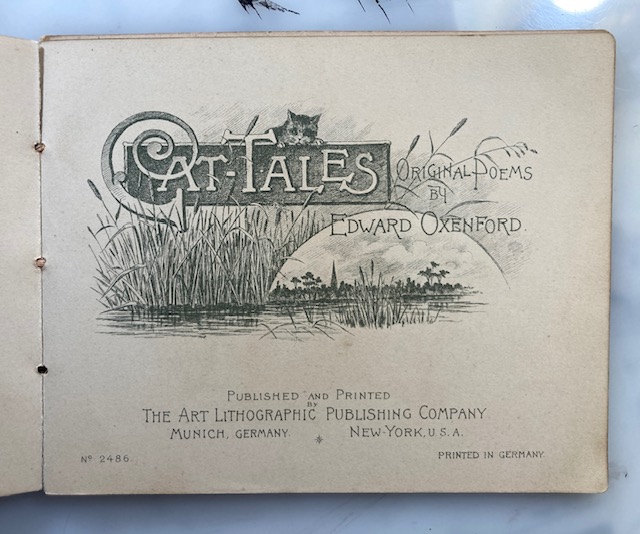
Title page. No copyright information but a printing number in the lower left?

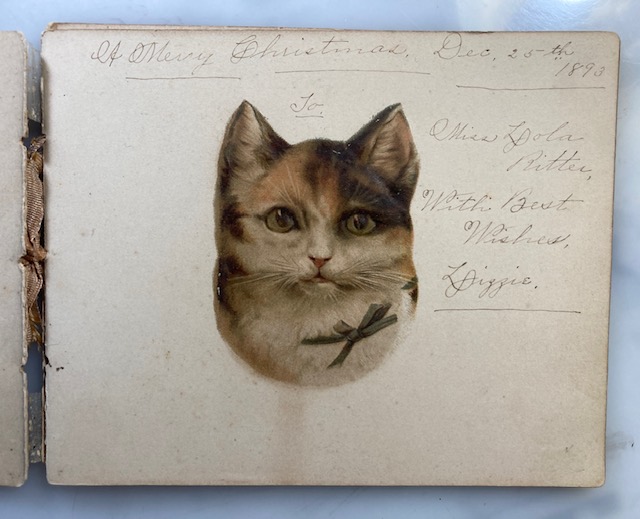
Inside it is inscribed on the inside cover, A Merry Christmas , Dec. 25th 1893. To: Miss Lola Ritter, With Best Wishes, Lizzie. This decorating the cat part of the inner cover.

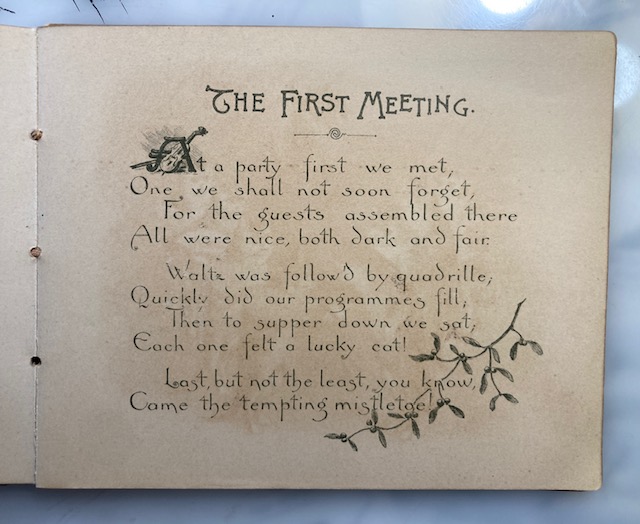
The contents are poems, cat verse. They are original works by Edward Oxenford. This little book was printed in Germany and published and printed by the Art Lithographic Publishing Company, Munich, German and New York, USA. Edward Oxenford has a few other available titles to his credit I could find, one book called Sports and Play which is a similarly litho edition to Cat Tales, but cut out in the shape of a saddle. (Apologies for not providing an image but there’s only one online and it wasn’t willing to be grabbed. An odd looking volume though.) As for the publisher, this sort of novelty book seems to have been their meat and potatoes, although I did not find any real history about it. Seems like they may have produced postcards as well.

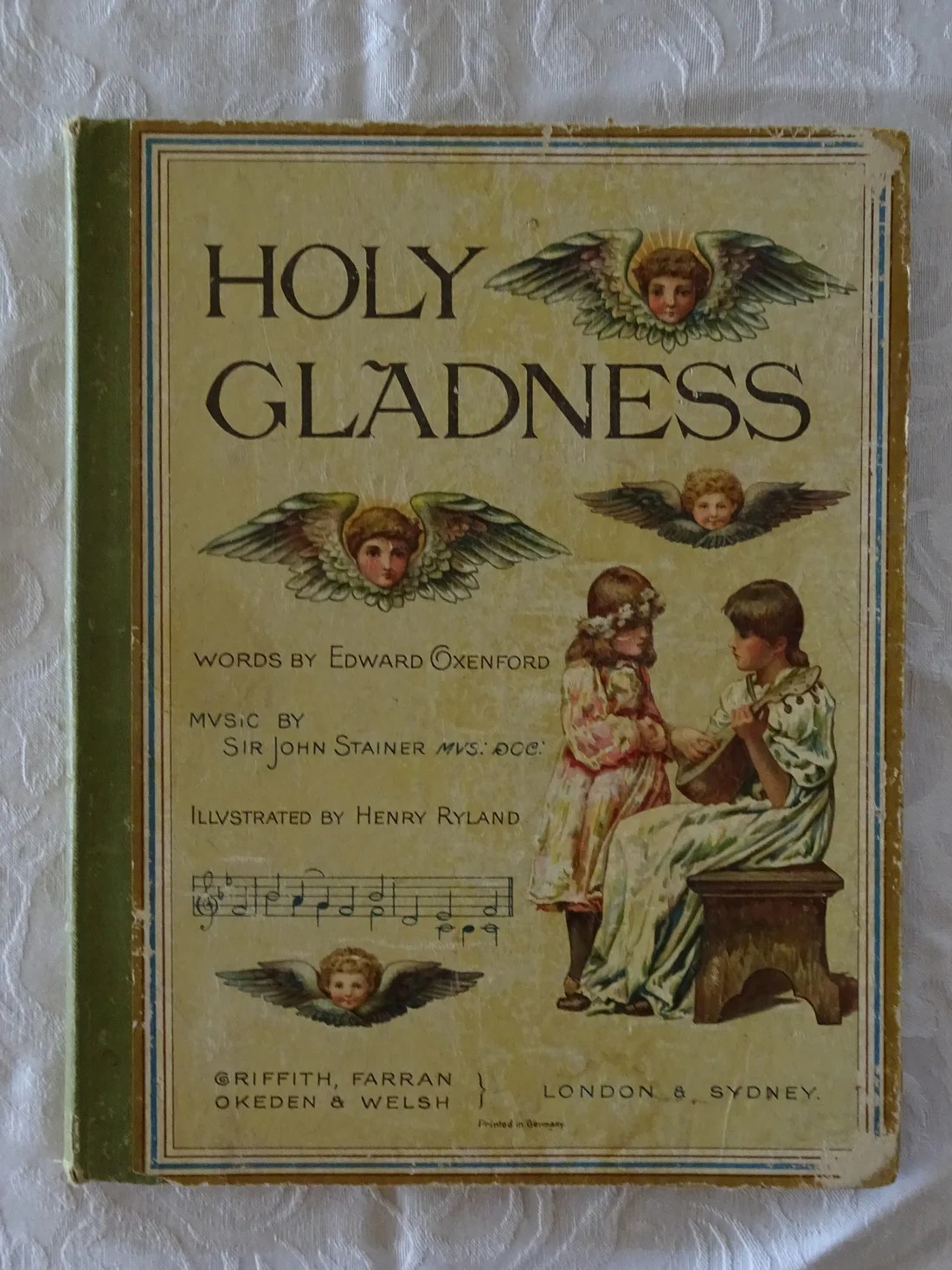
The other book of his is called Holy Gladness and it also sports beautiful lithographs but unlike the other two books, it is a larger bound edition. Neither of the other books are widely available and Cat Tales seems somewhat rare as well. Edward shares a name with a much earlier writer who also went under the name of Edward de Vere and has much more writing and controversy to his credit.

This illustrator gets a credit at least! Not in the Pams-Pictorama.com Collection.

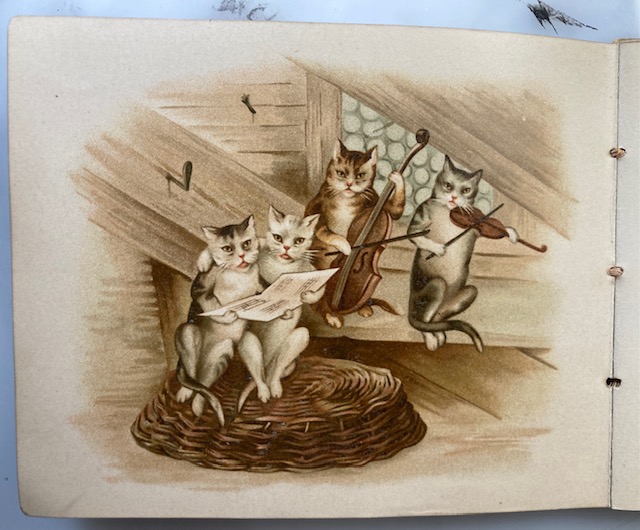
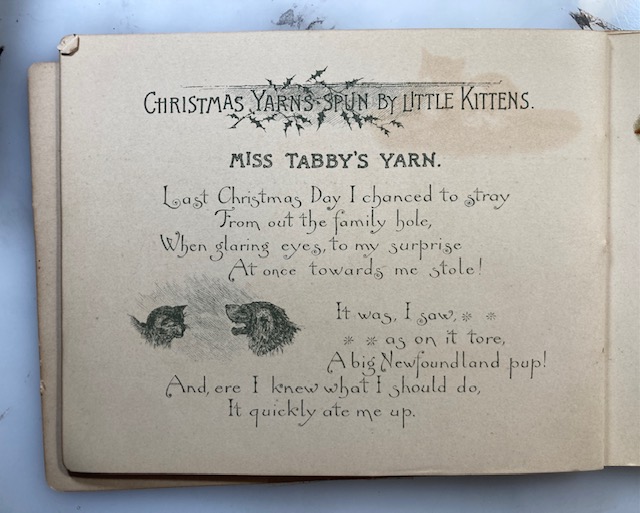
I’m a bit surprised (and sad) that the artist of these illustrations isn’t identified and get credit. These are wonderful illustrations beyond having been beautifully printed. There is no copyright date, only the inscription on the front identifies the year.

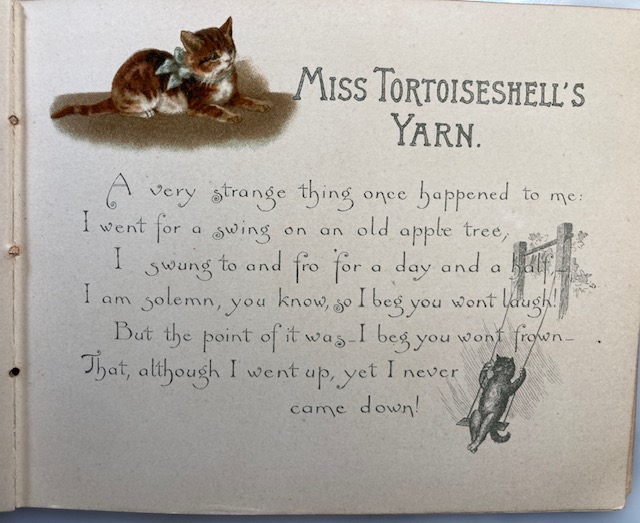
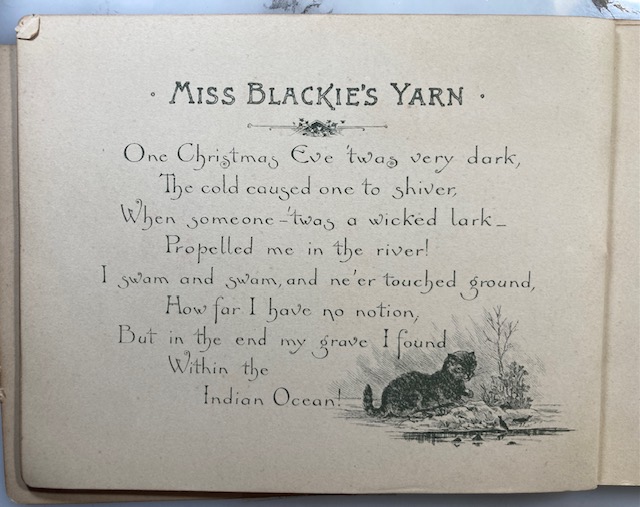
I’d like to point out that there is a Miss Blackie’s Yarn below. My Mr. Blackie is decidedly unimpressed by these so called Christmas verses at the close of this book. Oddly all three of these poems seem to end badly for the cats in question. Not at all sure I approve either. A jolly volume, these last few verses notwithstanding.

Reading: de Horne Vaizey Cont.

Pam’s Pictorama Post: I continue to work my way through the available books by Mrs. George (nee Jessie Mansergh) de Horne Vaizey, as chronicled in early parts here and here. I have had a tough time reading with a consistent timeline so I have hopped a bit through her ten year, prolific career and have been spending a lot of time around 1908 and 1909 recently, with a few jumps to near the end of her life in 1917.

There is not a lot of deep biographical information readily available and I sketched out most of it in my second post about her. She had a good for nothing drug addicted husband who had the good grace to die and she starts publishing shortly after. What I didn’t know until recently was that her young daughter, Gwenyth, took one of her stories from a drawer and sent it to a magazine contest without telling her mother. Jessie won and the prize was a cruise where she met George de Horne Vaizey and they marry and meanwhile her career was launched.

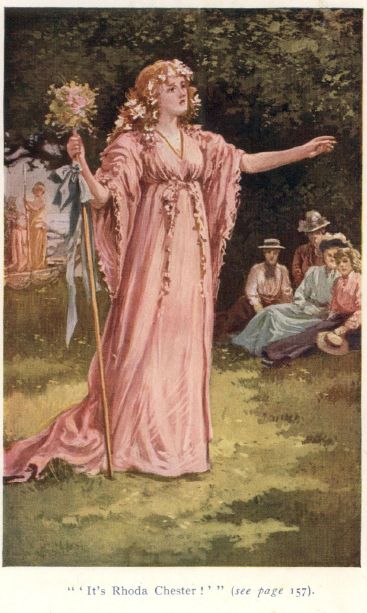
From A Houseful of Girls, 1902.

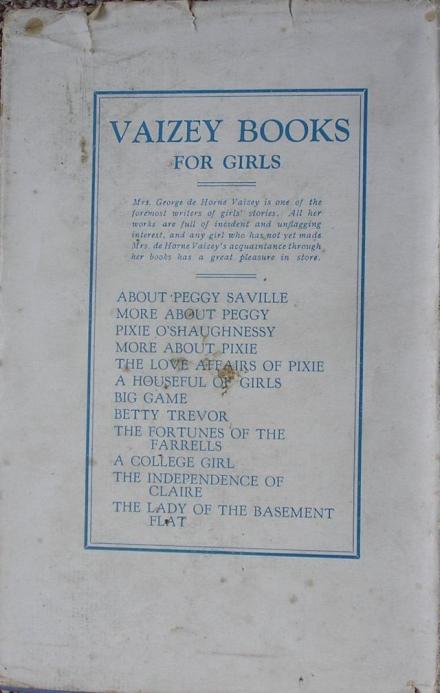
So the question of what was really lighting a fire under her about writing is an open one – she must have enjoyed it, but was it a financial need? I always thought she wrote for a longer time before remarrying and needed to support her family. Nonetheless, write she does with tremendous output. Wikipedia counts 31 books in the span of her brief career (another site says 33) and I think we have to assume there were magazine stories published as well. (There appears to be a collection of them published either right before or after her death.)

Her books are not especially brief. I would say they average around 300 pages. Reading them electronically it is a bit hard to tell. Sometimes two or even three were published in a given year.

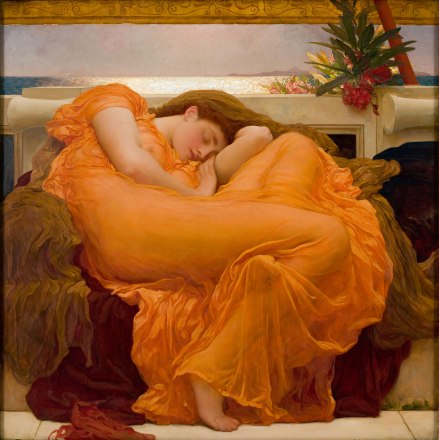
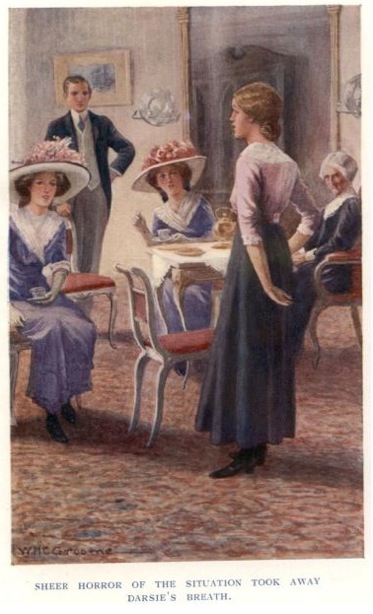
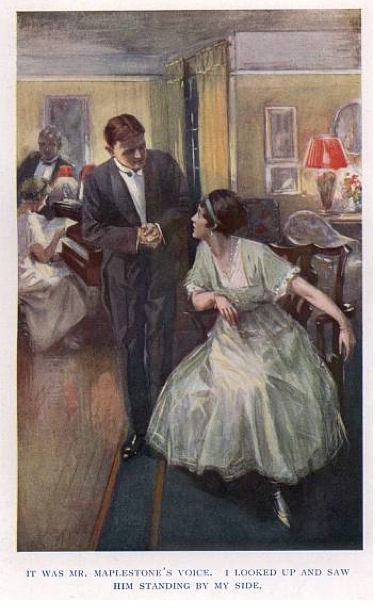
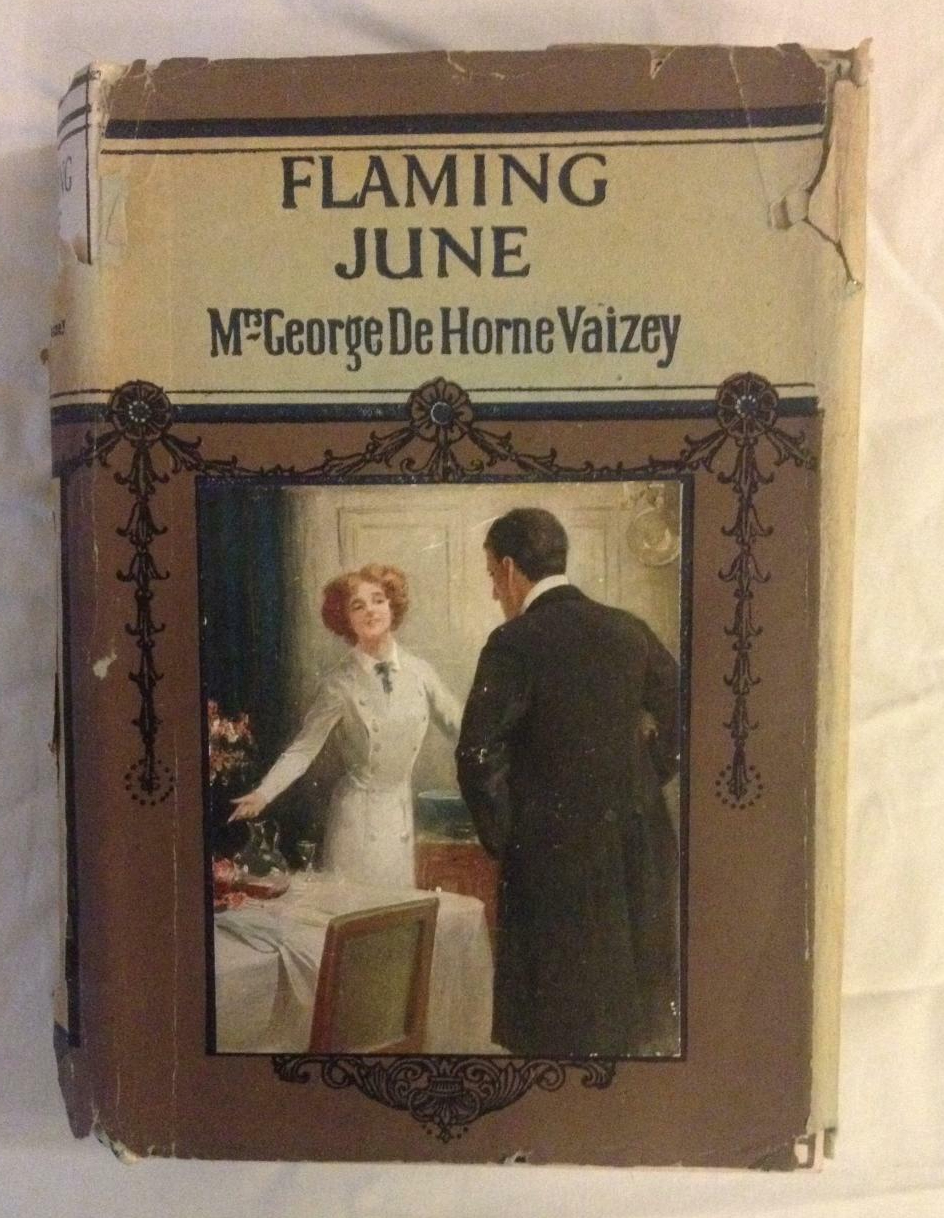
I have been thinking about her heroines as I read and as they grow in interest with her increased skill as a writer. They stop being simply likable (beautiful and loveable – gray eyes, long lashes) fairly early on and start to become more complicated. In Flaming June (note that the painting above is of the same name and was well known at the time – was she making reference to it? Frederic Leighton, 1895 – I say yes!) she has an American main character with a Western accent which, while effective, gets a bit tedious to read after awhile. (She also had a character with a lisp in one volume that started to drive me nuts. It seems to be a fashion for writers of the time to show all the accents they could write with.)

Also from A House Full of Girls.

However, over time her women grow into complex characters who are sometimes more interesting than likeable. For example, the woman in Flaming June is hot tempered and extremely independent. Much of the plot, and what happens to her both good and bad, centers on this quality as well as her stubbornness. It makes the story tick and, without being a spoiler I will say, gives it a somewhat quixotic ending.

In addition to greater character development her plots become more interesting and she leaves off the basic sort of worn tropes about school days and money acquired, lost and acquired again which were the bread and butter of her early writing and certainly for women authors of the day. A young woman of middling income decides to take a basement flat in the city and dress as a much older woman so that she will be free to help people in a way that an attractive young woman could not. (The eponymous volume is The Lady of the Basement Flat, 1917.) The story is worked however so that she also has a life at a country house where she is herself – of course the two weave together at some point. However, what a concept!

From Etheldreda the Ready, which I am currently reading, 1910. Definitely not one of her more likeable heroines! Etheldreda is utterly self-oriented and conceited, thus far anyway!

In What a Man Wills she takes a sort of well trod narrative path with a wealthy, ill, elderly man who invites four nieces and nephews for a long visit to decide who will be his heir. While, again without being a spoiler, I would say she doesn’t manage an entirely new take on it, she does well with expanding it and again, not afraid to make one of her main characters flawed.

Her women, even her heroines, can fall victim to vanity and greed, if not quite all the way to ambition. (She does poke fun at women authors occasionally with a sort of self-deprecation.) They are often a bit forward for the time and space they live in – especially those who reside in or come to find themselves in small rural towns. Financial ruin comes to people and families on a routine basis, but with a sort of detail that makes you think that for those who lived on investment income they way many people did at the time, that this was a very real event.

Her characters opine on the limited options for women – that they are not trained for anything to prepare them for life or possible ways to make a living. Therefore their fortunes hang largely on their ability to marry well – or remain dependent on a male relative or someone else to settle money on them. In the end this depends on how attractive they are and can make themselves and some of the more forward characters have a real struggle with this very real problem.

From The Lady of the Basement Flat – sadly I don’t have one of her dress as the elderly version of herself!

Frankly, the male characters tend to be a bit more one dimensional; she came from a large family and almost all of her characters do. Therefore, there are always a few brothers for color and plot development and of course there are suitors, and although we are privy to fewer of their thoughts and motivations, they are generally not fleshed out like the women are having they were often an end goal which offered security and a home in addition to whatever romantic interest was brought to the table.

The closest we come to the male prospective in the somewhat brilliant novel, An Unknown Lover. This is a complicated plot and while there is a woman at the center of it, we do get into the heads of both her epistolatory lover and brother and their motivations which help drive this story. Thus far I would say this is her best, published in ’13 so she is flexing her muscles, but not yet at the end of her life.

From Daugther of a Genius, 1903. A ner’do well father dies leaving his children to rely on their wits and creativity to make their way.

So my interest in women authors at the turn of the last century continues unabated. Watching them chafe at the conventions that defined their lives and dictated how they could live – sometimes these very conventions sentencing them to penury without a way to survive. It has been interesting to place her historically before some of my other beloved authors such as the adult novels of Frances Hodgson Burnett and Edna Ferber (a few of those posts are here and here, but there are others!) but interesting to add her to the timeline. Also, the play between the British authors and the American is interesting as women in the United States seem to have been freer to pursue a living more broadly than their British counterparts earlier on – and the conventions of our society a smidge less confining.

As stated in my earlier posts, Jessie de Horne Vaizey spends the last years of her life bedridden and dies in 1917. I learned recently however that it was first typhoid, then eventually arthritis which confined her to bed and she died unexpectedly during an operation for an appendicitis – so what made her an invalid is not what killed her. She does some of her characters painful rheumatic complaints, usually elderly men, but clearly she knew what she wrote of – and as someone who suffers from it myself, I can only imagine the kind of pain she must have had without the meds of today to help alleviate them. There are also many plot instances of long recoveries from illness, not unlike her typhoid I assume. She was my age when she died, but she made the most of her almost two decades as an author.

Yearly Felix, the Annuals: Part One

Pam’s Pictorama Post: Today’s Pictorama post is brought to you with love and thanks to our friend Bruce Simon who contributed this to the Pictorama archive recently. (Yay and thank you Bruce!) Bruce, involved in all things cartoon, comic and animation has been a decades long friend to Deitch Studio, but known Kim even longer. He has previously plied me with a supply of wonderful early cartoons – Felix, Krazy and others.

Bruce, his wife Jackie and their peppy pup live on the west coast so we are mostly online and postal pals these days, although we look forward to their upcoming sojourn to NYC in June and also perhaps seeing them at our trip to Comic Con in July. (Kim and I heading out to Comic Con this year as he is receiving an Eisner lifetime achievement award – certainly a future travel post there!)

Onto Felix however and this wonderful little item. An interesting Pictorama secret is that I actually own several of these annuals, three came in the group buy from an auction last year. In addition, I own a few other extremely rarified ones that are not Felix related and all of these will likely make their way into future posts.

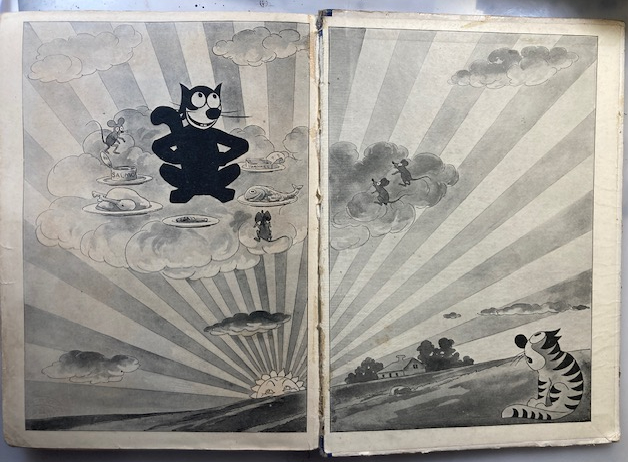
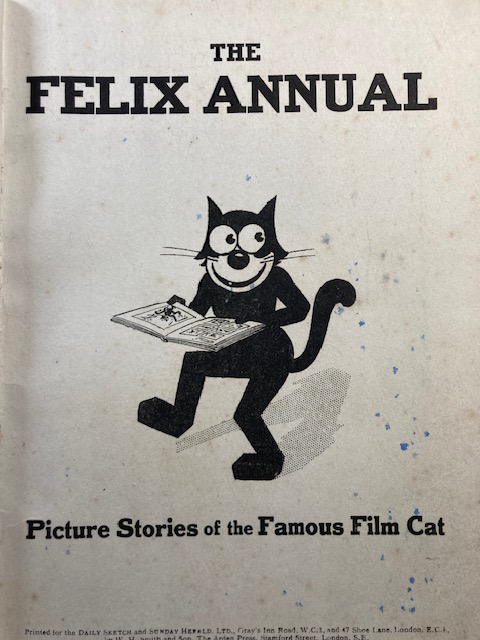
Endpapers for this 1925 Felix Annual. Pams-Pictorama.com Collection.

While I have tackled my Pip, Squeak and Wilfred annuals (one early post can be found here and another here) I am a bit confounded by conveying the wealth of Felix entertainment in one of these volumes. Virtually every page is sort of a gem – either early Messmer strips or those beloved boxy off-model Felix-es supplied by a British artist. Felix’s British alter ego. I don’t mean to be stingy, just a bit overwhelming to feel I am doing them justice. Let’s see how I do today.

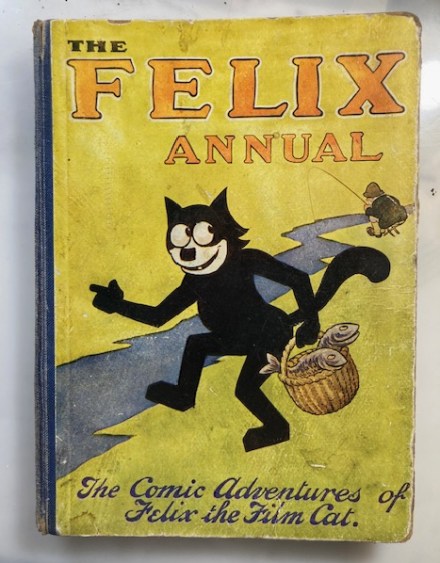
I think Felix is Easter ready on the cover of this 1925 annual (a nod to those of you who are celebrating today) with his basket of fish instead of Easter eggs! This is the great squared off Felix which I note above and ongoing readers know how much I like a square Felix! He is stealing away with the fisherman’s catch, the fisherman is either so deeply involved in his rod or nodding off – I can’t tell.

1925 appears to be the second year of the annuals and for some reason it is said to be less available, although you could buy one right now from what I can see. They are said to have lasted at least through 1929, which would give me all but one of them if true. Published through the Daily Sketch and Sunday Herald Ltd. the years of publication are nowhere in evidence in these books. For the devoted reader these can be had if a tad dear.

Title page. Pams-Pictorama.com Collection.
Damaged back page. Pams-Pictorama.com Collection.

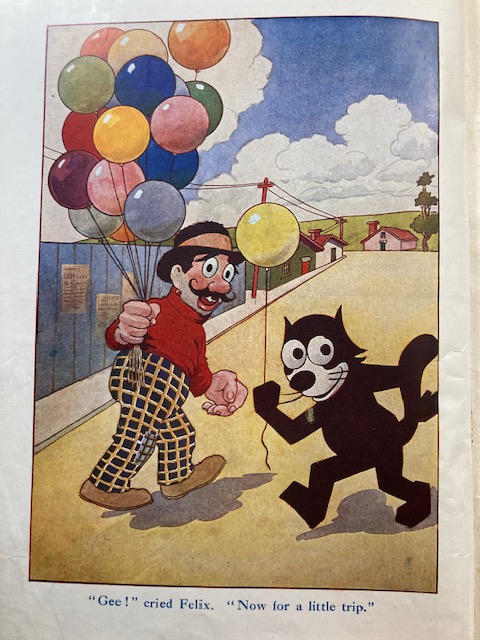
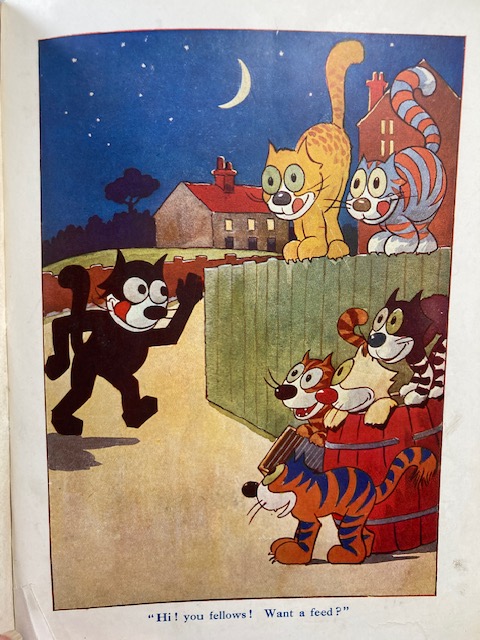
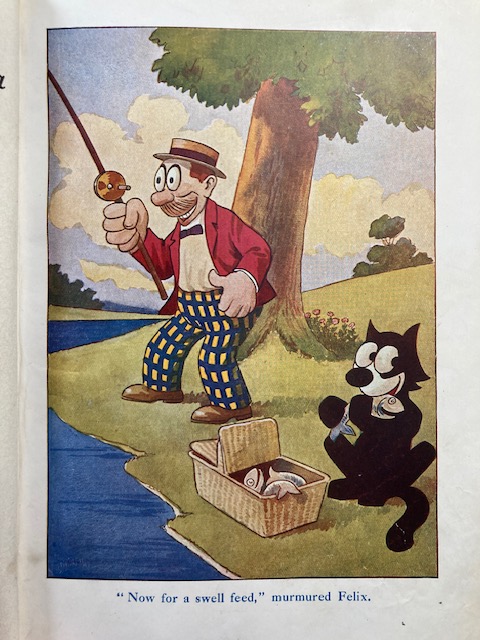
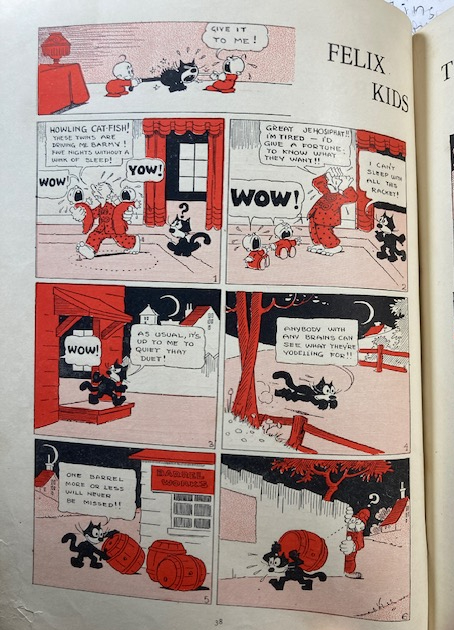
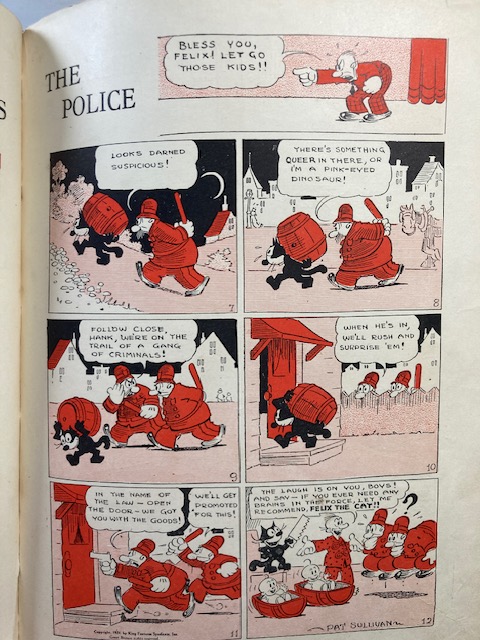
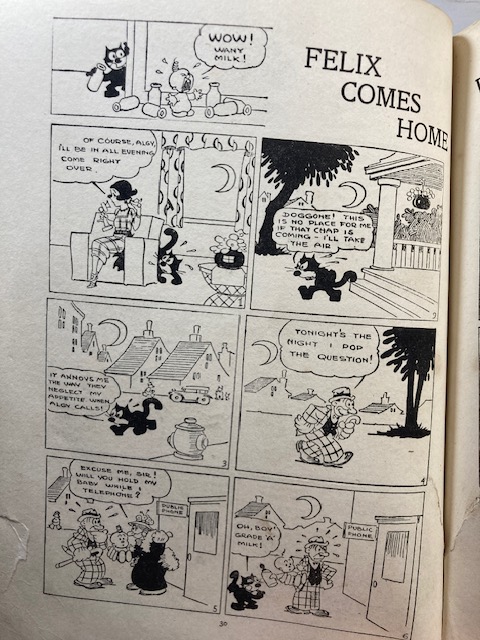
While the book is made up largely of black and white, presumably Sunday, strips, there are what I assume are British produced full color plates throughout which almost, loosely tell a story too. Then there is a center spread of four or so strips which are printed in red and black. This seems to roughly be the format of these annuals. It is interesting to me that the Pip, Squeak and Wilfred ones ran so much longer than Felix, despite his popularity. Those have a run from roughly ’22-’39. The British comics reading public did love their annuals however.

This volume also has hand painted embellishments on a few pages from a well meaning child. This is also very common indeed and not a surprise to anyone who collects children’s volumes of any kind.

The inside front and back covers are the same goofy design where Felix seems to have ascended to the heavens where he is surrounded by good things to eat (including mice) and admired by an anonymous cat below. There is also a front and back plate of him – sadly the back one is marred by a strange remnant of something unidentified which is on several pages of the book.

These annuals were sturdy in their construction – well bound and with thick pages. Even with that some of the pages in this 100 year old volume are worn right through with years of thumbing. The back outside cover is a not especially interesting ad for Ovaltine.

The comics within are worthy and I am enjoying reading them in bits here and there. I am more a fan of daily strips than Sundays in general, but these are fun and very much like the cartoons.

I promise more to come on these, but I hope today has been a tantalizing taste.

Part 2: Mrs. George de Horne Vaizey Cont.

Pam’s Pictorama Post: Apologies in advance for anyone who was peevish that yesterday was a book-ish post as I am going to wrap up (at least for now) my thoughts on Mrs. George de Horne Vaizey today as she continues to be my reading material of choice. (Yesterday’s post is here.)

I will confess I went for a long fallow period of not reading much and just one off books here and there when I was. Kim powers through all sorts of long and short term reading projects, both for his own edification and for things related to work, so I am jealous when I am without one too. However, I am there with the best when I find a rabbit hole to go down and therefore here we are today.

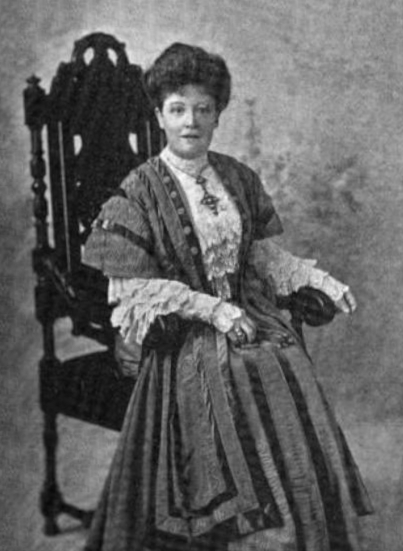
From Wikipedia and the only image of her I can find.

Mrs. G de HV as I like to call her, is fading from consciousness and seems to have barely been rescued for the digital age. If we are to look at the remaining availability of her published volumes, we have to assume that the Pixie books I wrote about yesterday were among her most popular, with a few other titles that seem to stand out. She wrote upwards of 32 books (I say upwards because Wikipedia does not always have every book published by an author although they do a good job of it) and clearly there were short stories. There is a collection of them mentioned as published in 1918. The list of her publications runs from 1897 to 1918, ending with that collection of stories. However, if I really want to read the widest swath of her work I will need to dig some. I would say about half is available online or for sale as antique volumes or occasional reprint.

From “Tom and Some Other Girls”, 1901.

Born Jessie Bell in 1857 as one in a melee of seven children (four brothers, two sisters) she was the daughter of a Scottish insurance broker. Her place of birth was Liverpool. She first married Henry Mansergh, a cotton broker, and published her first volumes under the name Jessie Mansergh. They had a daughter, Gwyneth Alice, in 1886. Mansergh was an addict which seems to have contributed to his early death. Reading between the lines so to speak, one wonders what part her early writing played in supporting them.

While I was certain that hers was a pen name of a type that was often adopted at the time, I learned that no, her second husband was indeed George de Horne Vaizey. She meets him while on a cruise which was a prize awarded for one of her short stories. They marry in ’98 and have a son, also named George, who goes on to be a writer. Sadly her own life ends as an invalid, confined to bed for many years. She dies in 1917 at about age 60 (her precise date of birth unknown) and therefore the final volume is posthumous.

From “A College Girl”, 1914.

Jessie uses her own life as whole cloth for her fiction. Large dynamic families, addiction, illness abound in her pages. Therefore, I have to assume that her evolving views on marriage and the relationships between men and women was also explored on her pages. If you’ve followed my previous musings on women writings of the early 20th century, you know that I found that even the juveniles such as The Radio Girls and Automobile Girls were gently ever pushing the line forward for what was permissible and acceptable for young women. (Some posts on those books here and here.)

Interesting to find Mrs. G de HV who is a bit earlier still than those authors and for me a logical forerunner of some. The line for women, the options they had in society for supporting themselves, is still more nascent although shifting all the time. An ongoing theme she explores is the unmarried middle class woman and her lack of options. I’ve already encountered several books where due to various circumstances the heroine is in some way prohibited or unable to marry and is faced with the issue of how to live their lives, preferably not just dependent on family. She seems to walk a narrow line – clearly a woman married to a man of means is the safest port in the storm.

She also confronts the daily reality of marriage – the idea that you are joining up with a mate who you will continue to make conversation with daily for decades. (I have often said that knowing that I would never be bored talking to Kim helped ensure a good union for us!) The sheer difficulty and exhaustion of running a house and caring for a family.

From “Lady of the Basement Flat”, 1917.

I am going to skip forward to An Unknown Lover, a novel published in 1913. (Some spoiler alerts ahead for those who care.) The author sets herself some unusual tasks. We have a heroine, Katrine, in her late twenties who has spent most of the last decade caring for her older brother who was widowed shortly after marrying. There are rarely effective parents in her books – adult children have either lost them or they are on the sidelines for some reason. I can’t even remember why they weren’t present to stop this hot mess of a situation – dead and forgotten in this case.

Anyway, both characters are beginning to chafe at the situation. The heroine opines on having all the responsibilities of housekeeping without the partnership of a true mate. She is also painfully aware that she is dependent on her brother for her keep, which comes to a hard point when he decides to remarry. She has no marketable skills and living in a small hamlet no prospects of marriage which is more or less what she is trained for. As a literary challenge, our author has placed an epistolary relationship through part of the book, which moves the storyline along. At first it seemed a bit awkward, but it grew on me. Despite some flaws and maybe questionable decisions, it is to date my favorite of her novels.

Love this title and looking forward to this one. Published in 1908.

De Horne Vaizey has beloved tropes – I’ve noted before a preponderance of gray eyed heroines, some have golden eyes as an alternative. An odd one seems to be a fondness for shipwrecks – I believe I may be up to three in her oeuvre to date. An interesting tidbit, while researching this post I came across the following in an Internet Archive version of An Unknown Lover which actually photographs the pages of a hard copy of the novel and included this forward below:

AUTHOR’S NOTE

Lest I should be credited with making literary material out of a disaster still painfully fresh in the minds of readers on both sides of the Atlantic, I should like to record the following rather striking coincidence.

On the fourteenth of April last, I was engaged in writing the description of the collision at sea in which the heroine of the present book plays a part; and after some deliberation as to the most forceful word to employ, wrote the sentence which originally ran as follows: —

”Mercifully it is not one person in many thousands who is called upon to endure so titanic an experience. …”

A few hours later my husband returned home and told me of the news which had that day thrilled the world — the foundering of the steamship Titanic on her maiden voyage.

Many weeks passed by before I could bring myself to continue the narrative.

Hampstead.

Jessie de Horne Vaizey.

Somehow she pulls out two parallel love stories and details the personal growth of Katrine as she makes some rather bold leaps forward to attain a measure of happiness and independence, gently breaking with at least some of society’s conventions.

Sadly Jessie de Horn Vaizey doesn’t live quite long enough to see the shift which occurs even in the early 20’s for women. At six or so volumes I have barely scratched the surface and if it is interesting enough I promise more to come.

Pixie and Mrs. George de Horne Vaizey: Part One

Pam’s Pictorama Post: It has been a very long time indeed since I have posted about a writer or books I have been reading. That is in part because the last year did not lend itself to reading. Helping during my
mother’s last illness and the months that followed, ultimately leading to my changing jobs at the end of the year, certainly there were books, but reading was sporadic. Love or hate my book posts, books are back and today kicks off an interest in Mrs. de Horne Vaizey, nee Jessie Bell, later Mrs. Henry Mansergh and finally Mrs. de Horne Vaizey.

Pictorama readers of long-standing know that in recent years (especially during the at home pandemic years) I chased down the writings of numerous authors including all the Judy Bolton mysteries (a post about those can be found here) and strolled through the collected works of several women who were writing short stories and novels that depicted the emerging woman in the US and Britain at the dawn of the 20th century.

These included the adult novels of Frances Hodgson Burnett (in several parts, but it all starts here),
the (glorious) short stories and novels of Edna Ferber (here) and the various series books including the Red Cross Girls, Ruth Fielding books and the many volumes of my beloved Campfire Girls. (Starting here, here and here if you are game.)

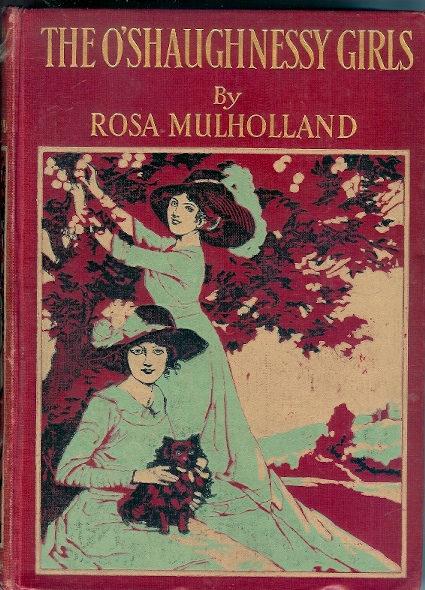
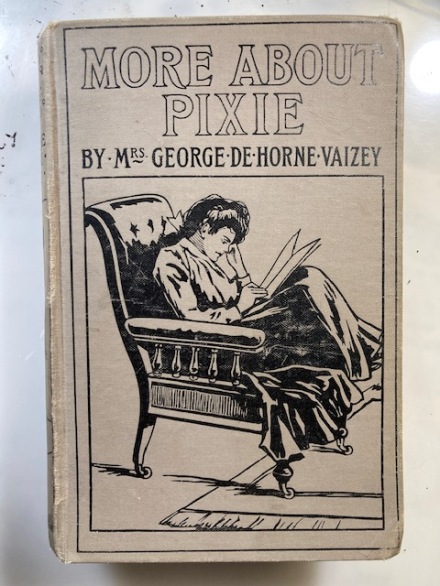
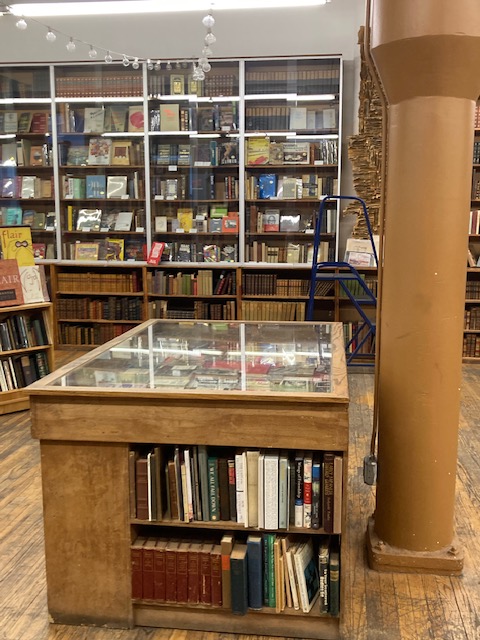
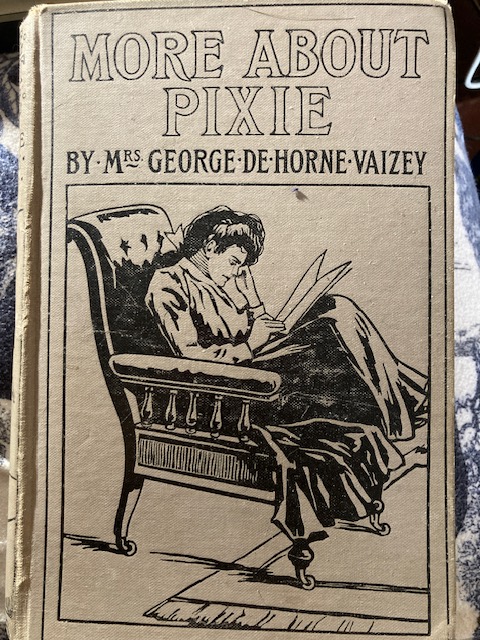
You might remember that my birthday this year turned into a day of poking around bookstores downtown, including The Strand’s re-opened rare book room. I picked up a copy of More About Pixie, the second volume in a three novel series by Mrs. George de Horne Vaizey (Mrs. GdeHV for my purposes going forward)

I was able to find the first volume of the books about Pixie online, Pixie O’Shaughnessy, with relative ease on my old friend Project Gutenberg. (All three volumes mentioned here are available on this free online resource as well as some others, although beyond these books only about half of her publications seem to be readily available. Many volumes of her work are also available at the Internet Archive.) I have largely been able to download illustrated versions of the books which I urge you to try to do as some of the illustrations are very good. (Oddly I can’t seem to open and share them here and show what I was able to find otherwise. I will add that the blog site isn’t actually allowing me to add images today so I apologize for the largely un-illustrated post!)

This first volume is a wonderful depiction of life in Ireland in the waning days of the 19th century. Written in 1902 it is a bit earlier than the copious volumes of my earlier reading I mention above. The impoverished, motherless (a recent loss) family resides in a dilapidated castle which becomes a sort of
character in the book, as does the backdrop of the small Irish town they reside in.

Pixie is a young child still at the start of this book – she is not a physically attractive youngster (this is an oddly defining characteristic that stays with her; her looks do not improve with age), however she has such an outspoken and winning personality that she always everyone’s favorite. To make up for her physical limitations as a beauty, she has two lavishly beautiful sisters (Mrs. GdeHV is a little obsessed with her heroines having gray eyes, they all do), Bridgie and Esmerelda, and attractive brothers in the bargain.
The funds are scraped together to send Pixie off to a private school in London and her adventures there make up the second half or so of the volume. (Esmerelda is hot tempered and so extravagantly stunning that she is somewhat done away with at the close of volume one.)

Written a year later, volume two, the one I picked up at The Strand More About Pixie, takes an interesting turn. It is in fact not so much more about Pixie, as the story is actually told by a young woman neighbor, a
recovering invalid, who lives on the street in London where the family decamps to at the start of this volume. Her encounters with the O’Shaughnessy family include Pixie, but in reality it focuses more on her friendship with one of the older sisters, Bridgie, who plays mother to the clan. Pixie does reassert
herself in the latter part of this volume, but it is Bridgie and the neighbor girl, Sylvia, and their friendship that is at the heart of the book.

Much of the book concerns the slow recovery of Sylvia (an illness which is given no name but has even affected her bones as they gravely consider needing to amputate her foot) who is another motherless child (life of mother’s was evidently cheap), living with an aunt while her father is away in India. (Mrs.
GdeHV likes to send men to India and bring them back after many years. To date I have barely been in India with her books, but wouldn’t be surprised if we end up there one of these days.)

It isn’t until 1914 that the final volume of the three is published, The Love Affairs of Pixie. Our prolific author has penned at least 17 volumes between these so it is a more mature writer who writes this novel. It interests me that she decided to turn her hand back to a now fully adult Pixie who returns as the heroine and focus of this story. Much of this story brings Pixie and the reader back to Esmerelda and Ireland, although the Ireland of this book is less lovingly described. Pixie remains unattractive on the face of things and in fact the book opens with her own discovery of this and is a theme throughout, but the pluckiness and good heartedness of Pixie has her as a sought after mate who (spoiler alert) finds her mate at the close of this volume.

Mrs. GdeHV clearly liked to assign herself challenges to keep things interesting. These are not formulaic series books (not that there’s anything wrong with those!), but instead you can see her making choices and setting up approaches to keep things different and interesting. I’ll cover more of her biography tomorrow, a sort of sad tale despite being a very prolific writer. She must have been popular in her time, but sadly volumes appear to be hard to find and I know she wrote short stories but none of those have turned up yet. However, I have only just begun my research so undoubtedly more to come.


Rolling Along

Pam’s Pictorama Toy Post: Today may mark the end of the birthday post fiesta – I have dinner with my friend Eileen Monday night and that technically marks the ends the annual month of shared birthday festivities with my Aquarian brethren. There was a time when there were several other members of the fold, but sadly folks have moved or are gone now so the February birthday dinners are less numerous. (Incidentally, for anyone just in this post for the toy, skip down to the bottom! Books and birthday at the top.)

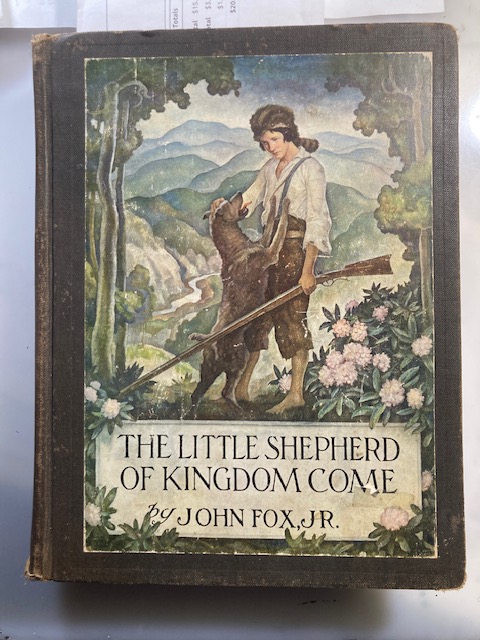
In addition to the February birthdays, there’s always a nice day spent with Kim roaming somewhere in the city. This year we ended up spending most of the day book shopping. We made a quick visit to Alabaster Books (on the ever mysterious 4th Avenue which exists as a stretch of street in that part of town around 13th Street) where we were intrigued, but the prices on the early juveniles volumes that appealed were too high for our blood, although I admit titles stayed with us and Kim later found another copy of The Little Shepherd of Kingdom Come by John Fox, Jr. illustrated by N.C. Wyeth, shown below.

Discovered at Alabaster Books in the East Village,but purchased elsewhere.

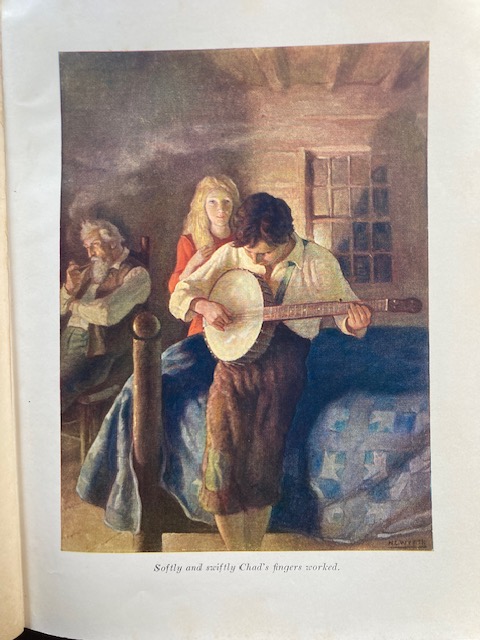
I have only had a backseat to Kim’s subsequent reading of it which seemed to veer from thinking it was amazing to a distinct sense of it falling off a bit. I will mention that he was particularly impressed with the illustration below and the song (Sourwood Mountain which can be heard on Youtube here) that it illustrates.

One of the N.C. Wyeth illustrations in the above volume. Link to the song being played above.

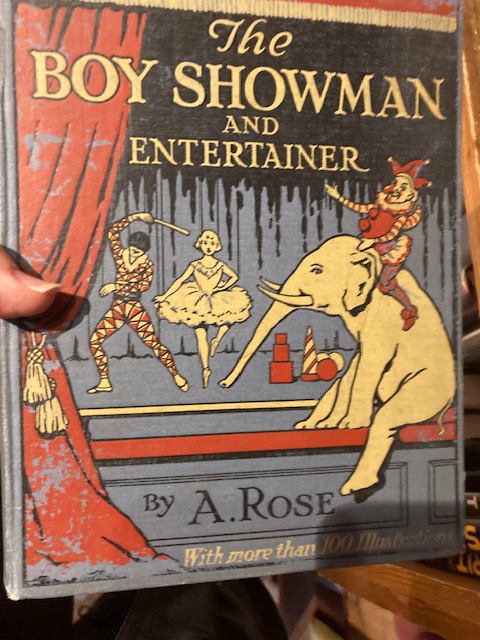
I, on the other hand, was tempted by The Boy Showman and Entertainer which essentially gives instruction on how to put on a show. These instructions were meant for someone much more handy than me (think of a kid who eventually grows up to work for NASA), but fascinate me nonetheless. I have another book of this type, How to Put on a Circus which I am very fond of and have written about here. Maybe I will go back for it.

Another almost purchase. Maybe eventually.

Sad that we did not feel inclined and able to support this bookstore on this particular day (they used to have the very most charming calico cat I liked to visit) we moved around the corner to The Strand. Much to our surprise and delight The Strand has re-opened their Rare Book Room upstairs. We scored a few interesting ratty volumes on the first floor before making our way up.

The Rare Book Room – welcome back old friend!

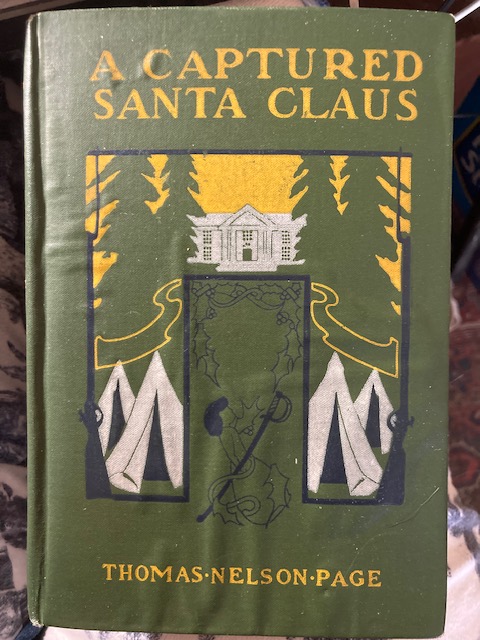
However among the purchases on the first floor was this interesting illustrated volume, A Captured Santa Claus which is a children’s chapter book, evidently about the Civil War. It is by Thomas Nelson Page and illustrated by someone named W. L. Jacobs. Perhaps more to come when I read this volume.

Purchsed downstairs at The Strand, merely old but not rare?

We were pleased to find some additional volumes in the old but not quite rarified enough to be truly rare. My significant purchase was the second volume in a series of three about Pixie O’Shaughnessy by Mrs. George de Horne Vaizey, aka More About Pixie. I was able to download volume one, simply Pixie O’Shaughnessy, and read it first. (Project Gutenberg and an illustrated version can be found here.) As Pictorama readers may know, I have a real soft spot for a certain kind of early 20th Century series book and this fits the bill gloriously. I think I owe Pixie and Mrs. de Horne Vaizey their own future post, but it all started here.

I’m already into this volume and I am a fan.

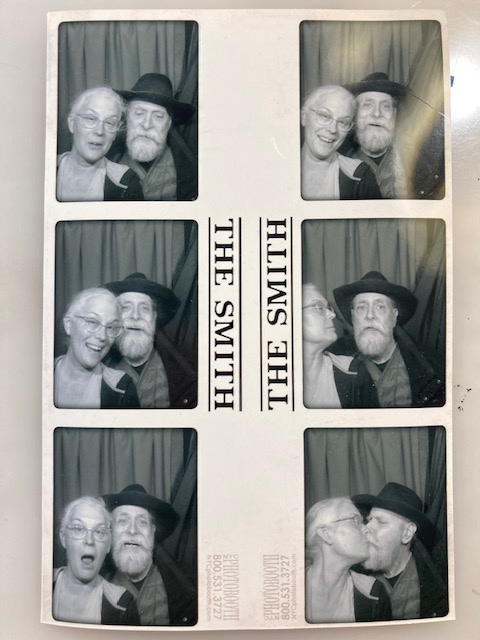
After a trip to the art supply store where Kim bought a new light board – a festive purchase; Kim loves this piece of equipment in his arsenal. Kim and I wandered over to The Smith where Kim treated me to a lovely lunch. I discovered a photobooth in the basement and we took the pics below – first photo strip in a long time.

The Smith in the East Village – a nice lunch and photobooth in the basement!

Meanwhile, I have buried the lead and toy folks are wondering when the heck I was going to get to this wonderful cat toy! I have lusted ongoing over toys on wheels and someday I will have (at least one) wonderful wheeled toy large enough for a small child to ride. There are wonderful elephant ones and many bears. We shall see about that!

Commemorative photostrip pics.

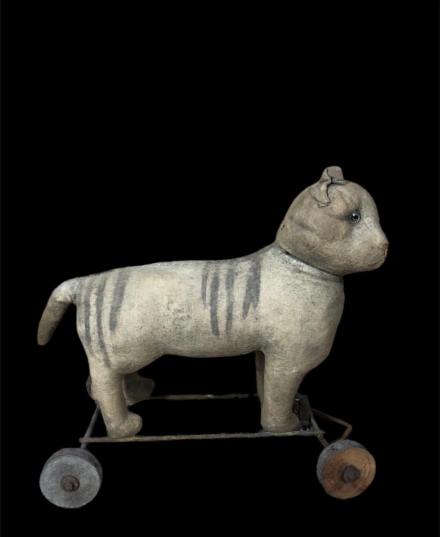
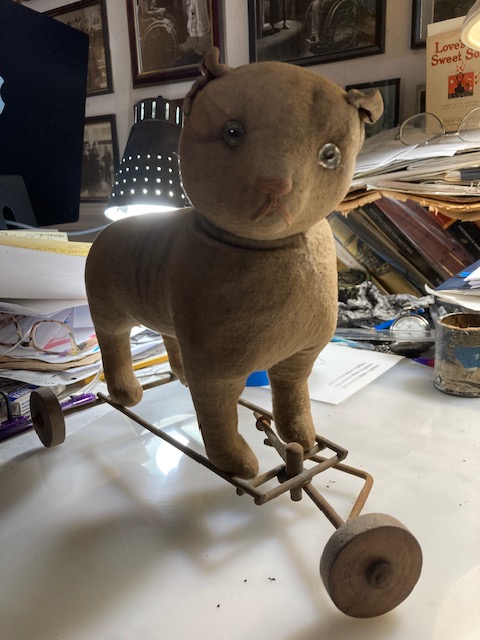
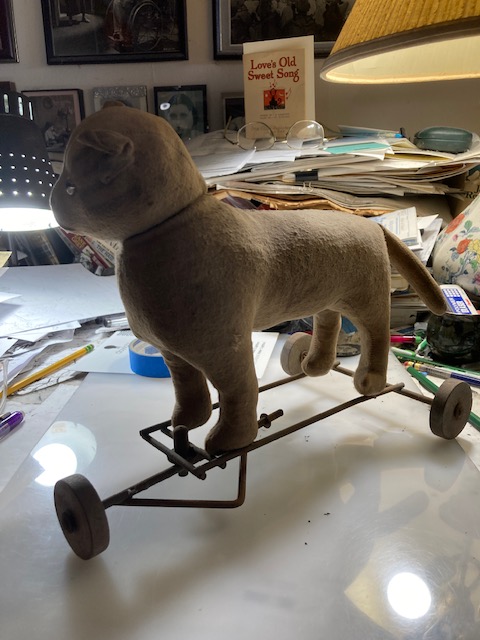
Anyway, this is a very early cat and he came to me via Brussels. I purchased him via an online sale on Facebook and Kim bought him for my birthday. He is the first wheeled fellow of this sort in my collection. He is missing one of his four wheels otherwise he is remarkably intact. The wheels are nicely made bits of wood with good hardware so I doubt that I can make or find much of a substitute, but luckily he will spend his days quietly.

A glorious and sturdy device he sits upon, ready to take turns as needed.

If you look at the front wheels you see that there is a nice bit where you could attach a lead of some sort to pull him around and the ability to turn the front and direct him that way. His ears are a bit less pert than they probably were in the day, but fully intact, as is his tail. He has a few tiger-y stripes and his stitched mouth and news were likely very red originally. He’s a solid citizen and is heavier and perhaps a tad larger than you might think he is.

Rear view with his tail shown.

There is evidence that at one time he had a bow around his neck which may have been red or pink, just a few faded orange threads. There’s something about his neck which made me wonder if his head moved at one time, but if so no longer.

Not surprisingly for a toy of this type there is no marking so I do not know if he was native to Brussels (a place which does oddly seem to cough up antique toys – one prior post to something I bought from a very sweet dealer there can be found here, Brussels may turn out to be an El Dorado of antique toys) or an import. I am looking at him and have decided he has a very sweet face. A beloved toy, probably from the earliest part of the 20th century which has made his way to me. My birthday may make me feel old, but I am a youngster compared to this fine fellow.

The Antique Cat

Pam’s Pictorama Post: I always like to look at old children’s books and juvenile fiction given the opportunity. Pictorama readers know that I enjoy early chapter books that would be called young adult fiction today. (There are the posts devoted to girl detective Judy Bolton, Honey Bunch and of course several devoted to The Camp Fire Girls, Red Cross and Ranch Girls. A smattering of those can be found here, here and here or search the site for books.) And I have written about some of my childhood favorites, including one illustrated by the great Garth Williams called Push Kitty (post here) which reminds me a bit of this volume. Still, it is rare that a true children’s book that I had no prior knowledge of zooms into a place in my heart as this one has. It is great for kids but a winner for the cat lovers too.

The illustrated cover which my copy does not have.

I stumbled across this title while searching for information on another one on Goodreads. The description was appealing and on a whim I purchased a (much) used library copy, sans cover and with a heavily taped spine, (stamped throughout as from the School of the Japanese Martyrs, Leavenworth, Minnesota!) for a nominal amount. With an unexpected trip to my mom in New Jersey and other pressing life matters I didn’t have a chance to read it until last night and it is a gem! I can only say I am sorry I didn’t know it when I was a kid, it would have been a favorite in rotation and my parents would have loved it too.

Solomon in the store window at night entertaining passersby.

The story is a simple one – a skinny stray (all black) cat is taken in by the owner of an antiques shop. It is told from the cat’s point of view and he has some simple adventures – most involve his love of eating fish – and all ends well with him installed as the beloved master and mascot of the establishment. An antique store makes for an interesting setting for cat adventures – while fear of breaking fragile items is mentioned, claw paws and scratching are not. However his nemesis ultimately is an antique doll who receives too much of his mistress’s attention and affection. Fortunately his human loves him above all else and forgives some minor feline transgressions.

Undeniably great cat poses!

The all black protagonist of our story, Solomon (we are not told how he acquired his moniker), looks like my own Blackie and the early drawings of him as a street cat sadly corresponding to our boy recovering (shaved and thin) from his recent stint of illness. (No mention of black cats and bad luck are mentioned and Bradbury gets points for me with this.) Solomon progresses to shining glory although I guess some of his battle scars around the ears and whatnot remain as badges of feline honor.

I easily could have found this book as a child. The copyright in this edition, the first, is 1945. It was published by The John Winston Company of Philadelphia and Toronto and the copyright notes that it was also copyrighted in Great Britain (Dominions and Possessions as well) and in the Philippines. It was written by Bianca Bradbury with drawings credited to Diana Thorne and Connie Moran.

Front papers.

Bradbury was born in New Milford, Connecticut in 1908. A brief online bio outlines that as a young wife she published verse and short pieces in magazines and eventually, after her sons were born her worked morphed into children’s books and ultimately into young adult chapter books. She evidently wrote realistically about the issues of the day for kids in those later books, not balking at difficult subjects. This book and that bio intrigues me enough to look into some of her other books. (One Kitten Too Many may be where I start, but I will look for the longer ones as e-publications perhaps.) She was prolific and wrote 46 books in her 40 year career.

Solomon thinking back on his stray cat compatriots!

Meanwhile, Diana Thorne gets top illustrator billing here and she deserves it. Her cat illustrations are perfect. It seems she is best known for her illustrations of dogs (these seem to be well known and collected), but she certainly lived amongst cats as the poses are spot on for us cat lovers. Her illustrations are pitch perfect and absolutely put the story over. While her illustrations and drawings are widely available on the internet, there is little biographical information about her. It seems, oddly, that she was either born in Odessa, Ukraine, or as she was later to claim, on a ranch in Winnipeg, Manitoba, in 1895 (d. 1965) – her love and knowledge of animals would argue some time on a ranch I think. Her work is collected in numerous museums in the United States and Great Britain including the Smithsonian.

Something “fishy” about this doll…

The other illustrator credited, Connie Moran, seems to have teamed up with Thorne on a number of similar illustrated children’s books. I can only assume that Thorne was only interested in the animals and left the humans (and in this case some antique furniture) to Moran. She is from Chicago, born in 1898 and dies in 1964 so she and Thorne are contemporaries. Her illustrations are, for me, more commonplace and would be forgettable without the Thorne cats among them.

Solomon loves his dish of fish.

The Antique Cat is much shorter than May Sarton’s The Fur Person, (you can find that post here), but reminds me of it in tone and the way it is told from the cat’s perspective. It is a very worthy entry into cat related literature and certainly deserves a place in the Pam’s Pictorama library.

Blackie this morning. Hopefully on the road to recovery.

A (Felix) Cat Book

Pam’s Pictorama Post: I’ve actually been in possession of this slim volume for a few years since purchasing it on eBay. I think it went to the shelf and somehow never made its Pictorama debut. But I was emailing about all things Felix with a fellow Felix-o-file and dug it out to show him. I have not seen it around much, but some digging shows that you can currently acquire a copy if you are willing to pay up. My copy is inscribed twice. The first is in a childish pencil scrawl which, oddly, reads, Elizabeth Butler, 1021 Craggmont. The other, in a neat pen, To Martha, from Mabel Crowe. Neither is dated.

Titlepage, Pams-Pictorama.com collection.

It is a somewhat odd book. To start with, across the front it announces that it was Published by Harper & Brothers – Established 1817. A quick check and Harper & Brothers, which started life as J. & J. Harper publishing in 1817 (brother Jay and John at the helm) until more brothers from the clan joined and the name changed in 1833 to recognize them. Then it changed again in 1962 and became Harper & Row, before later finding its 21st century moniker, Harper Collins. However, while new printing methods made them a leading publisher of books and textbooks, the influence of the famed Harper’s Magazine could evidently be felt through their publishing empire and its influence is felt in this volume.

Felix himself travels under an American passport and Harpers a US publisher, however the author is British essayist, E. V. Lucas, giving this something of the feel of a British product like one of their comics annuals. While this Felix volume was published in 1927 there is an earlier, 1902, version which has different and more traditional cat illustrations by someone named H. Officer Smith and in fact published in Britain. The illustrations have a whiff of Louis Wain to them.

The earlier version of the book with illustrations by H. Officer Smith. Not in Pictorama collection.

Lucas was a lifelong Punch author whose prodigious output of essays, commentary, verse, plays and was legendary in his day. His biography is sprinkled with references to hobnobbing with friends Barrie, A.A. Milne, Arthur Conan Doyle and the likes of his day, playing cricket and billiards. He has written the copy in simple verse with a sly eye to the beloved tricks, maneuvering and manipulation of cats.

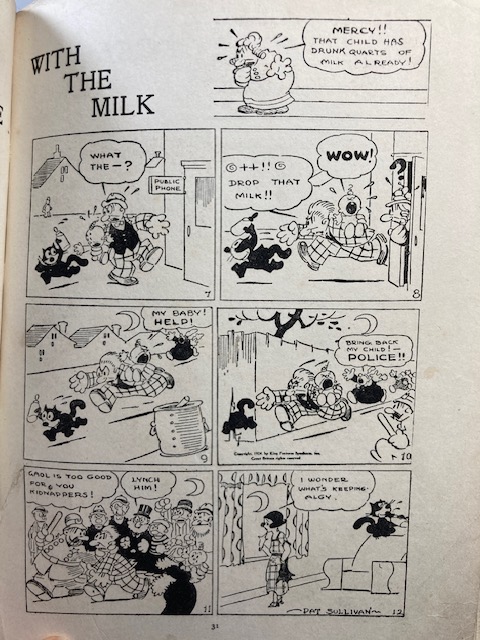
Our volume (ostensibly illustrated by Pat Sullivan who signed each illustration, however we’ll assume it is of course Otto Messmer ready at the dip pen) is a slim one at about 30 pages, writing on each left side and illustration on the right. Felix takes on the role of a sort of every cat persona rather than doing a star turn as his famous film self here – although he seems to have some of the Felix wiliness and trouble-making charm as played out in the pictures.

The drawings show Felix in fine fetter and I can only imagine that for a pro like Messmer it didn’t take him long. However his skill shows in making every line count for maximum entertainment and raises it to the level of a Pictorama worthy Felix investment.

Ed. Note: After this was posted @judd_kid and @tomatitojose sent word that they think it was drawn by Dana Parker who drew many of the Felix theater posters and advertising art! Fact for the day!