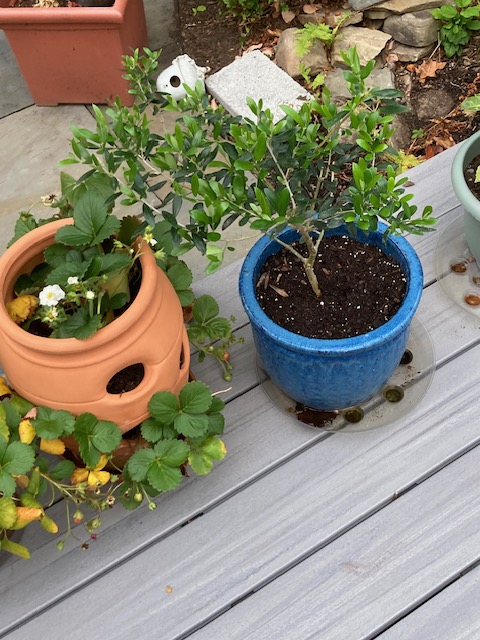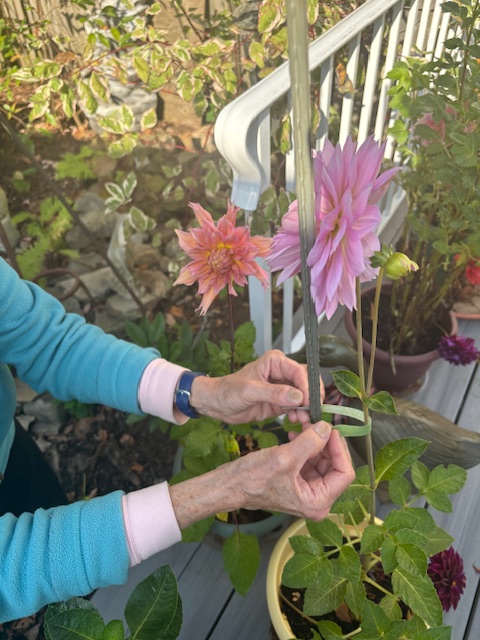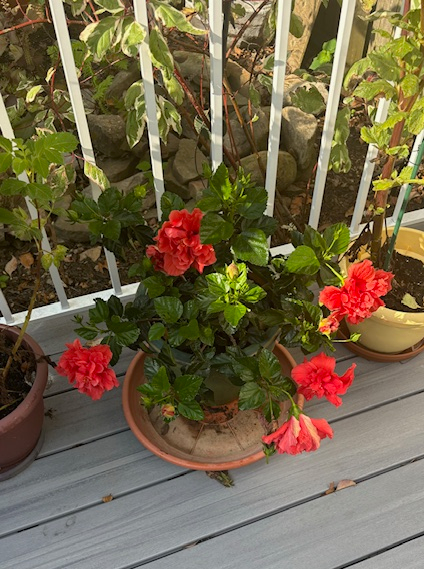
Lights

Pam’s Pictorama Post: Today’s is perhaps a odd post. Although Pictorama readers know of my passion for all things vintage cat, there are numerous other well worn paths of buying and collecting here at Deitch Studio. Sometimes these wax and wain, but many have long legs. There are the clothing equivalents, black cotton t-shirts and undershirts to wear under jackets, sweaters and sometimes even dresses. Then there are running socks which despite my best efforts lose their mates over time so it always seems like a good idea to buy more or resign myself to being mismatched.

Tin box that holds my collection of cards (get well, sympathy and birthday) here at home.

Among my more interesting ongoing buying interests are boxes. It is as if by supplying myself with enough boxes some day I will actually be organized. (An extremely popular post about the antique tin box that helped organized my home office during the pandemic can be found here.) The boxes, in all sizes, continue to come, but the organization a bit less so.

Just yesterday I wrote about a sardine box I will use for odds and ends (I think I have decided it is heading for the bathroom in New Jersey for hair ties and whatnot which the cats steal otherwise) and today I sit surrounded by a group buy of early jewelry boxes that just came from Britain.

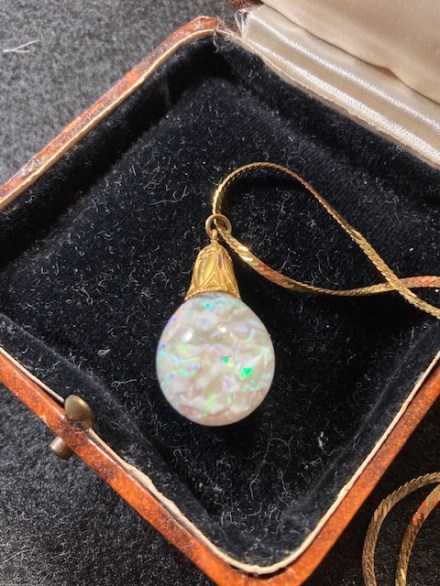
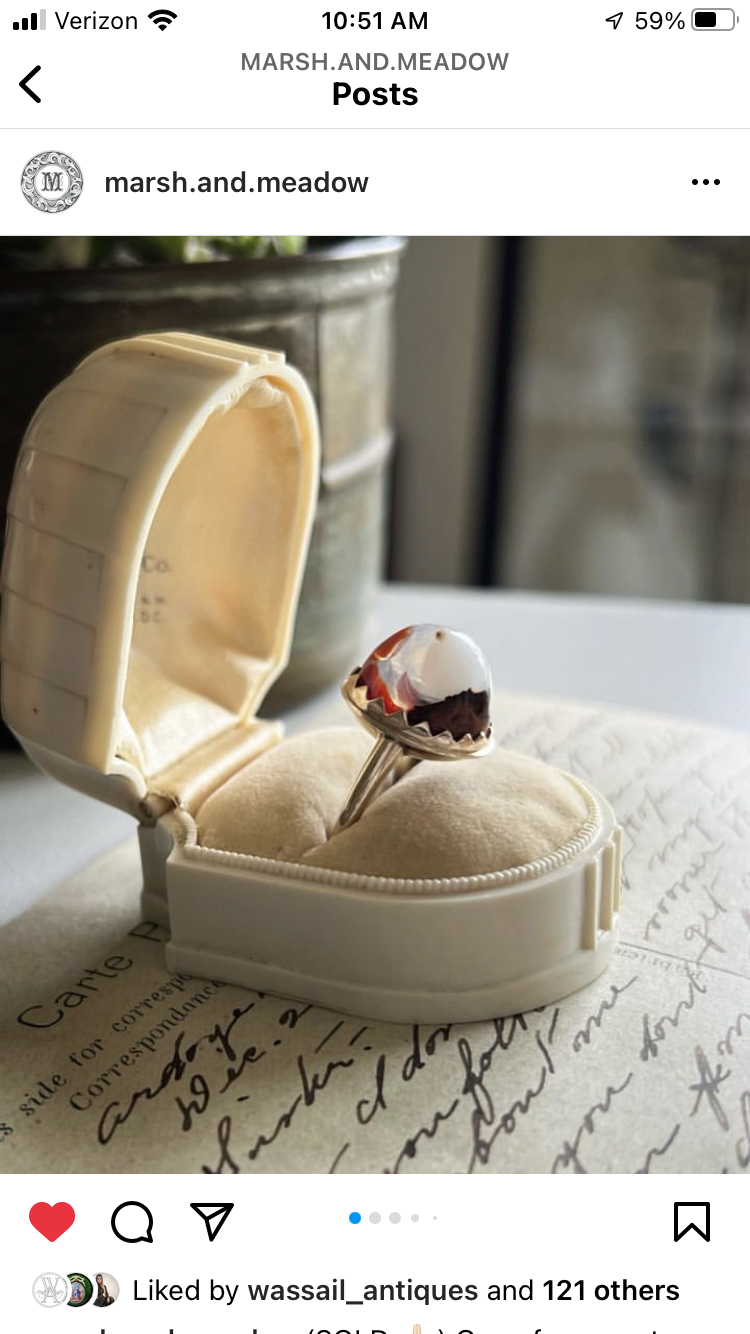
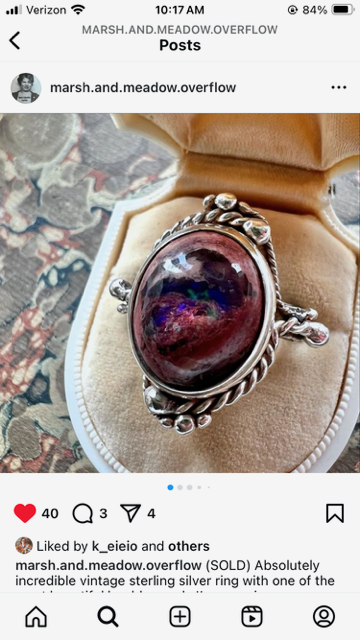
A ring that was a gift and is in its original box.

I think the largest of these will also go to New Jersey to store a few things there, away from prying cat paws which twitch to grab and play with them while I sleep. I may share one with a friend as well. Ring boxes are a great luxury but do require that I remember which one lives where so there isn’t a scramble in the morning – nor do I want to forget about anyone and have them go unworn. Most if not all are lined with old, worn velvet and many bear an inscription from a jeweler of another time and place. (Of course it is always very special to find an antique bit of jewelry in its original box, that which it has lived in from its very beginning.)

Popeye lamp acquisition which now resides in New Jersey.

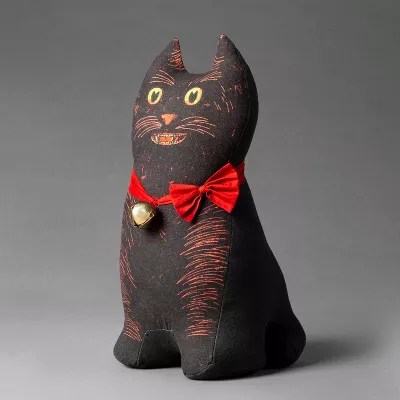
Another purchase itch which is a bit more unusual is lamps. I seem to exist in a world with little or poor overhead lighting and as a result for both homes and office it seems an ongoing need. I have written about some of those acquisitions here and here. I will confess though that I have my eye on two more – a rather comical dog lamp which I have bid on in an auction and another attractive desk lamp.

Dog lamp under consideration.

At the office right now I have a lamp made of antique dice which has followed me since I purchased it for my return to the Met back in 2001. However, the light in my current office is dreadful even and I am considering another desk lamp. What I really need is a standing lamp, but those are especially hard to source and given the ceiling leaks I would have to be very judicious about where I located it.

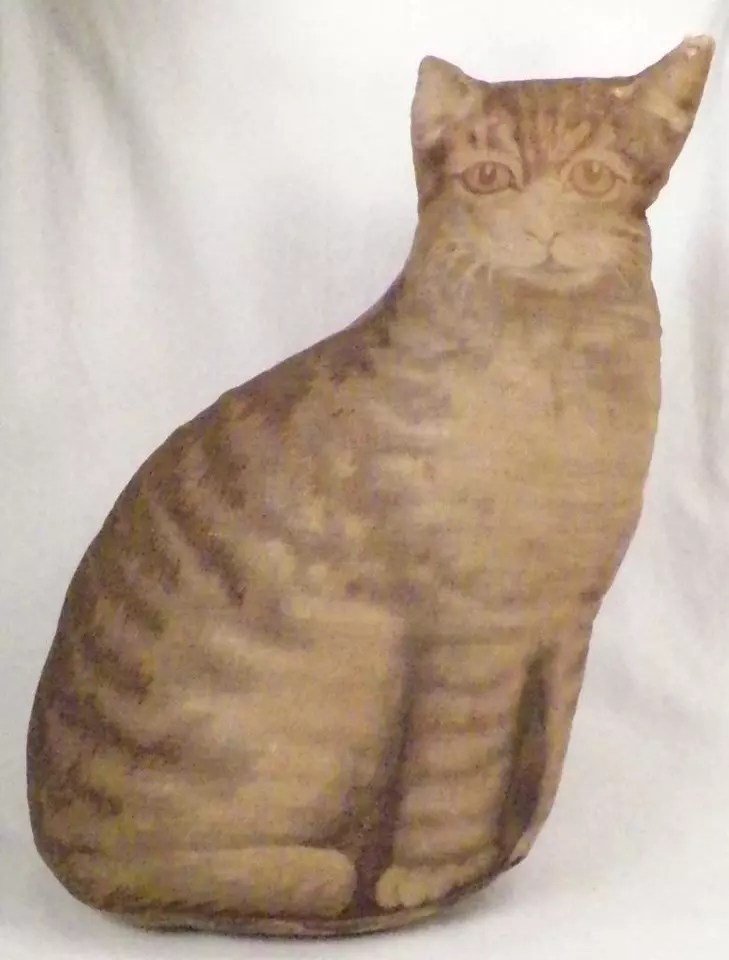
This lamp below crossed my path on eBay and I am tempted although I would say this is more a NJ lamp than an office one. I think it would be a lovely light either on a desk or even on a bedside table. Thoughts?

A maybe purchase on eBay.

Part of me understands that there will be a point at which I have enough lamps, but I don’t quite seem to be there yet.

On an even more practical side of things there are bowls. If I was in New Jersey I could share a large number of bowls purchased for that house which seems oddly bereft of them. Soup bowls and serving bowls. For that kitchen they are all new. Here in New York I try to fill in with vintage ones that match my blue and white ware china (the Blue Plate Special dishes inherited from my grandmother and a post on those can be found here) such as these which were purchased on a day in Cold Spring, New York last fall.

One of two blue and white bowls from a buy in Cold Spring.

So for now, these “practical” collections seem to amass until one day I am tripping over too many of whichever. Stay tuned for updates on those pending above however as that time has not come yet.

Packed Like Sardines

Pam’s Pictorama Post: This unusual item crossed my path while strolling through the online shop for Ghost Era Antiques (@ghost_era or ghostera.com) recently. There was something compelling about it, but it wasn’t until it nagged at my brain for several days that I went back and purchased it. Before doing so, I did a quick bit of research and was surprised to find that sardine boxes were indeed a Victorian thing and that once you start to look there are many in a variety of sizes and with many levels of decoration, ranging from plainer than this one to ones of majolica greatness.

Majolica beauty, not in my collection.

As one site states, the Victorians couldn’t resist a specific dish for a special food and back in that day sardines fell into that category. There is something wholly satisfying and pleasing about this plump fellow acting as the handle on this be-flowered container. I would have thought it a tad small for sardines, but I guess not because all the sardine boxes I have viewed online seem to fall into this range. (Perhaps I am thinking of those rather extra large Italian ones?) I can’t help but wonder if there was a sardine fork or device for removing them for consumption.

I imagine that in its day the gold was a bit brighter and less worn which would have given it more sparkle. It has a few well hidden, fine cracks in it and I don’t know that it would be entirely leak proof if challenged.

Peering inside! Pams-Pictorama.com Collection.

While I am generally a contented consumer of fish and sea beasts, sardines and anchovies have long left me cold – too salty and oily. (Having said that I do religiously keep anchovy paste in the pantry which does a nice job of enriching soups and stews without having to contend with consuming the entire fish. I highly recommend this particular cooking hack.)

Sardines consumed as a delicacy seem to come on the scene in the late 15th century, kept in brine. Canning came along in the 19th century and one site says that canned sardines were served as an elegant and exotic course for fine dining as late as the 1860’s. (This same site assures me that yes, special tongs and forks were a part of the show.) And those tins were still laboriously made by hand. However, by the early 1900’s their veneer of exoticism fades and they become fare for the working class blue plate special. How far in prestige they did fall!

The traditional can.

Turns out that there are a myriad of fish covered under the canned rubric of sardine including, but clearly not limited to pilchards, silds or sprats, and at one time even herring, although I guess someone put an end to that with some truth in advertising. At first we in the US seemed to get them largely from France (they had the good sense to fry them before canning), although those herring were being canned in Maine where these canned treats became a major boom, and of course ultimately bust business. The East coast sardine biz was referred to as Sardineland and the West coast had the more familiar sounding, Cannery Row. The fish themselves ultimately largely disappeared from these locales as I gather is also their pattern.

Another majolica one to lust after!

Evidently sardines tucked away in olive oil are also aged by some, like fine wine, in cool cellars, largely in Europe. 10, 15 and even 30 years marinating is mentioned. I am not sure this increases their potential appeal in my estimation.

My box will likely reside either in my office or in New Jersey to serve as a pin box of sorts for odds and ends. I must say, I wouldn’t hesitate to invest in one of these other beauties, should ones like them ever cross my path – perhaps a whole new avenue of collecting here at Pictorama.

Uncle Zack

Pam’s Pictorama Photo Post: As I start writing this post I am in New Jersey on Saturday evening with Beauregard, the huge all black cat, who is the master of this NJ Butler house. It is the end of several sunny days of stay here and I will head home tomorrow – potentially completing this on the train if I cannot before.

This photo postcard came to me via eBay and is an odd choice for me. This little girl with her chicken on a leash charmed me. Small children with pet chickens seems to be popular on the internet these days so poultry pets remain popular. Working for a veterinary hospital with an active Exotics service, we see a fair number of chickens. (Presumably chickens that are for eating go to a different sort of vet than us although obviously we’d care for one in need if presented!)

The little girl is nicely dressed in trousers and boots with a somewhat sporty coat with a design of the buttons across her shoulder and chest. She looks quite happy as does the (large) chicken on a string leash. There’s one or two other chickens, behind a fence in the distance who look on and the soil looks dusty. The nearest vegetation we can see are trees way off in the distance and the sun is casting long shadows. Given her attire, it was chilly.

This card was never sent and looks like it was quite beloved, handled. It is undated, but on the back in a child’s neatest script it says uncle zack.

Many years ago I remember my mother had a video of a woman she knew slightly about her and her pet chicken. I don’t remember the chicken’s name, but it lived in the house, primarily in a sort of all season room at the front of the house. A cared for pet chicken might live to be ten or twelve years old according to the internet, I actually thought it was older. The chicken in the video went everywhere with this woman – today it might have been considered a comfort animal.

Recently in a talk given to staff to celebrate diversity, one of the vet’s pointed out that some clients feel that people belittle their choice of an usual animal and express surprise that they would pay so much for the care of a fish, tiny turtle or perhaps chicken or duck. (I also heard about surgery on a goldfish recently which fascinated me! The surgeon was evidently personally quite fond of goldfish and frustrated by a common cause of death in them he was able to improve but not resolve the fish-y issue.) However, as animal lovers our heart knows no such boundaries and be it pigeon or porcupine we are committed to them and find great happiness with critters in all species, shapes and sizes.

Growing

Pam’s Pictorama Post: Garden and running update today. I hit the long pause on running after a bad spell with my arthritis which in turn precipitated some emergency oral surgery. Pain and winter weather side tracked me for several months, complicated further by starting a new job which required a new morning routine.

From a run earlier this week in NYC.

I realized I was hitting month five and I sat down and had a talk with myself. Through dedicated dieting I had lost some of the extra weight which was also impacting my earlier attempts to running so it was worth trying again.

Finally I decided that the benefits of running outweighed the issues. It will be a long slog back to even as fast (slow but less slow) as I was before and three miles is my limit for now. My trainer was taking two weeks to do a race in Hawaii and between that and a holiday weekend which would let me onramp a little more easily I decided there was nothing to do but commit to it.

Running clothes and bits needed to be assembled. I took a familiar route in the city and committed to just do the most I felt good about. After trying several different choices on my playlist I settled on Beethoven for that first run. Routine was my friend and memory muscle kicked in for 2.8 miles.

Garden clogs were a gift! Loving them.

There’s something about running which unknots something deep in my brain while loosening the muscles in my lower back. Somehow getting back into that routine even makes me feel more settled at the new job, as if I have found the old Pam again.

Sunset over Bahr’s Landing restaurant. A beloved local establishment.

For all of that which is good, after five consecutive days running, however much slower and more abbreviated these runs are, my thighs are screaming. Whatever theory I have about the three mile walk to and from work daily and the multiple flights of stairs I climb there being the same as running is just wrong. I would not hurt this much otherwise!

Roses in the garden in NJ.

Meanwhile, warm weather also brings the call of New Jersey and I had to head down here to meet some workmen early Thursday morning. I got into some early planting on my last visit, discovering what had wintered over (most of the herbs, the strawberry plant, that post can be read here) and put out some early veggies – lettuce and cucumbers, and I also set some dahlias which were ready to go. I bought a tiny grapevine which is thriving and a raspberry plant which just is not. The cukes didn’t do well, but the lettuce has thrived. I made myself a salad with fresh lettuce from the yard shortly after arrival.

Three cat loaf this morning post-breakfast.

Sadly most of the peonies were past their prime, but enough were left to bring a small bouquet inside. The roses are riotous and at their height. Mom loved roses and always planted them with great success and I get to enjoy them now. The peonies were gifts from me – selfishly I guess because they are one of my favorite flowers. I added a few in the early spring but it will be another year before the transplants flower I am told. (Someone also told me that epsom salts make them flower more – I’ll let you know if I try it!) The luxury of being able to cut flowers in the garden for the house is not at all lost on me.

The enthused fig trees.

The dahlias had already outgrown their containers and a new strawberry plant needed transplanting. A trip to Lowe’s produced tomato plants, a pepper and some replacement cucumbers. This resulted in a frenzy of planting this evening. Tomorrow I will tackle the planters in the front yard and restore the geraniums to the outdoors after a winter in the kitchen window. The potato vine has wandered out of the pots and taken root in the ground – I will have to see about restoring it to its pots of origin.

Transplanted strawberries and dahlias.

Speaking of returning to the outdoors, a tiny fig tree I purchased a Whole Foods last summer shot up inside over the winter and is a gangly six footer now. Despite that it seemed pleased to head outside today. Sadly there was a hibiscus tree and a jasmine plant which did not enjoy the winter inside I am afraid.

So while my muscles are sore what I am doing feels good. Slow but satisfying growth.

Moon Woman

Pam’s Pictorama Photo Post: A Pictorama part two post with this framed postcard. The frame was purchased first and much earlier than the postcard. I picked that up from @marsh.and.meadow.overflow in a sale of odds and ends. It’s a beaut! I knew I would find a use for it and even though I was on something of a money diet at the moment I jumped at putting it in my electronic cart. It has some age on it and sports a decorative faux wood design. The back is very old, probably more fitted to sitting up on a desk or table than hanging on the wall, although I guess we’ve figured that out too.

After it arrived and perhaps even in my mental machinations, I realized that the right postcard in it would make a dandy gift for Kim. Although I spend a lot of time with cat photos obviously, I was looking for something more Deitchian for him.

I felt truly inspired when I ran across a set of these Art Nouveau postcards, once again on Instagram, from a seller I have followed for a while but never purchased from, @ghost_era. Presented as a group in a series but sold individually I zeroed in on this one immediately – although I admit to being tempted to buy several! (A few remain available at their shop at Ghost Era Antiques.) Hard to explain but this photo postcard seemed to be perfection.

Another Reutlinger photo postcard, not in Pams-Pictorama.com Collection.

I’m not sure exactly why I love this photo so much but I really do; the woman, the moon and the radiating light, and then the stars! It epitomizes a certain kind of picture. There is the subtle color, from yellow to blue. I like the way some of the stars have been left bright white though for emphasis. The moon has some mottling (a nod to the man there?) and a deep shadow behind her. The woman is in a sort of nightgown dress – she’s dreaming? We are?

It would appear that this card was produced by the photographer Léopold-Émile Reutlinger (March 17, 1863 – March16, 1937). His uncle founded a Parisian photography studio where his father worked as the photographer. (Léopold’s son Jean became a prominent photographer too although sadly died in WWI.) Both photographed the rich and most importantly famous of the day, but he took the family business to a new height and is the one remembered today. I wonder if this is due to the popularity of photo postcards and I would think in part this Art Nouveau style which he excelled at.

I gave this to Kim last year. And yes! I believe that is the trademark R for Reutlinger at the bottom right!

As I look over his work online I can’ help but wonder if a few of the other postcards in my collection can be attributed to him. I am thinking of a Valentine’s Day gift I gave Kim last year below. (Post can be read here.)

In 1930, Reutlinger suffered an accident with a champagne cork, (weird sort of irony, yes?) which cost him an eye and seriously affected his profession. But he continued to run the studio until his death in Paris in 1937.

Meanwhile, Kim has a good spot on the wall over his desk picked out for it, above a Frank Borzage still from Lucky Star. Some rearranging needs to go on first but I look forward to seeing it there along with a few other Borzage stills we are swapping in for other photos. (A post on those stills can be found here and here.) Maybe a future post on the walls here at Deitch Studio. For now, enjoy the rest of this holiday weekend if you are reading in real time.

Still Life with Nick Carter

Pam’s Pictorama Photo Post: Today’s post is the first of a few highlighting things I gave Kim for his birthday this year, celebrated last week at the time of writing this. Kim doesn’t like a lot of fuss over his birthday, but I try to find something he’s either wanted or failing that, like this year, some original bits. (A past post of a birthday gift can be found here.)

Today’s photo is tiny, only sort of 2.25″x 2.75″ or so. I ran across it on my Instagram feed via @baleighfaucz and it whispered Kim! at me a bit so here we are. In addition to being small (smaller in fact than I anticipated) it has these two deep creases in it. These are of course unfortunate, but they do not rob me of any pleasure in getting a glimpse into a little world of long ago offered up here.

I cannot say I can identify everything in the image. The Nick Carter, Secret Agent Weekly, is from April 20, 1912 and cost 5 cents – seems like a princely sum actually. I think it was this that put me in the mind of Kim as he has passed through a few dime novel stages, although not to say he’s a fan of Nick Carter in particular. According to Wikipedia Detective Nick Carter leapt onto the scene in 1886 (Kim is telling me he and Sherlock Holmes hit the scene at roughly the same time), and had an extraordinary meandering run through more than a century beyond, hitting incarnations in various forms of popular media from dime novels to radio and beyond, with a most recent stop as a series of novels that were produced from 1964-1990.

This tiny image is the only color version I could find on the internet.

A pipe, cigarettes, cigar and a pocket watch are in the foreground although in front of them is some sort of small paper package I can’t identify and in the lower right corner something utterly lost on me. A decorative beer stein is perched on a well used Central Union Cut Plug tobacco tin. One site selling such a tin says they were often used as lunch pails once depleted. This one appears to still host tobacco.

Saw some pricey perfect versions for sale but at the time of writing you could have this one for $20 on eBay.

An odd illustration which is entitled simply Life in script at the top and appears to be of two men at a dinner table with a menu, one in evening cloths and a plumed hat and the other dressed as a woman is at the back. Can’t imagine the importance of it to the photographer although it serves as sort of a title for the image overall.

Looking at a few of these objects in color makes me wonder if he was disappointed with it in black and white. It is a dynamic little photo, but my guess is that the colors were pretty punchy in person.

I love to think of the photographer, maybe a young man back in the spring of 1912, setting up this photo. They were likely a nascent enthusiast as home photography was still just becoming popular. It is sort of sweet to think of a serious young fellow studiously putting this together, (why these particular things? smoking, reading, drinking) showing us a slice of his life that we can consider so many decades later.

Mack

Pam’s Pictorama Post: Truck and car parts are not generally within the usual Pictorama sphere of collectible, but I picked this up in Jersey last summer on one of our antique store junkets in Red Bank.

It has all the heft you would expect from a Mack truck hood ornament – as if it had a function and had to prove its worth. I guess it wouldn’t do for it to have been made skimpy and light of let’s say of aluminum.

Pams-Pictorama.com Collection.

Hood ornaments started out life with a function – not that I entirely understand it, but something to do with the radiator. Turns out that they stopped putting them on cars for two reasons. First, because they were frequently literally ripped off of cars and stolen. Second, they were found to be particularly injurious to passengers in accidents. It would seem they are even quasi-illegal in cars now – although I happen to know someone who has a custom one of a beaver on her car.

Hood ornaments are a significant category of collectible. The Rolls Royce Flying Lady or Spirit of Ecstasy is the zenith of that particular area of collecting. It has a hotsy totsy history which includes intrigue, affairs and sky high prices for the item now. (The story is told best and briefly here.)

One of the variations on the Spirit of Ecstasy hood ornament on a Rolls Royce.

Rolls Royce is the only car that still maintains a hood ornament and theirs has resolved the issue by automating it to tuck into the hood for safety. Trucks seem to enjoy a different status and a variation of this Mack bulldog is still on their trucks.

Painted version of the Le Jeune Felix hood ornament, not in the Pictorama collection, alas! From a Hake’s sale catalogue.

More in line with my interests and budget, there are some wonderful Felix ones that enjoyed great popularity in the hereafter of collectibles. Oddly, I do not own one and I may get around to rectifying that at some point. They need to be mounted however and I am not handy that way. I have written about them a bit in an earlier post found here and this photo is as close as I come to owning one at the time of writing this. My bulldog could also use mounting, but an easier design than Felix, just need to find something to tuck under his front paws.

Mack trucks were founded in Brooklyn in 1900 and was making vehicles for the British army in 1916 where they got their (English) bulldog nickname. The bulldog was first affixed to the side of the vehicle in 1922. The bulldog as hood ornament takes its place about ten years later.

At a glance this appears to be as rare as claimed, a heavy British doorstop of the Mack dog.

About the early design one blog sites: The design was a front view of an English bulldog tearing up a book, and on the book was printed the words “hauling costs.” By 1932, a bored Alfred F. Masury, Mack’s chief engineer, created the ornament. A medical issue had sidelined Masury, leaving him looking for something to do with his hands. The answer: a carved bulldog. That same year, the carved bulldog figure appeared on the front of the Mack AB, a lighter-duty version of the AC. (The entire post can be found here.)

The number tells us what period he is from.

Meanwhile, unlike whatever prohibition there now is for automobiles, Mack trucks continue to boast these dogs and variations on them today. One site claims that the symbol is meant to convey solidness, dependability, but also openness to the future and of course speed.

Perched on a small jewelry box here. Pams-Pictorama.com Collection.

The variation is largely the metal color of each, indicating different things about the vehicle which it is perched on. As I understand it the gold color is for vehicles which are 100% Mack parts and the chrome for lesser ones if you will. A recent addition appears to be a copper for electric vehicles. A bit of research shows that mine is a later dog, the numbers on his chest mean he was produced after 1986. I think his separate legs mean he was indeed a real hood ornament and not a decorative reproduction. He bears a studded collar with his name Mack and he stands ever ready for action.

There is something endearing about his chunky self, leaning forward on the prow of a truck, streamlined and somehow windblown he well exemplifies a bulldog, straining and pulling forward, a collar but no leash on this fellow.

Reading: de Horne Vaizey Cont.

Pam’s Pictorama Post: I continue to work my way through the available books by Mrs. George (nee Jessie Mansergh) de Horne Vaizey, as chronicled in early parts here and here. I have had a tough time reading with a consistent timeline so I have hopped a bit through her ten year, prolific career and have been spending a lot of time around 1908 and 1909 recently, with a few jumps to near the end of her life in 1917.

There is not a lot of deep biographical information readily available and I sketched out most of it in my second post about her. She had a good for nothing drug addicted husband who had the good grace to die and she starts publishing shortly after. What I didn’t know until recently was that her young daughter, Gwenyth, took one of her stories from a drawer and sent it to a magazine contest without telling her mother. Jessie won and the prize was a cruise where she met George de Horne Vaizey and they marry and meanwhile her career was launched.

From A Houseful of Girls, 1902.

So the question of what was really lighting a fire under her about writing is an open one – she must have enjoyed it, but was it a financial need? I always thought she wrote for a longer time before remarrying and needed to support her family. Nonetheless, write she does with tremendous output. Wikipedia counts 31 books in the span of her brief career (another site says 33) and I think we have to assume there were magazine stories published as well. (There appears to be a collection of them published either right before or after her death.)

Her books are not especially brief. I would say they average around 300 pages. Reading them electronically it is a bit hard to tell. Sometimes two or even three were published in a given year.

I have been thinking about her heroines as I read and as they grow in interest with her increased skill as a writer. They stop being simply likable (beautiful and loveable – gray eyes, long lashes) fairly early on and start to become more complicated. In Flaming June (note that the painting above is of the same name and was well known at the time – was she making reference to it? Frederic Leighton, 1895 – I say yes!) she has an American main character with a Western accent which, while effective, gets a bit tedious to read after awhile. (She also had a character with a lisp in one volume that started to drive me nuts. It seems to be a fashion for writers of the time to show all the accents they could write with.)

Also from A House Full of Girls.

However, over time her women grow into complex characters who are sometimes more interesting than likeable. For example, the woman in Flaming June is hot tempered and extremely independent. Much of the plot, and what happens to her both good and bad, centers on this quality as well as her stubbornness. It makes the story tick and, without being a spoiler I will say, gives it a somewhat quixotic ending.

In addition to greater character development her plots become more interesting and she leaves off the basic sort of worn tropes about school days and money acquired, lost and acquired again which were the bread and butter of her early writing and certainly for women authors of the day. A young woman of middling income decides to take a basement flat in the city and dress as a much older woman so that she will be free to help people in a way that an attractive young woman could not. (The eponymous volume is The Lady of the Basement Flat, 1917.) The story is worked however so that she also has a life at a country house where she is herself – of course the two weave together at some point. However, what a concept!

From Etheldreda the Ready, which I am currently reading, 1910. Definitely not one of her more likeable heroines! Etheldreda is utterly self-oriented and conceited, thus far anyway!

In What a Man Wills she takes a sort of well trod narrative path with a wealthy, ill, elderly man who invites four nieces and nephews for a long visit to decide who will be his heir. While, again without being a spoiler, I would say she doesn’t manage an entirely new take on it, she does well with expanding it and again, not afraid to make one of her main characters flawed.

Her women, even her heroines, can fall victim to vanity and greed, if not quite all the way to ambition. (She does poke fun at women authors occasionally with a sort of self-deprecation.) They are often a bit forward for the time and space they live in – especially those who reside in or come to find themselves in small rural towns. Financial ruin comes to people and families on a routine basis, but with a sort of detail that makes you think that for those who lived on investment income they way many people did at the time, that this was a very real event.

Her characters opine on the limited options for women – that they are not trained for anything to prepare them for life or possible ways to make a living. Therefore their fortunes hang largely on their ability to marry well – or remain dependent on a male relative or someone else to settle money on them. In the end this depends on how attractive they are and can make themselves and some of the more forward characters have a real struggle with this very real problem.

From The Lady of the Basement Flat – sadly I don’t have one of her dress as the elderly version of herself!

Frankly, the male characters tend to be a bit more one dimensional; she came from a large family and almost all of her characters do. Therefore, there are always a few brothers for color and plot development and of course there are suitors, and although we are privy to fewer of their thoughts and motivations, they are generally not fleshed out like the women are having they were often an end goal which offered security and a home in addition to whatever romantic interest was brought to the table.

The closest we come to the male prospective in the somewhat brilliant novel, An Unknown Lover. This is a complicated plot and while there is a woman at the center of it, we do get into the heads of both her epistolatory lover and brother and their motivations which help drive this story. Thus far I would say this is her best, published in ’13 so she is flexing her muscles, but not yet at the end of her life.

From Daugther of a Genius, 1903. A ner’do well father dies leaving his children to rely on their wits and creativity to make their way.

So my interest in women authors at the turn of the last century continues unabated. Watching them chafe at the conventions that defined their lives and dictated how they could live – sometimes these very conventions sentencing them to penury without a way to survive. It has been interesting to place her historically before some of my other beloved authors such as the adult novels of Frances Hodgson Burnett and Edna Ferber (a few of those posts are here and here, but there are others!) but interesting to add her to the timeline. Also, the play between the British authors and the American is interesting as women in the United States seem to have been freer to pursue a living more broadly than their British counterparts earlier on – and the conventions of our society a smidge less confining.

As stated in my earlier posts, Jessie de Horne Vaizey spends the last years of her life bedridden and dies in 1917. I learned recently however that it was first typhoid, then eventually arthritis which confined her to bed and she died unexpectedly during an operation for an appendicitis – so what made her an invalid is not what killed her. She does some of her characters painful rheumatic complaints, usually elderly men, but clearly she knew what she wrote of – and as someone who suffers from it myself, I can only imagine the kind of pain she must have had without the meds of today to help alleviate them. There are also many plot instances of long recoveries from illness, not unlike her typhoid I assume. She was my age when she died, but she made the most of her almost two decades as an author.

Tulip Time: Part Two

Pam’s Pictorama Post: I continue my second part, tulip treatise today with an odd alignment that came out of tulip talk recently here at Deitch Studio. As occasionally occurs here over leisurely morning work, reading and discussion sessions, Kim and I meandered through both my tulip triumphs in New Jersey and his interest in this book and comic as outlined below and these posts were born. Welcome to The Black Tulip and part two of the Pictorama post.

****

I commence with a full admission that before I met Kim Classics Illustrated comics were at best known to me in a theoretical way – a sort of punchline to a joke about not having read a school book assignment – as in clearly they read the comic book version. I confess I have never actually read one to date.

A pile of the comics within eyeshot, next to Kim’s desk, while I write this morning.

A number of years back Kim discovered a guy on 86th Street who was selling them. Not every day of the week, but most weekend days and maybe a few others piles of them on a table with their bright yellow logos being hawked. Over time they began their siren song and Kim was lured into slowly acquiring both those remembered from his youth and then ones he had missed along the way. Slowly his collection grew if haphazardly. I can’t remember now if the fellow gave up before Covid or it was the pandemic that did his periodic business in. And it wasn’t a constant flow, but an occasional addition would be made via eBay. Although he might give a quick look when I was with him it was generally a mission he completed on his own – an excuse for a walk on a nice day and presumably some comics chat.

A better look at that pile. This is just the tip of the iceberg of Kim’s collection.

Kim, a voracious reader and particularly of classic literature, seems like an unlikely candidate however most recently he uses these as sort of massive supplemental illustrations to something he is reading. (The man is devoted to illustrated fiction in all its guises.) A large trade paperback on the history of Classics Illustrated found its way into the house recently and, although he is a committed Dumas fan, his purchase of The Black Tulip I believe was a result of his reading of that. The novel is on its way so he has not commenced reading it yet.

Classics Illustrated (which has lodged in my brain as Classic Comics) had a 30 year run, from 1941-1971, launching with The Three Musketeers. With printing and reprinting and the collecting of them, it can be a deep and largely affordable vein of comics collecting. If Kim were writing this there would be color and lore I cannot provide – thoughtful observations about the various artists who illustrated them, some who were wrapping up a career during the heyday of comics.

The opening pages of our rather tatty copy.

The Black Tulip (based as noted on the novel by Alexandre Dumas) was illustrated by Alex A. Blum (1889-1969) and I would say his illustrations are definitely part of the appeal of the comic. The story takes place during the tulip craze in the Netherlands of the 1600’s after the introduction of the plant from the near east in the preceding century. As you probably know, tulips were wildly sought after and the bulbs traded like gold or cocoa on a world exchange. Fortunes were made and lost in tulips and even poor and middle class families might stake their fortunes on the waxing and waning of them.

Queen of the Night variety of tulip – appears to be pretty much as close as we come to black.

The plot of the novel is the race to develop a truly black tulip and the nefarious individuals who would do anything to capture a $100k guilder prize for the development of it. (For the record, a true black tulip does not exist even today and a very dark purple one called black is as close as one comes.) Since Kim is planning to read the original novel as well so I will have to ask him if they explain why black seemed so desirable – I prefer red and orange among others myself. (It should be noted that blue does not exist either – only a sort of lavender to blue.)

The jolly cover caught my imagination and a stroll through the comic is not disappointing. For the record, there is a column in the front cover called Student Boners which claims to be funny mistakes made on regional state exams – along the lines of Name two explorers of the Mississippi – answer: Romeo and Juliet. There is a bio of Dumas and encouragement to read the full novel at the back. Throughout there seems to be a layer of an in the service of sort of self-conscious educational mission.

The back of the book – free comics tattoos with your purchase of 10 issues.

Along those lines also included at the back is a plot summary of the opera Boris Gudenof (what did kids make of that?); a bio of Alfred Nobel (Inventor of Dynamite!); and an unrelated short story about a dog. Kim informs me that the books had to be weighted with a certain amount of text in order to get a book rate for mailing. (This is part of the eventual undoing of the company as they ultimately lost this status.) There is an emphasis on the great literature these are based on (There have been no greater story-tellers than these immortal authors) and on reading in general.

A page from a story to be published next year called Apocalypso.

As I alluded to above, these comics were a fixture of Kim’s childhood and a recently completed page from an upcoming story for his next book shows a young Kim and a friend in a room littered with them. (We had some discussion over which covers would be featured.) As for me, well my generation had Cliff Notes (which also took a final bite out of these comics) instead. I never read them, but I am sure they were far less romantic and potentially interesting as Classics Illustrated and in addition I doubt that anyone collects them today.

Tulip Time: Part One

Pam’s Pictorama Post: It’s spring time in full bloom here at Deitch Studio and I bring you a somewhat unorthodox Pictorama post about tulips today. It’s a two part post where Kim and Pam meeting of the minds post as our nascent floral interests convened this month.

I will start by saying that I have loved tulips since college where I remember seeing my first gorgeous bunch of them in someone’s room, a wonderful harbinger of spring. I think they were apricot colored and I guess the whole concept of cut flowers was very adult as well. While we grew flowers in New Jersey my mother, at that time, was not so big on harvesting them, preferring to let them run their course in the yard.

I am a big fan of vases filled with tulips, all colors and types. Trim the stems and add a couple of pennies – if in the sun or a warm spot they will force quickly. A cooler shaded spot to keep them longer.

Those yards of my youth consisted of sandy stony soil and were resistant to cultivation, despite my mother’s best efforts. As a result her purview was focused. She produced a credible vegetable and ultimately herb garden and managed to get shrubs and trees to grow, but less so bulbs of the annual variety like tulips. (Although someone gave her stunning and unusual iris bulbs which were perennial and a few of which exist in my yard today. Perhaps a future post on them.)

From my former office at Jazz. I generally had cut flowers on my desk each week.

Meanwhile, the lovely if extremely finite, nature of tulips fascinated me. I always say, there’s nothing more dead than a dead tulip. However, if true, in some ways there’s nothing more vibrant than one it its prime – their life and death cycle perhaps being part of the appeal. As plants they hit the ground running, so to speak, and once they hatch from their bulb they race to a full stem, bloom tightly folded. And then, bam! It opens. Amazing! Before you know it, the plant is spent and that’s pretty much it.

If left in the ground you can get a second showing the following year. When I worked for Central Park we had an annual Tulip Toss where the spent bulbs were dug up and replaced with fresh. The bulbs were given to smaller parks and interested individuals who would plant them the following year with a less reliable yield.

Now, I have mostly enjoyed my tulips as cut flowers indoors. However, as Pictorama readers know, I went gardener last year after inheriting the house in Fair Haven. Although I confined myself largely to herbs and veggies, one of my final acts of gardening in the fall was to plant some tulips out in the front yard.

Photo from a friend’s trip to Amsterdam this year.

As many know, a siren call to all wildlife are bulbs, seeds and flowering plants. Now, I try to take a pretty philosophical view of critters munching my blueberries and strawberries (read about that a bit here if you like), and I think mom planted the berries for the birds, but the seeds, bulbs and flowering plants (think geraniums) make me a bit sad. Anyway, understanding that it could result in spring disappointment, I planted a row of tulips and one of daffodils (less tasty it seems) in the front yard.

Our backyard is fenced and I generally do not have deer visit back there (although bunnies, chipmunks and squirrels abound, as well as myriad birds), but the front yard is fair game and can pretty much be considered a buffet for the plant munchers.

Nonetheless, I ordered some bulbs from a nursery and spent a chilly, dirty and backbreaking afternoon of planting last fall. I was a bit late getting them in which was a strike against me.

Last year’s strawberry plant. It wintered over and is laden with blooms already. The birds, bunnies and I will have strawberries galore this year.

My trips to New Jersey are somewhat sporadic and dictated by both things that need to be done there or other things which need to be done in Manhattan and keep me here. However, the women who look after the house and cats keep a weather eye on my garden as well and send frequent reports.

The tulips were not eaten as bulbs and low and behold – they came up unmolested. Now the race was on for me to get to New Jersey before a strolling four-legged resident feasted on them.

I had forgotten that I had purchased these brilliant bright orange and red ones. I zipped down to New Jersey and caught them in their full glory. So cheerful! Their straight stems and gaping blossoms opening to the sun and sky in the morning and shutting down again at night. I must say, I thoroughly enjoyed them.

I left on a Monday night and by Tuesday morning the report came – they were gone. I am so grateful that the critters waited for me, but I guess ultimately they proved to be an irresistible nosh.
By coincidence, last night I was catching up with a Frank Borzage directed film I had never seen, Seven Sweethearts. I am a huge Borzage fan and will sit down for any film of his I haven’t seen and TCM is doing a sort of mini-tribute to him this month. They appear to be focusing on the later films. (Why anyone would show Borzage and not show Lucky Star – an all-time favorite film – I have no idea. I collect stills from them and have written extensively about my love of his silent films here and here for starters.)

Charmingly artificial Borzage background on this still from Seven Sweethearts.

Now, I can’t really recommend this 1942 era film, except Katheryn Grayson (dressed of course in Dutch girl garb) is in fine voice. I wouldn’t say I didn’t enjoy it – there are some unmistakable Borzage touches including some very charming fields of faux tulips. The setting is an imaginary location called New Delft, a sleepy tourist town where some people come and never leave. Central to the town and the plot is a hotel owned by S. Z. Sakall who is Papa to seven daughters – five with sweethearts at the start of the film. Alas, none can marry until the oldest sister and she’s an aspiring actress so no interest in marriage there. You can fill in the rest. It is pretty available to be streamed online (free or nominal fee) and at the time of writing I caught it on the TCM app after a showing late on Thursday night.

All this to say tulips figure largely in the film and there are scenes, glass shots and charmingly artificial sets, of acres of tulips. I especially liked a scene where Katheryn Grayson tells Van Heflin that these tulips can tell the weather – that they close up with the darkening of the sky before the rain. It reminded me of mine, gently opening and closing in the front yard.

Last little fellow who popped up after all the others.

Meanwhile, I got a report that one lone little tulip showed up after the fact and I have the photo you can see above. Tomorrow, a bit more on the background of tulips and, oddly enough, where they intersect with comics.