Townsend & Co., Newcastle

Pam’s Pictorama Post: This was part of a much anticipated Instagram online auction that occurred last weekend. It was via a British dealer, @oldstockantiques, who had recently purchased a collection of cat related items belonging to a woman in her 90’s. (It wasn’t clear if this was an estate sale or just her divesting.)

So, after calculating the time difference, I set myself up with multiple devices for bidding. The terms of the auction required that you message the dealer for each item as it went up and this meant that I spent about an hour and 45 minutes to get through the listing of a dozen items or less. Even with my multiple devices and refreshing my feed constantly I have to report that I lost many more times than won. I can’t figure out if somehow my internet connection to England took longer or if my internet in general a tad slower than someone else’s because I will moving as fast as I could. (I’m sure you can imagine, knowing of my profound dedication to the Pictorama collection, my extraordinary frustration. However, @oldstockantiques remained patient with me and a shout out to him!)

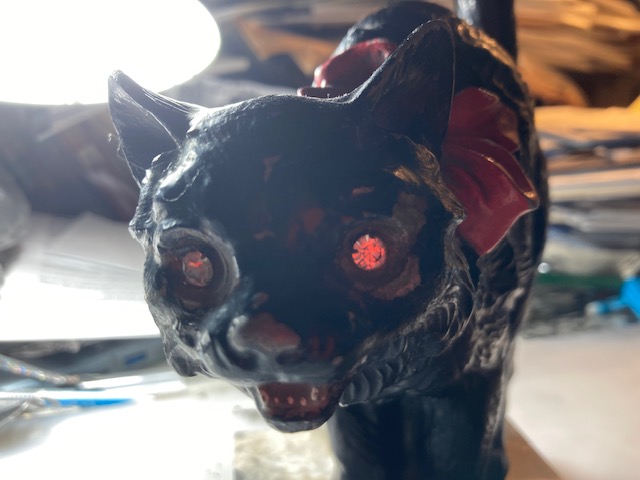
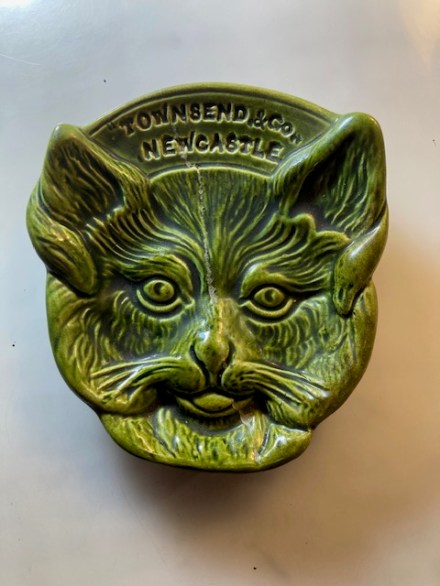
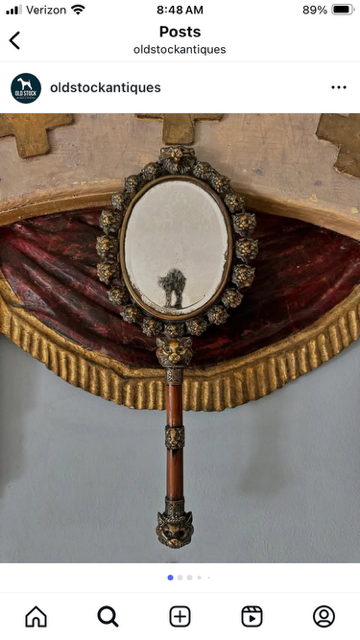
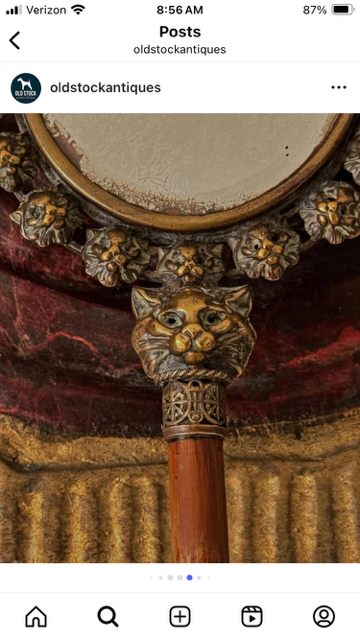
Nonetheless, I purchased one item (future post) and then at the end of the auction asked if there was anything unsold and I threw this lovely green cat pin dish in for good measure. Above I have shared a Victorian cat mirror that got away – alas! My bank account is happy but I am very sad.

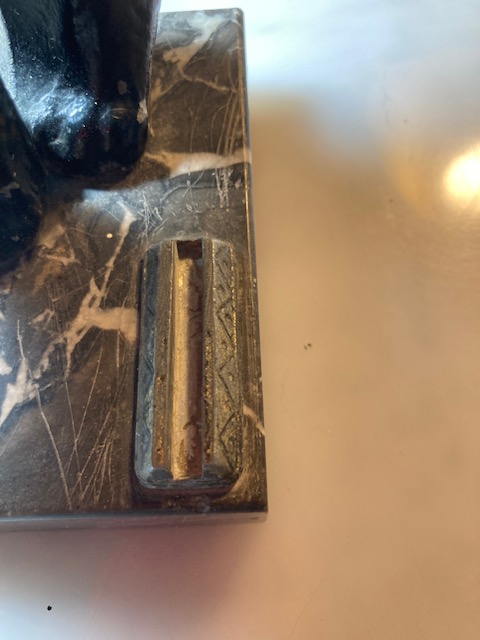
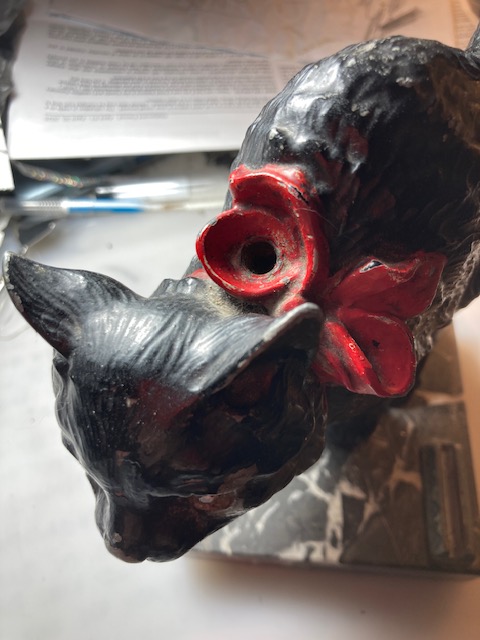
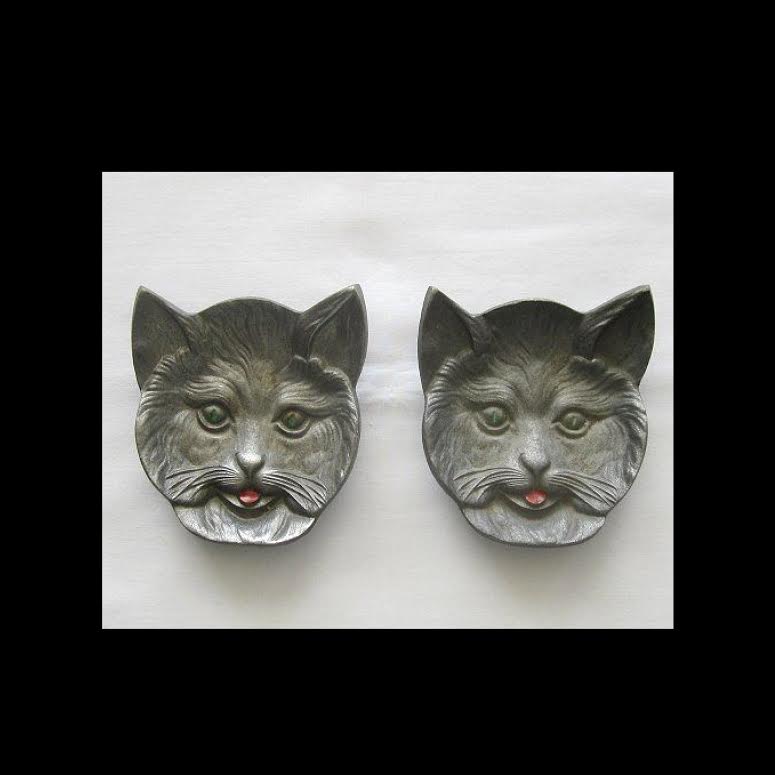
Perhaps this little fellow didn’t sell because he has a large repair down his middle. There is nothing further to identify or edify on the back, although there are three small feet to secure it on a surface. The repair does not especially bother me and the green color is absolutely seductive. However, one of the most interesting things is that I posted about very similar dishes, cast in metal, in one of my nascent blog posts back in 2014 which can be found here. Those were purchased for a freakishly minimal amount on eBay while wandering through cat advertising items and reside on my dresser, bulging with rings, today.

Identified on the back as Corbin Lock Company, Canada. Pams-Pictorama.com collection.

While the metal duo are advertising Canadian Corbin Locks (the name is on the back), this little fellow belongs on the other side of the ocean where he boasted the virtue of Townsend & Co., New Castle. It took me a bit of time to sort through a number of companies and options before landing on Townsend & Co. Newcastle-on-Tyne, makers of fine china at the end of the 19th and into the early 20th century. (While references to it abound around items being sold, no history of the company is readily available.) I cannot be sure and I do not find another dish like this one, at least not attributable to them. (I haven’t found one advertising for anything of this vintage or precise style.) Feel free to poke holes in my theory!
Townsend & Co. did make advertising pin dishes like this one and Google tells me notably made them for a 1929 North East Coast Industries Exhibition in conjunction with a company called Mailing. The trail goes a bit cold at that point.

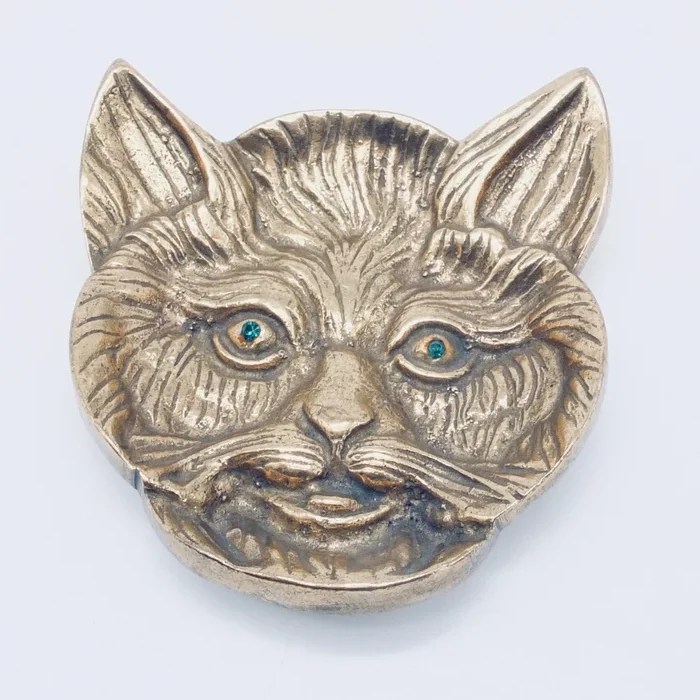
On sale at Etsy at the time of posting. This one has rhinestone eyes!
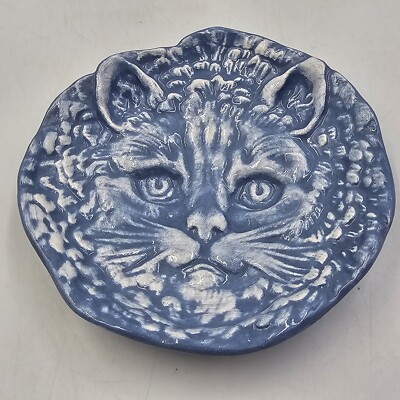
Meanwhile, there is now a fascination for me in the question of this mold. In casting around on the internet I saw it referred to as an old French mold, although I have yet to see specific evidence of that myself. I have seen the old metal ones both with other advertising and without any advertising – sometimes billed as ashtrays like the one on Etsy here. They are not identical – there is a slight morph – but surprisingly similar.

Below is an example of a similar mold in use by a Japanese ceramist currently. The persistence of the image is amazing across probably at least 100 years.

Contemporary, Japanese made version.

I believe this one is heading to New Jersey where it will likely reside in the bedroom or bathroom there. It’s cheerful green color and timeless kitty face will fit right in. And who knows where this cat will turn up next.

British Bright Lights

Pam’s Pictorama Photo Post: I was on a bit of a role recently with press photos on eBay. (See last week’s Felix-y post here.) I had to barter over this one a bit but it seemed to fit nicely within my purview of photo interests. This came to me via a dealer in Livingston, Texas.

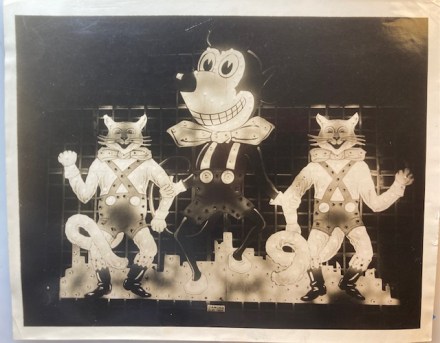
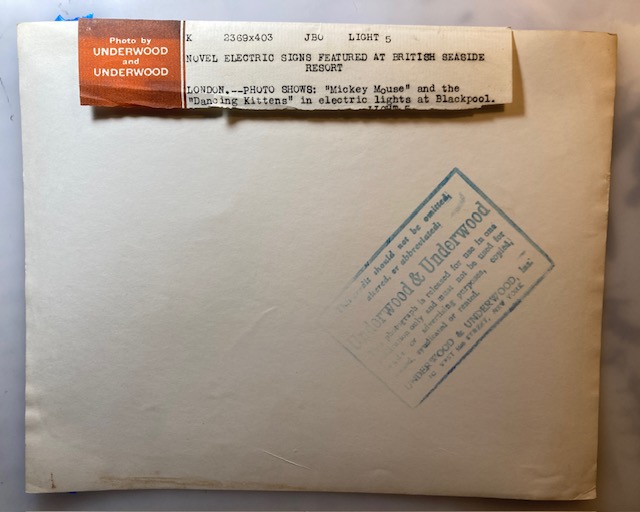
On the back it is identified as a photo by Underwood and Underwood a stock photo company located at 242 West 55th Street here in New York City. On a scrap of paper glued to the back, NOVEL ELECTRIC SIGNS FEATURED AT BRITISH SEASIDE RESORT. LONDON. –PHOTO SHOWS: “Mickey Mouse” and the “Dancing Kittens” in electric lights at Blackpool. There was something below it that was neatly ripped off.

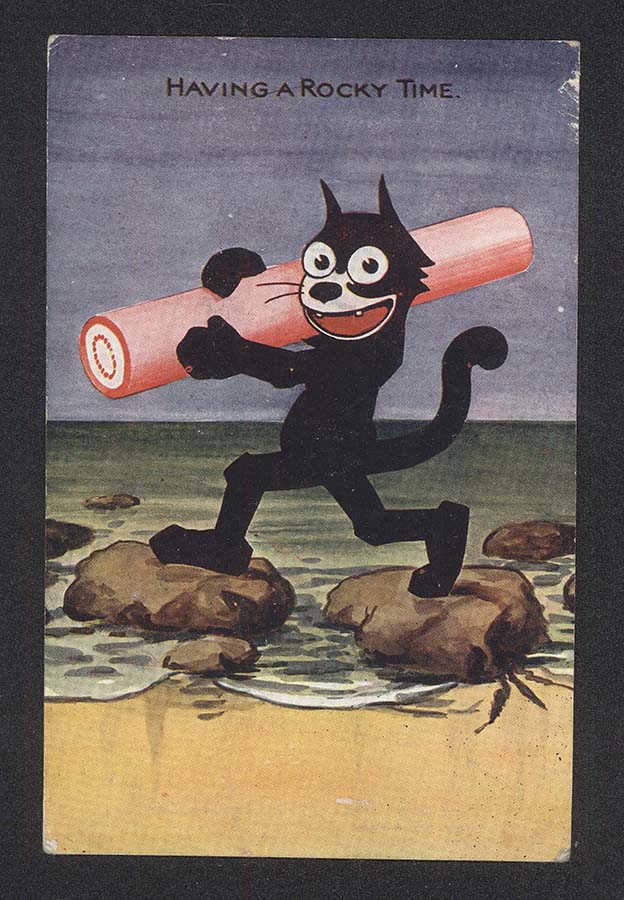
The candy shown here with Felix was sometimes referred to as Blackpool Rock. Pams-Pictorama.com Collection.

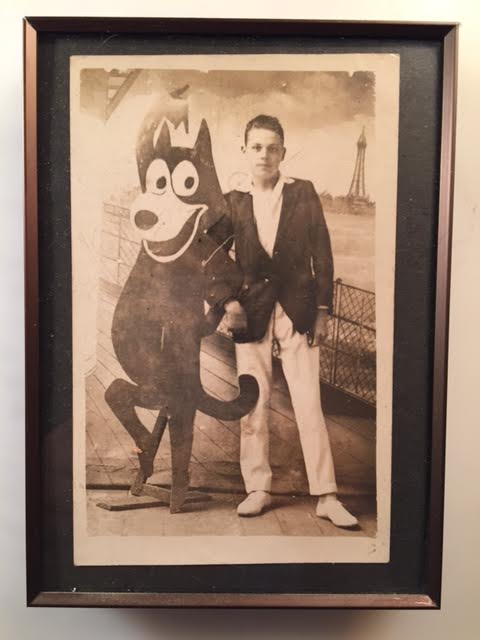
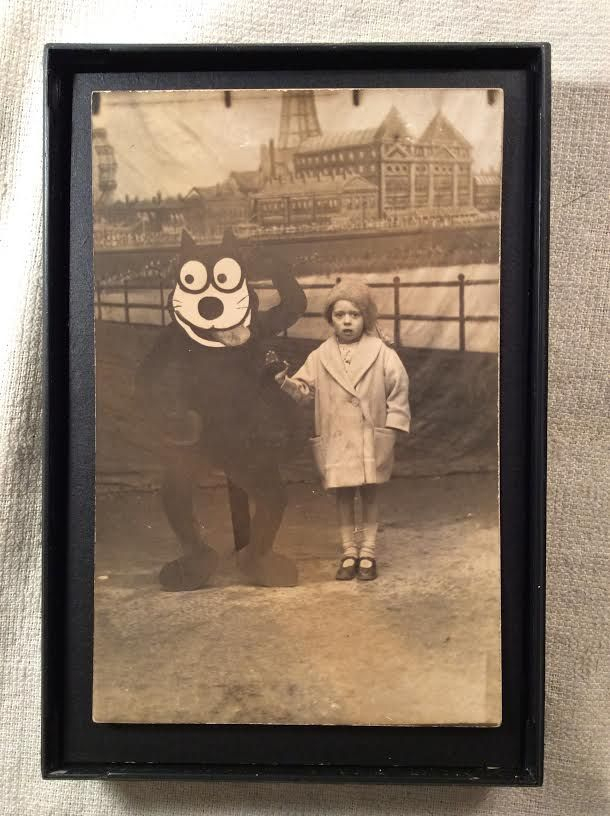
Blackpool beach resort has been the locale of numerous Pictorama posts as a rather specific Felix wooden cut out was available for photos and even one errant donkey. (A mere sampling of posts can be found here, here and here.) Blackpool as a seaside resort goes back to the 18th century. There is what they refer to as the Blackpool Tower and Pleasure Beach which appears to be an amusement pier, probably not unlike the small one in Long Branch, NJ I grew up with but maybe larger since it was referred to as the Golden Mile as well. It reached its zenith of popularity around the time of this photo and although tourism has fallen off still exists largely intact today.

Posing with Felix in Blackpool. Pams-Pictorama.com Collection.

I’m not sure who the brain child was behind this off-model Mickey and tow dancing kitties in what appear to be lederhosen and bow ties. The cats have luxurious tails that curl around and are clad in black boots. Mickey, on the other hand, while sporting an outsized bow tie had oddly small feet in some sort of white shoes.

Unfortunately the tops of Mickey’s ears are lost to the black sky behind him – Kim suggested a bit of white paint to rectify that. I am a bit surprised it wasn’t painted on for publication. I do wonder about publicizing what was so clearly a homemade Mickey in newspapers. Did the long arm of Walt reach them?

Another Blackpool Felix photo. Pams-Pictorama.com Collection.

All three are decorated in round white bulbs. They drift in front of something made to look like a fence. I thought it was a real fence at first but it is dotted with lights too. Oddly enough the cat’s booted feet do not seem to have bulbs.

Information on the back of the photo.

There is a tiny sign affixed to the bottom which says, DANGER Do not touch. I can only imagine that now it would have to be much, much bigger. There are shadows along the back fence that look strangely like black cats to me. The bulbs in the white areas of the cats and Mickey’s face look lit up under careful examination – but the lights on their pants and bows do not appear to be. Perhaps they blinked – maybe half are on and half off?

Of course my imagination goes wild with the idea of a day and an evening at Blackpool – getting my photo taken with Felix on the beach first and then seeing this at night! I am probably delightedly eating cotton candy and other junk food in the interim. A perfect day at the British seashore resort.

Buster Brown Bank

Pam’s Pictorama Post: I realize that there has been no reason to visit the history of Buster Brown in this blog. Today I will try to do him justice via this bank I purchased recently from my Texan friends, @curiositiesantique via Instagram.

For those of you too young to have owned these shoes (I barely slip into that category with a dim memory of the advertising at the shoe store when I was a tiny tot) the brief history goes pretty much as follows. Back in 1904 in an early advertising coup the nascent Buster Brown shoe company purchased the rights to an existing comic strip character created by Richard Outcault of Yellow Kid fame. Outcault was on the market selling the character and pressed them to additionally purchase the rights to the Buster’s girlfriend which they did – more about her in a minute.

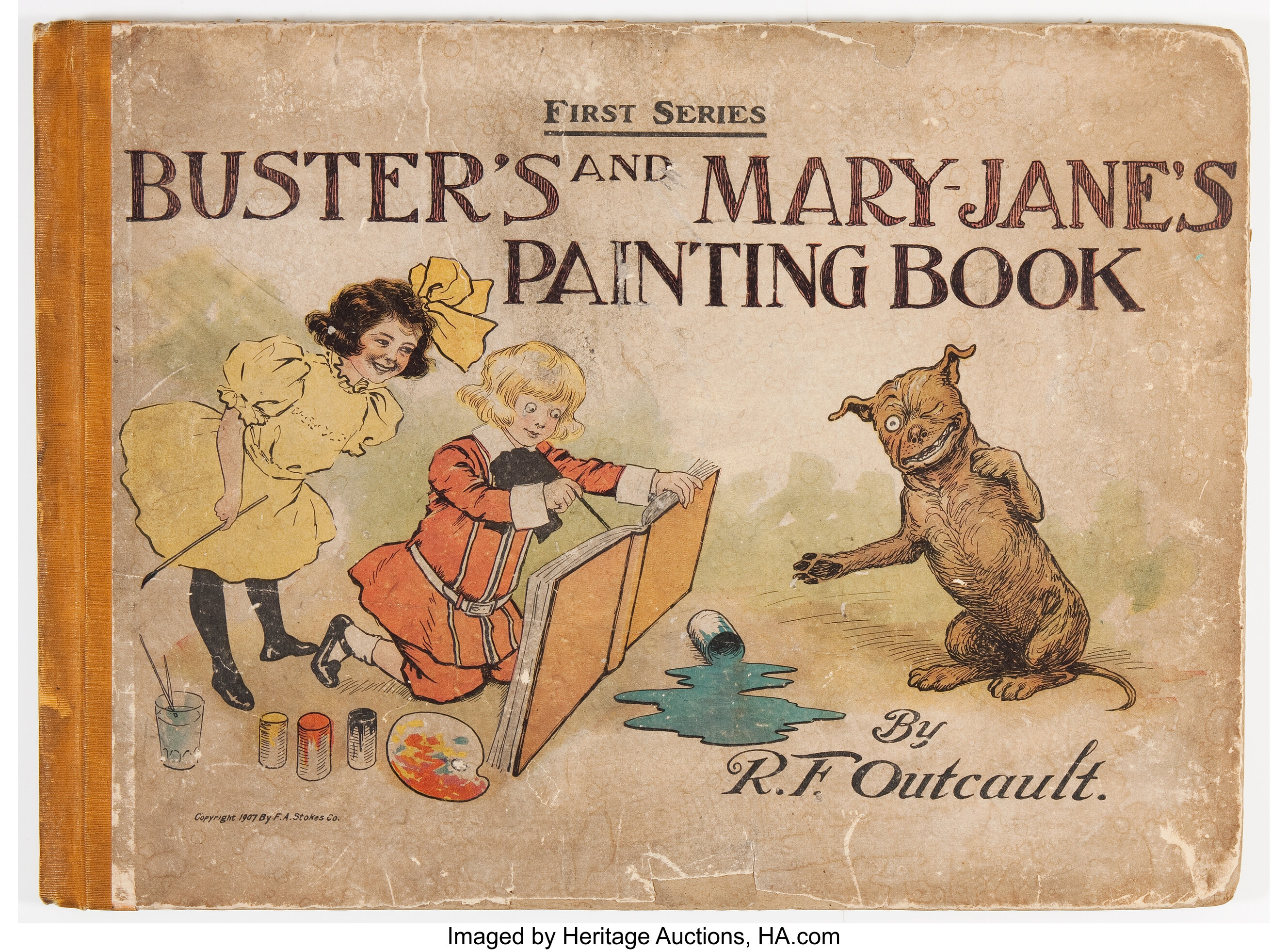
From a Heritage Auction. Not in Pictorama collection.

Interesting to me that Outcault sold the rights to 200 companies at the Louisiana Exposition which is where the shoe company picked it up. Therefore, presumably, there are Buster Brown items or more likely advertising that does not belong to the shoe company. Clearly however the shoe company made the most of their acquisition and a long history of Buster Brown shelling for shoes begins and runs well into the middle of the 20th century and Buster Brown is virtually synonymous with shoes now.

Meanwhile, it should be noted that the cartoonist Outcault was quite the business man when it came to licensing and in 1904 was making $75,000 a year on licenses and employed a small staff to manage them. (If Google is telling me the truth this means he was a millionaire in his day.)

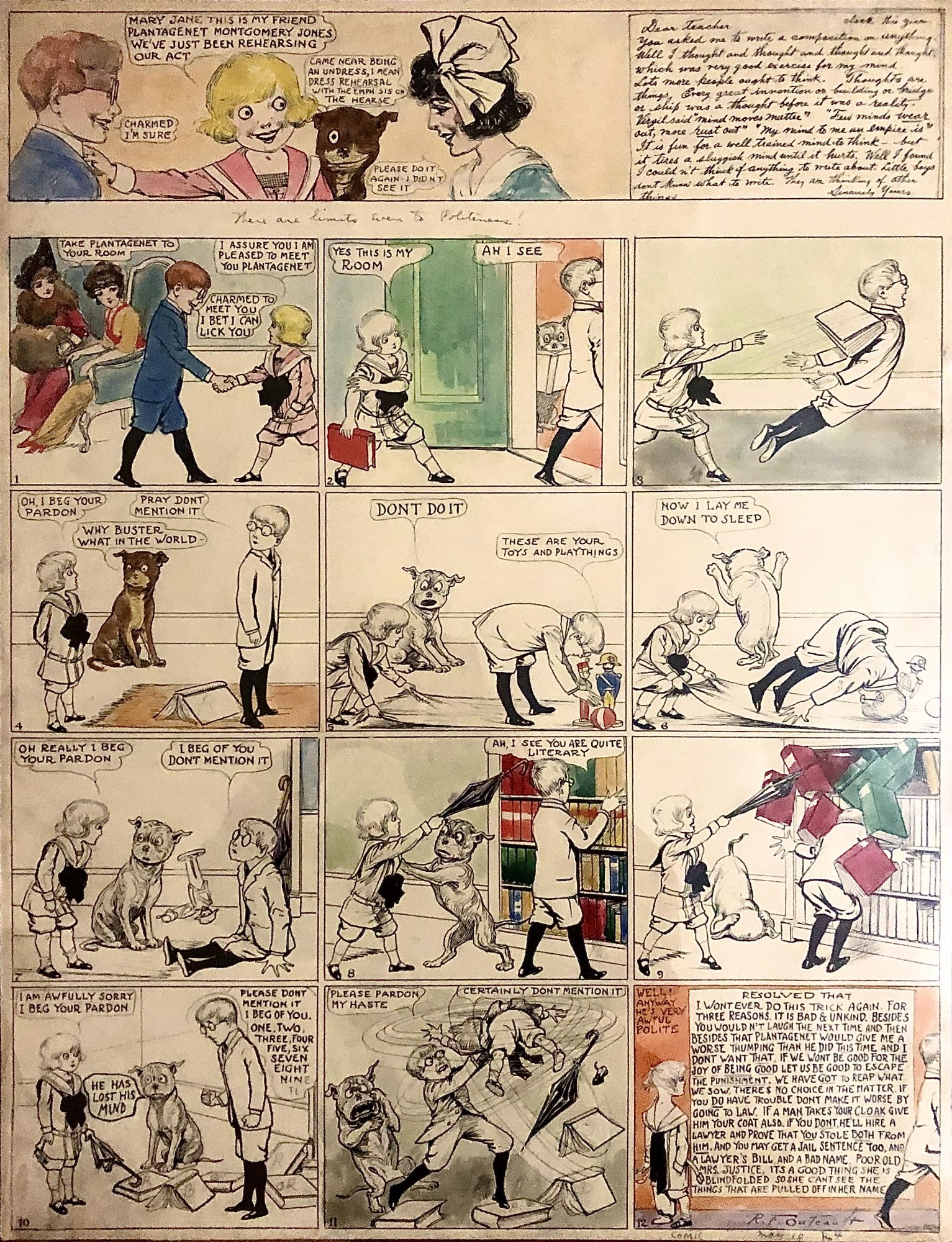
Speciman 1908 hand colored Outcault Buster Brown strip.

However, let’s get back to the shoes. The shoes were so popular that generically a kids shoes might be referred to as their Buster Browns. In addition to items like this bank there was reams of print advertising and purchase point items for stores. Midgets were employed to play Buster, in his unfortunate garb, with cheerful pit bulls enrolled to play his dog Tige. The merchandising for toys was glorious and I spied at least one stuffed Tige online that I covet already. By the time I wandered onto the shoe wearing scene in the 1960’s the merchandising boiled down to some balloons. (There is a vague memory that maybe there was something else, maybe a comic long reprinted but I don’t really remember.)

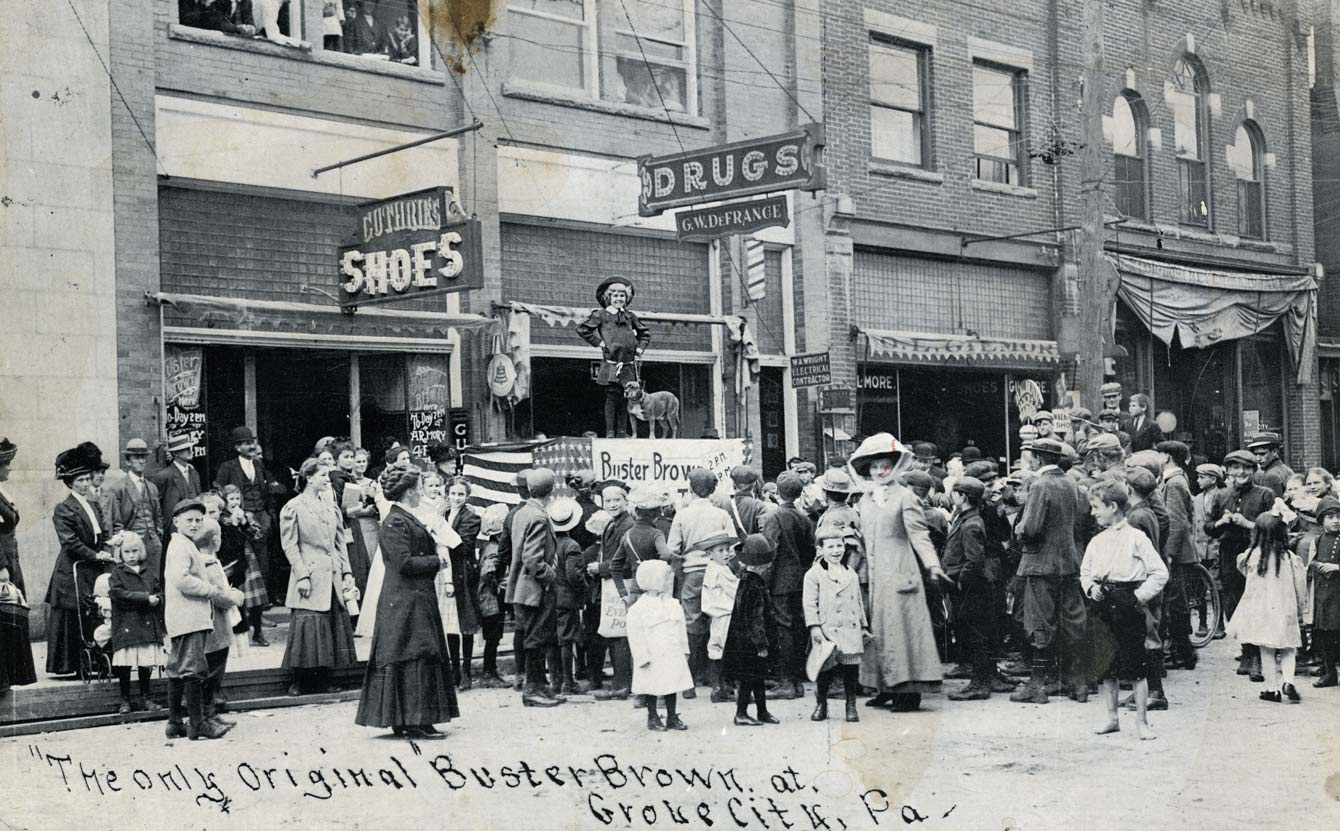
Buster Brown and Tige in front of a shoe store. The copy of this photo is credited to Mel Birnkrant’s collection although a few exist online.

The shoes had Buster and Tige inside, under your heel and I remember the jingle from early tv in a high pitched voice, I’m Buster Brown and I live in a shoe, that’s my dog Tige and he lives there too.

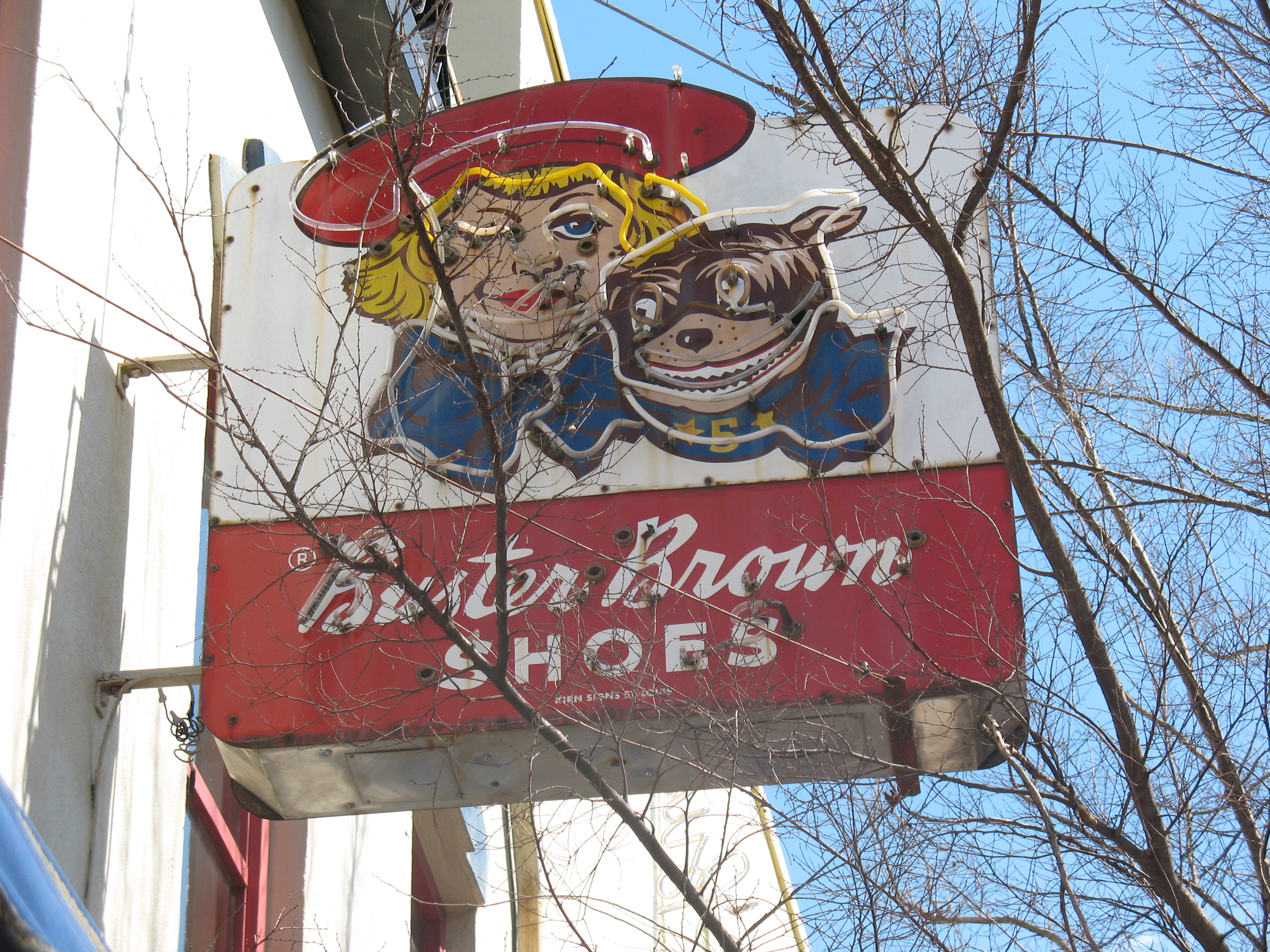
Buster Brown Shoes sign located in Thomasville, Georgia. It can be found on North Broad Street.

So to my surprise, I learned today that as above Buster Brown had a girlfriend (huh), and her name was Mary Jane – and that is how women’s shoes with the single strap were named Mary Janes and are still known by that term today.

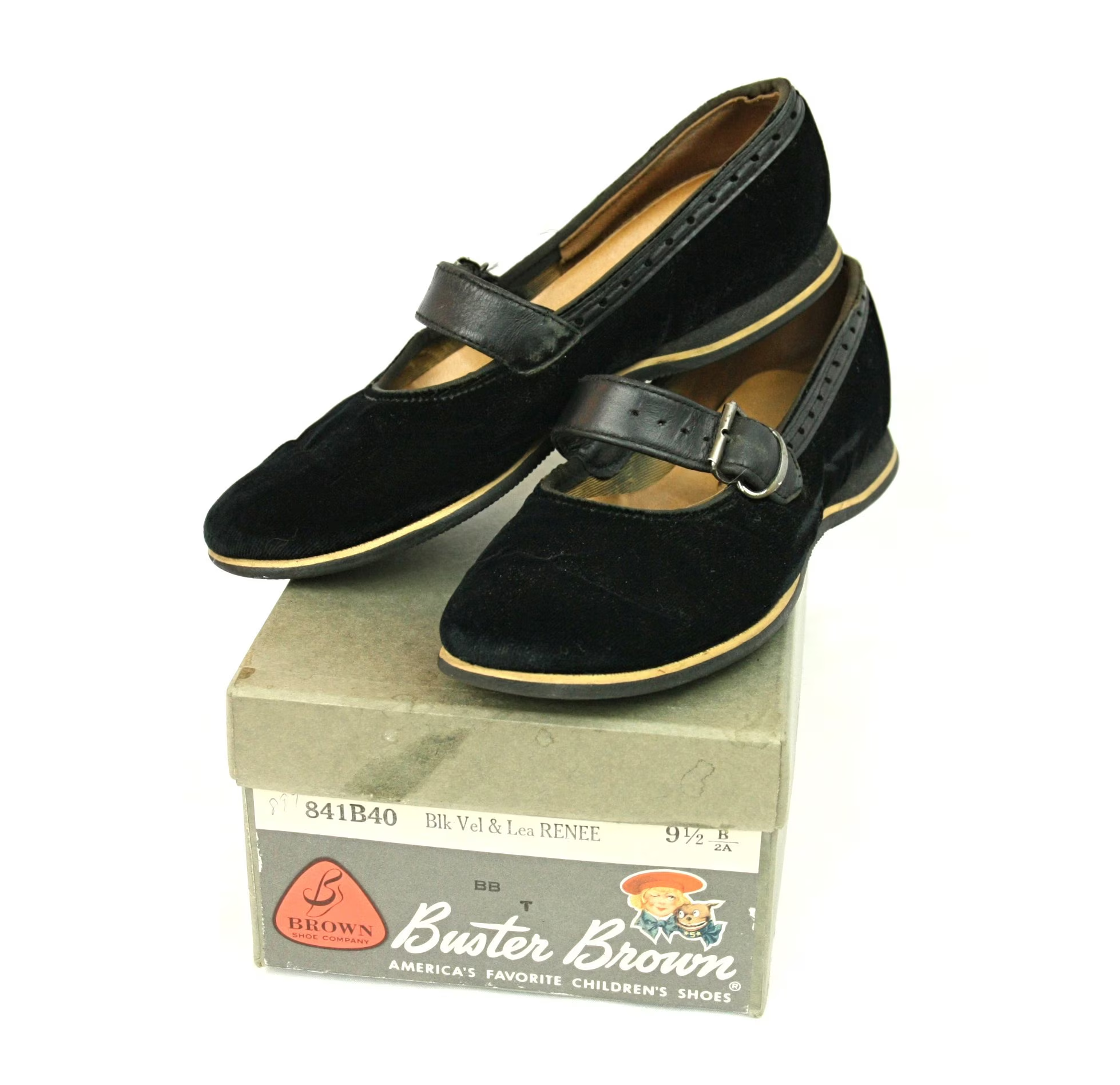
Real Buster Brown Mary Janes. Can be yours on Etsy at the time of publication.

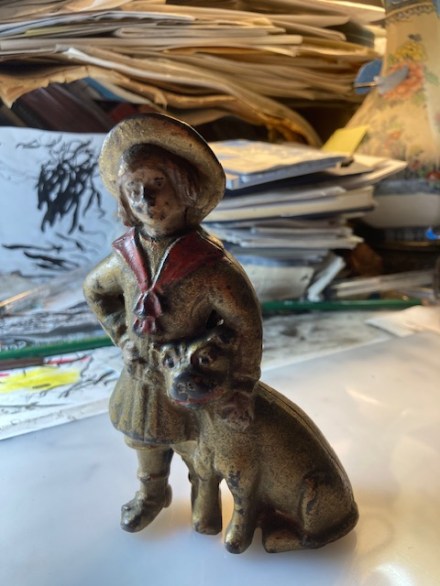
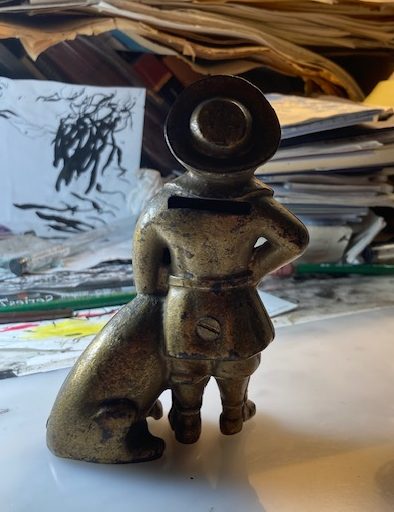
As for this bank, it stands at five or six inches. A trace of paint remains on the face and hands while the red tie remains fairly vivid. This seems to be the most common form of this bank although online I found versions in an overall green and one in red which I can’t decide if it is original or not. The face was the first to go and I can’t say I found it pristine on any of this design. Buster’s hair was painted a light brown and Tige’s mouth was also the vivid red and there were red circles around his eyes.

Back of the bank.

It is a simple bank with a screw in the bottom you would use to retrieve your saved coins. It is small so not like you were keeping a fortune in there. Kim starts to ruminate on restoring it as soon as he looks at it. Evidently it makes him itch to paint it although we know that he won’t – nor should he devote time to such projects when more creative work awaits him. (Although Kim’s next book is scheduled for release early next year he’s already deep into the one after it.)

So now that we have a first Buster Brown item we’ll see how long it is before the next wanders in the door. I am going to be looking sharp for that stuffed Tige.

You Should Have Seen That Cat

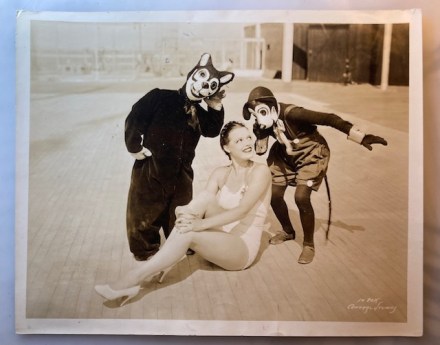
Pam’s Pictorama Photo Post: Today’s treat is a clear example of the curios you will come across if you consistently spend time down a given rabbit hole of collecting as I tend to. Definitely in the more interesting than good, this old press photo caught my eye recently and was on its way to me lickety split. It had found its way from the East coast to Los Angeles, but it is back home in the tri-state area again.

Its eBay listing,1936 Disney Mickey Mouse Costume Atlantic City Steel Pier Midgets Felix the Cat, was designed to catch my attention a few different ways. And really, put that way, who could resist it?

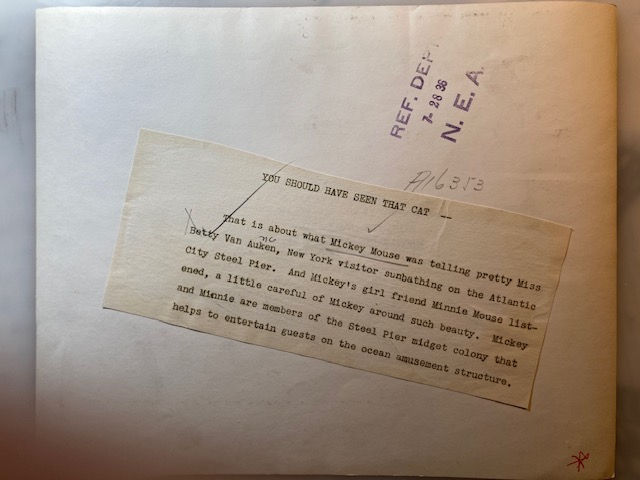
Deconstructing that amazing sentence a bit – Felix? Um, I hate to be a critic but I think they were very safe from copyright infringement on that one. It is somewhat more illuminated by the press information stored on the back. Glued to the back, in a very old fashioned type, is the following breaking news:

Back of the photo.

YOU SHOULD HAVE SEEN THAT CAT – That is about what Mickey Mouse was telling pretty Miss Betty Van Auken, New York visitor sunbathing on the Atlantic City Steel Pier. And Mickey’s girl friend Minnie Mouse listened, a little careful of Mickey around such beauty. Mickey and Minnie are members of the Steel Pier midget colony that helps to entertain guests on the ocean amusement structure. It has an index number, A16353 and it says, Ref. Dept. 7-28-36 N.E.A.

The Steel Pier seems to be the major amusement pier in Atlantic City and we will assume it has been ever thus. And while it seems sensible that this figure with Mickey was never meant to be Felix, it’s decidedly un-Minnie like as well, both mask and outfit. (And that suit looks hot for a July in Atlantic City too – she’d have been much happier in Minnie’s usual brief attire!) Mickey still looks a bit overdressed for July, but is in more traditional Mickey garb.

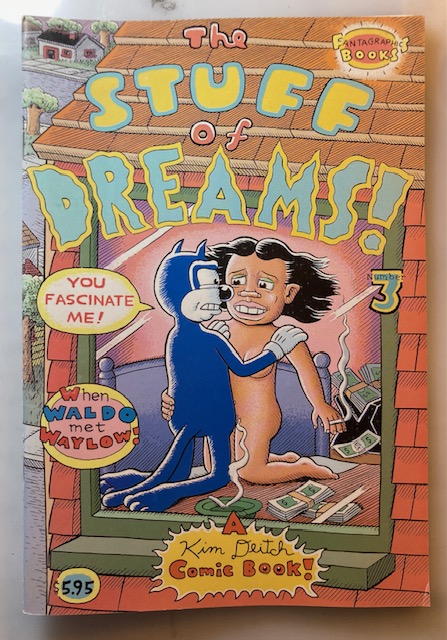
Comic book publication of Stuff of Dreams, #3, cover image.

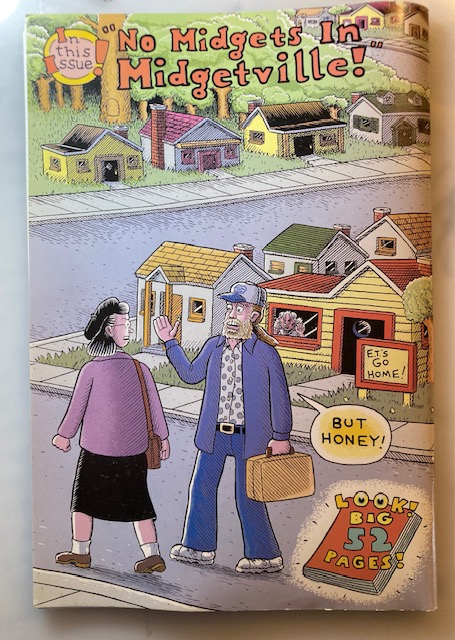
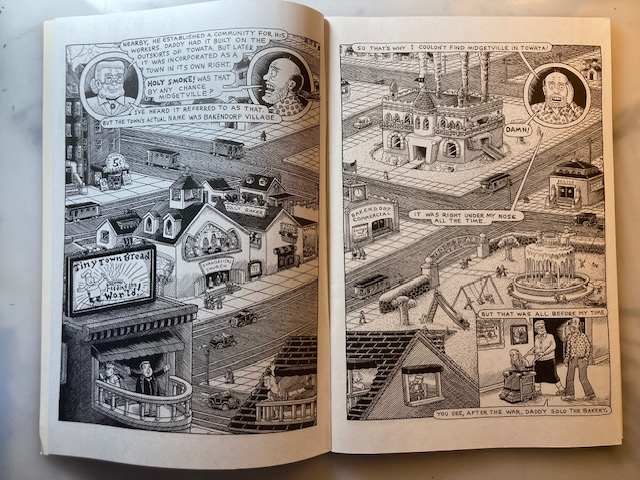
It took a few times before the midget colony part sunk into my consciousness. Fascinating on its own, it also reminded me immediately of a story Kim did years ago, No Midgets in Midgetville which had roots in an actual town in northern NJ which is said to have originally been the winter home of a group of traveling circus midgets. (That story was published in his book, Alias the Cat which can be purchased on Amazon here or search eBay. Or you can find it in single comics under the name, Stuff of Dreams #3.)

Back cover of Stuff of Dreams #3.

We went and looked at the remains of the enclave of small (and occasionally tiny) houses as research for the story, an interesting morning jaunt with my ever patient father. In these days of tiny homes it is a bit hard to say how much truth was in the story, although some house did seem quite small. (The original story about it being Midgetville originated in the New York Times back in 2002 and can be found here although there are other references to the town online.) Regardless, the idea that circus performers (perhaps of all sizes) wintered there perhaps makes sense and it makes additional sense that perhaps some of those performers went no further than Atlantic City seaside for a summer gig.

Centerfold of Midgetville, Kim Deitch, Stuff of Dreams.

As for Miss Betty Van Auken of New York – it is hard to believe that even a veteran New Yorker showed up in Atlantic in a bathing suit, mincing along in high heels and lipstick for a day at the beach. At first I didn’t even bother googling her but it turns out that 1936 was her year. She has a Broadway role (Dodsworth) and film credits from that year, The Garden of Allah, Oasis Girl (uncredited), and a small part as a manicurist in Big Brown Eyes. The trail grows cold after that.

The weirdness of this duo continues to nag at me though. How odd to be on the seaside pier in roasting July heat, eating your cotton candy and have these two come gamboling up around you. The Stuff of Dreams indeed!

Tail End

Pam’s Pictorama Post: Today I have a somewhat odd Louis Wain card which I have to assume is an early one, before he found his feline métier in the more satirical and representational vision of cats. This black one is loaded up with symbols of luck – a black cat being lucky in Great Britain, if not here in the US. (Proving them to be sensible sorts in this regard – in my opinion!)

This card was never used and is attributed to the Alphalsa Publishing Company in London. This company seems to have existed, under shifting names, between 1910 and 1930, although there is an intimation that the archive from it existed into the 1960’s when it was lost in a fire. The back of the card also identifies it as The Aloha Postcard. Louis Wain and Alpha get credit on the bottom front of this card.

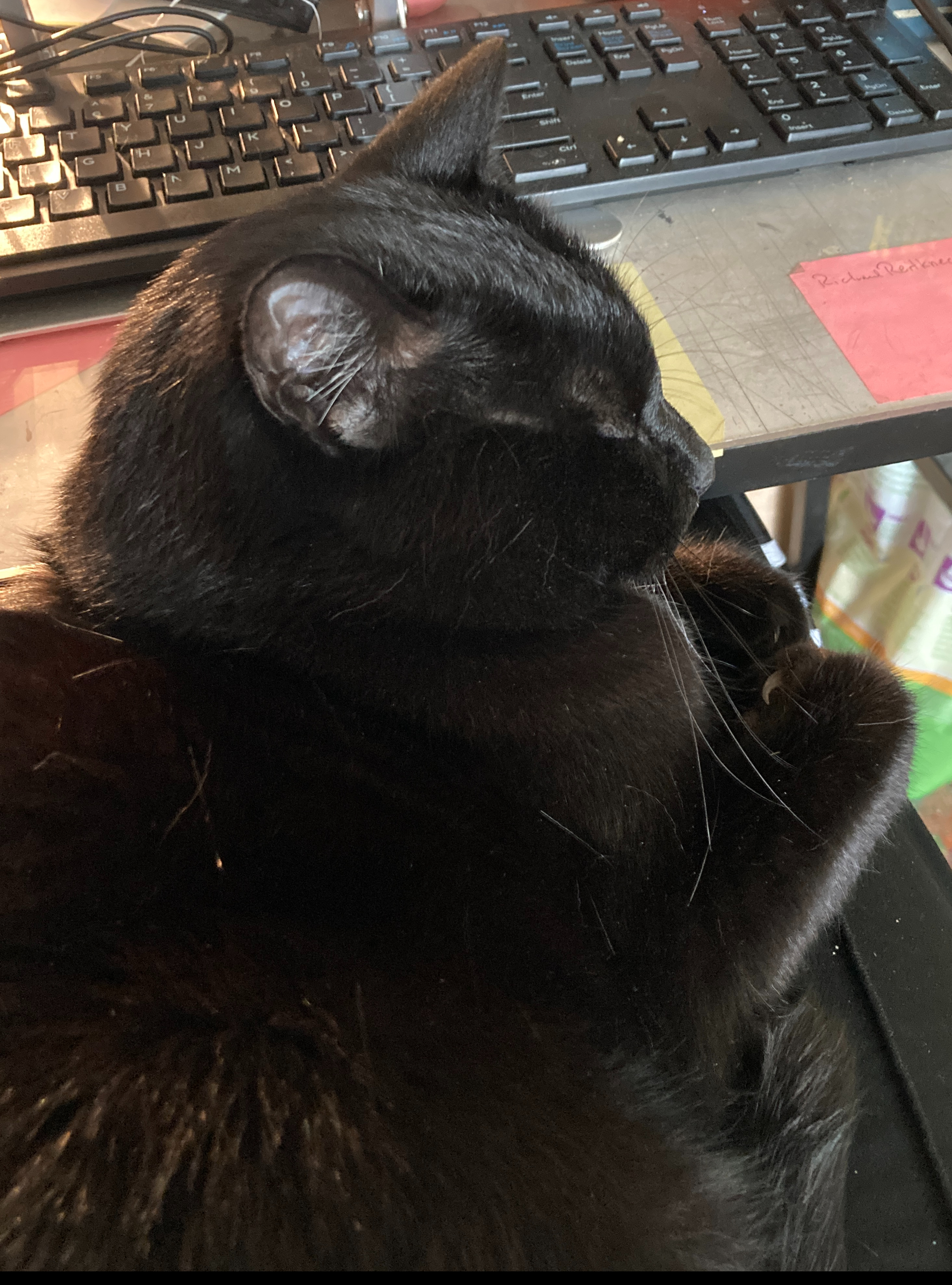
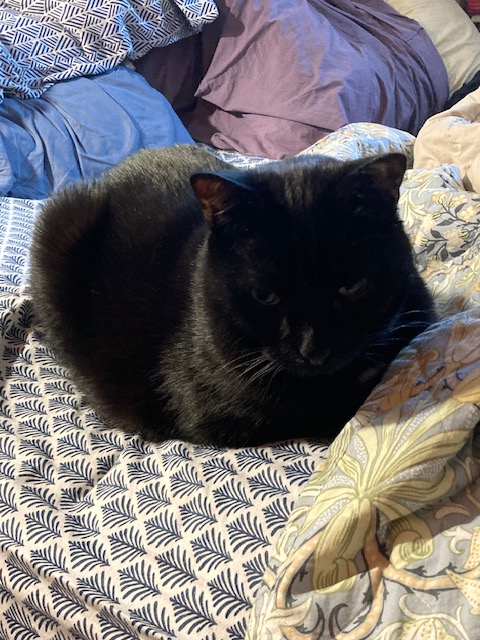
A somewhat peevish Blackie on my lap the other morning. He wanted my chair.

This kit is grinning from ear to ear and doesn’t seem to mind the bag of gold piled atop his head. He has symbols of luck and prosperity tied to his tail (don’t try this at home) and around his neck – those ancient symbols (still used for their original purpose in Eastern cultures) which a decade or two later became swastikas. A horseshoe is thrown in for good measure although I was always told that they should go in the other direction in order to keep the luck from pouring out.

In addition to fortune, this card is promoting Health, Wealth and Goodluck to the Very Tail End. I like the idea that this little fellow is good luck to the tip of his tail. While not being especially superstitious about luck symbols – good or bad – I can appreciate picking up a good heads up penny now and then.

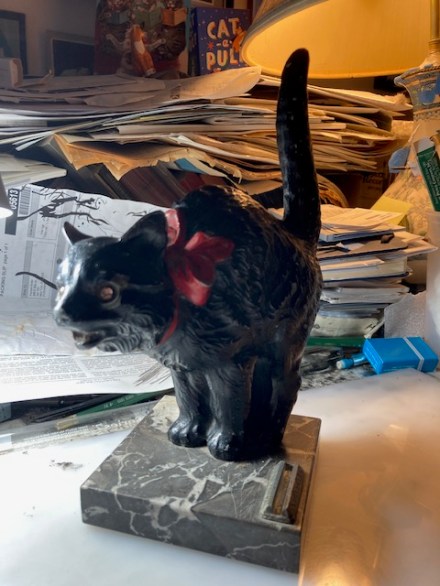
Beauregard during a recent visit to NJ.

I, of course, subscribe to the black cats are good luck theory – thank you Beauregard and Blackie! Blackie cheats it with a white badge on his chest and some hidden on his tummy. You need to look really closely at Beau (one of the Jersey five) to find a few white hairs on his chest. Kim has a theory that the white star on the chest was an evolutionary move to protect all black cats from superstitious fear.

Meanwhile, I am utterly sold on the friendly good tempered nature of male black cats which I have only discovered with these two – a longstanding tuxedo fancier I love them but they tend to another personality altogether. Cookie is a girl of course which is quite different anyway, but she is comparatively shrill and less easy going than her fraternal counterpart.

Leaping?

Pam’s Pictorama Photo Post: It’s a cute kitten post today with this somewhat scrappy looking fellow or gal. For no particular reason I am going to say fellow – something about the build. You have to look a bit carefully to see Sautera? printed at the bottom.

This card was never mailed and there is nothing written on the back. It was produced by Reutlinger Studio, Paris. These were popular photo postcard producers at the dawn of the 20th Century. (There are a few other postcards in my collection by this Peruvian born French photographer. Those posts and more about him can be found here and here. Reutlinger evidently lost an eye to a champagne cork – how very French! A very bad for the photography business as well. And also to note, I always wrap a champagne bottle in a towel before opening.)

When I purchased this card I was thinking that this kitty was perched on a martini style glass (falling into the drink sort of thing), but instead it appears to be a glass funnel of sorts. Try as I might, I cannot figure out what is at the bottom of the funnel, pebbles perhaps? (I considered olives when I thought this was a martini glass.)

It is tucked into the glass neck of a large bottle – and in fact, even if that kit is quite small the funnel and bottle must be quite large – it would have made a truly man-sized martini in retrospect. Having said that, toward the end of his life my father became very enamored of martinis and purchased a few very large martini glasses, but perhaps not quite cat-sized.

A quick translation of Sauterna? from the French is Jumping? I guess he is planning to since curling up on or in the rim of that funnel isn’t going to do much for him. He does have a thoughtful look on his little mug though – a tiny kitten, staring into the void.

There seems to have been a series of these cards and with this very cat, which I have found online and share below. The second one seems to have been more recently appropriated.

Cats are ace jumpers. They seem to understand not only their own overall capacity for the leap, but have the ability to size up distance and other factors which you can see get calculated in their brain. Those of us who live with cats have seen them study such a situation, sometimes resulting in a preliminary butt wiggle – the tail is essential to the balancing act of the cat – especially when it is a floor up trajectory. A cat rarely misses its mark with a jump – and are very embarrassed if they do. I had a little girl tuxie, Otto Dix, who seemed to just float upward. It was as if all she needed to do was think about being somewhere and land there.

And who hasn’t stood poised in a similar, if metaphorical, position? There have been a few notable times in my life where there was a leap to be made. I always think of leaving my job at the Metropolitan Museum to go to Jazz at Lincoln Center as an enormous leap – which it was. I almost broke my neck but I found my footing eventually.

The more recent vocational leap was to the animal hospital I raise money for and that was less dramatic, but a bit of a leap nonetheless. (Posts about those professional leaps of faith can be found here, here and here, although much of my time at Jazz was shared in the annals of this blog.) I am still finding my sea legs on that one so the jury remains out.

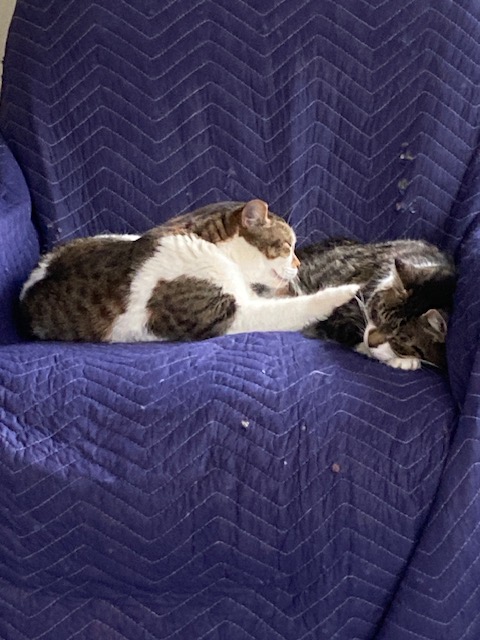
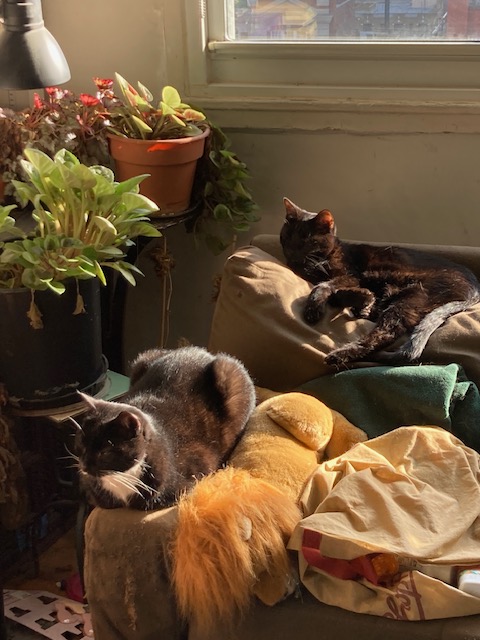
Bonus picture of Cookie and Blackie from early this morning – rare sleeping together pose!

Atlantic Highlands

Pam’s Pictorama Post: Today’s postcard, celebrating a local summer spot where I grew up in New Jersey, seems like a fitting Memorial Day holiday kick-off card. I purchased it at the postcard show bonanza of a few months ago with the intention of framing it for the house in NJ where I am gathering a few early cards of local spots I love.

This one was mailed on August 8, 1923 from Atlantic Highlands at 11 AM. It was mailed to Mr. Robert Del Paso, 44 Est 98th Street, New York. Written on the back is a brief note, Best regards to you and your sister from Dorothy and Eugene.

The view shown here is the one that you now see from the ferry when it pulls in. It looks nothing like this now, a small public beach is at the landing and some low condos not far beyond. Boats dock nearby and restaurants and small businesses dot the edge of the water along with some houses, although you don’t see those right in this spot either, as it is largely in the shadow of a much larger bridge.

The approach to Atlantic Highlands via ferry from 2021.

The first time I took the ferry into Atlantic Highlands, the sense memory of that spot was amazing. On the occasions I would go sailing with my dad or on the creaking wooden fishing boat of my grandfather, the Imp, we would head first under one bridge and then the other and to the bay or ocean. The sense of history smacked me hard being on that spot of the water again.

I have touched on this Jersey shore enclave before, not long ago in a post about Bahr’s Restaurant which can be found here. I opined on the thoughts I had about living there at one time, and the history of that restaurant where I had what turned out to be a last birthday dinner with my sister, a few decades past now.

Atlantic Highlands, and it’s kissin’ cousin Highlands, abut the area of the shore I grew up in. (Highlands is the hamlet slightly further into the river side, Atlantic Highlands faces out toward the ocean and beyond.) However, while Sea Bright, a spit of land that adjoins it, was an almost daily destination, the Highlands while hard by, somehow were the route less taken. I believe that this was probably largely due to beach traffic and while being almost within shouting distance as the crow flies it was rarely the shortest way to go anywhere from Memorial Day through Labor Day.

The parking lot for the ferry, next to the small public beach and some condos.

Once I hit high school we made it part of our route when traffic died down late in the evening. We ate lobster rolls and drank beer at shacks at the edge of the river at the junction where the bay joins the river and the ocean. Also on our route was a movie theater that showed films recently fallen out of circulation for an admission of $1.00. Beyond that, expensive restaurants that hugged the shore and gave a view as far as Manhattan on a clear day and those were beyond our means.

Atlantic Highlands, as shown in this postcard, attaches to Sandy Hook beach (and now state park) via the bay. Not only has this quaint wooden bridge been replaced, but the concrete one of my childhood (which seemed plenty big at the time, bigger than its Sea Bright counterpart which required a draw bridge function for the passing parade of boats) was replaced very recently by a true behemoth of a bridge.

Moby’s lobster shack on the water.

The one in Sea Bright is also under reconstruction and I gather will no longer be the draw bridge of my childhood – it’s opening hourly in the summer was how we timed our days in the summer in order to avoid it and the traffic back-up it would cause. I had a boyfriend in high school who had a summer job working the bridge which was a great gig and the retirement job of numerous fishermen. I don’t know how, in retrospect, Ed got that job but many envied him it. I am sorry to say I never visited the tiny shack mid-bridge that was the man cave you stayed in if you worked the bridge.

The theater is evidently still there.

I’m also sorry to have to say that one of the people I spent the most hours with in Atlantic Highlands is gone now. A long former boyfriend, I had fallen out of touch with Sam Lutz, and found out via local connections that he died a few years ago.

I suspect I will eventually return to writing about this area. For some reason it lives in my memory in a way other places do not. However, for now, this rosy sun setting over the Highlands hills is a good place to leave Pictorama for the holiday weekend as I head out there shortly.

Some Tale

Pam’s Pictorama Post: Kicking off the Memorial Day weekend with this somewhat military cat card. Given the general lack of sympathy among cats for each other (some special cases notwithstanding) this gray kit has a tough time convincing his rather intense superior officer that he is under the weather. The long paw of the law as represented by this black cat, cap forward, is very upright as he judges this underling wanting. I love our cat Blackie but boy, I wouldn’t want him judging me – he’d look just like this I think. It’s an odd card and it was the black cat in particular that sold me on it. (Of course Blackie is constantly judging us – not to mention his sister Cookie!)

The two tiny identifying markers on the front of the card are Oilette and FEM. The tracks on FEM are obscured or gone but I am told that Oilette seems to be best known as a series of postcards that were made to look like oil paintings for the famed Tuck postcard company, as opposed to this very water color like illustration. Someone drawing it really knew cats however. This is a Tuck card as well.

The postmark is obscured but it was mailed from Clapham SW and probably on November 17. It is addressed to Miss C. Steer, Lower Froyle, Nr Alton, Hants. The recipient appears to be the sister of the writer who pens, Dear Con, just a card, we received the parcel safely and very many thanks for them, Margie was going to write but she has so many home lessons (?) to do. Sorry Mothers feet are so bad hope they will be better love to D and of course Mother and yourself. Yours best from us all. xxxxx An additional note was added in pencil at the top, received mother’s letter this morning 8.11.17. Even today Lower Froyle seems to be a fairly remote part of Hampshire according to Google.

This takes me to a bit of a tangent sick leave seems to be something that is being phased out, or perhaps it just is where I work now. Instead of sick leave there are PTO days and you can use them for sick or annual leave. (Not sure how Planned Time Off is waking up with the sniffles but okay I guess.) There is additional accrued sick leave for more substantial illness, surgery and the like and you need a doc’s note to take that.

As someone who doesn’t take a lot of sick leave it doesn’t especially affect me a lot, but it seems like a bad trend and a bit unfriendly too – like this card. I do believe that if folks are sick they should stay home and get better. Covid should have taught us that if nothing else and I don’t especially want to get sick because they have come to the office rather than take the day off. Meanwhile, I have substantial oral surgery coming up and I did get a note from my doc and will take a day and a half of medical leave for it – its on the Thursday so I am going to assume with the weekend I will be back in the saddle on the Monday.

These are a bit bleak, if somewhat military associated, as thoughts go on the first (if cloudy and cold) morning of a three day holiday weekend. (Former Memorial Day posts attest to the routine cold and wetness of my childhood living near the beach. One can be found here.) Tomorrow I head to New Jersey where I will, somewhat belatedly, get my dahlias planted in pots on the porch to start the season. I believe there are some geraniums blooming in the kitchen that can go back out front in those pots where they will be cheerful and deer deterring. We’ll hope for a jollier post tomorrow!

Rosa Mulholland: Part One

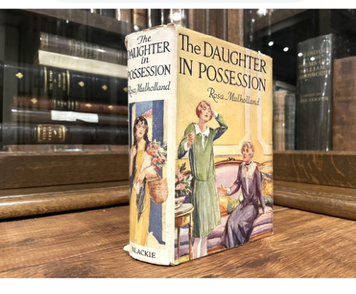
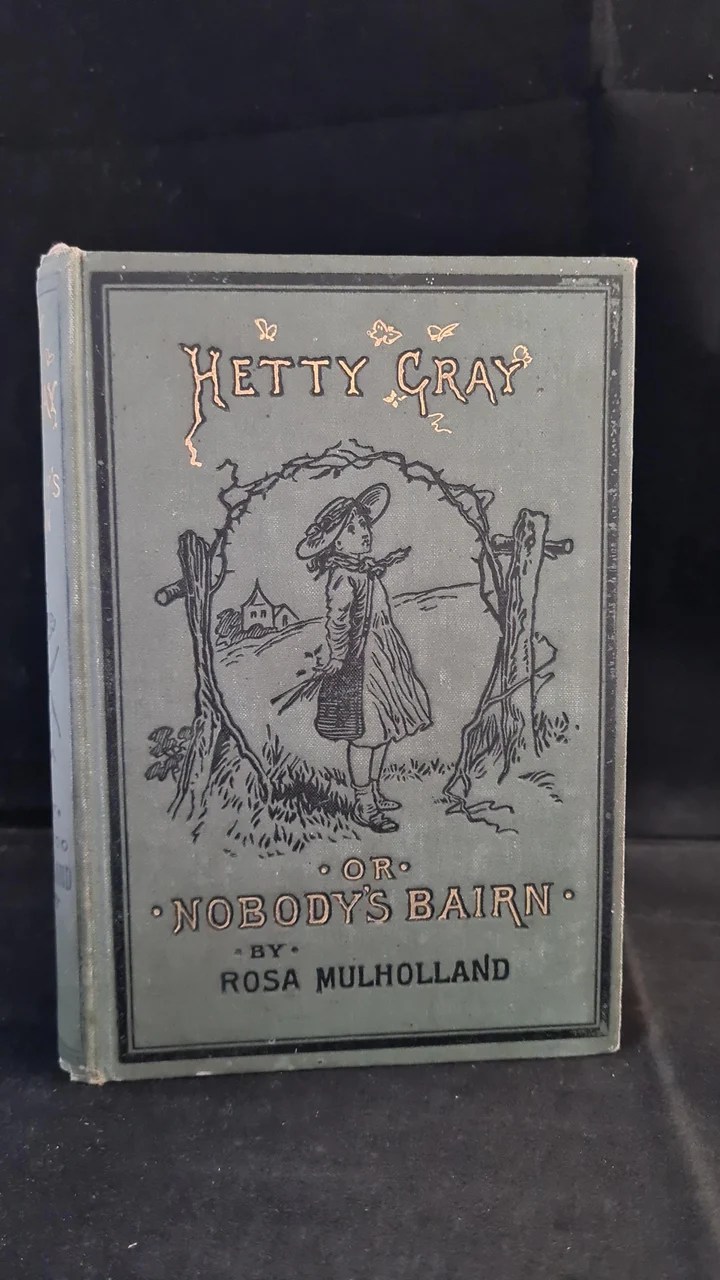
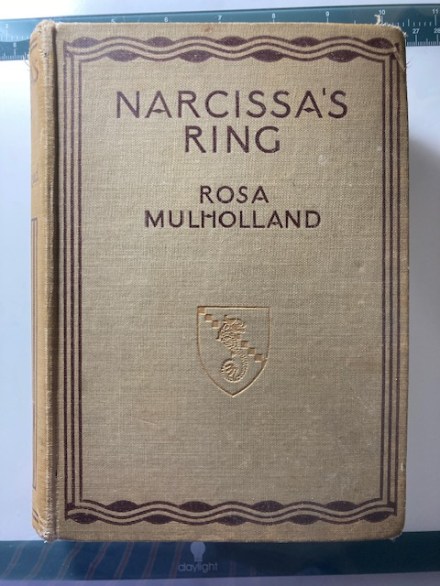
Pam’s Pictorama Post: If yesterday was devoted to a bit of what we’ve been watching here at Deitch Studio, today I will spend some time on what I have been reading. You may remember that as part of a much belated birthday celebration spent wandering around downtown with Kim, I purchased a rather beautifully bound volume by Rosa Mulholland with the intention of reading it. That volume, Our Sister Maisie, turned out to be an interesting sort of a point in her career to stumble onto and, written when she was 66 years old, it seems to have been one of her most popular books.

Volume I purchased as a belated birthday gift to myself in March at The Strand.

Her biography is interesting when considering her stories which deal a lot with the position of women in terms of money and livelihood at the time which she documents and considers. The daughter of a prominent doctor she came from a fairly well to do Irish family in Dublin. Other she first dabbled in painting (I have seen no evidence of it) she turned her hand to writing early and began trying to get published in her teens, including a novel at 15. One of the most interesting pieces of the tale is that early publication of her work caught the eye of an elderly Charles Dickens who not only encourage her but published her in one of his magazines and in a compilation with one of his own stories.

He bet on a good horse. She was very prolific with a list of upward of forty publications, mostly novels, to her credit. She wrote under at least three names I can find, Rosa Mulholland, Rosa Gilbert and very early on, Ruth Murray and seem to have published until a few years before her death and there was a healthy reprinting of her work which continues into the 1940’s. Gilbert is her married name – she married at the age of 50 to a well-known historian, Sir Thomas Gilbert, 12 years her senior. By marriage she therefore became Lady Gilbert.

If any of her writing was used for films I cannot find any evidence of it. I want to say that her books while very popular in Ireland and Great Britain they appear to have been less known here in the US. Really though the only evidence I have of that is that used contemporary copies of her books are mostly available in Britain.

Much like some of the other women authors I have written about previously (for starters, the adult novels of Francis Hodgson Burnett which can be found here, one about Mrs. George de Horne Vaizey here and an earlier one on Edna Ferber here) she is writing about the changing values and culture evolving around women’s emerging role in the late 19th and into the 20th century. Of the above mentioned authors, Francis Hodgson Burnett writes a bit about the other side of the Atlantic and especially the influence of the more forward Americans who visit there – generally very wealthy ones at that. Mrs. George de Horne Vaizey also writes about Britain but is poised a bit later.

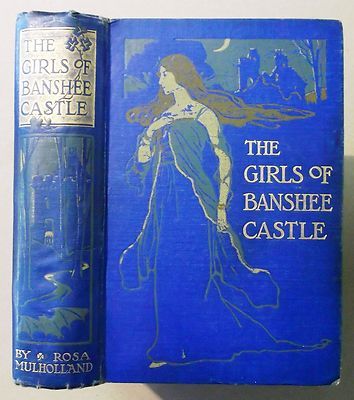
A pretty if damaged volume for sale. I am waiting for a less expensive but equally beautiful volume.

Mulholland therefore is a bit unique in her entirely Irish perspective and generally a bit earlier than the women above. She recognizes that there is a problem where women’s only option for survival is the money their family could supply in the form of a life-long bit of capital to earn and be spent down and the marriage they make. Therefore nascent attempts to work among them are plot points – smart and ambitious women (much like herself we have to assume) are trying to break the mold either because they have been left with no money or are a simmering genius whose talent must find an outlet.

For all of that and knowing of her own life she can be a bit hard on these women – perhaps as society at the time was and it was the feeling of the day. I have read three of her books to date and in Our Sister Maisie there is a younger sister who yearns to be an architect – much like the young Mulholland she even has some of her designs used when she is teenager. Against all odds she makes it to architecture school and, although it is a bit unclear, drops out just before completion to marry her wealthy and wonderful heart’s desire.

I don’t have this one yet either but great title and nice opening page.

In a later volume, Twin Sisters, An Irish Tale published in 1913 she has a female character who, in charge of her late husband’s estate (it is thought of as her managing it for her son – as if she wasn’t also living off it in the meanwhile) invests aggressively in the stock market and makes but ultimately loses much of the fortune. She is criticized as having had no business trying to do the work of a man. But women like her are frequently left to their own devices and the heroine of the story arrives, along with her twin sister, in Britain from Spain as the wards of a family friend they never met. Penniless, the woman charitably agrees to help launch them into society and make agreeable marriages for them. Our girl Pipa isn’t having it though and takes work in an apple orchard in the country instead. Although she is roundly criticized for this, she is our heroine so needless to say she does the right thing – but of course she will end up with her best mate as well.

I’m also holding out for this illustrated version of this volume.

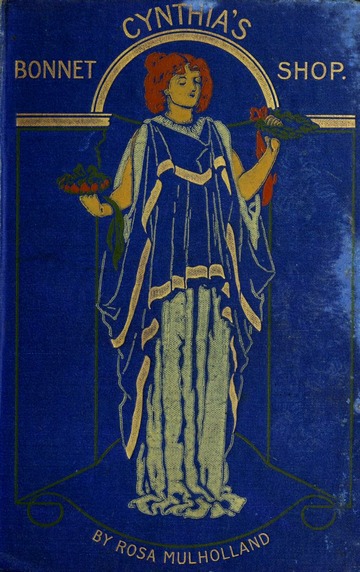
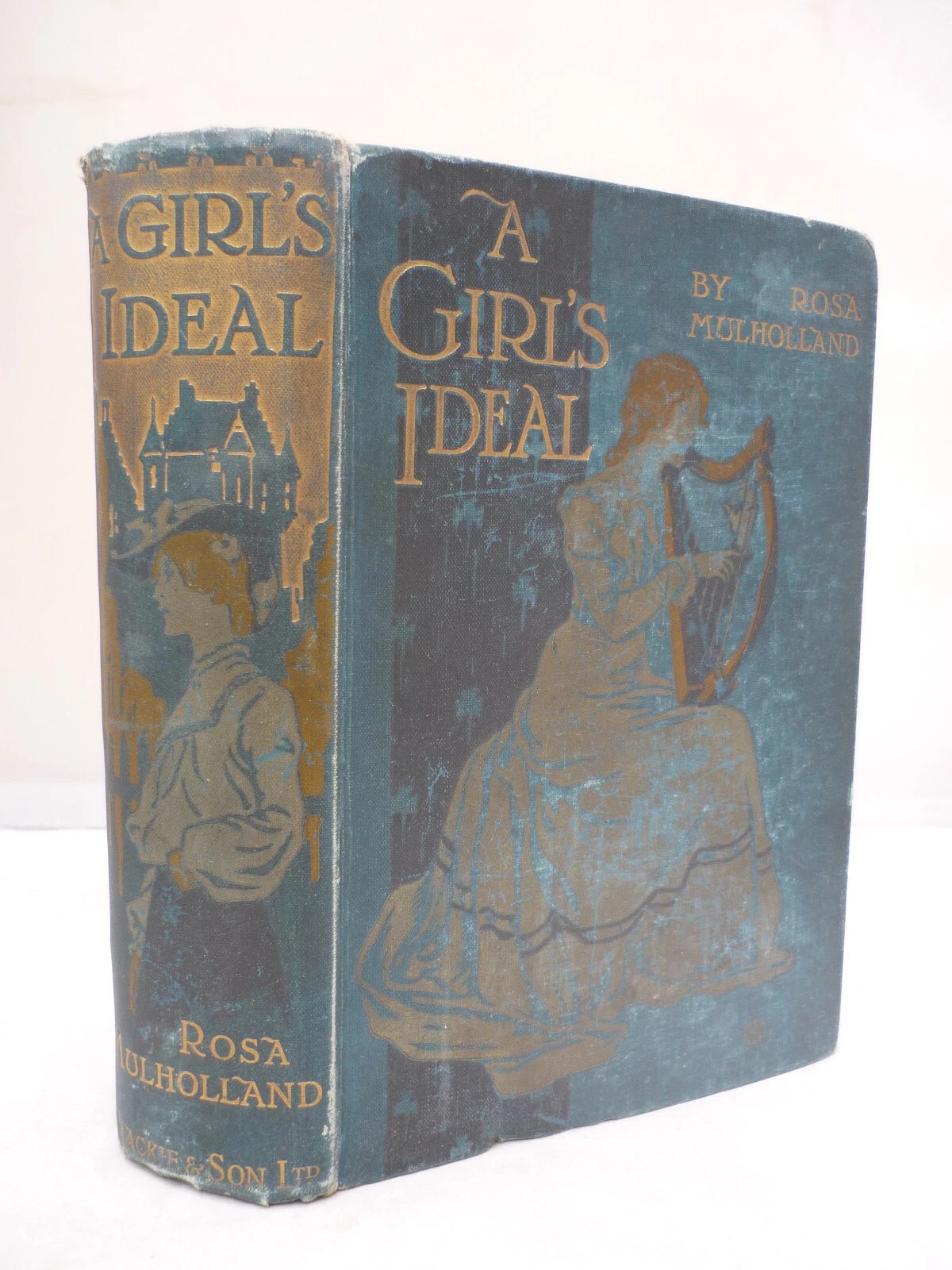
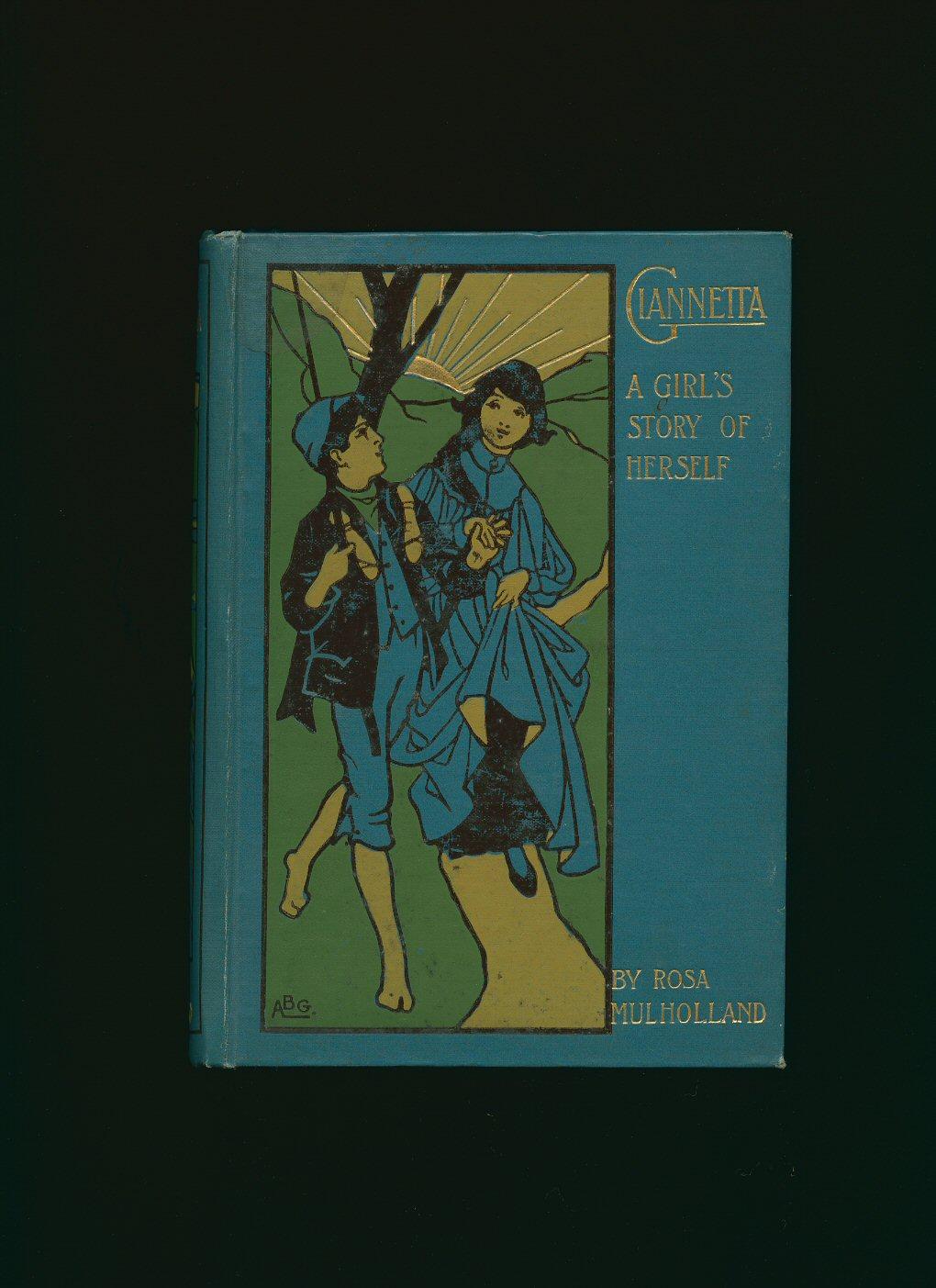
Mulholland’s books are a bit harder to track down than what I have enjoyed in recent years where there has been aplenty available online and in inexpensive used volumes. Rosa Muholland’s books tend to be beautifully bound, illustrated, volumes that are being sold at a premium because of that and despite the fact that there is not much demand to read them. Why more are not available electronically I cannot quite figure out. Perhaps she is just a bit early for for most people – or if the basis of those collections is based on American libraries and universities she may just not be in the right purview.

Clearly it would be a pity not to read this one in a beautiful illustrated volume like this one as well! Not in my collection – yet!

All this to say that while between the acquisition of physical volumes of her books, I grabbed one of her earlier works online and that was interesting and The Late Miss Hollingford was the story of hers, serialized in a magazine, that caught Dickens’s eye. Her descriptive powers were in greater force in her early writing, although her descriptions of the Irish country and seaside are also wonderful in Our Sister Maisie. The descriptions of the farm this young woman goes to live on are just cozy and great. (Yes, another orphaned girl-woman sent off to live with folks she hardly knows – this time her parents, who she barely knew, died of a fever in India leaving her a sufficient income although in reverse this time she is sent to live with people who don’t have money. The father was the perpetrator of a pyramid scheme and those seemed to be rampant at this time – I know the from the de Vaizey books among others!)

Illustration from the Late Miss Hollingford which I read electronically but with illustrations via Project Gutenberg.

I suspect there will be more to come on Ms. Mulholland and her writing as I am wading into the depths. I also suspect that Abe Books and others can expect to be seeing a whole lot of my pocket change in the near future. Stay tuned.

The Devil’s Circus

Pam’s Pictorama Post: Today I have an unusual post and not just because it is a dog day, but I am going down the rabbit hole of silent film, an occasional tributary. However, it has been a very long time since the films of Deitch Studio have been up for discussion. Those of you who know us, or have been readers for a long time, know that silent and early films are among the programming here at Deitch Studio. There are lots of film links and recommendations here so get ready.

While I have devoted some space to silent cartoons, stills like this one are most likely to turn up in my collection. My affection for Frank Borzage has lead me to several (nonanimal) acquisitions which adorn the walls here (posts about those can be found here and here for starters) and of course Felix, who posed with a number of actresses of the silent era, is robustly represented on our walls. Dogs do occasionally turn up and a post with Peter the Great can be found here based on a still of him with Bonzo. Sometimes even short stories of the period lead to a silent film discovery such as in this post here.

Another still from The Devil’s Circus. Not in Pams-Pictorama.com Collection.

Today we started with the film, not the photo which was acquired after. Recently Kim stumbled on this splendid Norma Shearer silent film, The Devil’s Circus, a 1926 film which neither of us had ever seen or heard of. We watched it on Youtube and a stunningly gorgeous print can be found there. I am unable to share the link but it is easily searchable there. (There are some much lesser bad print versions so look for the one in excellent condition.)

Directed by Benjamin Christensen, a young Norma Shearer is already getting her name above the title in this drama with co-stars Charles Emmett Mack and Carmel Myers well below. (Full credits for the film can be found on the IMDb database here.) A 24 year old Norma Shearer is playing a bit younger as a girl who, with her dog, is looking for work in a circus in a non-specific European locale, when she meets Mack and they become a couple. I won’t spoil the plot for you, but there are great circus scenes and my only complaint is that is would have been even better if Mary had come with a dog act for the circus because this little fellow was up for even more screen time. Buddy the dog emerges as the star of this post today, but really, I can’t say enough good about this film. Run, don’t walk, to Youtube to watch it.

Buddy does his turns admirably with Shearer for about half of The Devil’s Circus and we miss him when he’s disappears. It is clear that they clicked together and he is very believable as her pup. This photo Kim found on eBay embodies it best – the two of them looking together off screen, joyfully ready for action. This photo was identified as having come from a print made in the 1970’s but it must have been from the negative as it does not appear duped. It came from the Marvin Paige collection and he was evidently a longstanding casting director in Hollywood. It is identified only with the name of the film written in pencil on the back. Additional photos of Buddy are not easily available online and are probably best found unidentified in film stills like this one.

The story goes that Buddy, a stray terrier or terrier mix, was found and trained, and was well into his film career when he made The Devil’s Circus. His working life seems to start back in a 1923 film call F.O.B., a Lloyd Hamilton short. (It’s unclear if F.O.B. still exists; I cannot find it at this time.) His big break was with Charley Chase in something called Speed Mad (1925, while prints appear to exist I cannot find it to show at the time of writing) and then he’s off to the races with one called What Price Goofy in 1925 where his name morphs from Duke the Dog to Buddy the Dog and sticks.

So his early days and his entree into films seems to be with Hal Roach and Leo McCarey. All in he makes about 25 films, a mix of shorts and features, from 1923 to his last film credit in 1932 in the sound film Hypnotized also linked below. The Devil’s Circus appears to be right after his rechristening.

So there you have a capsule history of film dog star Buddy, a somewhat forgotten but very talented canine from the early days of film and ample examples to watch him at his craft. Settle in and have a little film festival (like we are – catching up with these additions) celebrating this fine fellow.